This is going to be a somewhat mixed bag. It’s all the result of (sometimes bitter) experience. Some of it will refer specifically to the Camino Francés; some to pilgrimage in general; some to any kind of long-distance walk. Pick and mix, as you feel moved. I may come back to this and add bits as I remember them.
– I think pretty much everyone reading this will already have worked this out, but it’s still top-of-the-list important, so I’m still putting it down. Know at least a bit of the language of every country you’re going to pass through. That tiny bit of consideration makes the people you meet that much more likely to want to help you. Even if it’s just to order a cup of coffee. And yes, there are still places where people don’t speak English, and yes, there will come a time when you need to ask for help.
– Rest days are important. It’s horribly tempting just to press on, because yes, I know that I can easily walk another 10km before dinner, but before you know it, it’s 30km through waist-deep snow, and you’re exhausted. (I exaggerate, but only slightly.) Keeping on doing that day after day ruins your feet and your knees. There is no shame in walking only 5km in a day. Or 1km. Or not walking at all.
– You can get away without earplugs, so long as you’re always the first one to bed and are a sound sleeper. But there are people who snore at a quite remarkable volume.
– Look after your feet. My own personal routine went like this: in the evening, wash, dry, talc, sleep. In the morning, vaseline, let it soak in, socks, boots. Liner socks + hiking socks. Well-fitting boots. I didn’t get a single blister until I was actually in Santiago de Compostela, and spent too long wandering around in sandals that didn’t quite fit.
– If you have a pair of telescopic walking poles, people will mock you, but it’s worth it.
– Looking back on it, waterproof trousers would probably have been a good investment, particularly in the snow. The problem was not so much walking through it, as melted snow running off my [waterproof] rucksack cover and soaking me from the waist down.
– It’s quite nice to have a map, for moral support, but once you’re well into Spain you can just follow the waymarkings.
– Do practice walks. Do practice walks with a heavy rucksack, because that’s the part that’s wearing: it’s not the walking (well, it is the walking, but you know what I mean) but the carrying.
– Speaking of heavy rucksacks, make yours as light as possible. You do not need: razors, deodorant, bivvy bags, books, inflatable mattresses, binoculars, makeup.
– I always set out with 2l of water, which was probably too much – I only finished that on a couple of days, and I’m pretty sure we passed fountains on those days. Do take water, though.
– You will end up stinking, but so will everybody else you meet. Just don’t take clothes you’re particularly fond of, and shower whenever you get the chance.
– This is a useful diagram depicting the stuff you actually need.
– You’ll be doing a lot of laundry by hand. Safety pins are good for attaching socks, pants, etc, to the back of a rucksack to dry along the way. Not if it’s raining, though, obviously.
– Hi-tech fabrics tend to be beautifully light, but may not dry very fast. Try it out at home.
– Soap is soap. We ended up using cheapo shampoo for hair, body, and clothes – though be careful if you have sensitive skin, of course.
– Useful things: a credit card and a mobile phone.
– There is always somewhere to sleep. There was only one day in seven weeks where we had to walk on to another village to find a bed.
– Compeed is fantastic stuff, but do NOT repeat NOT put it on blisters that have burst. The result is painful.
– Don’t leave your walking boots too close to an open fire, no matter how sodden they be.
– I had a navy blue Guernsey sweater. While this was relatively heavy, most days I was wearing it, so didn’t notice. Most importantly, I didn’t have to wash it once.
– Take as few valuables as possible, and keep them with you. There are no safes.
Farewell and adieu to you fair Spanish ladies,
Farewell and adieu to you ladies of Spain,
For we’re under orders to sail for old England,
And we may never see you fair ladies again.
One is meant to hug Saint James – his gilded, pilgrim-clad statue that stands behind the altar in his cathedral – but I couldn’t quite work up the courage. I patted him on the shoulder, instead. I did hug Anne, though, just before we went in. It was a quite remarkable feeling, having got there, having got there together, being in the place we’d been aiming at for so long.
Black Madonna in Santiago cathedral
We wandered around the cathedral in a bit of a daze. It’s a remarkable building: a lovely Romanesque structure encased in a baroque exterior (the latter adorned here and there by various forms of plant-life, which was not what we were used to). The famous botafumeiro, the giant thurible, hung at the crossing: we’d just missed mass for St John’s day. I’m told that it’s quite spectacular in action.
Having gawped at the cathedral, we toddled off to the pilgrim office to have our passports checked and our certificates awarded. Since we counted as ‘religious/spiritual’ pilgrims (as opposed to sporting/cultural/other sorts of pilgrim) we got Latin compostelas. On our way out, we saw Gillian again – she’d had her hair done as a celebration, and she looked fantastic.
Anne and Gillian outside the pilgrim office
We meant to go to Finisterre. We really, really did. We were in Santiago in good time to set out for Finisterre and return to catch our train (not that we’d booked a train, but we had a pretty good idea of when we’d need to hop on one, and that time was several days away). When it came to it, though, we just never left. Didn’t want to. We were in Santiago de Compostela and that was good enough for us.
Instead, we spent the time exploring the city. We left the refugio we were in and booked into a guest house in the old town – very reasonably priced for a twin room with a balcony, and much less guilt about taking up beds that other pilgrims might be needing.
We went to the midday mass every day. Admired the singing of one particular nun, and despaired of that of everyone else. Met new friends and re-met old ones. Returned to the sundae bar for chocolate con churros – the thickest hot chocolate, by the way, that I’ve yet seen. Mocked (at a distance) tourists in the cathedral shop who were telling each other, ‘well of course, in the olden days people actually walked here, on pilgrimage, you know?’ Visited the Museum of Pilgrimage, learnt about the jet trade. Bought scallop shells carved in jet. Explored the cathedral, including its crypt and chapels. Bought skirts – after seven weeks in the same pairs of trousers, these felt like a real luxury. Went to the final of a Galician folk music competition with the Ely Four (gaitas very much in evidence; also the percussive effect of a bowl of water.) Ate all the things we’d been craving that were impossible to carry. (Watermelon. Jelly. And so on.)
We met the Ely Four again. How did it feel, we asked John and Linda, to finally be at Santiago, having stopped and started again so many times as they walked a few weeks at a time? Very odd, they said. Very odd.
And we found perhaps the most hilarious translation blooper in the history of the Camino. Speaking of a cad who was so bold as to attempt to make off with the cathedral bells, the English version of the ‘Legends of the Camino’ book we had in Spanish proclaimed, ‘Some type of divine punishment receives Almanzor, because your horse dies exploded after drinking water from a fountain.’ To this day, ‘your horse dies exploded’ proves a handy filler for awkward gaps in conversation.
So we passed our time in Santiago de Compostela. The day before we were due to leave, we wandered down to the station to buy tickets to Ferrol. No such luck. We could only get tickets that went as far as A Coruña. No matter. The trains we were aiming at, running along the narrow gauge Via Estrecha from Ferrol to Santander, only left a couple of times per day, so we would have plenty of time to sort out the next leg when we got there.
Loco commemorating Holy Year 2004 in the forecourt at Santiago station
After all, we were in no hurry. If we had been, I wouldn’t have planned a rail journey that took two days; as it was, taking our time over the return seemed fitting, even if we were no longer walking it. And I’d been promised that the Via Estrecha was as spectacular a train ride as any in Europe.
It took the best part of a morning to get from Santiago to Ferrol, changing in A Coruña (which, at least in our admittedly transitory experience of it, bore few signs of Sir John Moore’s dramatic end). We ate lunch in Ferrol, making the most of the hour’s layover, then boarded the little train for the antepenultimate leg of our journey.
There really are no words to describe the Via Estrecha. One doesn’t hear much about the north coast of Spain, and I have no idea why, because it’s utterly beautiful. For almost all the way, the railway runs as close to the sea as it can get, albeit about a hundred feet above sea level, clinging to the cliffs, in and out of tunnels. Through the afternoon we travelled through Galicia and into Asturias. (In Asturias the horreos are different – larger and squarer.) As night fell a bevy of teenagers joined the train, dressed up for a night out in Oviedo. We also alighted in Oviedo, but in search of a bed rather than the bright lights.
My anxiety about finding somewhere to sleep, never quite alleviated on the pilgrimage, went into overdrive now we weren’t on the Camino Frances. However, even from the station we could see a sign advertising camas (beds), and, despite the relatively late hour (it was gone nine o’clock) we had no trouble getting a room in the building to which it was attached.
The next day we breakfasted at the station before setting off again on the narrow-gauge. The landscape was not quite so spectacular, but all the way the presence of the sea on our left told us: we were on the way home.
Today our objective was Santander – the end of the line, and the last stop in Spain. We had booked our ferry tickets home when we booked the tickets out, so the sailing was a fixed point. No danger of missing it, though: we had almost twenty-four hours in Santander. I put the hotel bill on my credit card, and we set out to explore.
Santander is a pleasant town, if not wildly interesting. It being a nice sunny afternoon, we wandered along the seafront, vaguely considered a boat trip, thought better of it, and bought ice creams instead. A small child in the queue tested out her English on me, much to Anne’s amusement.
And then we went back to the hotel. Showered. Made use of the more frivolous toiletries we’d acquired (i.e. more frivolous than plain soap – these included razors). It may or may not have been due to the fact that our room had no windows to speak of, but we discovered we were utterly exhausted, and went to sleep. This meant that we missed dinner, but that saved having to think about it.
In the morning we checked out and hauled our rucksacks around the town. A little more wandering took us to the cathedral, which reminded me agreeably of Portsmouth in its mixture of ancient and modern, and nautical associations. At lunch we discovered further hilarious translation errors (‘Galician Octopussy’ – ‘Hake of hook to the Roman’) which, together with the people ordering in English and not even trying to speak Spanish, reminded us that we were in a port, and, more to the point, in the port on the way home.
About the voyage home, the less said the better. It was the one and only time I’ve ever been actually seasick. We didn’t even attempt the reclining chairs this time round, and bagging a decent spot on the floor was definitely a good move. It still didn’t improve matters much. And then the only available reading material was the Daily Express. The Madeleine McCann case was just breaking, and so was the ‘silver ring’ test case.
All in all, sleep was a blessed relief, and I didn’t wake until the call came over the ship’s tannoy that we would soon be docking in Plymouth. ‘Soon’, in this case, meant ‘in a few hours’. Ironically, we’d dissuaded my boyfriend from driving down from Exeter to Plymouth to meet us on the grounds that he’d have to go far too fast if he didn’t want us to wait around for hours. In the event we were about an hour getting off the boat, so he would have made it easily, but really, getting the train was hardly going to kill us.
The Exeter train was quite full, and our bags were large. Anne and I lolled in the vestibule, and grinned at each other in an accomplished, tired, contented sort of way.
Niton. Portsmouth. Caen. Saint Palais. Ostabat-Asme. Saint-Jean-Pied-de-Port. Roncesvalles. Viskarret. Larrasoaña. Cizur Menor. Puente la Reina. Estella. Los Arcos. Viana. Logroño. Navarrete. Azofra. Santo Domingo de la Calzada. Redecilla. Villafranca Montes de Oca. Atapuerca. Burgos. Hornillos del Camino. Castrojeriz. Frómista. Carrión de los Condes. Ledigos. Bercianos. Reliegos. Arcahueja. Virgen del Camino. Villar de Mazarife. Hospital de Orbigo. Astorga. Rabanal. Riego de Ambros. Cacabelos. Villafranca del Bierzo. Vega del Valcarce. Hospital de Condesa. Triacastela. Sarria. Portomarín. Ligonde. Palas de Rei. Arca. Santiago de Compostela. A Coruña. Ferrol. Oviedo. Santander. Plymouth. Exeter.
Sarria to Santiago de Compostela(2nd – 7th May 2007)
I was glad when they said unto me: we shall go into the house of the Lord.
Our feet shall stand in thy gates: O Jerusalem.
Ps 121
In Sarria we discovered a novelty: te con leche. Tea with milk. Excellent, we thought; Anne had been missing proper tea. It turned out, however, not to be tea with milk, but tea made with milk: a cup of hot milk with a tea bag in it. I was never so glad of my taste for black coffee.
A pleasant, if rainy, morning’s walk along green lanes. The waymarkings now came at regular intervals: concrete pillars, about waist-height, telling you where, if anywhere, you were, and how far it was to Santiago. The count-down was beginning to get exciting.
Just outside Barbadelo I saw my first horreo, a kind of small barn elevated on legs to keep it out of reach of the rats. Local legend says that at night these buildings get up and wander around the countryside; but we were never out after dark to see them.
The first horreo
At Ferreiros, at the less-than-100km-to-go bar (why yes, of course there is one), we had lunch, and another first: tarta de Santiago. This is an almond mixture baked in a pastry case, with the viciously pointy Santiago cross stencilled onto the top in icing sugar. Delicious, but best eaten in very thin slices, if one were planning on moving anywhere after lunch, and after some debate we decided that we were.
It was another 9km to Portomarín, down the hill and across the reservoir. At the bottom of the reservoir lies the old town of Portomarín, all except the church, which was dismantled and moved stone by stone to the top of the hill before the valley was dammed and the water flowed in.
Looking down towards Portomarín
The albergue was modern and spacious, and looked out over the reservoir. There were few other pilgrims, and we lazed away the remainder of the afternoon, stocking up on supplies at the food shop, doing our washing and hanging it out to dry in the laundry at the far end of the albergue, and chatting to an American pilgrim by the name of Sarah. She had lost time with an injury, and would now be unable to walk the rest of the way to Santiago before her flight left.
The next morning, while we sat in the town square waiting for the translated church to open, she caught the bus. The church took its time; we went postcard shopping and said Matins before it opened, but it was worth the wait. A remarkable example of Romanesque architecture before the flooding, the move made it more remarkable still. The portal was another of Master Mateo’s works – not so impressive, we understood, as the Pórtico de la Gloria at Santiago cathedral, but still a fine work. On the top of the tower was a stork’s nest – more friends seen, without knowing it, for the last time.
Waiting for the bus in PortomarínThe last storks’ nest
The way out of Portomarín was a steep track through the woods. We took our time and discussed, for no obvious reason, Shakespeare’s propensity for resurrecting dead women in his plays. It took a while to find the albergue in Hospital de la Cruz, and found, when we did, that it was closed. We settled for lunch and went on another four or five kilometres to Ligonde. There we found a small but airy hostel with chickens scratching around outside and a grand total of two saucepans in the kitchen, one very large and one very small. No matter: they served our purpose.
At Ligonde, we met Jim and Daniel, an Irish father and son. Daniel must have been about ten, the youngest pilgrim we’d met. (The youngest we’d met to speak to, anyway; the noisy kids at Logroño didn’t really count.) Jim joined the ever-increasing band of people who were disappointed that I wasn’t Irish myself, with a name like that.
The next morning we made instant couscous in the very large saucepan, ate it, and set out upon the way. It soon became clear that the day’s walk would not be a pleasant one, for me at least: my period had started the night before, and the cramps were excruciating, worse than I’d ever had before or have had since. None the less, we decided to take a detour to take a look at (what else?) an interesting church: at Vilar de Donas, the church of El Salvador has rather fine wall-paintings and the effigies of knights of the Order of Santiago. Dan Brown would have had a field day, and Anne enjoyed herself, but I was in no state to look at anything. We trudged back towards the main camino. ‘I feel sick,’ I said. ‘I’m not going to be sick; it’s a different system, but I feel sick.’
We stopped for a drink and (more importantly) a rest in the bar at Portos, where the diversion rejoined the camino. About a minute after finishing my coffee, I was sick. Then, since the proprietor was evidently keen to shut up for the morning, we moved on.
Progress was slow. Since the only attitude that afforded me any relief was a kind of doubled-up foetal position, which is obviously difficult to adopt while walking, I spent much of the time seeking out and sitting on low walls. Anne shifted more and more of my gear over to her rucksack. Occasional passing pilgrims stopped and asked if there was anything they could do, but there wasn’t, really; we were in the middle of nowhere and the only thing was to press on.
According to the book it was 7.5km to Palas de Rei, and we must have covered most of that. Happily, however, a huge, shiny, new municipal albergue had been erected since its publication, a fair way before the town itself. Unhappily, it had not yet opened for the day; but by now we were both happy to sit on the bench outside and wait to be let in.
The doors opened at one o’clock. Anne saw me safely tucked up in (unusually for me) a lower bunk, before going out to town to find herself some lunch and other useful things. I slept for a good couple of hours, which improved matters greatly. Anne returned with food, some fearsome Bridget-Jones knickers, and the news that there was a small ferret-like creature hiding under the front desk. We looked, but there wasn’t much more to see than a pair of round eyes and a pointy nose; and neither of us is much good on mustelidae.
The showers were effective but singularly lacking in curtain, but at four hundred miles in I’d lost most of my modesty, and no one else came in, anyway. We had thought the kitchen utensil range at Ligonde narrow enough, but the mod cons at Palas de Rei were spectacularly useless. While it was fully equipped with stove, sink, etc, the only container of any description was a plastic colander. We ate bread with salmon pâté and raw carrots, then, since the kitchen was obviously not going to be of any use to anyone else, we commandeered it as an oratory and said Evensong.
By this time I was pretty much recovered and we went out for a wander. As we passed a kind of bar/restaurant in the park the Ely folkies hailed us: they were staying elsewhere in the town. We joined them for a drink and an ice cream; it made a satisfying end to a difficult day.
Back at the albergue, a further failing became clear, apart from the curtainless shower and the pan-less kitchen: the lights could not be switched off. Very odd. We went to bed anyway.
In the morning we were able to proceed as normal. It didn’t look as if we’d missed much by not staying in Palas de Rei itself, so we didn’t linger there, but pushed on through suburbs and villages, keeping a good pace as far as Liboreiro.
Crossing into the province of A Coruña
It was a good day for a walk, sunny but not too hot. At Furelos we visited the church of San Juan. The priest showed us the main point of interest: a crucifix in which Christ has only the left hand nailed to the cross. The right arm dangles, or reaches, down. I found it extraordinarily moving: Christ who bridges the gap between earth and God, Christ who is divine in weakness.
We also asked why Saint Roch has a dog, having wondered about this for a while, but the priest didn’t know.
Leaving Furelos, we ate our lunch on tree-trunk benches just outside Melide. In Melide itself we stopped off in a rather dingy bar for a drink. The guidebook recommended stopping for octopus, but we’d had enough of seafood after Sahagún, and pressed on, dodging around a wedding party. Past the 50km mark, now, we carried on and stopped in a lovely church in Boente. It was open and empty, so we took the opportunity to say Evening Prayer.
Another five kilometres, up and over a little ridge, and we stopped at the bottom of the valley. The albergue at Ribadiso do Baixo was just over the bridge, with buildings spread over a large compound. Plenty of washing lines, although something of a peg shortage, but we coped. Supper was back up the hill: spaghetti at Bar Manuel. Afterwards, we stood on the bridge and watched the fish jump. It was a gorgeous, still evening.
Laundry and horreo at Ribodiso do Baixo
Next morning the lazy feeling persisted, and we dawdled as far as Arzúa. Now we were so near, it felt important not to rush things, to make the most of the last few days on the road. We stopped for breakfast, and I muddled the ordering of breakfast completely; my Spanish was still far from perfect. Still, we ate.
We ate again in Calle; while passing through the woods we met a man who recommended the tarta Santiago at a certain bar there. We followed his advice and partook of it; it was indeed excellent. I made a note of the brand for future reference. The next settlement was Salceda, where we had a boccadillo lunch and ice creams, and moved on again. The landscape had changed again: we were now walking through eucalyptus woods, tall twisting trunks and a mild fragrance reminiscent of snuffles. We halted by a spring in Santa Irene and said Evening Prayer in the afternoon sun.
Corkscrew-trunked eucalyptus tree
The nearer we got to Santiago, the larger the albergues became. Or so it seemed. The one at Arca (or Pedrouzo, or O Pino – it appeared to have several names, and one more than the number of languages spoken in the area) was fairly massive. In early May it was by no means full, but there was still a good number of pilgrims around. There was a kitchen, which looked comparatively well-equipped, but we had no food and couldn’t be bothered, so went out to the restaurant in the village. This proved to be full for the moment, but also to have coin-operated internet machines, so we went online and rejoiced in the fact that –
tomorrow we would be in Santiago –
Then there was a table free, so we went through, and ate, and talked, and filled a few more pages of the pink notebook of deep thoughts.
Tomorrow we would be in Santiago.
We left early, breakfasting in a café up the road. The camino led through more of the eucalyptus forest. A drink in another café, where we met some more English pilgrims, Christians, but not, as I understood them, Roman Catholic. It would have been good to talk further, to compare notes, but we never saw them again. Onwards and upwards: Lavacolla, where ‘Santiago’ airport is. Closer and closer, but the camino snaked all over the place. Finally: Monte del Gozo (“Mountjoy!” cry Roland and Oliver). Monte del Gozo is supposed to be the first point from which one can see the cathedral of Santiago de Compostela. Of course, the trees have grown up, and one can’t. Instead, we inspected a vast sculpture set up to celebrate the Pope’s visit, and another, smaller, one of a pilgrim assessing the state of her feet.
Down the other side of Monte del Gozo, and into Santiago de Compostela itself. We entered through the suburb of San Lázaro, passing a great arch decorated with portraits of famous pilgrims. Remembering our earlier experiences entering cities, we decided to stop for lunch now, rather than pressing on hungry and grumpy. The Hotel San Lázaro had a long, narrow dining room, and entirely acceptable food – apart, as always, from the puddings.
San Lázaro arch
As we walked, the suburbs gave way to the old city and the architecture became interesting. Jim and Daniel, our friends from Ligonde, caught up with us, to our great delight, and we walked through the old town and into the Plaza del Obradoiro together, to see the great facade of the cathedral rise up in front of us.
Vega de Valcarce to Sarria (29th April – 1st May 2007)
Tom, Tom, the piper’s son
Stole a pig and away did run,
And all the tune that he could play
Was ‘Over the hills and far away’:
Over the hills and a great way off,
The wind shall blow my top-knot off.
Calle Camino de Santiago. Don’t be fooled by the roadsign: we went up
It was a long, long climb up into the mountains and Galicia, leaving the village of Vega de Valcarce and its four banks behind us. The scenery was green and beautiful, and in its verdure and its steepness the section reminded me very much of Stenbury Down on the Isle of Wight, where I’d done some of my practice walks. We climbed about 650m in altitude over the course of the morning. The bar at La Faba provided a much-needed break, although the lock on the lavatory door left much to be desired. I was rather worried that the only way out might be violence.
Looking forwards into Galicia
The path levelled out more or less at the point where we crossed into Galicia. We looked back at the rolling, sunlit, hills – so different from Castile. It was rather satisfying to have reached a new province before lunch.
We ate lunch in O Cebreiro, which is alleged to be of considerable importance in the history of the Camino. To be quite frank, it was a disappointment. The bars were crowded, the tat shops were crowded and full of extremely kitsch representations of witches, the significance of which we never discovered. I found the mass of people difficult to cope with and promptly failed to make up my mind what to have for lunch. We wondered whether to stay or to move on – the original plan had been to stay, but the place was really a bit dire. The decision was made for us: an Irish pilgrim helpfully informed us that the albergue was shut. How ironic, we observed, in a place that the guidebook extols as ‘a high point of the pilgrimage’. But that was that.
We wandered around the village for a little longer. The only other place to stay, the Hostal San Giraldo de Aurillac, was also closed. That was also that, but Anne got quite excited about its very existence, having a soft spot for Gerald of Aurillac following a second-year History module. (I believe that Saint Gerald was the one who was conceived on Easter Saturday or some similar vigil, accidentally, because his father saw his mother in the bath, and the poor things couldn’t help themselves. However, upon realising what they had done they immediately ran to the priest to confess, and as a result Gerald was an unusually holy chap, though not without his own hangups about sex.)
The church was pleasantly cool and quiet. Evidently most of the trippers were not interested in the eucharistic miracle of the bread and wine that changed to flesh and blood, and the statue of the Virgin Mary that inclined its (her?) head in acknowledgment. Nor, if I am honest, did we find it particularly compelling; it did not involve resurrected mules or chickens, or plagues of geese, and of course we were good little Anglicans and therefore meant to react to the Real Presence with mild confusion. In any case, the information around the church was not exhaustive, and all the guide told us was that the ‘statue of the Virgin… reputedly inclined its head after a miracle took place’; we were unaware of the nature of the miracle for some time after we’d left O Cebreiro.
Leaving O Cebreiro was difficult; the waymarkings were unclear. It was, we concluded darkly, yet another symptom of how the village had moved away from its identity as a resource for pilgrims. We ended up on the main road and were obliged to double back on ourselves.
Back on the right path, we met our old friend Saint Roch again, in the guise of a dramatic bit of hill: the Alto San Roque. It was embellished with a statue of a pilgrim, cape blowing in the wind. Possibly it was meant to be Saint Roch himself, possibly not. We did not stop to examine it too closely; I was getting paranoid about there being space in the albergue at Hospital de la Condesa. This time, as it transpired, I had good reason. We claimed the last two of the eighteen beds, and witnessed people arriving half an hour later being turned away.
People who had got there before us, however, included the group we’d first met at Santa Catalina de Somoza. They were folkies from Ely. Linda and John had been doing the Camino in stages over the course of several years; Fionn and Sheila had joined them for the last section, starting at León. They shared stories of wandering round the back streets of Santiago de Compostela with a friend who was looking for a gaita maker. (A gaita is the Galician version of bagpipes.) Sheila was suffering terribly with blisters, so she and Anne found plenty to talk about.
Other than the chickens scratching around outside (the place appeared to be attached to a farm, but was otherwise entirely what we would come to know as standard Galician municipal refuge, complete with green and white livery and identikit sello) there was not much to keep us there. We set off the next morning to be greeted with a snow shower, the first snow we’d seen since Navarre. Then rain. Then sun. We stopped in a bar in Fonfria for tea, coffee, Mars bars, and other delights to revive the weary.
The architecture changed along with the landscape: here is Anne outside a typical Galician church, low, grey-stone.
The path to Triacastela was at a comfortable distance from the road, and, apart from some apparently suicidal cyclists, a pleasant walk, steep but green. We’d heard Galicia compared to the west of Ireland, being just as green and just as wet. Not having been there, we were unable to judge, but it sounded plausible. The pattern of alternating rain and shine continued until we got to a bar, after which it was rain for the rest of the day.
It was a good bar (Bar O Peregrino Triacastela, if you’re ever in the area.) It served good boccadillos, and nobody objected to us dripping all over the floor. What was more exciting was a young wild boar – actually, I suppose, a tame boar – that was brought in wearing a dog harness and lead. It was evidently a regular; the bar staff came out and made a great fuss of it. We were fascinated; we’d never seen anything like it. We also saw our first horseback pilgrims, who would have been a novelty in the ordinary way, but who paled into obscurity beside the piglet.
Wild boarlet
As we left the heavens opened. This was rain with a vengeance. This was rain as we hadn’t seen it since… well, we hadn’t seen rain like this. Snow, maybe, crossing the Pyrenees, but not rain. We quickly decided that staying in Triacastela would be an excellent idea. Even though it was still early afternoon, the prospect of walking 9km to Samos in a downpour was not appealing.
The Refugio de Oribio was the first one we found. The dormitories were spacious; the kitchen was cramped. Most importantly, the shower was hot. There was a computer terminal with net access. It was located in a sort of cupboard, but we didn’t really mind that. Next door there was a supermarket, which we raided for supper essentials and a bottle of wine. We examined the (limited) selection of underwear, the situation in that department having become rather desperate (and shortly to become more so, did we but know it), but were put off by the proportion of synthetics to stuff that wouldn’t end up horrendously smelly. We went back to the albergue and cooked and ate what we’d bought, instead. Having said Compline, and marvelled at the sheer amount of wet lycra the recently arrived cyclist pilgrims had brought in with them, we went to bed.
The morning brought another choice of routes: to Sarria direct, or to Sarria via Samos? There was a difference of 3.5km, but we thought that we wouldn’t mind a look at the monastery in Samos, so headed off in that direction. Or attempted to – we very nearly missed the vital turn at San Cristobo. Once confident that we were on the right track, however, we plodded along happily enough, though were glad to reach Samos – and its bar. The bar provided tea, of which Anne was badly in need by this point. It also contained the Ely Four, who had passed a dismally cold night in Samos, at the monastery itself. They recommended a visit, however, because it was well worth looking at.
It was. The chapel was spectacular, in a gilt-Spanish-Catholic way, but the feature that was really stunning was the painting that stretched around four walls on one of the landings. It depicts the life of Saint Benedict (the monastery is a Benedictine establishment) and is one of those clever pieces where the subjects’ eyes appear to follow you round the room. All the same, the place was chilly, and we were glad that we had stopped in Triacastela.
The path to Sarria felt far longer than the 12km that the guidebook claimed it covered. It was not that it was in any way unpleasant – indeed, we were pleased to see hoopoes on the way out of Samos – but rather that it went on and on. And on. And on and on.
Even once we’d got into Sarria we hadn’t arrived. We stopped at the first bar we came across, because we felt that we were due a rest; there was a small, and irritating, white poodle. We finished our drinks and moved on; we were still only on the outskirts of town, and the evening was drawing on. There was, however, one shop still open on the way to the albergue, shamelessly pandering to the pilgrim trade and selling waterproofs, sticks, postcards and other treasures. (Sarria, incidentally, is just the far side of the magic 100km mark, from where one needs to have walked in order to get the certificate from the cathedral at Santiago.) I succumbed to the temptation to fill in the gaps in my collection of cloth badges.
At long last we made it to the Albergue O Durmiñento, a pleasant, spacious building opposite the church. The hospitalero offered us the chance to share the evening meal; we thought this an excellent plan, but were obliged to go straight out again in order to obtain enough cash for the endeavour. It was worth the hassle: an excellent meal – soup, bread, meatballs – shared with a friendly group.
There was internet access available in the albergue, but the keyboard was so stiff and unreceptive that we gave up on it after a very short while and went to bed – having said Compline and worked out the complexities of the light switch. There was only a little over 100km left to go.
Astorga to Vega del Valcarce (24th – 28th April 2007)
Yves Massarde: I understand you believe there is some sort of plague coming out of Mali. Dr Frank Hopper: We don’t like to say “plague”. Yves Massarde: What do you think it is, then? Dr Eva Rojas: A plague. – Sahara, 2005
GENERAL: Away, away!
POLICE:(without moving) Yes, yes, we go.
GENERAL: These pirates slay.
POLICE: Tarantara!
GENERAL: Then do not stay.
POLICE: Tarantara!
GENERAL: Then why this delay?
POLICE: All right, we go.
ALL: Yes, forward on the foe! Yes, forward on the foe!
GENERAL: Yes, but you don’t go!
POLICE: We go, we go
ALL: Yes, forward on the foe! Yes, forward on the foe!
GENERAL: Yes, but you don’t go!
POLICE: We go, we go
ALL: At last they go! At last they really go! – The Pirates of Penzance – W. S. Gilbert and Arthur Sullivan
The next morning we discovered the downside to staying in the wonderful Albergue San Miguel in Hospital de Orbigo. Our rucksacks had been invaded by bedbugs. ‘Chinches,’ the hospitalero said with resignation, and produced some potent and no doubt deeply environmentally unfriendly spray. We sprayed half-heartedly, promised to do it again later in the evening, and set out.
Anne reads Morning Prayer (the 1922 BCP was the smallest I could find) in the albergue at Astorga
Astorga still seemed disinclined to let us leave, and it seemed that everything was in the wrong place. The post office would not sell us stamps; the supermarket would not sell us cheese. (The refrigerator was broken, making the staff understandably reluctant to sell its contents; this was somewhat ironic, given that we would be taking it up the mountains in no more efficient cooling container than a rucksack.) We did our best to find this amusing. A corner shop was more cooperative in matters cheesy, and we bought a few apples as well.
Stocking up on chocolate to take us over the mountainsMosaic on the side of a church on the way out of Astorga
The day was overcast but warm, and we were excited at the prospect of getting into the mountains of León. The camino was well away from the road, and soon left it entirely. As we worked our way up the incline we discussed how Anne could possibly have such hopelessly blister-prone feet when her great-grandfather had made it most of the way up Everest on the 1924 expedition. We assumed it came from the other side of the family, but subsequent research showed that the more famous Norton had also had trouble with his feet.
Pause for chocolate
I insisted that we stop for a while in Santa Catalina de Somoza, because it had my name. That, and the fact that it was definitely mid-morning by now, made it a reasonable point for a coffee break. We sat outside a bar and admired a pilgrim-shaped weathervane on a nearby house. At the next table was a party of four English pilgrims, three women and a man. One of them lent Anne some foot ointment after she had finished with it; she had fairly horrible blisters herself.
We would be seeing them again.
Wayside footcare in Santa Catalina de Somoza
We walked on. Lunchtime coincided more or less happily with our arrival in El Ganso. We admired, but did not go into, Cowboy Bar, which looked very much as one might have expected from the name. The church porch proved to be an excellent place to eat our rolls and cheese, although I was getting thoroughly fed up with pan de leche by this point. We recalled the bit in 1066 And All That about nobody being allowed to be born, or marry, or die, except in church porches; this particular church porch, the guidebook said, ‘has sheltered countless pilgrims from both rain and sun’. In our case it was sun.
Mesón CowboyEating lunch in the church porch at El Ganso
We slogged on up the hill into Rabanal del Camino. We were looking specifically for the refugio run by the Confraternity of Saint James, and passed an obvious rival with a garden festooned with tents on the way. Refugio Gaucelmo, the CSJ place, was at first sight concealed by a coach full of fake pilgrims. We scorned them and their suitcases.
Gaucelmo was a lovely place. The hospitaleros, an Irish couple called Peter and Kathleen, were very welcoming – although disappointed that I wasn’t Irish myself, with a name like that. Unusually, there was a large garden behind the building, quite apart from all the facilities one would expect. It appeared that we had managed to lose the new bottle of shampoo – egg-flavoured, which seemed quite common in Spain, and which we used for washing clothes and skin as well as hair. The shop was able to supply a replacement, not to mention some very juvenile fizzy sweets. A fizzy sweet or six once in a while can be most heartening. We took advantage of the garden by spreading out our sleeping bags, spraying them with bug spray and then sponging them down. It was tedious and rather embarrassing, but finding four-leafed clovers in the grass heartened us. We left the sleeping bags to dry off again and did some more orthodox laundry – including, which was a mistake, my brown microfleece – before dinner. Anne spent most of it with her right foot up on a chair, wrapped up with an icepack – a proper icepack, not ice cubes wrapped in a towel – because her ankle was still playing up.
Afterwards we began saying Compline in the kitchen, before Kathleen popped in to let us know that there was actually a dedicated prayer room, if we would like to use that. We most certainly would. After the Office, we inspected the icon on the wall; it represented Saint James, events from his life both scriptural and apocryphal, and pilgrims through the ages. It was a pity they didn’t sell postcards of it; I found it impossible to get a good photograph, and would have dearly liked a copy. Still, it were better to have loved and lost, etcetera, and all in all the day seemed more successful than not. We went to bed happy to be in a really civilised refugio.
Icon of St James in Refugio Gaucelmo
The next morning my microfleece was still sopping wet; I bunged it into a bag and hoped it wouldn’t leak. Anne had another dose of icepack over breakfast. We discovered that the four English pilgrims we had met the day before were also at Gaucelmo. It was already raining, and waterproofs were emerging right, left and centre. I donned my cyberman trousers and my big blue poncho. We were hoping that this combination would solve the problem caused by rain running off my rucksack cover and soaking my trousers. One of the English pilgrims – Sheila – was dressed from top to toe in black, and looked like nothing so much as a penguin in her peaked hood.
We set out in dribs and drabs. The landscape was now more like Dartmoor, consisting in large part of granite and gorse. Within the space of a hundred yards my silver trousers had developed a small tear. As I walked it became a large tear. I resolved to obtain some kind of tape to fix it as soon as we could find a shop. Not a chance. They were soon ripped beyond repair, and I had to take them off.
We walked on into Foncebadón. It was another strategic site in Sir John Moore’s retreat to Coruña, but we found nothing more aggressive than a flock of geese. Even the geese were not terribly aggressive. I recalled the story of Saint Milburga, who delivered the village of Stoke St Milborough in Shropshire from a flock of vicious geese. Anne thought that perhaps she should go on to do a Masters in saints with animal-related miracles. What with Santo Domingo, we had already collected a fair bit of material.
We were approaching what is perhaps the most well-known landmark of the Camino Francés, the Cruz de Ferro. As the name suggests, it is a large iron cross. Over the years a cairn has grown up around its base; traditionally each pilgrim carries a stone with them from home and leaves it at the Cruz de Ferro. It’s meant to be symbolic: think of Christian’s burden falling off and rolling down the hill in Pilgrim’s Progress. We had not done this, having gone for the sensible rather than the penitential approach to pilgrimage. Carrying unnecessary stones in our rucksacks seemed almost on a par with filling our boots with pebbles, or eating yew berries to induce penitential diarrhoea – both authentic medieval pilgrim practices. Anyway, we already had cairn fatigue. We walked around the Cruz de Ferro and glared at it from the shelter of a little hut, where I was able to rearrange my complicated system of waterproofs. It kept on raining and we kept on walking; we were reasonably cheerful, since rain was now something of a novelty. The mist, grey stone and purple heather made us feel at home.
Manjarín is an abandoned village – abandoned except for the albergue run by a man by the name of Tomás, who battles against rain, snow, and the authorities to keep a welcome for tired pilgrims. We hadn’t planned on stopping, but the place looked so enticing, in a countercultural hippie kind of a way, that we went in. A few other pilgrims were there already. Coffee appeared almost instantly, for which I was extremely grateful. We looked at photographs of Foncebadón in the snow, and quite understood why Moore had trouble there.
Shortly after leaving Manjarín we reached the highest point on the Camino Francés, according to the book. It was not particularly obvious, but knowing that we had, at some point, managed to pass it felt like an achievement. It continued to rain. Another crowd of trippers appeared – probably the same crowd of trippers that we had encountered in Rabanal. We did our best to keep out of their way, but when we reached El Acebo we found to our disgust that the bar was packed to bursting with this egregious coach party and that the overflow was milling around in the narrow street outside and all too eager to quiz some genuine pilgrims. To add insult to injury, one of them was wearing that most unhikerlike of garments, a skirt. We found that we couldn’t trust ourselves to keep civil tongues in our heads, faced with such provocation, so we moved on.
Deprived of a sit-down and a chance to attend to suffering feet, carrying on and stopping for the day as soon as possible seemed to be the only thing to do. It was four kilometres to Riego de Ambrós, and we resented every step of it. Had the refugio there been shut there would have been trouble; providentially it opened just as we arrived. Even better, there was a fire – well, a wood-burning stove – in the kitchen. We spread wet things out to dry as quickly as possible and settled down in the kitchen for the afternoon. We even drank the instant cup soup that we had been avoiding on the grounds that instant cup soup was minging. The improvised icepack suffered from proximity to the fire, but there wasn’t much we could do about that. It was not such a bad afternoon after all; there is nothing like being inside in the warm while the weather is audibly miserable outside. Instant soup for lunch was followed by instant couscous for supper, Evensong, and bed.
Soggy view from the kitchen window at the Riego de Ambrós albergue
Having reached the highest point on Wednesday, Thursday morning began with a steep climb down again. The road descended in hairpin bends of the sort seen in James Bond films, and the path did much the same, ten metres higher. The track was slippery and the views were amazing, even through the mist, but we reached Molinaseca with no accidents. We sat for a while looking across the river to recover our breath after the descent. Trees, mountains, water; it was amazing how much the landscape had changed within a distance of three days.
The descent from Riego de Ambrós.The rocky path down and westThe church at Molinaseca
Molinaseca was a relatively large village, and as the camino passed through it joined roads and pavements. It was tarmac all the way to Ponferrada, the next large town. We stopped in the first available bar for what the Americans call a ‘comfort break’. The staff were most obliging and seemed not to object to Anne unwinding and repinning miles of bandage while I sat and drank my coffee. They were so obliging that they gave us cake – free – which is what I call service. It surely doesn’t count as tapas?
Ponferrada was generally friendly. We were unable to have a proper look at the castle, which was undergoing renovations, but when we managed to get ourselves lost around its ramparts a kind citizen put us back on the right track. The right track happened to go past a shop that sold stamps and a small supermarket, which was all to the good. The more modern, less interesting, part of the city went on for rather further than the older, more interesting part, but that was not really a problem because we had better things to do than sight-seeing. We had to get to Camponaraya, where, Mathias had claimed, there was an albergue.
A mural on a church in Compostilla, a couple of kilometres out of the city, cleared up a debate that we had been engaged in for some time. It depicted the four evangelists as their symbolic animals, and, what was more, it had their names helpfully inscribed next their heads. We had never had any problem with John (eagle) or Luke (ox), but I maintained that Mark was the man and Matthew the lion. Anne said it was the other way round. The mural sorted it out: Anne was right. I had been sure that it had something to do with Matthew depicting Jesus as king. If Mark were going to be any kind of big cat, surely he ought to be a cheetah?
Christ and the Evangelists mural at Compostilla
I soothed my hurt pride with an ice cream in the village bar. Anne had one too, for solidarity’s sake, or something like that. In Columbrianos my foot began to hurt, the same sharp, mysterious pain that had plagued me while heading into Saint-Jean-Pied-de-Port and crossing the Pyrenees, but in the other foot this time. I was glad to think of the albergue in Camponaraya. On the bright side, I was amused to see that a pole had been erected to divert storks from the church, and that a pair of storks were making good use of it. One does not want to drive storks away – they bring good luck, after all – but in some places they can be a nuisance. A dedicated stork pillar was an inspired idea.
Stork’s nest on its own dedicated pillar
We limped on into Camponaraya. There was no albergue. There wasn’t even an hostal. We would probably have settled for it, had there been one. The best we could do was a pair of doughnuts in Bar Brazal. We made the most of those, and pressed on through the vineyards in the gathering dusk in a state of considerable exhaustion and some pain on both parts. As we approached Cacabelos we passed a stall where two men were handing out free samples of wine; but stopping would have been fatal. We would never have moved again.
Vineyard in the dusk
Worse was to follow. We met a fellow pilgrim as we entered the village. She had bad news: the hostel was closed. Not even full, closed. We did not like this news one little bit; wherever the next one was, we weren’t in a fit state to walk there. Curling up in the gutter and going to sleep seemed a more viable option.
It did not quite come to that. Refugio or, as in this case, no albergue, Cacabelos was not entirely devoid of beds. It had a number of bars, and one of those bars had a bed going spare. One solitary, just-about-queen-sized-if-you-both-breathed-in, bed, in a cramped room up a flight of crazy stairs. We handed over thirty-five euros without a murmur, laid out our sleeping bags, and had a very good cry. I blew goodness knows how much phone credit talking to my long-suffering boyfriend for the first time in weeks. Anne did likewise, talking to a useful friend from church. We went to bed without dinner. It was a fitting end to the day.
The next morning was a great improvement. The bar served chocolatey waffles, and was showing a Spanish-dubbed version of Fantastic Four on the television. It also had an impressive sello depicting a windmill. We had been too preoccupied the previous night to notice that the place was called El Molino, but that made sense, we supposed.
It was seven kilometres to Villafranca del Bierzo, mainly along the road, and we walked it very slowly and stopped when we got there. We passed a yard full of sculptures, and very few cars. El Bierzo is renowned (in Spain) for its wine, which is not bad, at that. We hadn’t heard anything about sculptures.
We stopped at the albergue Ave Fenix, which was a joyously unconventional establishment with star-shaped cut-outs in the dormitory roof, a young ginkgo tree growing in the yard, and dodgy plumbing. The guidebook advised us, assuming the opportunity presented itself, to partake in a queimada – ‘at a queimada an alcoholic concoction of drink is lit in gathering darkness and, whilst those present are sharing it, tales are told and spells incanted’. The opportunity did not present itself, and I think we were, secretly, rather relieved.
In the courtyard at Ave Fenix
Villafranca was a good place to laze around in. We went down to one of the restaurants for lunch and, since we were nearing Galicia, I tried a bowl of caldo gallego – a Galician-style stew involving haricot beans and bacon. It was very good. Lunch was laid-back. So was the rest of the day. We had a look at the church of Santiago, but, since that was right next the albergue, it didn’t take a huge amount of effort, and we appreciated that after the tribulations of the day before.
The church of Santiago in Villafranca del Bierzo
Our greatest mistake that day was going for a drink after dinner. We wandered all the way down the valley (Villafranca del Bierzo is built up the sides of a rather steep valley) to the main square and sat outside a café to drink a lemonade. This was all well and good, but it meant that by the time we got back and were ready for bed, several other pilgrims had beaten us to the dormitory. On previous nights we had found that the only surefire way not to find oneself disturbed by snoring was to go to sleep before everyone else.
We were already too late, and passed a miserable night in consequence. There were at least three distinct snorers, one directly beneath us, and each snored at his own pace and rhythm, stopping and starting just when one least expected it. Murderous thoughts ran through my head. The temptation to empty a Platypus full of water over the side of the bunk was almost overwhelming. I staged a half-hearted screaming nightmare, but only managed to disturb people who weren’t asleep. It was a very quiet screaming nightmare.
In the dormitory at Villafranca del Bierzo
Cat at Villafranca
Still, we made it through the night, and set out cheerfully the next morning – pausing to take a picture of the resident cat. The guidebook offered us a choice of three routes; it did not take us long to choose the one that was shortest and easiest, although probably also the most boring. It ran alongside the main road – which was not nearly so dire as we feared it might be; there was very little traffic, and decent scenery most of the way. Another pilgrim appeared – going the wrong way. Kits, cats, sacks and wives, how many were going to Santiago? It turned out that he had already got there, and was walking the return journey, too. We thought this very keen. We stopped in one bar that had the wood panelling and gloom of a decent British pub. It also had cake, so that was all right. As we plodded on, as the camino snaked around and over the main road, Anne attempted to explain to me the allure of World of Warcraft, to which I attributed, with the arrogance that only a best friend can get away with, everything that had gone wrong with her life in the past couple of months. I still didn’t get it.
We stopped at a small shop in Trabadelo and purchased revolting and E-number-rich snacks. Then, fingers orange from the Spanish equivalent of Cheesy Wotsits, we moved on. The next rest was in La Portela de Valcarce; a plaque on a pilgrim statue helpfully informed us that it was 559km to Roncesvalles, and, more excitingly, 190km to Santiago. Tomorrow we would be in Galicia.
Handy milestone sculpture
The first albergue in Vega de Valcarce was the Albergue do Brasil, and it looked so intriguing that we decided to stop right there, before we even got into the village. There were hammocks in the front yard, and a covered area described by a wooden sign as ‘Camelot’. Cristina, the hospitalera, welcomed us with open arms. She told us how the refugio was run by a Brazilian organisation, how she would be there six months, how she wished her daughter (who was about our age, she said) would do the camino too. She offered us the chance to share a Brazilian dinner that night; breakfast would also be served. After a little deliberation, we went for dinner, but decided to pass on breakfast. Breakfast, we thought, would be breakfast, while dinner would very likely be interesting.
The Brazilian flag flies at Vega del ValcarceAnne relaxes at Albergue do Brasil
We passed the afternoon lazing in the hammocks, watching other pilgrims pass by. I looked up the valley and saw the main road on stilts high, high above us. It was peculiarly depressing. How long would it last, I wondered, this lovely land of dust and green? I had probably read too many terrifying editorials in New Scientist. Anne succeeded in distracting me from my gloomy thoughts by pointing out a pond full of trout, and we watched them happily.
By the evening three other pilgrims had arrived who wanted to partake in the repast, all of them German: Elke, Marina and Daniel. Daniel was one of the legendary fast walkers, but Elke and Marina seemed to be moving at what we considered to be a more sensible pace. The food was simple but delicious – a rice dish followed by a bean and egg concoction. Anne loved the place and was not to be prevented from buying a frivolous red feather clip to go in her hair: not the type of thing that a pilgrim would wear, at all, but we took our luxuries where we could find them. The only problem was how to pack it: it ended up inside an empty plastic bottle. I contented myself with buying a length of printed friendship bracelet. Cristina said I had to make a wish, and when the thing broke and fell off my wrist, the wish would come true. Anne said, ‘You’d better make sure it’s not a wish you’re particularly bothered about.’ She knew that I fully intended to sew it onto my blanket.
Tomorrow, Galicia.
Dinner at Albergue do Brasil. Cristina sits at the head of the table.
Virgen del Camino to Astorga, 20th – 23rd April 2007
‘The Shepherds, I say, whose names were Knowledge, Experience, Watchful and Sincere, took them by the hand, and had them to the tents, and made them partake of that which was ready at present. They said, moreover, We would that ye should stay here awhile, to be acquainted with us; and yet more to solace yourselves with the good of these Delectable Mountains. They then told them, that they were content to stay; so they went to their rest that night, because it was very late.’ Pilgrim’s Progress – John Bunyan
The albergue kicked us out at eight on the dot, but since we intended to shake the dust of León from our feet as quickly as possible this was no great hardship. It did mean that we had to cut off Morning Prayer half way through; the Lord, we hoped, would understand. Having decided to take the longer, quieter route to Hospital de Orbigo, rather than walking alongside the road, we stopped in Chozas de Abajo and completed the service. It was a pleasant morning, not yet too hot, and we lazed on a bench there for a little while. The next settlement, Villar de Mazarife, was only 4.5km further on, and we arrived well before lunchtime. We could have carried on, but the next albergue appeared to be another 15km away, and, when the one here was in plain sight and had a row of sun loungers temptingly displayed on the front lawn… we found that we weren’t feeling all that energetic.
This tempting refugio was the Albergue San Antonio de Padua, a relatively new establishment opened by a professional massage therapist. Mathias, the massage therapist, seemed slightly surprised to see us this early in the day, but welcomed us in and showed us to our own room. Luxury! We did some laundry, and hung it up to dry. Then, having surfed the internet for as long as our patience allowed, the connection being exceedingly slow, we set off to explore the village. Mathias requested that we buy him some cigarettes, and gave us cash for same. We acquiesced, and found some other useful things in the village shop. According to numerous signs, the place to eat was Bar Tio Pepe, so we went there and sampled their pilgrim menu. It was one of the more imaginative that we had come across – which isn’t saying much, when you come to think about it – and we enjoyed some potato and meat soup and a Spanish omelette. The yoghurt, not so much.
The afternoon was blissful. We took possession of a pair of sunloungers, and applied ourselves to learning some more psalm chants. Mathias remarked on the serendipity of our contrasting voices. ‘Very good. One high, one low. One soprano, one contralto. It works well.’ Having learned the chants, we used them for Evensong – and stayed out in the sun for that, too.
One more solitary pilgrim had turned up by nightfall, a German by the name of Norbert. We all drank coffee together, together with Mathias, who brought his extensive knowledge of the Camino to bear on our individual pilgrimages and advised us on the most sensible pace to adopt. He advocated taking it slowly. Anne and I had plenty of time; we’d booked a ferry several days later than we expected to finish, and Mathias said that we should make the most of those several days. Even if we wanted to walk on to Finisterre after arriving in Santiago, there was still no need to rush. He also claimed that most pilgrims got up far too early, and that we should have a lie-in tomorrow.
Mathias then rounded off the evening by giving us both massages – the one not on the receiving end remaining decorously in the room for the duration – and making affirmative comments on the state of our back muscles. We slept well. The next morning brought our first encounter with the Spanish delicacy known as churros, which are probably best described as long, thin, doughnuts: deep-fried cylinders of batter, sprinkled with sugar. Unhealthy as anything, of course, but delicious.
A mystery solved: what storks live on, miles from water
Mindful of Mathias’ advice, we dawdled over breakfast and set out rather late. Predictably enough, this resulted in a walk in hot sun, which in turn resulted in the pair of us being unconscionably grumpy. A discussion on the merits of Firefly diverted us for a little, but could not distract from how hot it was, and how dull it was, and how we’d rather not be walking. We stopped in Villavente, but, the bar we hit on proving gloomy and unwelcoming, this did little to improve matters. Even the ice creams didn’t help.
Resting beside the weary road
We failed to follow the instructions in the guidebook; this appeared to make very little difference in the long run. We found ourselves walking alongside the railway for four or five kilometres, and the niggling feeling that we were not on the right path made those four or five kilometres go on forever. The lizards that scampered over the ballast and sleepers seemed to be enjoying the sun; we weren’t, particularly. We sulked our way across the main road, up, down, into Hospital de Orbigo – or what we thought was Hospital de Orbigo. In fact, this was Puente de Orbigo, and Hospital de Orbigo turned out to be over the other side of a long, impressive bridge that interested us not in the least.
The Hospital de Orbigo albergue was hospitable indeed, and a refuge from the heat and the dust. It had large, cool dormitories, a shady courtyard, a washing line, friendly hospitaleros, bottom bunks that one could occupy without painful impact to the head. Self-expression was encouraged, and the walls were hung with artworks executed by pilgrims who had passed through. It did have its bad points, but the most annoying of these did not make itself obvious until some days later, so I shall pass over it for the moment. Suffice it to say that, at that moment, for the moment, Albergue San Miguel was exactly what we needed.
Relaxing at San Miguel
We did our washing. We sat out in the courtyard while it dried, and played Spite and Malice (oh yes, it had playing cards, too) all through the siesta hour. Then we sallied forth to the shop and purchased the wherewithal for supper. Supper was good. The wine was bad – the worst we’d had, in fact. Perhaps it was a cautionary reminder that one can’t always pay two euros for a bottle and get away with it. We abandoned it after a glass. Anne persuaded me to buy a waterproof poncho – an odd purchase, one might think, given the weather outside, but we were approaching the mountains and, beyond them, Galicia, notorious for its rainy climate.
There was a little of the meseta left to go, however: one day’s walk to Astorga. Astorga was the beginning of the end for Sir John Moore’s army in the Napoleonic Wars; we hoped it would not prove so tragic for us. At least the landscape looked more interesting. It was still sunny and dusty, but it was beginning to have some gradients. Groves of olive trees made a change from the endless fields. Ahead of us was a large party of pilgrims, many of them burdened with garments and luggage that we immediately condemned as unsuitable. They comprised an example of our least favourite travelling companion: the coach party. Still, today it was easy enough to lag behind and wait until they got well ahead of us.
Pilgrim statue/scarecrow
We found a picnic area with a kind of shrine adorned with a metal sculpture depicting a pilgrim. The pilgrim had himself been adorned with various cast-offs – trousers, a shirt, a small rucksack. And again, the shirt was covered with inked messages from passing pilgrims. We added to it our It’s a long way to Santiago. I wondered idly whether it would catch on, and, a year hence, pilgrims up and down the camino might sing it, not knowing where it originated. (We signed our names to it, though.)
The approach to Astorga
Once we judged that the trippers would be well ahead of us, we carried on. We stopped for lunch in Santo Toribio, at the top of a small hill. Behind us the meseta stretched back beyond memory. Ahead of us was Astorga and, beyond it, the mountains. This was a landscape that lent itself to the imagination. Today was much more optimistic. We might actually get somewhere, and achieve something, and we might do it before we dropped dead of thirst and boredom. We started down the hill happily.
Animal carvings in the cathedral at Astorga
Astorga is one of those places that it is very difficult to leave. An early getaway the next morning was impossible: it was a Sunday, and all the useful sort of shops were closed. (Pilgrim tat shops, on the other hand, were carrying on regardless.) We were not sure where the next food shop would be, and were reluctant to start out over the mountains only carrying what we already had. At present we had no intention of leaving Astorga; there was too much to look at. We signed into one of the three albergues, a huge, rambling, rickety building near the cathedral.
The bunks were crammed in; there were more to a room than ought to have been possible. Anne followed local custom and took a siesta. I took a bundle of laundry into the courtyard, washed it, and hung it out to dry. Washing lines stretched across the yard from the first floor windows: very sensible. Then I indulged myself with a session on the internet. An opportunity to find out what was going on back in civilisation was not to be passed up.
A maragato atop Astorga cathedral
When Anne had rested we had a look at the cathedral, which had three distinct shades of stone without, and a good deal of gold within. On the top it had the figure of a maragato (a resident of the area), and next it was the former Bishop’s Palace. This was nothing like something out of the works of Anthony Trollope. The works of Walt Disney would be nearer the mark, with a side-order of Hammer Horror. It was designed by Gaudí in one of his… moments. It was not the kind of palace where one imagined a Bishop living. Perhaps Sleeping Beauty, in her Goth phase. The three stone angels in the garden, bearing mitre, cross and crozier, did little to render it less surreal.
The Bishop’s Palace
We dragged ourselves away from this alarming sight, and raided the tat shop for postcards of it. An unexpected – and welcome – find was a basket of waterproof jacket-and-trousers sets. They were stupidly cheap, so I bought a snazzy silver number. We discovered, when I tried it on back at the albergue, that it made me look like a Cyberman. The albergue kept a large basket into which unwanted garments and items could be hurled, and all pilgrims were welcome to rummage through it in case it contained something they could use. I discarded the jacket – there was no way a two euro plastic creation would work better than Rohan’s latest technology – and put the trousers away until they should be needed.
Dinner that night was in the dazzling dining room of the Hotel Gaudí, where a 10€ menu could be procured on production of credencial. We felt extremely out of place, but made the most of it. I had an extremely nice seafood dish. Anne, still wary, stuck to tamer foods.
The next day was Monday. We intended to do some food shopping and then leave. Astorga, however, had other ideas. All the shops were shut. It was St George’s Day, and we wondered whether that had something to do with it. We thought it unlikely, and concluded that it must be the feast of Our Lady of My-goodness-it’s-been-two-weeks-since-Easter-time-for-another-bank-holiday. Whatever the facts, it was a little inconvenient, but we made the best of it.
The pink facade of Albergue Camino y Via
The first step was to find breakfast. We did better than that – we found churros. Then, feeling that we had not yet assimilated the weirdness of the Bishop’s Palace, we spent some time sitting on a bench in front of it, just looking at it. After a while, when we judged that the other albergues in the town would be open for business, we moved on. Having searched unsuccessfully for the one run by nuns, we ended up at Albergue Camino y Via, which we had passed on the way into the town the previous day. It was a maze of a building, the back of which looked out from the old town walls, back the way we had come.
Looking east from the back of Albergue Camino y Via
Anne, who had passed an unpleasant night due to the crowdedness of the dormitory at San Javier, went straight off for a nap, while I looked at the Roman pavements and found some more tacky postcard shops. One of these sold not only tacky postcards but also tacky prayer cards, credit-card sized pieces of plastic with a picture of a saint on the front, a prayer on the back and, if you were lucky, a tin medallion suspended in a hole at the top right corner. To my delight there was one featuring Saint Roch, the patron saint of pilgrims afflicted by plague. (He looks very much like Saint James, who also tends to crop up sporting a hat with a shell on the brim. Roch is the one hitching up his garment to show off the festering sore on his leg, and accompanied by a little dog who carries the saint’s bread in his mouth. With that attitude to basic hygiene, it’s hardly surprising he had a problem with plague.) I bought it for Anne, in the hope that it might help with the blisters; she carries it in her purse to this day. I also bought another cloth badge for my camp blanket.
Roman pavement under glass in AstorgaStorks circling above the town hall
By the time I got back, Anne was mid-way through doing the laundry. When she had done, and we had hung it up in a kind of shelter at the back of the albergue, we went out into the town for lunch. The eateries were not, fortunately, closed for the bank holiday, and we decided to be distinctly un-Spanish and eat pizza at the place in the main square. We sat outside and watched the storks circling around the town hall. I decided that I needed something to keep my hair from blowing in my face – it was getting longer and more straggly – so we visited a shop that sold cheap jewellery and other accessories. I also indulged in a little black-and-white painted wooden ring. It was a mistake: I’d lost it within the week.
Street performer in Astorga
Afterwards, we returned to the albergue, and, after another short session on the internet, it was my turn for a nap – slightly marred, I may say, by the proximity of some loud, off-key, frequently ringing bells. Still, I coped. We spent the rest of the afternoon wandering around the town, hoping against hope that a shoe shop might exist in an open state, because my little crochet pumps were falling to pieces. Eventually we gave up and went to a bar. I was not to be deprived of shoes, however, because upon leaving the bar we at last found a shop that was open. Granted, it was not a shoe shop as such; it was one of those odd shops that sell everything from tiger-print wall-hangings to lighters with pictures of cannabis leaves on them. The range of weirdness encompassed footwear, however, and I came away with a pair of ugly cloth sandals for the princely sum of €2.50. Dinner followed, sausage, egg and chips in a dingy café, and then we retired to bed for the second night in Astorga. Tomorrow, we devoutly hoped, we would move on.
Carrión de los Condes to Virgen del Camino, 15th-19th April 2007
Ubi caritas et amor, Deus ibi est
The curse of Carrión pursued us into the next day as we left the town. We got an early start and, though we left in no particular hurry, I managed to leave the suncream under the bed. Of course it turned out to be a sweltering hot day, and a walk on a path with very little shelter. When we discovered the loss of the suncream Anne was rather put out, and was obliged to cover as much bare skin as possible with a combination of trousers, long-sleeved top and Buff. I don’t burn so easily, and trusted in my extremely wide-brimmed hat to keep the worst of the rays off.
Anne wrapped up against sunburn
The guidebook warns that ‘between Carrión and the next town Sahagún (43km) is an arid plain with little accommodation (other than refuges) except the hostal at Calzadilla de la Cueza (15km) and few bars and shops’. We were fairly well stocked with food, and had both filled our water carriers up to the maximum two litres. We found the hostal at Calzadilla easily enough, and stopped for a lemonade and a packet of crisps in the bar. It became another entry on the long list of slightly unlikely places to say Morning Prayer. Then, feeling it inappropriate to eat our own bread and cheese in someone else’s bar, we moved on to the picnic area outside for lunch.
One kilometre further on, we were at the half-way point between Saint-Jean-Pied-de-Port and Santiago – which, given that we had started two days further back from St Jean, meant that we were already more than half way there. It was an encouraging concept, particularly considering how the long, flat plain was grinding our spirits down. We plodded on to Ledigos. We approved of the Ledigos albergue, for the following reasons. Firstly, it was part of a complex comprising a bar, dormitories, kitchen and shower and loo block, complete with internet access, all built around a grassy quadrangle. Secondly, the stamp displayed a magnificent image of a knight on horseback. Thirdly, the TV in the bar was showing the Bahrain Grand Prix. Anne went straight for the shower. I went straight for the bar and a beer. I had been missing the Formula One. It seemed prudent to root for Fernando Alonso, much as I disapproved of his defection from Renault to McLaren. Actually, we had arrived too late for me to become really absorbed in the race, but it was a welcome taste of home.
Sunbathing fully dressed
It was a beautiful afternoon, and we made the most of it by doing very little. The sunshine was too good to waste, and Anne compromised between the desire to sunbathe and the reluctance to burn by swaddling herself in her sleeping bag liner and tipping her hat forward onto her face. We lounged on the grass and talked about everything and nothing, deep theological thoughts and silly fannish flights of fancy. Then we said Evening Prayer. We made up packets of instant pasta in sauce in the tiny kitchen, and ate them seated at plastic tables, with swallows dipping and darting over our heads to their nests. And then, since the bar was so near, we went for a drink before bed.
Early nights and early mornings had become routine for us. We would be in bed by nine or ten, and sleep right through. As such, it was a long time since I had seen any stars, and so, when I got up to go to the loo, and had to cross the grass to get there from the dormitory, the illuminated sky was a stunning surprise. In a small village in the centre of the plain there was little light pollution, and the night sky was a great, blue, spangled dome. I was too chilly, in T-shirt and knickers, to stand there long, but it was a moment to remember.
The next day the memory of the dehydration night at Carrión had receded far enough for me to risk a morning coffee on the road. We stopped in San Nicolás del Real Camino, which was chiefly notable for possessing a small, artificial-looking mound, bristling with chimneys, and into which several small doors were set. Hobbit-holes, we decided. Obviously. Or, in the real world, perhaps some kind of wine cellar. At the Bar Casa Barrunta we had croissants, a rare indulgence.
Between San Nicolás and Sahagún we passed into the next province of Castilla y León, a fact that might have been exciting had we not been walking alongside a peculiarly depressing stretch of motorway, and fed up with the whole region of Castilla y León to boot. It was too hot and too flat. And, as we got nearer to the city of León, we were discovering that León separatists had an irritating habit of vandalising any road sign that happened to mention Castilla. I grew up on the Welsh borders, where all the signs were bilingual, and I couldn’t see what all the fuss was about. But then there was something about the region that shortened the temper. Once the camino left off running beside the motorway and went beneath it, instead, we stopped under a bridge and said Morning Prayer.
Anne with ill-advised inland paella
My father had sent me, via text message, a severely condensed account of Sir John Moore’s campaign in northern Spain. Sahagún was the site of a significant battle, a victory for the British cavalry. It proved to be rather inauspicious for us… We stopped for lunch and, unwisely, decided to try a paella. Feeling on the whole uninspired by Sahagún, we moved on. We missed a fork in the camino at Calzada del Coto; one had to cross a bridge over the motorway to get there, and by the time we realised why we hadn’t come to the village yet, we couldn’t be bothered to go back. We had already crossed a lethal slip-road, and the prospect of going one step further than we had to was not enticing.We plodded on – alongside yet another motorway. We did at least have our own dedicated path, with some well-meaning trees planted alongside to provide (about fifteen years from now) some shade. It was gravel, trees on the left, and road on the right, from here to – well, we didn’t know yet. A couple of kilometres in, a pornographic magazine, weighted down with stones, flapped ineffectually in the breeze. It was unexpected… surreal… an objet trouvé… and we, frankly, didn’t care.
Ten minutes down the road Anne said, ‘So… that was a porno mag.’
Twenty minutes down the road she was feeling distinctly queasy. It seemed to be the fault of the paella rather than the porn. I checked the guidebook. The next settlement was Bercianos de Real Camino; it claimed only to be 5.5km further on from Calzada del Coto, but it was the longest 5.5km of the camino. Eventually, Anne was actually sick, and going much further seemed unwise, if it was even feasible. Fortunately, we had at least reached a shady picnic area. We reconsidered. Bercianos could not be that far away. We knew that there was a albergue there. I would go ahead and investigate, taking my own rucksack, and see if it was possible to get a taxi out for Anne. She would turn her mobile phone on, and I would let her know the situation at the other end.
It was a reasonable plan, and it worked well enough. Soon after I set out I passed a memorial to someone who had died on that spot, which was not exactly encouraging. (There are such memorials all the way along the camino. I suspect that it has as much to do with the sheer weight of traffic and the statistical likelihood of people dying anyway as any dangers inherent to the pilgrimage, although we did hear rumours, filtering westwards, about an Englishman who had died crossing the Pyrenees at about the same time that we were.) I reached the albergue to discover that there were only three beds remaining, and that any possible taxi would have to come from Sahagún, and would probably take another half hour. I called Anne. She thought that she could probably walk it, if I were to carry her rucksack.
The bed situation worried me. I had not passed any other pilgrims on the way into the village, and as far as I was aware there were none close behind us, but I did not like the proportion of spare beds to people, not with Anne so desperately in need of one. The hospitaleros were sympathetic, but could not see their way to bending the first come, first served rule. It was frustrating, but there it was. They let me leave my rucksack in the foyer, on the understanding that if, when I returned, the remaining beds were full, we would go to the hostal.
I hurried back, half-striding, half-running. I was fitter than I had been in a long time, but long-distance running was never my thing. Anne looked better than she had when I left her, and professed herself ready to give the walk a try. I donned her rucksack, and we set out together. I managed to keep her from seeing the dead pilgrim memorial; I had found it depressing, and my innards were behaving themselves. Anne did not quite get the urgency of the bed situation, and was not going to go any faster than she needed to. I kept checking over my shoulder to see if any pilgrims were gaining on us. I hadn’t passed any on my way back, but one never knew…
We made it. The remaining beds were all top bunks, but I at least was happy to have any form of bed at all. Getting Anne, in her feeble state, up the ladder (in fact, there may not even have been a ladder…) was an interesting exercise, but we managed it. The hospitaleros were wonderful. What was wrong? Could they do anything? Did she want anything? She didn’t think so; we just tucked her up and left plenty of water nearby. Meanwhile, all the other pilgrims were working together to produce a communal meal. It was heavenly: I was absolved of all responsibility for such minor details as food, and could concentrate on looking after my friend.
After supper, it was my turn to join in the singing while Anne stayed upstairs, in bed. I reflected upon the unifying power of song. Goodness knows how many nationalities were represented among the fifty-odd pilgrims, but every single one of them knew Yesterday. We had a few offerings of national songs, too, including a Basque number and a French-Canadian song. I sang My bonnie lies over the ocean. Afterwards, we retired to the prayer room for a short service. It was a peaceful end to a stressful day.
Bercianos del Real Camino: decorative railings
Anne was feeling much better the next day, and joined everyone else for a communal breakfast. We left Bercianos de Real Camino in better spirits than we had when we arrived. Anne’s stomach was fine; her foot, however, was not. In the next village, El Burgo Ranero, we stopped to see if the pharmacy could do anything about that. It couldn’t, not when we arrived, because it was shut. Visitors to El Burgo Ranero should beware of the dirty old man who wishes to show them the church. I’m just saying. It’s not a very interesting church. We encountered the dirty old man, got away from him, and went to the pharmacy. They didn’t seem to know what was wrong with Anne’s foot there, but measured her up and provided her with a kind of elastic bandage.
Bercianos del Real Camino: lizard railings
All afternoon we walked along a hot, dusty plain, parallel to the railway line. There was no shade between the designated rest areas, and, as for somewhere to go for a discreet wee, forget it. We passed what was surely the most pointlessly vandalised sign on the route: a notification regarding the railway from León to Palencia, from which the ‘Palencia’ had been imperfectly erased. This was more irritating than it should have been, given that it had nothing to do with us whatsoever. A few hundred yards further on we came across a little pond. I went in search of frogs; as at Los Arcos, I could hear them croaking and splashing, but never saw one.
We saw more hobbit holes as we entered Reliegos, which cheered us up. The albergue there was adequate, with a large, well-equipped kitchen. The showers were cold, even after we had turned on the gas water heater, but we coped. The shop in the village sold jam in portion-sized packs – a welcome luxury. We bought enough to last for a few days, along with some shampoo (used not only for hair, but for bodies and clothes as well, once the specialist multi-purpose liquid soap had run out) and the ingredients for that night’s supper: pasta with sweetcorn and tuna. Lizzie turned up at the albergue and we spent a while gossiping before bed.
Anne and I were approaching León with a vague feeling of dread. We did not have a good record when it came to cities, on the whole: we remembered the fiasco with Anne’s bank card in Pamplona, the non-existent buses to Logroño, and how horribly lost we had got in Burgos. It would be a good plan to approach León early in the day, we thought, so that we would have plenty of time to find our way in, see the sights, and be out the other side before nightfall.
This being so, we set out the next day with the strong resolution not to reach León. We stopped for our morning tea and coffee in Mansilla de las Mulas, and indulged in some slightly extravagant pastries. From Mansilla we were on a track parallel to N601 for part of the way, according to the guidebook. I don’t remember it at all, but I have annotated the book: ‘& jolly nasty it is too’. Evidently I have blanked it from my memory. I do remember the next town, Puente la Villarente. We were amused to see that the hostal mentioned in the guidebook was slap bang next to ‘Club Kiss’, and disappointed that the splendid twenty-arched bridge was ruined by having the road built too near it.
After that we pressed on through the heat, and found Lizzie eating her lunch in the shade of a large shed. We joined her, and, when we were all finished, continued to Arcahueja. Here we found Bar La Torre, which the guidebook told us was actually 1.5km further on, but we were not going to complain about that. The bar owner had branched out into catering for the pilgrimage trade by converting one room of his hostal into a albergue style dormitory. Anne and I considered that this, six or seven kilometres from León, was an ideal place to stop. Lizzie was less sure, but booked in with us anyway. We flopped down in the cool. I had no intention of moving any further than downstairs, but Lizzie was feeling guilty. She decided that she ought to move on and make León that day. Even I, with my Protestant Walk Ethic, thought that this was remarkably dedicated, but we wished her luck. It was the last we were to see of her.
The finding and losing of companions is a distinctive feature of the Camino. Unless one falls in by chance with someone who walks at precisely more or less one’s own pace, and happens to get on with them, the Camino is an unmitigated sequence of meetings and farewells – but not farewells, because it takes a while to realise that one has seen the last of the person with whom one had been coinciding all week. We had got ahead of Claire. Terry, Marg and Ursula had skipped ahead too far for us to catch them up. Meeting Marvin more than once was extremely unlikely, given his pace, and yet it had happened – but was hardly going to happen again. Now we were losing Lizzie, and we didn’t know it yet. We spent the next week or so hoping that we would catch her up…
The afternoon was spent peaceably enough in and out of the bar, getting used to the concept of tapas coming free with drinks, catching up with our diaries, and napping. One more lone pilgrim turned up; we were obliged to move our washing so that he could get to a bunk. We ate over the bar – I braved the seafood soup, which was in fact very good – and had further profound conversations over dinner. At last I found the elusive final rhyme for the It’s a long way to Tipperary filk that had been in my head for the past week:
It’s a long way to Santiago,
It’s a long way to go.
It’s a long way to Santiago,
Where the censer swings just so.
Goodbye Roncesvalles,
Farewell Carrión,
It’s a long, long way to Santiago
But we’ll keep right on!
The next day we were up well before our alarm, and away around eight. We found a pleasant picnic area next a small church; the tower was, predictably, inhabited by a pair of storks. On the approach to León, the camino runs parallel to a hideous main road and over a footbridge. We had already been feeling somewhat dubious about León, and the ten-tonne trucks were not improving matters. Still, we made it into the city and promptly got lost. The guidebook claimed that there was a ‘helpful information kiosk’ somewhere; we couldn’t find it. We did find a couple of policemen, who did their best, but we remained lost. Eventually, after wandering despondently through some irrelevant suburbs, I found a bus stop with a half-decent map affixed. While it told us more about the bus routes than topography, enough of the major streets were labelled for us to be able to identify where we were, thanks to the memorable street names (Avenida de Antibioticos and Avenida Doctor Fleming) and from that we made our way to the city centre. We ended up approching it from the wrong direction, but approaching it at all was good enough for us, and, pausing only to marvel at a vanload of potatoes (we hadn’t seen any in Spain thus far) we made a beeline for a café on the riverbank and ordered two cold lemonades.
We then got lost again, looking for the cathedral. Had we come in the right way we would have passed it, but as it was we found that following the waymarkings backwards was no easier than following them forwards into the city had been. Just as we were getting thoroughly hot and cross, we found it. Even better, entry was free, and they had a sello. The latter was small and smudgy, but was, none the less, a sello. The cathedral was, we admitted sulkily, impressive. ‘Certainly not lacking in windows,’ Anne remarked, and in this respect it was an improvement on the many gloomy brick box-like churches we had seen – even if the colour scheme was somewhat reminiscent of a five-year-old’s effort with a packet of felt pens.
All the same, we were not really in the mood to appreciate fine Gothic architecture, so, having raided the nearest gift shop for fabric badges, we set off to look for an ice cream instead. We found some in dulce de leche flavour, which I found hilarious for reasons vaguely connected to having watched Guys and Dolls far too many times. (‘This would be an excellent way of encouraging children to drink milk!’) I felt impelled to buy some, but Anne had a sorbet. I still had to track down the post office and pick up the letter that should have been at Burgos. This proved easier than I had thought, and, with the aid of my little yellow dictionary, I emerged from the post office bearing two sides of news from home, which (once I got around to reading it) was extremely cheering.
The next challenge of the day was to find lunch, which by this time was well overdue. We walked for miles (or so it seemed) to find a supermarket, and then a few more weary yards (or metres, I suppose, in Spain) to a bench in a leafy garden next the river. We did not approve of León, and we had yet to find our way out the other side. I unzipped my trousers at the knee – after all, there was no sense in making myself hotter and crosser than I already was – and discovered to my delight that the trousers and the detachable legs bore little tabs to aid reattachment, red for the left leg and green for the right. Port and starboard!
We decided that, after all, we would not go too far out of the city that day. It was too hot, and Anne’s feet were being particularly troublesome. We would follow the camino until we were safely out of León, and then we would stop and attempt to recover. So, stopping at a couple of bars along the way for restorative drinks of lemonade, we plodded on to Virgen del Camino. This was an uninspiring suburb; its albergue, however, was everything we needed at the end of a trying day. White blossoms drifted down onto a wide lawn; the building was clean and spacious. The kitchen served our purposes, though it was a little short on pans. We didn’t care. There was enough to make dinner, and it was good enough for us.
Open now the crystal fountain
Whence the healing stream doth flow;
Let the fiery, cloudy pillar
Guide me all my journey through.
William Williams, etc.
Before we left Emaús there was work to be done: sweeping and dusting. But before we left there was also ‘bread for the journey’ to be taken: slips of paper with a spiritual message. It was the little touches like that, and the provision of a prayer room, which made this refugio special: we felt that Marie-Noëlle cared about all the aspects of her pilgrims’ experience, physical, mental and spiritual.
We had been amused to see a ‘Hobbiton café’ as we entered Burgos on Easter day. As we left we passed through a grove of trees that was equally Tolkienesque: straight, slender trunks glowing in pale sunlight. The landscape was about to change again; for the next few weeks we would be walking on the Castilian meseta, a hot, dusty plain. We walked on and had our mid-morning refreshment in a café in Tardajos. Lizzie, a young Scottish pilgrim whom we had met the first night at Emaús, warned us not to try the albergue there. She and some others had been unceremoniously evicted for the heinous crime of sitting on a picnic bench. Mindful of this, we bought ourselves some bread in the village shop and kept going.
Shade in the heat of the day
It was a hot, cloudless day. We were glad of the shade of a shelter erected over a picnic area, and the water pump under it. This being so, we were a little surprised to see a young man jogging along the path we had just abandoned. We shook our heads at his folly and ate our lunch. Twenty minutes later, he was back. This time he ducked into the shelter, pumped himself a swig from the fountain, and was off again. An odd chap, we thought.
We stuck to our own leisurely pace when we set off again, and reached Hornillos del Camino without incident. The albergue there was probably the least welcoming and the least salubrious one that we would come across. It was dirty and disorganised. We had stayed in several where one was expected to bag a bunk first and sign in later, but had never yet found one where nobody came to do the signing in at all. I ventured into the shower; it was so cold that I wished that I had had some lustful thoughts before going in, just to make the resulting penance worth it.
We escaped as soon as was decently possible, bought some snacks in the village shop, and sat on some benches watching the tractors go by. Yes, tractors. The shop also provided a sello, which was just as well: the albergue was obviously not going to oblige. It was, we decided, definitely a night to eat out. The thought of the kitchen was not enticing; the bar supplied a cheap, filling and tasty meal. When we did return to the albergue we only stayed up for as long as it took to say evening prayer.
Unwilling to stay in Hornillos for longer than necessary, we left early the next morning. It was another long, hot walk through hot, flat countryside, a day of pressing on. We passed a turning to Arroyo de San Bol, the signpost to which made much of the reputedly magic spring. The guidebook alluded to a belief that pilgrims who washed their feet in this spring would not suffer from any further problems with them on the camino. While, considering the problems Anne had already had, this might have been worth a try, we passed on. Later we met some German girls. One of them had, she said, drunk from it, and been ill. Evidently the magic water was for external use only.
Lunch in the shade of a tree
Mindful of the injunction in the guidebook to avoid one of the Hontanas albergues, we did not linger in this next town for longer than it took to say Morning Prayer (dabbling our hands in the fountain next the church – a refreshing break). The next few kilometres were enlivened by my having a nosebleed. This wrote off most of the too-small Estella knickers, which I had taken to using as handkerchiefs after I lost my faithful blue hankie somewhere on the way to Viana. Anne thought it was very funny. We had lunch under one of the few trees large enough to provide shade, and pressed on again. We passed under a 14th century arch, which marked the ruins of the convent of Saint Antony, pressed on for another five kilometres or so, and reached the town of Castrojeriz.
The rooftops of Castrojeriz
Castrojeriz is a long, thin town, built in several levels around three sides of a hill. When we arrived there most of its roads were being dug up, and we were obliged to do a kind of tightrope act over a series of planks in order to avoid falling into wet cement. Having navigated this more or less successfully, we ended up at a distinctly hippyish albergue with the unlikely name ‘Casa Nostra’. It had low bunks, uneven floors, intriguing closed off areas, and free internet access. We availed ourselves of this for a while, then went for an amble around the town.
Serenaded by fellow pilgrims at Casa Nostra
Anne’s run of bad luck with regard to her bank card continued when a hole-in-the-wall refused to give it back; we were obliged to go into the shop to which it was attached and produce ID in order to retrieve it. The episode probably said more about Anne’s card than Castrojeriz; we had no issues with the rest of the town. Indeed, we passed a very pleasant evening in La Taberna, which had a most impressive sello. When we returned to Casa Nostra we found that a group of Spanish pilgrims had initiated a sing-song, in which we joined enthusiastically and, it must be admitted, somewhat alcoholically.
The path out of Castrojeriz
Leaving Castrojeriz was a little daunting: the camino goes straight up a very steep hill. We gritted our teeth and set to it. At the top we met Lizzie again, exchanging names for the first time. (Previously, she had been ‘the Scottish girl’ to us, and we had been ‘the hat girls’ to her.) She always knew when we were coming, she said, because of the noise of our walking poles ‘like very aggressive knitting’. We walked with her for a while, and passed over the border into Palencia, the next province of Castilla y León.
Entering Palencia
After the excitement of that impressive incline, Palencia proved to be flat and boring. It was also hot. We stopped in a bar at Itero de la Vega, and then walked on to Boadilla del Camino, which had a welcome shady picnic area. While Anne ate her lunch, I found that I needed the loo urgently, so traipsed around the village. The municipal albergue was shut, and I couldn’t find a bar; eventually I came to an exceedingly swish private albergue. I used their loo, and bought myself an ice cream to salve my conscience. (It was a rather nice lemon flavoured Cornetto; why don’t we get them in England?) The day got hotter still, but most of that afternoon’s walk was alongside a canal, so a cooling breeze came off the water and saved us from heatstroke.
The canal at Frómista
We wound up in Frómista, in a albergue which, despite its lack of kitchen, seemed a palace after the crumbling yet charming Casa Nostra, and the simply crumbling dump at Hornillos. It was just as well: both of us needed showers badly. We then decided that we were feeling sufficiently cultured to go and inspect the church of San Martín, and we were glad we did.
The church of San Martín at Frómista
Built in 1066, restored at the beginning of the 20th century, deconsecrated and now open to the public (€0.70 for pilgrims, complete with a sello for the pilgrim record) it is decorated with (apparently; we didn’t count them) 315 exquisitely carved figures around the outside. Consecrated or deconsecrated, it felt very peaceful. Afterwards, eating out by necessity, we remembered how nice fried eggs were, and what a long time it had been since we had last had them at Atapuerca, so each ordered a plato combinado at the Hotel San Martín. A group of young German pilgrims sang Here’s to you, Mrs Robinson in the albergue yard.
To make up for the lack of a kitchen, the albergue provided breakfast, including very good coffee. It was, it turned out, a little too good. The walk from Frómista to Carrión de los Condes (where we intended to stop for the night) was another long, hot one. We walked alongside the river for a little while, and got confused by the directions in the guidebook. We wanted to take the road route, but that seemed to run next the river. The road route should have taken us to Revenga; the river route, to Villaviejo. Walking next the river, we ended up in Revenga, where we stopped in a bar for Mattins and a cold drink.
Pilgrim statue in the square at Revenga
Now we walked alongside the road on a dusty gravel track marked out by concrete bollards marked with scallop shells. We drank a lot of water, and, by the time we reached Villalcázar de Sirga, finding a lavatory was the priority. And of course politeness meant that one of us had to order a drink while the other went to the loo, rendering confusion worse confounded in the bladder area, and then reverse the process when the first came out again. The loo at this bar seemed to be terminally blocked, and had a cutesy relief picture of a girl relieving herself on the door. It was an irritating sort of place.
The flat straight path across the meseta
We had a look around the church, too; it was massive, and claimed to be a national monument. We didn’t actually think all that much of it. It was huge, yes, but not really terribly interesting, just big and gloomy. What was more exciting was the souvenir shop across the square: it sold pin badges in the shape of storks. This called for another relaxation of the no-tourist-tat rule; we hadn’t seen any like this before, and might not again. I pinned mine straight into my hat, where it remained for the rest of the journey, battered by rain and sun until the pin rusted in and the paint began to wash off.
On to Carrión de los Condes, on another gravel path next the main road. The hospitalera at Carrión spoke very fast Spanish, and was next to incomprehensible, but we managed to get ourselves signed in and went off to explore the town. It was a good-sized settlement with what they call ‘all the facilities’; these included a very well-stocked supermarket. We bought ourselves a feast. Olives, crisps, bread, cheese, a gigantic, multi-fingered Kitkat… Upon returning to the albergue, I suddenly had an urge to drink ridiculous quantities of water; we decided that I was probably dehydrated. I was packed off to bed, where I listened enviously to the gathering singing Taizé songs downstairs. Meanwhile, I chatted to an American gentleman by the name of Marvin, an acquaintance from Castrojeriz chiefly notable for walking insanely far each day. I also reflected on how silly it is to sleep in the top bunk when one has consumed several litres of water. There was a lot of getting up, getting down, and going…
Giant KitKat
We concluded, the next morning, that it was the fault of the coffee that I’d had at breakfast – it was, after all, a very large mug, and I don’t take milk. We also decided that a rest day was in order. Lizzie joined us in this; she had picked up a tummy bug of some sort and was feeling distinctly out of sorts. The three of us repaired to the nearest bar to discuss our next move. I assume that I was restrained from drinking coffee, but can’t imagine what I may have consumed as an alternative. I do remember commenting on the bizarre nature of the anime being shown on the bar’s television; it was, perhaps, a good thing that we couldn’t understand the audio.
There were at least two other refugios in the town. One of them was closed for refurbishment; we had seen the sign on the way into town. We resolved to wait until the other one was likely to be open and then try to talk our way into it. Feeling remarkably sprightly after the previous night’s misadventures, I volunteered to go out in search of the ‘Private Albergue, Espiritu Santo‘.
I found many things. I found the park and the bridge and the post office. I walked down several streets twice, and back up other ones. Eventually I found the convent of the Espiritu Santo, which looked open and welcoming, so I set off back to the bar to collect Anne and Lizzie. Together we made our way to the convent and explained our predicament. The fact that we had already stayed one night in Carrión did not seem to worry the nun who signed us in and stamped our credenciales. She pointed out the image of the dove on the stamp, flapping her hands to emphasise the point (an action that Anne and I both found immoderately amusing for private reasons) and explaining that it symbolised the Holy Spirit. We liked this place already.
The dormitories were well-lit and spacious, and had proper beds rather than bunks. The décor had something of the seventies about it, but it would have been churlish to complain about that, when things were so comfortable. A poster on the wall said, SER SINCERO Y COHERENTE, ME HACE PERSONA AUTENTICA. It made a lot of sense to me. Lizzie went straight to bed; Anne and I admired the storks’ nest on the bell tower (we knew this was a good place!) did our laundry in the sinks outside, and left it to dry in the sun.
Now that I knew the location of the post office, it made sense to make use of it. I gathered together some bits and pieces for which I had no further use – unsent postcards, the collection of cloth badges thus far – and packed them into a Spanish postal package. I also managed to include some perfectly good stamps and a pen, which was not particularly clever, and was to puzzle my father when he opened the parcel at the other end.
We returned to the albergue and did very little for the rest of the day. There was free internet access and clean showers. We made use of them. The place was beginning to fill up with other pilgrims, not that this was in any way a problem. There was plenty of room for everybody. The only thing that Espiritu Santo really lacked was a kitchen; people ate their evening meals at the table in the middle of the dormitory, and there was, of course, no tin opener. A German pilgrim borrowed my penknife to attack her tin of sardines, and made no impression on it. She tried with her own, and broke it. It was definitely one of those days. We decided that an early bedtime was the only way to deal with it. Tomorrow was another day.
Villafranca Montes de Oca – Burgos, 7th – 9th April 2007
‘Now that same day two of them were going to a village called Emmaus, about seven miles from Jerusalem. They were talking with each other about everything that had happened. As they talked and discussed these things with each other, Jesus himself came up and walked along with them, but they were kept from recognising him.’ – Luke 24:13-16
I think this is the most plaintive lion I’ve ever seen
Anne and I left Villafranca de Montes de Oca in thick fog. The advantage of this was that it meant that we were unable to see the degree of the impending ascent. The disadvantage was that it made the path very boring indeed. We could see a few metres all around: (muddy) path ahead, and trees on either side. Things went on in this fashion all the way to San Juan de Ortega. San Juan himself was allegedly a disciple of our old friend Santo Domingo de la Calzada, and assisted him with the building of bridges in the area. The hamlet named after him seemed to consist entirely of a monastery, a church and a bar – where we caught up with Marg, Terry and Ursula. The church is large and impressive, and has painted dragons on the ceiling, and a wall painting depicting the story of Saint Jerome and the lion. I was very taken by the lion’s expression of desolation. Equally appealing was the real live dog outside, who begged chocolate. We hardened our hearts – chocolate isn’t good for dogs – and plodded on to Atapuerca.
The lion is put to work alongside the donkeys and camelsDragons in the ceiling
The albergue at Atapuerca was unlike any we had yet visited; it seemed to be made out of several very large, clean, static caravans, and was decorated in bright colours. It was perhaps a bit soulless, but it had working showers. We took a nap. Anne was not happy; she was missing everything that would be happening on Easter Saturday at home. It didn’t seem to affect me in the same way; it just didn’t feel like Easter Saturday. I could live with that.
The day was redeemed when Terry, Marg and Ursula showed up for the second time. We had a pleasant drink with them at a scarily civilised bar named, in a punnish reference to the archaeological discoveries at Atapuerca and the fact that the Spanish for “to eat” is comer, “Como Sapiens”. After an evening stroll around the village Anne and I ate at the attached restaurant and enjoyed the luxury of crepes with mascarpone and real spinach, and fried eggs, and real pudding (a “tarantela”) as opposed to flan (crème caramel) out of a pot. We had been getting used to good, cheap wine, but were finding that on the whole cheap food was edible but dreadfully samey. Como Sapiens was by no means expensive, but it was definitely a step up from the endless pilgrim menus. We enjoyed it.
Easter morning was misty again, but as we reached the top of the hill beyond Atapuerca the cloud rolled away, and we saw a great wooden cross very black against the pale sunlit sky. Now it felt like Easter.
Easter morning
A quiet day’s walk through quiet villages, overtaking Marco every so often, and being overtaken back, and we reached Burgos. We got lost on the way into the city; we followed meticulously the instructions in the guidebook about turning right in front of a large building with a Telefónica sign on the top, but missed the arrows all the same. We got thoroughly hot and cross. Still, we found the way to the city centre more or less following our noses.
Once there, we searched for the Casa de Peregrinos Emaús, because it would be wonderfully appropriate to reach Emmaus on Easter Day. The guidebook having neglected to mention the fact that it was on the other side of the river, we had great difficulty finding it until an umbrella-bearing gentleman stopped to help us. He was obviously not entirely familiar with the area himself, but had no qualms with stopping passers-by to ask where it might be, and then leading us in the direction in which he had been pointed. It was a sunny day; it was at about this point that we started noticing how all our angels had been carrying umbrellas.
Supper at Emaús
Emaús was everything that we had been hoping for. It was run by an extremely idiosyncratic nun by the name of Marie-Noëlle, and it had – unusually for an albergue – a prayer room. We loved it. The peaceful back garden, the quiet companionship with the other pilgrims, the shared meal in the evening – and then, last thing, the evening prayer service, with Taizé chants and the Ultreia! song. It made Easter right.
The river at Burgos
We sweet-talked Marie-Noëlle into letting us stay an extra night, and spent Easter Monday in Burgos. We accompanied her to mass at the nearby convent (‘You’re Catholic? No? Ah, it’s the same Christ’) and then went to see the cathedral. Despite the fact that much of the interior was swathed in tarpaulin, it was magnificent. Huge, Gothic, it defies description now. My mind skips to details, like the chapel of Santa Catalina, which was full of pictures of deceased bishops, or the exhibition of liturgical tat, or the horde of school children tramping noisily around the cloisters.
El Cid
There was much about Burgos that was appealing. The statue of El Cid, cloak streaming behind him, stands a few hundred yards from the bridge lined with figures depicting his wife and other dignitaries. Mrs Cid is captured in the act of releasing a stone falcon into the air. The tacky gift shops were located close to the cathedral, and were well stocked with fabric badges for my blanket. The post office was on the other side of the river. My father had sent me a letter post restante, but it had not yet arrived. I arranged (I hoped) to send it on to León to be collected when we arrived there. Pa claimed to have done similar himself on various of his interminable train-spotting expeditions across the continent; he also claimed that many years ago he went into a shop in Burgos to buy food (probably, knowing my father, sardines) and found that several snails, on sale as a delicacy, were crawling out of their box and up the wall. We wondered whether the shop we visited was the same one.
Mrs Cid
Back at Emaús, Anne and I taught ourselves a psalm chant; the prayer room had inspired us. We found fairly soon that the natural break in my voice around the C above middle C was a great help in pitching, once we had remembered how intervals worked. I had copied nine chants into my diary, about four of which were interesting enough to sing with two of the parts missing. Marie-Noëlle asked us to sing for that evening’s prayer session, so we spent much of the afternoon practising. We also found a sight more revolting than Anne’s feet: Rae’s ears. Rae was another British pilgrim; she had somewhat extreme ear piercings, which had got infected. She could not, she said, remove the earrings without pliers, so in the interim she was dabbing at the site with Betadine. Most of the other pilgrims did their best not to look.
Marie-Noëlle press-ganged us all into helping with a somewhat daunting enterprise: the back door was shut off with a huge, heavy iron frame. This needed to be unscrewed and manhandled down a set of steps and into the garden shed. Between the half dozen of us we managed it without mishap. Dinner followed, then night prayer, then bed.
Before we left Emaús there was work to be done: sweeping and dusting. But before we left there was also ‘bread for the journey’ to be taken: slips of paper with a spiritual message. It was the little touches like that which made this refugio special: we felt that Marie-Noëlle cared about all the aspects of her pilgrims’ experience, physical, mental and spiritual.
Logroño to Villafranca Montes de Oca, Palm Sunday – Good Friday – 2nd-6th April 2007
‘Let man’s Soul be a Sphere, and then, in this,
The intelligence that moves, devotion is;
And as the other Spheres, by being grown
Subject to foreign motions, lose their own,
And being by others hurried every day,
Scarce in a year their natural form obey;
Pleasure or business, so, our Souls admit
For their first mover, and are whirl’d by it.
Hence is’t, that I am carried towards the West
This day, when my Soul’s form bends towards the East.
There I should see a Sun, by rising set,
And by that setting endless day beget;
But that Christ on this Cross did rise and fall,
Sin had eternally benighted all.’
– Good Friday, 1613. Riding Westward, John Donne
Anne, Terry, Marg and Ursula at the Logroño albergue
We made a quick getaway from Logroño, before daylight. It was a murky morning, raining, and the streetlamps were reflected in the wet pavements. We managed to get lost before we even found our way out of the city; a man with an umbrella pointed us back in the right direction. It was interesting, we were beginning to think, that everybody who helped us find our way was carrying an umbrella. Admittedly, most of the time that this was needed there was some degree of precipitation – but not always. The sky was becoming light as we left Logroño by way of a large park, which led to some kind of nature reserve. There was already a heavy stream of ponchoed pilgrims passing along the muddy Camino. Anne and I worked our way through all the folk songs to which we knew the words; it earned us a few funny looks, but it kept our spirits up.
The procession ploughed through what seems in my memory to have been a wilderness of mud, over a ridge edged with chainlink fence into which people had threaded sticks to form cross shapes, and down again to walk alongside a depressing main road. I was gratified to see a Veterano bull on the skyline; it was one of the two things that I had particularly hoped to see in Spain.
It rained. We were blistered, and cold, and miserable, and when we reached the village of Navarrete we stopped in Bar Los Arcos. We hadn’t been intending to stop for longer there than it would take to order and consume a hot drink apiece, but somehow, with the internet machine in the corner, the warmth inside and the rain outside, the thought of moving on became less and less tempting. The morning wore on, and it became more and more obvious that we weren’t going to be walking any further that day. We gave in and bought ourselves some boccadillos for lunch. I ordered mine in Spanish; the barmaid answered me in English. Anne ordered hers in English; the barmaid told her off. You don’t learn if you don’t try, etc.
We ended up spending most of the day in Bar Los Arcos, apart from a venture into the rain in order to find basic provisions, and a pharmacy. The pharmacist was particularly helpful, enquiring diligently of the nature of Anne’s blisters (popped or unpopped?) and, learning that they were popped, cautioning her sternly never to put Compeed on them. Why? (Those of a squeamish disposition are strongly encouraged to look away now.) Because Compeed, while providing a comfortable layer of extra ‘skin’ to cushion an unpopped blister, is sticky stuff, and, if the skin underneath is torn, will rip it away. Painfully. Having explained all this, the pharmacist supplied Anne with bandages and Betadine. The latter is a brand of iodine; we thought it all very Swallows and Amazons.
Anne in the albergue kitchen at Navarrete
The albergue at Navarrete accepts pilgrims in the following order of priority: 1. Walkers of more than 20km (e.g. from Viana). 2. Walkers of less than 20km (e.g. from Logroño). 3. Cyclists. We, of course, came into the second category. At this time of year, however, it didn’t seem to matter, and we were welcomed in five minutes after opening. We spent the rest of the afternoon doing very little, other than establishing once and for all that I, unlike most pilgrims, preferred to sleep in the top bunk, and Anne preferred to sleep in the bottom one. I had no objections to leaping up and down to and from the top deck, being in possession of a healthy pair of feet, and disliked sitting up and hitting my head on the top bunk. Anne preferred a less athletic approach. This was a discovery that stood us in good stead for the rest of the journey; at the time, however, I was mostly amused. It gave the lie to the nudge-nudge wink-wink assertion that ‘sopranos prefer it on top; altos prefer it underneath’. I spent rather longer than was necessary giggling about that.
We got further the next day. We were beginning to realise that a pilgrimage, being essentially a journey from A to B rather than a tour designed to take in as many attractions and as little squalor as possible, was going to give us a cross-section of the whole country. We were going to get a representative sample. This became obvious as we approached the small town of Nájera and walked through what appeared to be a rubbish dump. There were some extremely battered armchairs perched on the brow of a hill; it was slightly surreal. So was the road sign that we passed as we crossed a road into an industrial estate: ‘pilgrims crossing’.
Pilgrim crossing
I liked Nájera. It had a supermarket that was still open when we got to it, allowing us to purchase cotton wool for Anne’s feet, a bar with a pinball machine and, of course, a stork. I was not nearly as good at pinball as I had remembered. We found Terry, Marg and Ursula, our friends from Estella, and Los Arcos. They, it transpired, had stayed at Ventosa, a village we had passed through earlier that day. We did not stay long in Nájera, however; it was a pleasant afternoon, and we pressed on to Azofra. The 5km walk would have been like a stroll along English country lanes, had it not been for the fact that vineyards rather than green fields lined the path. The sudden appearance of several young men on motorcycles was a little alarming, but might just as well have happened in England.
The entire population of Azofra could probably have been accommodated in the municipal albergue where we – and Marg, Terry, and Ursula, not to mention Brantz, our friend from the Pyrenees – ended up. It was a large building in a small village, and had the air of a swimming bath about it: all tiled floors and stainless steel door fittings. We revelled in the luxury of having a room to ourselves; it was so small that it was difficult to sit on either bed if the door was open, but it was still an exciting novelty. Anne revelled in it to the extent that she felt moved to have a nap; I, meanwhile, went out in search of food. I raided the village’s two shops and came away with the wherewithal to make a decent tomato pasta dish, not to mention a bottle of wine filled straight from the cask.
A common failing of albergues is the lack of the one kitchen implement that in the ordinary way would be essential to the completion of the meal. At Azofra it was the can opener that was missing. My tomatoes were canned, and their can had no ring-pull. I was not, however, going to let a little thing like that stop me, and I attacked the top of the can with a pair of kitchen scissors until I had made a hole large enough to get the tomatoes out. Anne was rather alarmed. ‘Roland is fierce, and Oliver is wise.’ Terry commented that I was obviously a very independent-minded person. I was able to continue making supper, and I had not sustained any injury, so I was quite happy. More hilarity ensued when I opened the wine bottle. I did, thankfully, have a corkscrew, but the cork was in no mind to cooperate. It broke in two. I tried to get the corkscrew into the bottom half, but only succeeded in pushing it into the bottle which, being fully, squirted wine over me and the work surface. Still, it was good wine. After all, we were in La Rioja.
Anne and Brantz at Azofra
The next day’s walk was a painful one. We set off into steady, penetrating drizzle. I did not like wet days; my top half always remained dry, but my bottom half was invariably soaked. Anne’s feet were still playing up, and as we passed through Cirueña (which was, so far as we could see, a building site), over the brow of the hill, and started down the other side, we got slower and slower, and pilgrim after pilgrim overtook us. It was a dispiriting process. By the time we got to the bottom of the hill we had resolved to stop at the next opportunity.
The next opportunity was Santo Domingo de la Calzada, and its suburbs seemed to go on for ever. So did its residential sector. When we eventually found a bar we walked in, ordered hot drinks, and worked out our next move: not to move. According to the guidebook, we had walked 15km from Azofra, which was quite respectable. It was only just lunchtime, so we found a restaurant – yet another establishment called Los Arcos – with a pilgrim menu, and settled down to a three course meal. In between courses I did my best to translate the story of Santo Domingo, as told in a little book of Camino legends that I had bought in Pamplona. It goes something like this:
Once upon a time there was a German family, a father, a mother, and Hugonell, their son, and they set out on the pilgrimage to Santiago de Compostela. They stayed at an inn in the town of Santo Domingo de la Calzada, and while they were there the innkeeper’s daughter fell madly in love with the son of the family. Hugonell, a virtuous young man, repulsed her advances, and the girl was soon as mad with humiliation as she had previously been mad for love. Before the family was able to leave the town she had her revenge: planting a precious silver cup in his luggage, she accused him of theft. The luggage was searched; the cup was found; the boy was arrested and sentenced to death. They hanged him.
His grieving parents, not knowing what else to do, left the next day, and continued on the long walk to Santiago. They reached it, and turned around to walk back to their home in Germany. They reached Santo Domingo de la Calzada a second time, and once again stayed there for the night. That night his mother could not sleep; she heard her son calling to her, over and over, telling her that he was not dead, that he hung on the gallows still alive, that she must come and get him down.
In the morning, when her husband woke, she told him what she had heard and, though he could hardly believe her, he agreed to go with her to the magistrate and, with her, to tell him what had been heard. The magistrate was not best pleased to see them; he was just sitting down to eat.
‘Cut him down from the gallows? You must be joking! Your son,’ he said, gesturing at the roast poultry on his table, ‘is about as alive as these two chickens here.’
And at that, the roast cockerel and the roast hen leapt up from the table and, flapping and squawking flew out of the window and away.
The magistrate, still less pleased, had little choice but to go to the gallows with the executed man’s parents. He ordered that Hugonell be cut down from the gallows and returned to them, dead or alive, he didn’t much care which.
And indeed when Hugonell was cut down from the gallows he was quickly seen to be alive. When his parents, rejoicing yet fearful, asked him how this could possibly have happened, he explained that he had prayed to Santo Domingo and that the saint had preserved him from death. The family, reunited at last, went on their way, and to this day the people of the town of Santo Domingo de la Calzada have kept a white cockerel and a white hen in the cathedral to the end that the miracle might always be remembered.
Santo Domingo, with the chickens (and bonus mattresses for accommodating extra pilgrims), at the town albergue
We came across various versions of this. Some of them put the resolution before the parents leave Santo Domingo, which is the more likely explanation. I don’t know much about hanging; I suppose it might be just about possible for someone to survive overnight and be taken down alive in the morning. But that wouldn’t be so miraculous, would it? We also found that the miracle was attributed to different saints: Saint James or the Virgin Mary were offered as alternatives. Anne, the mediaeval historian, made sense of this: in the early days, when the Camino was not yet popular, and a miracle was a sure way of attracting attention, the importance of Saint James would have been emphasised. As the town grew up around the bridge (calzada means ’causeway’) built by Santo Domingo, the local saint would take precedence. Finally, when the Cistercians, who tended to be keen on the mother of God, moved in, they would have transferred the miracle to Mary.
Later in the afternoon, after we had booked ourselves into the albergue, said Evening Prayer, and discussed the Thirty-Nine Articles, we went to the cathedral and saw the chickens for ourselves. They live in what must be one of the oldest chicken coops in the world, and crow without regard to who might be at prayer, or celebrating Mass, or anything. We were impressed with the cathedral: not only did it let us in for €1 on production of credencial, but it also had a beautiful east end, a tower on the other side of the square, choir stalls adorned with saints, a traffic jam of Good Friday floats, and, of course, live chickens. We looked around a display of religious art; a very gilded representation of the Holy Generations (Saint Anne, the Virgin Mary, and the Christ Child, in decreasing size) sticks in my mind. We had intended to return later for pilgrim mass, but did not get round to it.
The cathedral’s independently minded spire
The albergue was also impressive; an ancient, higgledy piggledy building. The internet machine was located incongruously in the front porch, behind the gigantic iron-studded door, lit by a huge chandelier. Spare mattresses were stacked up in one room, while the dormitories themselves were neatly separated into cubicles with waist-high wooden partitions. Of course these did nothing for the snoring; but we had worked out that if we went to bed before everyone else, we would usually drop off before the serious snorers got started.
New technology in an ancient building
Before we left Santo Domingo de la Calzada we stopped by the post office to buy some stamps. No such luck; it was Maundy Thursday and the post office was closed. We made the best of it and walked on 6km to Grañón, crossing Santo Domingo’s bridge. Santo Domingo himself is perhaps less famous than the legend of the German pilgrims, but as I walked the Camino I found his story resonating more and more deeply with me.
Domingo believed that he had a calling to the religious life. No monastery, however, would accept him as a novice, though he asked several to take him in. Eventually he gave up and went to live by himself as a hermit in the forest. Probably he sulked a lot at first – he wasn’t a saint yet – but as time went by he noticed that there was something that he could do. Pilgrims were passing through the region where he lived, and they needed places to stay and roads to walk on. Some of them fell sick, and there was no hospital. Domingo saw that something needed to be done, and so he did it. He built a hospital and a bridge; he paved roads; and he founded the town that bears his name. He had a vocation, but it didn’t manifest itself in the way that he had expected when he was knocking at the monastery doors.
The albergue at Grañón is in the church bell tower. We had no intention of staying there overnight, but another pilgrim encouraged us to go in anyway. The warden was friendly, offering us tea and inviting us to sit down next the fire. We would very much have liked to stay there; quite apart from the appropriateness of being in an upper room on Maundy Thursday, it was a friendly place with comfortable chairs, and books. Marco, whom we’d met in the albergue at Navarrete appeared just as we’d sat down with our tea, and got out his guitar and strummed away. We decided that, since we liked Grañón so much, we could justify going to the bar opposite specifically to acquire a stamp in our credenciales, despite our resolution not to behave like tourists and try to get a souvenir of every little place we passed through.
Shortly after leaving Grañón we left the region of La Rioja and passed into Castilla y León. Had it not been for the ten foot high sign we would not have noticed; the border falls between two otherwise identical fields. We trudged on another four kilometres to Redecilla de Camino and, because it was raining, sheltered under the eaves of the tourist information office to eat our lunch. Cyclists came and went like half term in an Enid Blyton school story. One of them had a Buff patterned with camino seashells; Anne, who already had a perfectly good blue paisley Buff, was slightly jealous. It continued to rain, and we thought that we might as well stop for the day, having been compelled to go further than we had meant the day before. We found the albergue and were shown into a very cold dormitory; fortunately blankets were provided.
We took naps, and then had a wander around this first village in Castile. Its main point of interest according to the guidebook is the church of the Virgen de la Calle, and, specifically, its Romanesque font. We went in and admired the font, and were quietly horrified by the sheer amount of gilt elsewhere, but the real attraction of Redecilla was the tiny little shop inside the bar. (The bar, incidentally, was on the wrong side of a horrible road, but we needed food, and crossed it without accident.) The proprietor unlocked it especially for us, sold us a bar of chocolate and a tin of sardines, and locked it up again.
When we returned to the albergue it was full of Scouts. We had no specific objection to Scouts, but these ones were somewhat on the loud side. We avoided them, cooked our evening meal in a very large saucepan in a very small kitchen, and discussed such theological matters as were worrying us over pasta with sardines. Then we said Evening Prayer and went to bed, feeling distinctly old, well before the Scouts.
On Good Friday morning we made an early start, and failed to resist the temptation to sing Tom Lehrer’s Be Prepared as we marched along. The resulting frivolity and abandon may have contributed to my falling off a stepping stone into the stream and getting my feet wet; however, it didn’t get any further than the outer layer of my boots, and they dried soon enough. Following the waymarkings took us into Viloria de la Rioja, birthplace of Santo Domingo; a dingy place. We did not linger there, but continued to Belorado, a village that charmed me by having a bell tower with no fewer than four storks’ nests on it. Heloise had warned me against the refugio there (“Dickensian… cramped with lethal stairs”); we had deliberately avoided any walking schedule that would have put Belorado towards the end of a day. In fact, when we got there it was That Time Of The Morning, so we stopped for our customary hot drinks (tea, black, no sugar, for Anne, and coffee, ditto, for me) in a bar which had at least two novelty clocks on every wall and which was showing one of the Lassie films on one of the three TVs. The other two were playing completely different things, and whatever it was that was coming over the sound system corresponded with none of them.
Storks on the bell tower at Belorado
Mindful of the fact that certain establishments were a little uncooperative on holy days (the Santo Domingo post office, for example) we were worried that no shops would be open, but we found a bakery where we were able to buy a long loaf of bread, and counted ourselves lucky. We left Belorado, but had to stop again before we were well out of it: blisters again. As always, however, Anne gamely limped on. We added to our bread purchase with yet another tin of sardines, this one from a service station. Five kilometres to Tosantos; we saw in the distance what appeared to be a church cut into the cliff. We never discovered whether this was in fact what it was, or, if not, what it actually was. Having charged through a small hamlet with little regard to its identity, I was suddenly hit by an irrational fear that it might have been Espinosa del Camino. It may or may not have been; either way, we continued more slowly to Villafranca Montes de Oca, where we arrived just too late for lunch at Bar Alba. Boccadillos were still being served, however; we did not go hungry.
While we were waiting for sellos at the albergue Terry, Marg and Ursula appeared once again. We were pleased to see them, but sad to hear that they were planning to take the train on for a bit when they reached Burgos; Terry and Marg’s plane left rather too early for them to walk all the way, so they would jump ahead to León. Ursula was probably going to go with them. This being so, we would lose them after Burgos. It is in the nature of the Camino to find and lose companions all the way along, but it was rather dispiriting for a parting to be as definite as this one was going to be.
Another Evening Prayer, another albergue kitchen, another meal. I went straight off to sleep that night; Anne was kept awake by what she swears was Monty Python’s Life of Brian. Oddly appropriate for Good Friday.


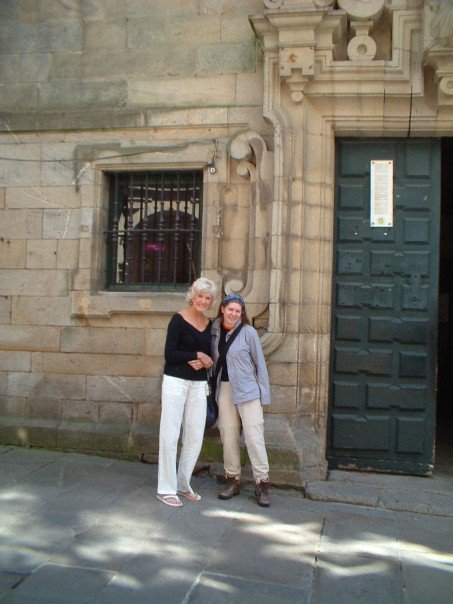
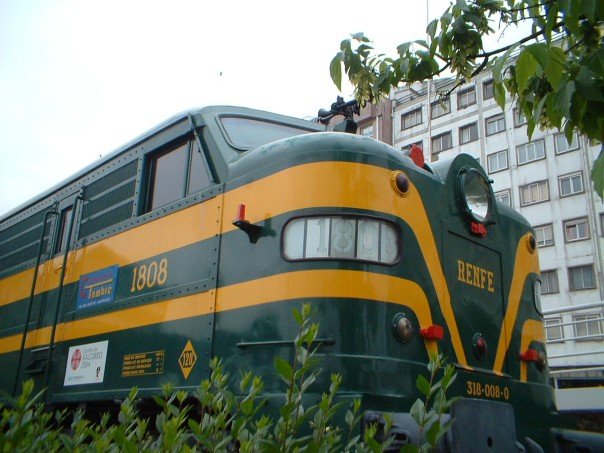
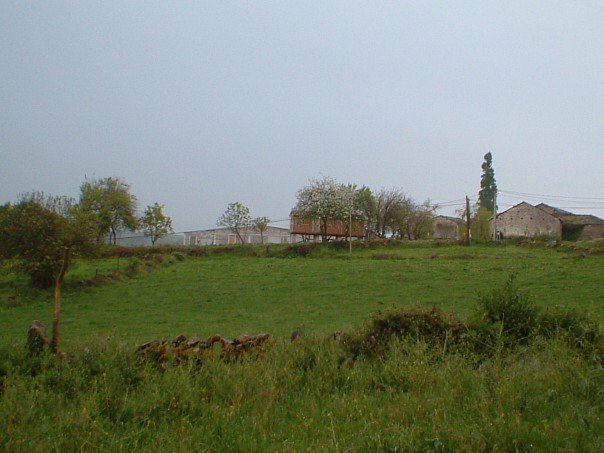
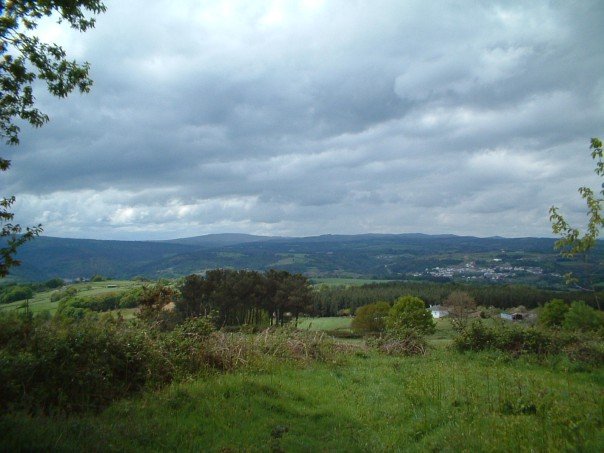

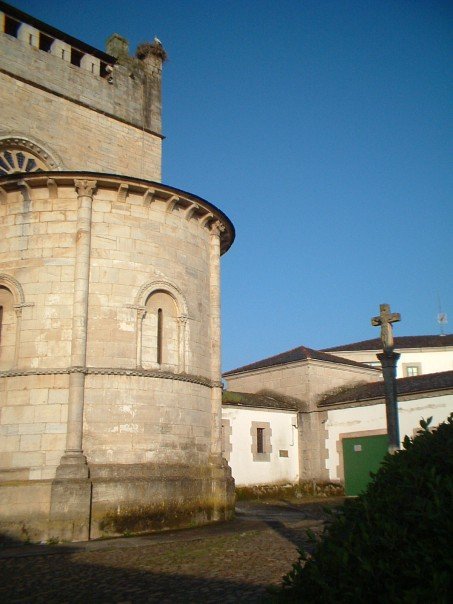
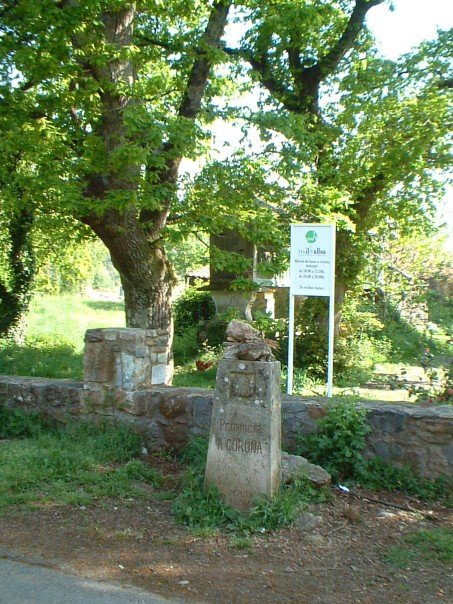


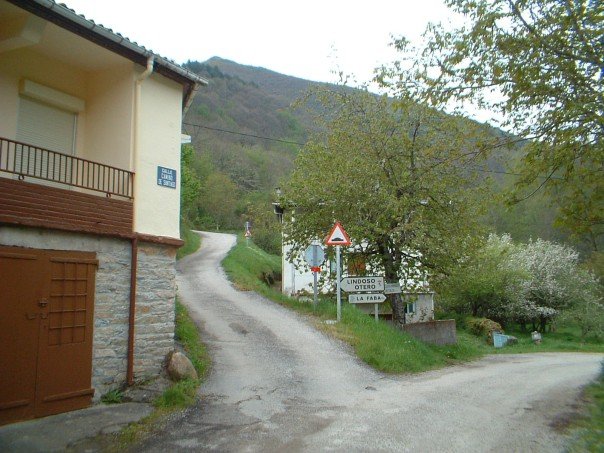
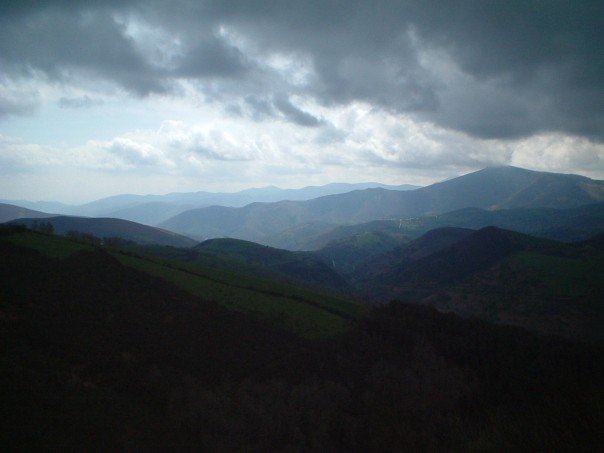


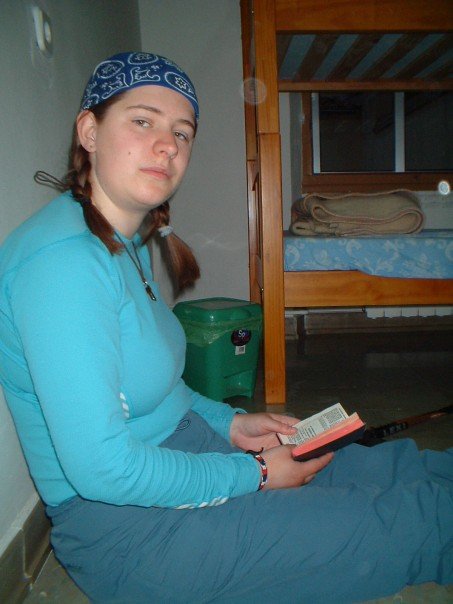


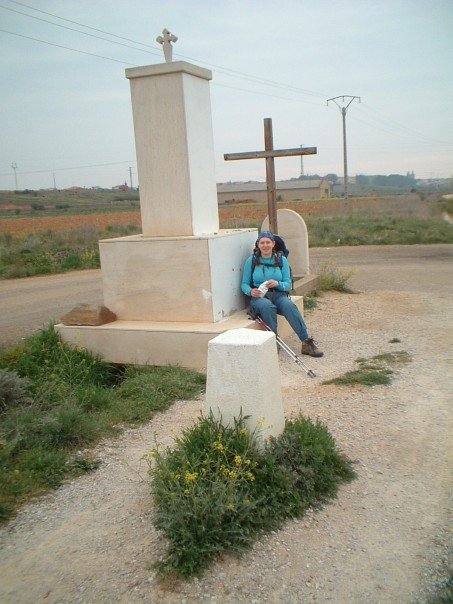
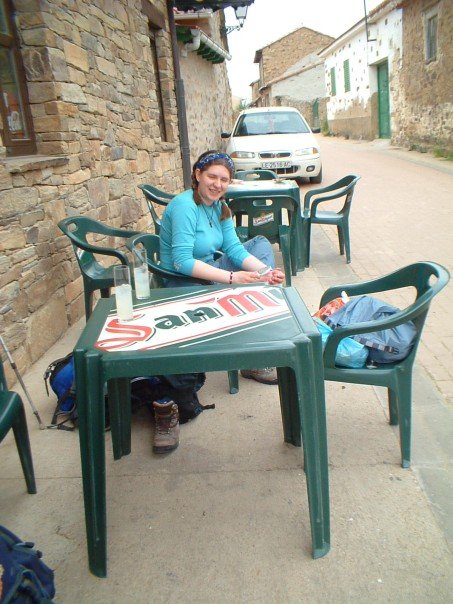

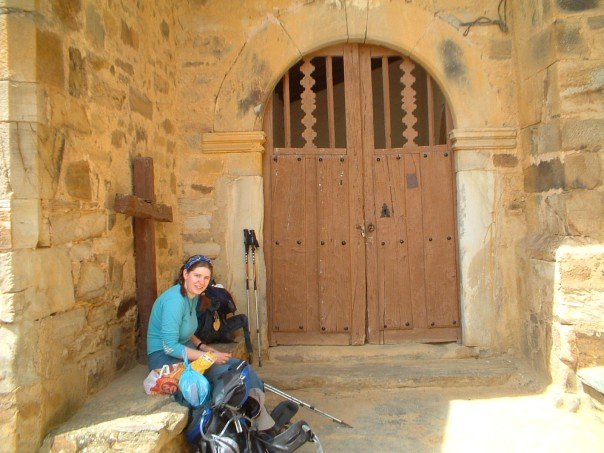

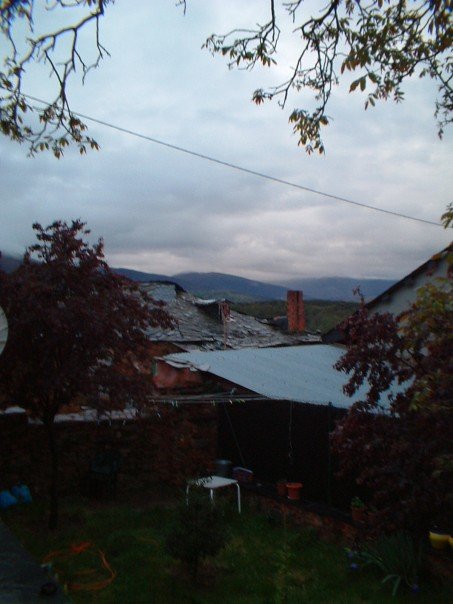

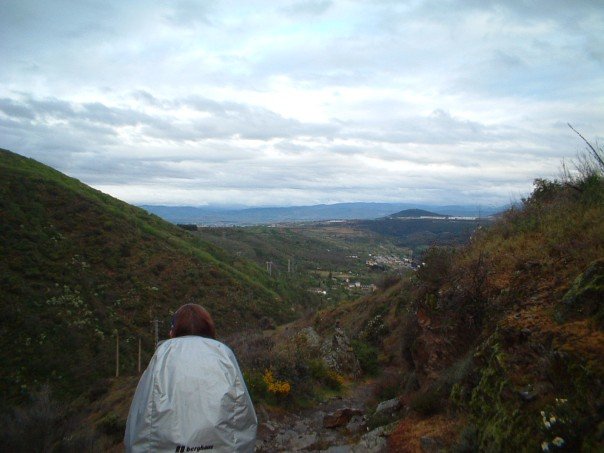

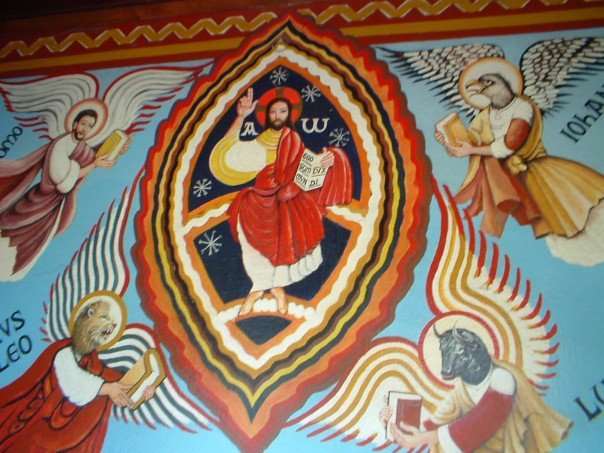


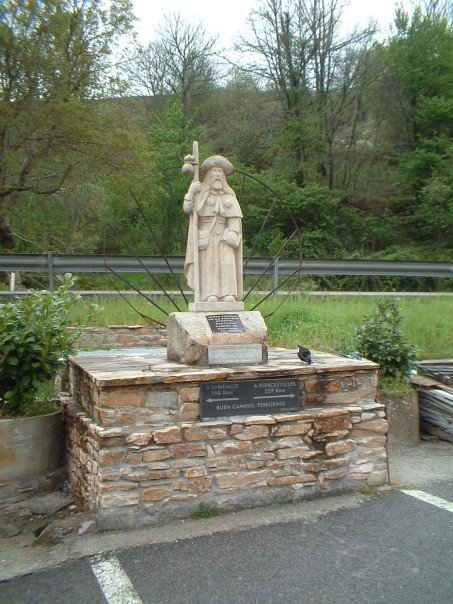
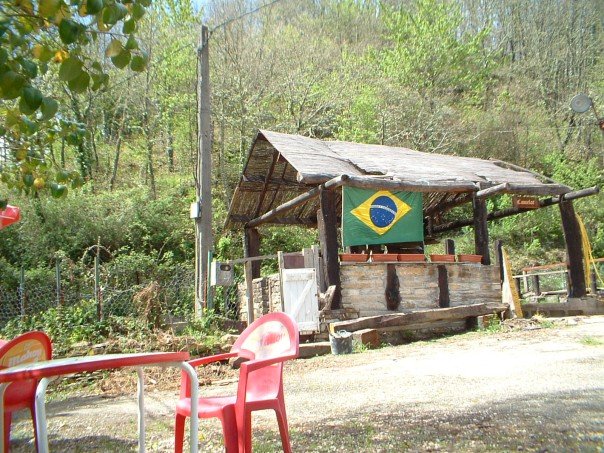

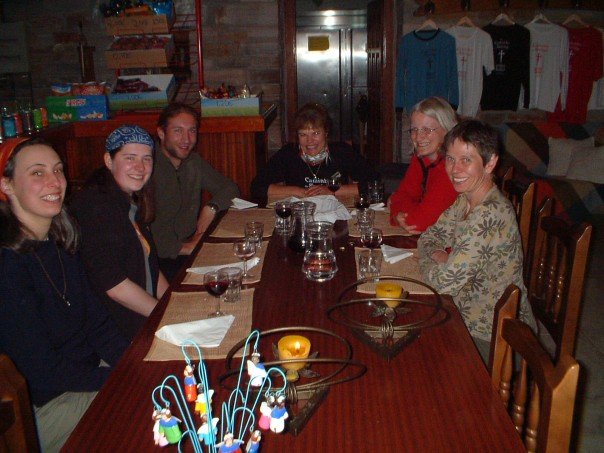


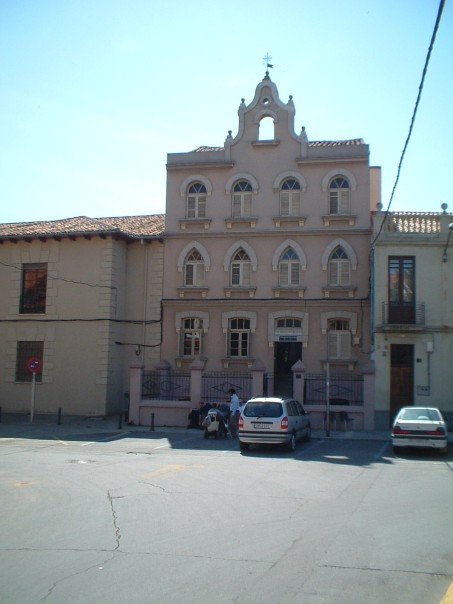


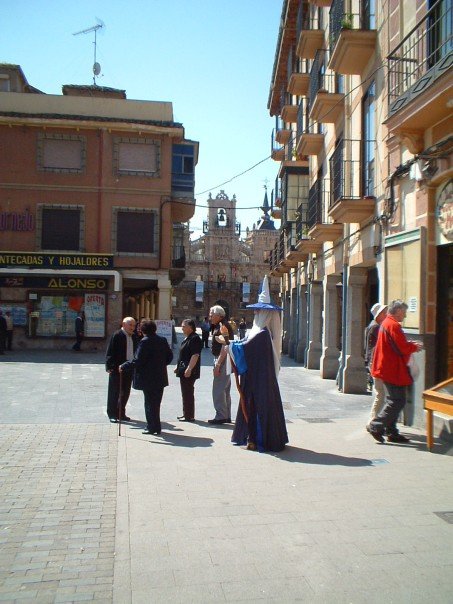

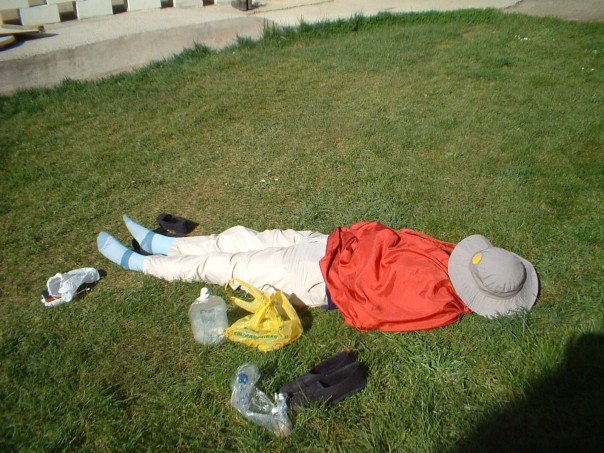
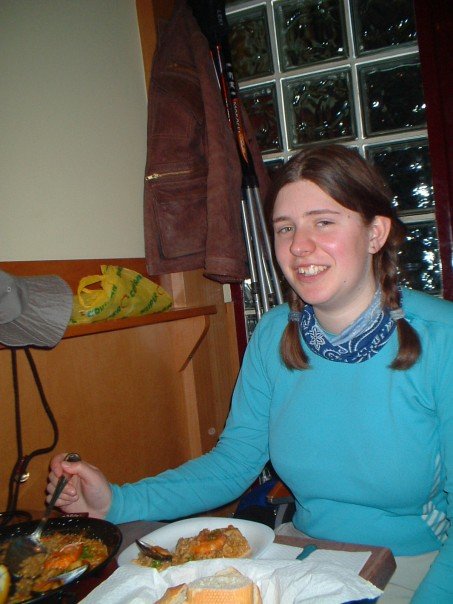
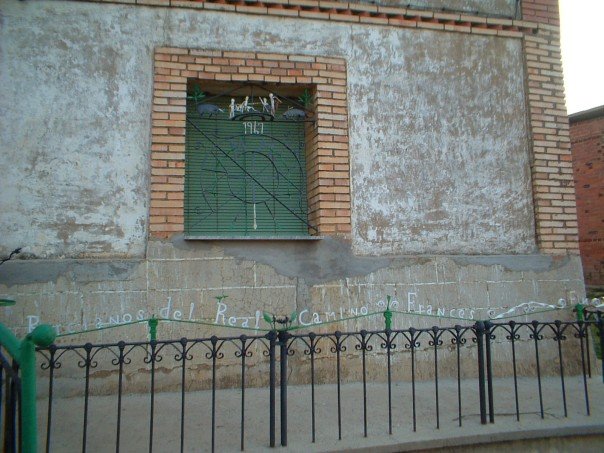
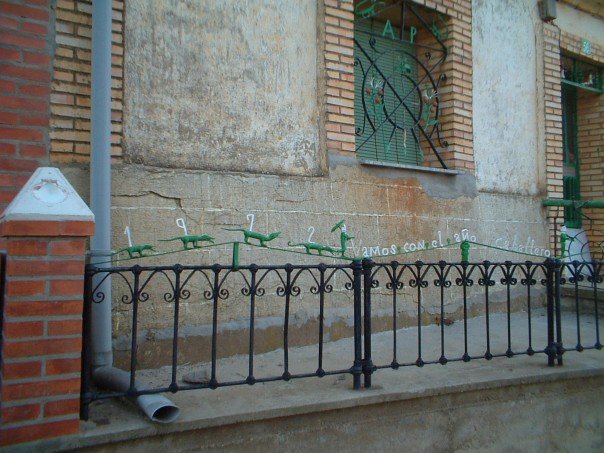


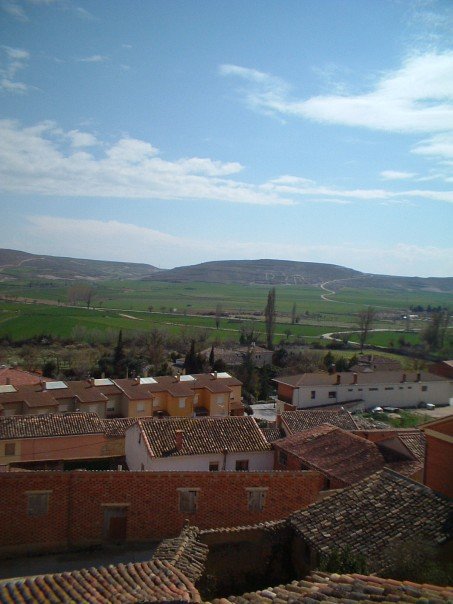


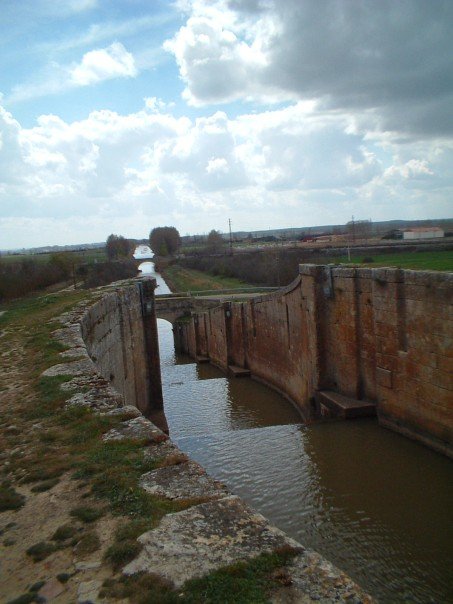


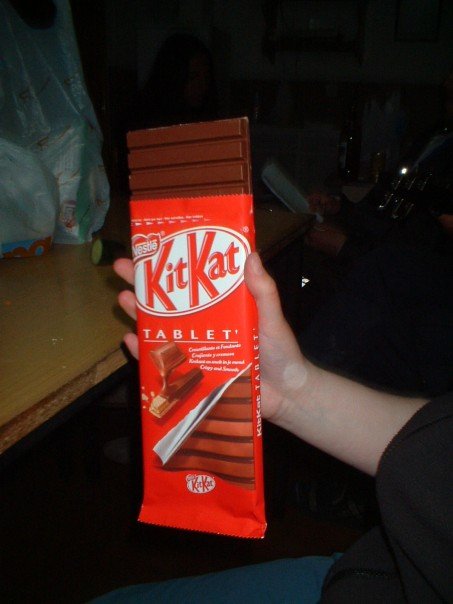

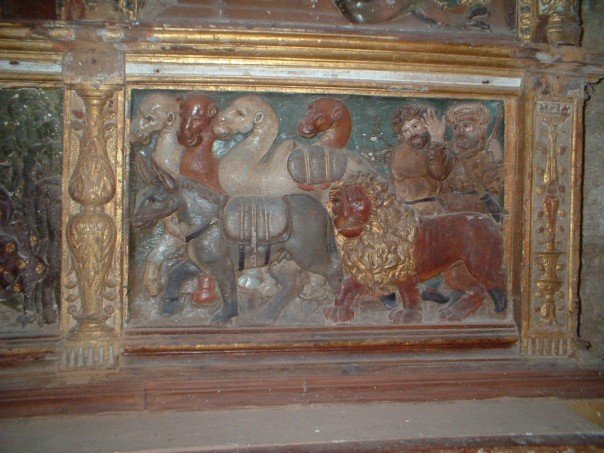


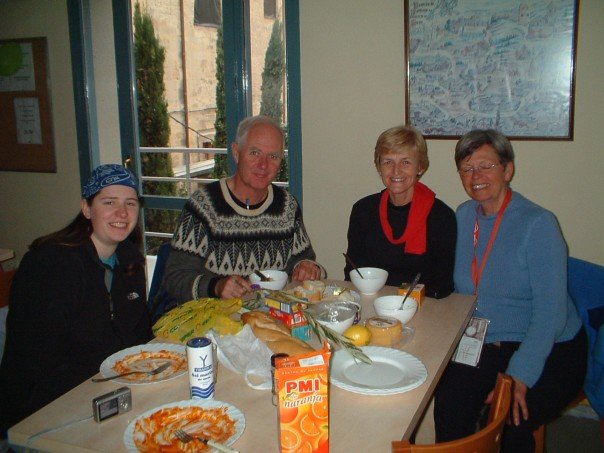


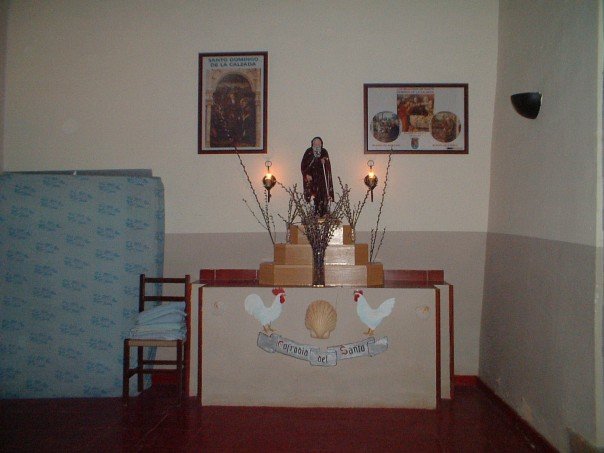
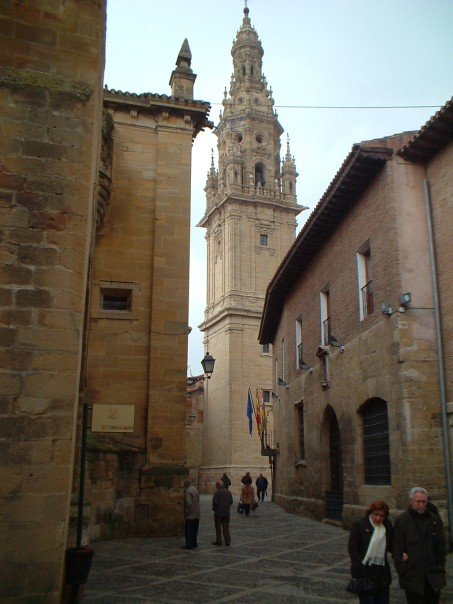
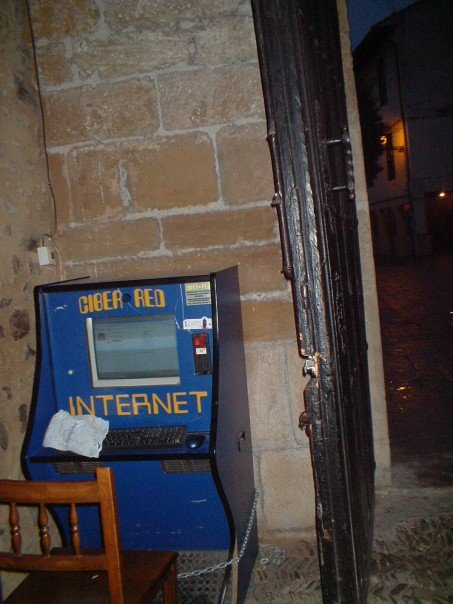
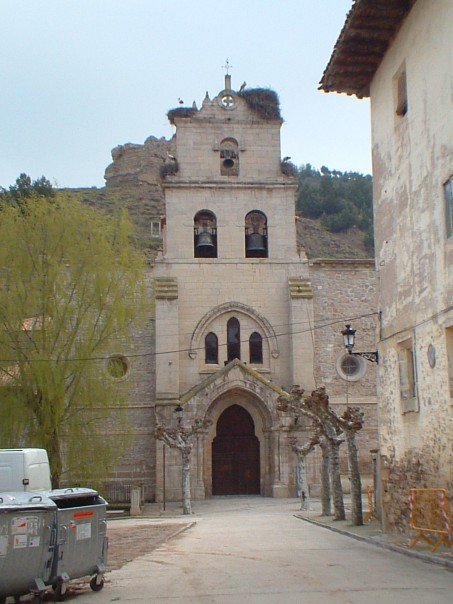
 Kathleen Jowitt
