
Kathleen Jowitt writes contemporary literary fiction exploring themes of identity, redemption, integrity, and politics. Her work has been shortlisted for the Exeter Novel Prize and the Selfies Award, and her debut novel, Speak Its Name, was the first ever self-published book to receive a Betty Trask Award.
Afterwards
live into this new world
pick a path across
the rubble – see
how fast you tread it down – stones,
pebbles, dust,
hard-packed –
live into this new world
day by day
this world without them
this pale sky over you
the blackbird
tell someone
how you would have liked to tell them
Purl two (getting it wrong, but not as wrong as I thought)
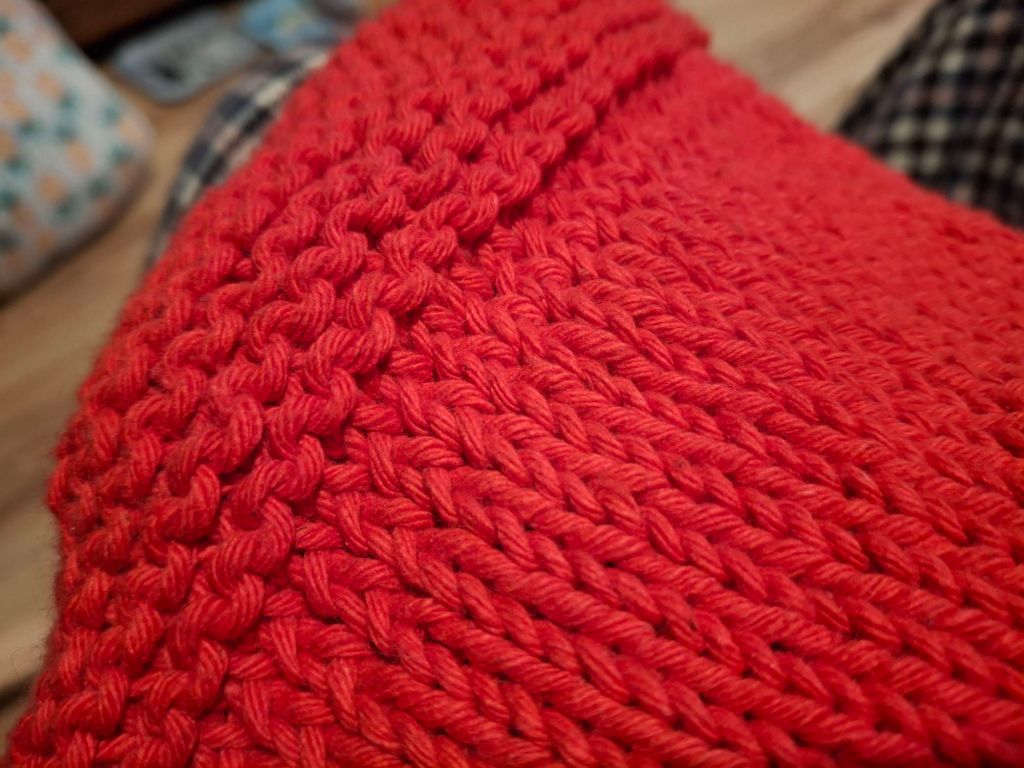
My stocking stitch has been wonky for a long time. Not, I think, forever, but definitely a while. I remember my mother remarking on it (she rather liked it, I should say), and I don’t think we’d knitted in the same room since Covid. You can see it in the picture: after the waggly lines of garter stitch on the cuff, there are a couple of rows where the stocking stitch shimmies right and then left, the tails of each stitch crossing over each other rather than lying flat next each other.
For a while I thought it was just something about the way I held the yarn, or something like that, just one of those things. Then I started knitting socks, got my head around knitting in the round, and suddenly my stocking stitch was flat and well-behaved. Hmm, I thought.
When you’re knitting flat, you have to knit the front one way and the back the other. To make stocking stitch, you knit (needle goes through the stitch from front to back, left to right) on the right side and purl (back to front, right to left) on the wrong side. But when you’re working in the round, you can just keep knitting and knitting and knitting, no purl required unless you’re doing something fancy.
So, like an inadvertent elimination diet, my knitting in the round had revealed the problem. If the knit stitches were fine, it must be the purl. Some time after this (because actually I much prefer knitting in the round and didn’t have any flat projects) I went back to the books. And there it was. All these years, I’d been taking the yarn clockwise to make the purl stitches, and it should have been anticlockwise. You can see in the picture the moment I tried it the other way.
Or maybe not. That’s one of a pair of sleeves, you see, so I had to do the second one to match, and goodness knows I can’t remember which one was which.
I announced my discovery and a friend said this is in fact a recognised variant called combination stitch. So now I know.
What I don’t know is when I started doing it. Have I always been purling backwards? It’s possible. But switching to anticlockwise felt very natural, so much so that I had to keep stopping to check that I was doing it right now. So did I start out doing it by the book? If so, when did I switch? Do I have enough old knitting projects still extant to find out? Am I really that bothered? Probably not, to be honest, but it’s interesting how the brain can accept that of course things are a certain way when in fact they might not be that way at all.
Do you know, I do quite like the look of it.
Holiday at home
One of the most infuriating cases of semantic drift is the word staycation. It was an irritatingly twee portmanteau in the first place, but it did at least serve a useful purpose, describing that thing where you take a few days at work to stay at home and do nothing in particular, maybe take some sandwiches out to the park and read a book under a tree. I am all in favour of this. I make a point of doing it at least once a year.
But now it’s been appropriated by the travel industry to mean “a holiday in the UK”, thereby implying that a holiday that doesn’t involve a flight and a passport isn’t really a holiday, thereby attempting to make those who can’t afford or don’t want to leave the country feel bad about their circumstances or their choices.
I am not having this. If you’re leaving your house and staying somewhere else and doing something enjoyable and not working, it’s a holiday. You’re not telling me that every joyous seaside summer of my childhood was a mere staycation.
I’m not really talking about either of those things in this post, though. I’m talking about the attempt to adopt a mindset that looks something like this:
I live in a place that’s really quite beautiful and really quite interesting, the sort of place that other people visit on holiday. What can I do to appreciate this and make it more than merely my everyday?
I mean, I got an email the other day from a steam train excursions company inviting me to go and look at “the serene beauty of Ely”, so I’m clearly onto something here. And so are they. It does have a serene beauty.
So what does it look like when I don’t, in fact, have to take a train to experience this serene beauty? Mostly, making today the day I get out for a walk/pop into that interesting-looking shop/use the coffee cup I really like/do a very bad sketch of the angel on the Old Palace. Allowing myself to take some time to be interested.
And then: How do I do this when I have a job to do and can’t just skip out to do a two-hour self-guided walk? How can I do this when funds are limited and I can’t eat at the Old Fire Engine House every week? How do I do this when non-working days are occupied with childcare? How do I do this when looking after the house is my responsibility, not that of some briefly-met and charming apartment owner or hotel proprietor? How do I do this, in short, when everything else still needs doing?
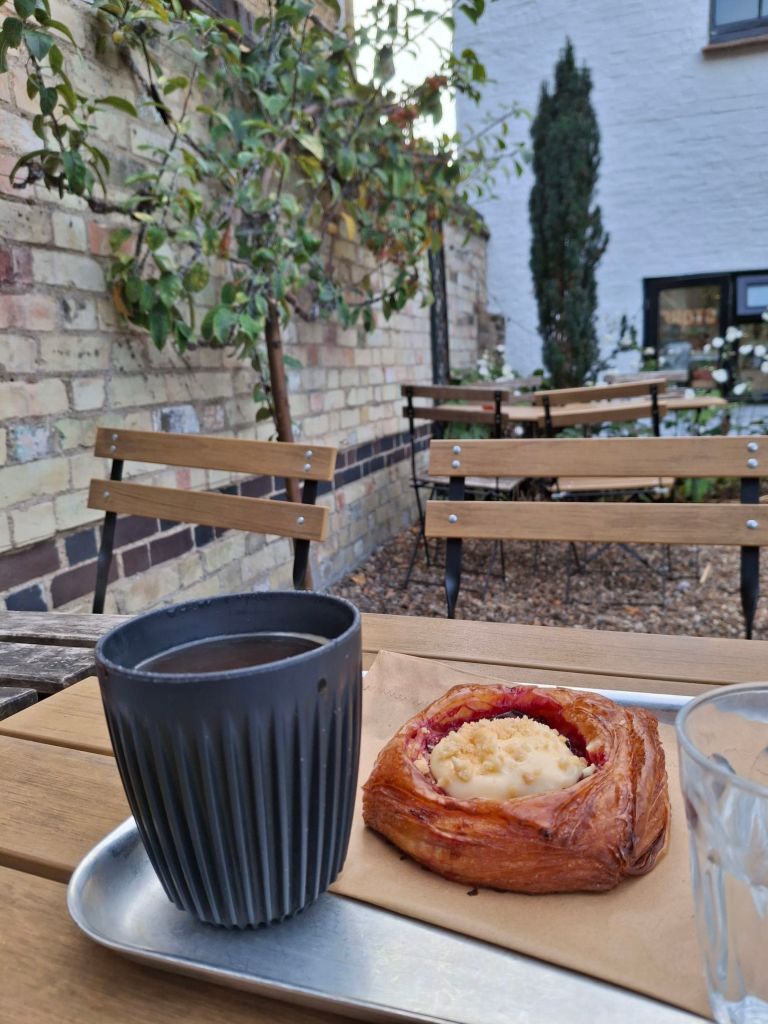
And the answer is, as it often is for me, doing what I can in the time available, and paying attention. If I would order a coffee and a pastry and sit at a table and people-watch if I were in, I don’t know, Bordeaux, I can do it in Ely. If we would go to a recommended child-friendly museum abroad – well, Ely’s museum is great, it has an exhibit where you can fill a basket with wooden vegetables, if that’s your thing, and meanwhile I learn about what keeps the landscape around me working (pumps and drainage ditches). One of these years I’m going to walk the labyrinth in Chartres cathedral, but in the meantime there’s a perfectly good one here. At home, I can take my coffee out into the garden for ten minutes, or stand at the kitchen window and watch the birds.
You might very well say that it is easy in Ely, where a wonder of the medieval world is my regular place of worship, where the tourist information centre squats in a house that belonged to a ruler of the nation, where the buildings are made of old brick that glows in autumn sunlight, where there’s a plaque commemorating James Bond’s Little Nellie on the side of the gelateria. You might very well point out that before I lived in Ely I lived in Cambridge, which must be in the top ten UK tourist cities. I’ve been in no danger of running out of things to look at.
And I would say, yes, and before Cambridge I lived in Woking (“ugh, Woking“, say colleagues), which is generally agreed to be an uninteresting commuter town in the South East – and, because I have been trying to live like this for a long time, I found interesting things there too. Woking is where the Martians land in The War of the Worlds. Once I cycled out to find the place identified in the book (it isn’t right in the centre, where the magnificent tripod sculpture stands). There’s the site of Anne Boleyn’s palace. There’s the country’s first mosque. There was an unexpected cycle race that sparked a decade-long enthusiasm for the sport. And apart from all that, I explored, I walked down streets to see what there was at the other end, I kept my eyes open. I could do that anywhere.
Julia Cameron advises taking time every week for an “artist date” – not to create art, not necessarily to experience it (though you might do), but just to fill up on colour and taste and sound and smell, to encounter something other than the inside of one’s own head, to be able to return to one’s creative work refreshed and enthused and replenished. That is part of what I’m doing here, I think.
And of course it also makes me more at home. When I follow these streets, I get to know these streets, I get to recognise my neighbours. When I know my town, I can share my town.
Do I succeed all the time? Of course not. There are plenty of days where it’s back to back meetings and lunch is a sandwich in front of the computer, and if I go into town it’s a frantic errand for a box of eggs and I don’t spare a thought for Oliver Cromwell as I dash into the Co-op opposite his house. Often the holiday at home isn’t even an aspiration, let alone a reality. But when I manage it, I enjoy it.
Autumn skies

I opened the door to get the milk in at half past five this morning and was greeted by the most spectacular sight: a rising crescent moon; a bright planet very close to it; Orion striding away from it. And other stars.
I’ve been trying half-heartedly to get better at identifying constellations over the last decade or so. I’ve known Orion and the Great Bear (/Plough/Saucepan/Charles’s Wain) since childhood; Cassiopeia is easy enough to identify, if not to spell; Andromeda, with her boxy body and flailing limbs, is quite distinctive. About five years ago I got Cygnus pinned down: great big cross, and we’re in the northern hemisphere.
Recently I read this fascinating piece about the Pleiades, and that taught me that Orion is chasing Taurus, the bull. This morning I looked at Orion and then looked to the right, and there they were, though I couldn’t parse the bull-shape. And I remembered that Sirius is the brightest star in the sky and is also part of Orion’s dog, though again, I couldn’t really make out the rest of the constellation. Still, little by little I’m building up my map.
I loaded up Stellarium and discovered that the planet was Jupiter. Mars was also around, though much less striking. (In fact it turns out that the Moon and Jupiter get very close indeed today, though it’ll be too light to see Jupiter where I am. So I’m feeling quite pleased to have noticed the beginning of a significant astronomical event without knowing it was going to happen.) Then I went back inside – the milk had to go into the fridge, after all – and got down my analogue star map and the Philips Guide to the Night Sky. Sir Patrick Moore says that some people think that autumn skies are not so good for stargazing, but that they are wrong. I agree. Although he sees the fact that Orion doesn’t rise until the morning as a disadvantage, and today that’s not the case at all.
The sky was lightening as I left the house, and there was the beginning of a fine red sky visible from the top of the hill. Down by the railway (and, more to the point, down by the river), the mist had rolled in, though, and on the train there was only soft blackness in the windows. That, and the fact that I had to run for the train, is why you get a very human-made star in the photo on this post.
Last week I cleared all the old train tickets out of the pockets of my reflective cycling jacket. A few from September. Lots from May. I hadn’t realised I was wearing it all the way into the summer. So perhaps that means nine months of starry mornings still to come.
Michaelmas
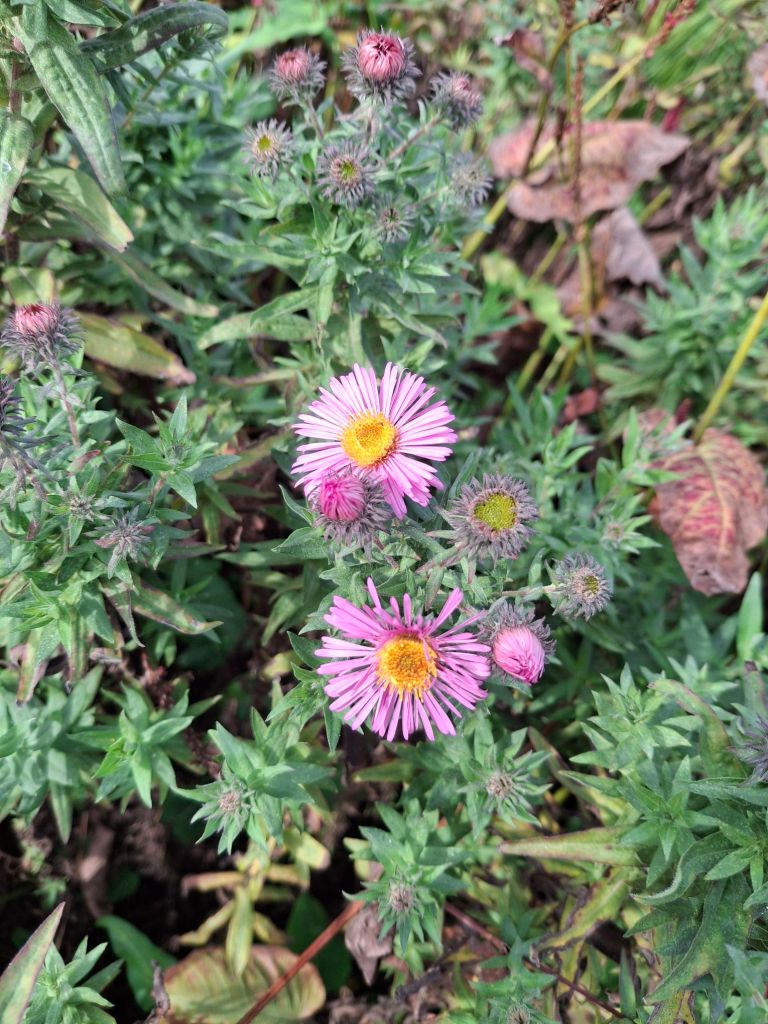
St Michael and All Angels. Don’t pick any blackberries after today: the Devil spits on them. Or possibly wees on them. Actually, they’ve been looking a bit sad for a while now. There’s the odd one or two that still look tempting, but mostly they’re all very shrivelled.
It’s definitely getting to the end of the fruit harvest. As always, there has been more than I could triage despite my best efforts. Not so much in the way of apples and pears, this year (the apples mostly went bad and fell before they got good); a few raspberries eaten straight off the canes; loads of Victoria plums; the most greengages we’ve ever had.
Yesterday I filled four carrier bags with grapes – too small and pippy for eating off the stalk, but enough people from the local free-sharing Facebook group wanted some to make it worth the picking. Again, we’re approaching the end of the harvest: I passed some bunches over for being either mouldy or wannabe raisins, and the recipients will have to pick them over before making wine or jelly or whatever it is they’re going to do with them.
Last night I made baked apples: the last three from the tree. There’s still a punnet of greengages in the fridge. I think I’ll make another plum torte. Green, not purple, in this case.
And everything else will have to be for the birds, or the invertebrates, or the compost bin. Or, I suppose, for the Devil to leave his bodily fluids on. Time to accept I’ll never get to everything, and move on.
Long weekend in the Low Countries, by rail, sea, and jigsaw puzzle
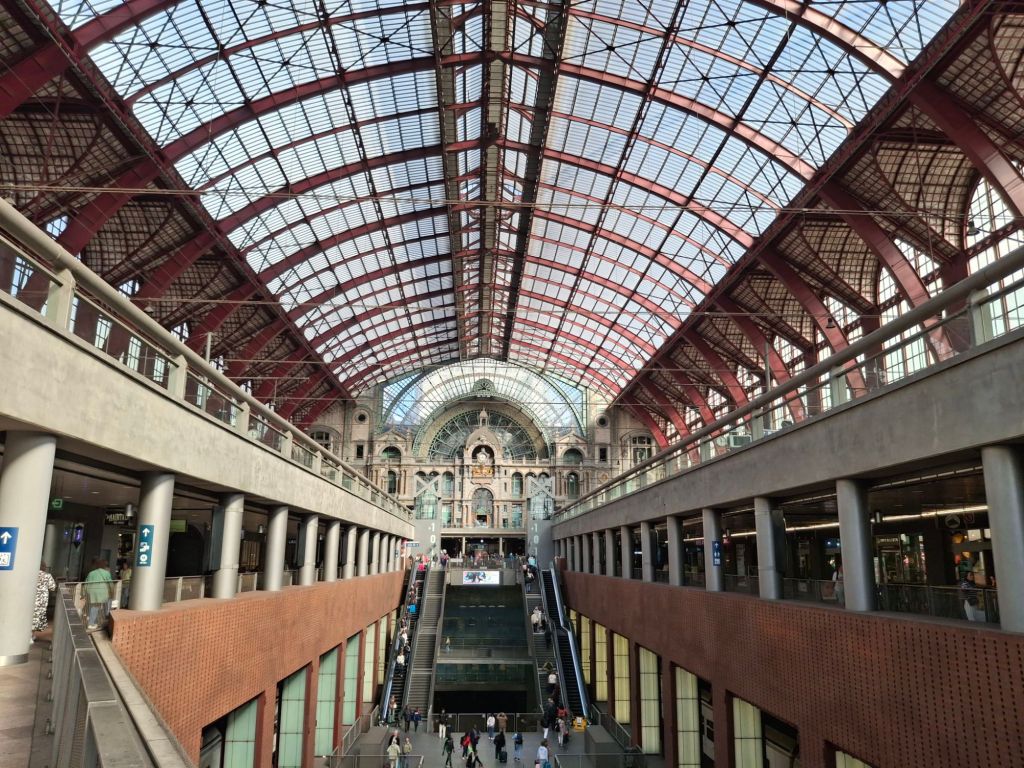
Antwerpen Centraal, Anvers Central, Antwerp Central station is a magnificent neo-Romanesque monument. I knew this, because I have a jigsaw puzzle which features the entrance hall.
So of course I had to go and look at it.
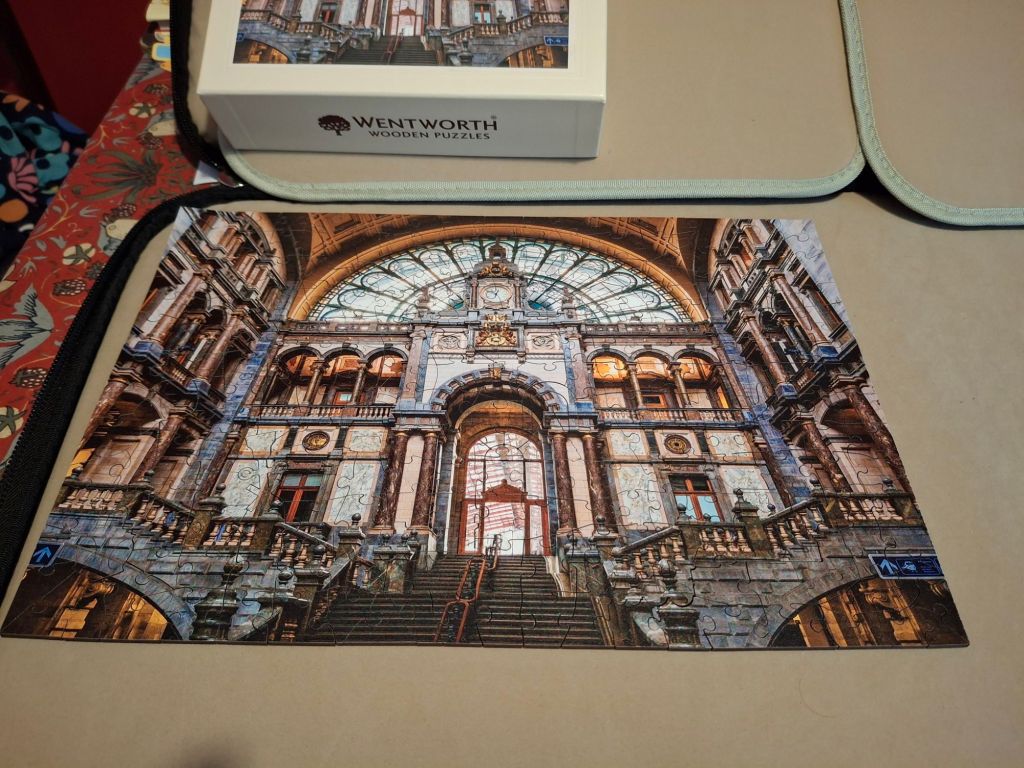
We were actually planning to go last year, before my mother died. That trip happened last June in the end, but was rather curtailed, and Antwerp was one of the bits we had to cut. So this year it got a trip of its own.
We took the night ferry from Harwich and, having taken the whole day off in order to get there with minimal stress, thought we might as well stay on the train to Harwich Town at the end of the line. It made for a pleasant, if breezy, wander, but it seemed to have jumped straight into the off-season and very little was open. That, combined with a poorly toddler who didn’t like the wind at all, rather limited our options. We were extremely relieved to find that a place called Tea@Patricia’s was open and serving very good cakes.
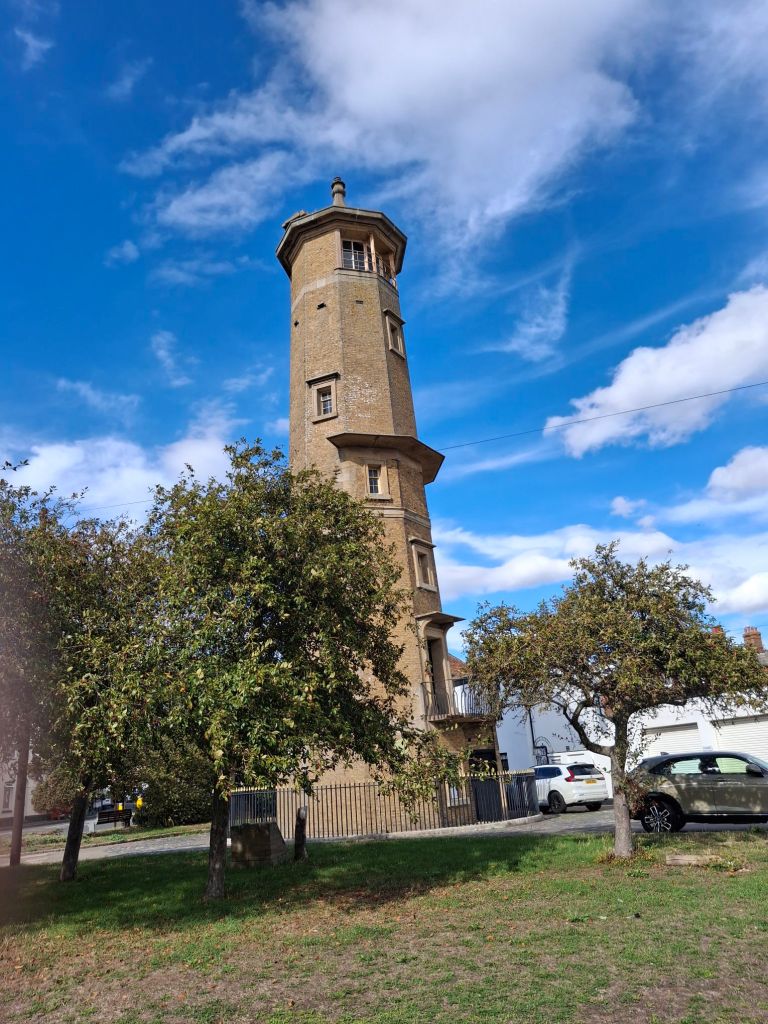
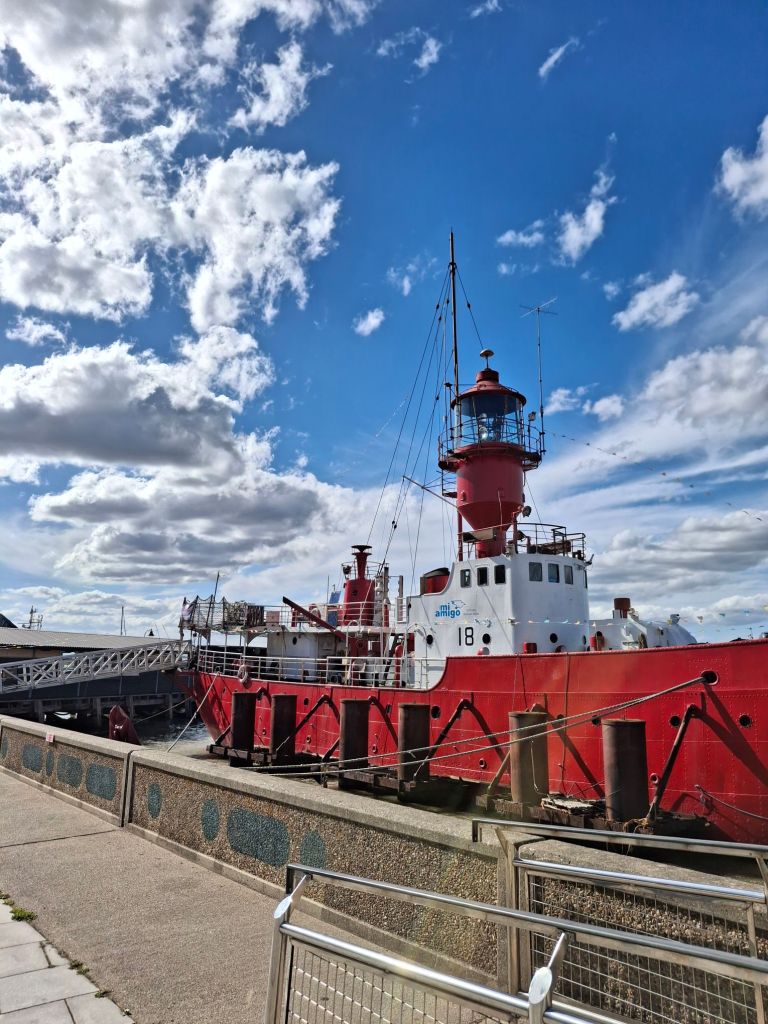
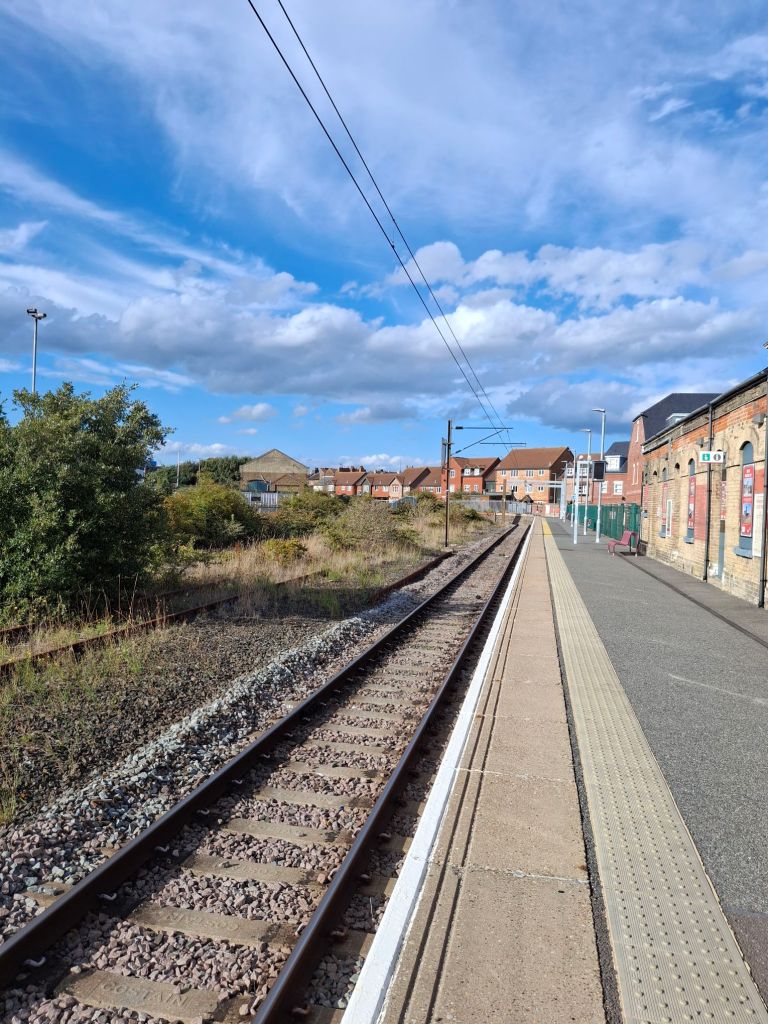
Even Patricia wouldn’t stay open until check-in opened, though, so we decided that the ferry terminal was as good a place as any to eat fish and chips. Very good fish and chips, as it turned out. (Take the train to Dovercourt and go to the Fish House.) I have no complaints about the food in Harwich.
Over the years my overnight ferry bookings have become steadily less spartan. Back in 2007 it was a reclining seat. Ten years later it was a cabin, but nothing fancy. This time round we went for the one with two beds (one double, one single), room to turn around in the bathroom, and a window. Luxury. But I am appreciating sleep more these days, and also somebody has to stay in the cabin after child bedtime, so it’s worth making it slightly nicer.
Anyway, no matter how luxurious, or otherwise, one’s sleeping arrangements, it is exciting to see the ship coming in, and a pain in the backside to get through security and entry/exit (I seem to have defective fingerprints; the officers keep asking me to press harder when I’m already pressing as hard as I can), and it is a long walk up the ramp, and it is very exciting indeed to step on board. And, assuming one gets to sleep, it’s great fun to go to sleep in one country and wake up in another. I’ve done this crossing a few times now, and the red lighthouse at Hoek van Holland is becoming a friend.
Then it’s light rail to Schiedam and main line into the middle of Rotterdam, and then you’re really talking connections. I saw a Swiss loco, complete with boxy pantograph and Jungfrau branding, trundling through the middle of Rotterdam Centraal as if we were thousands of metres above sea level rather than flirting with minus figures. We were only going to Belgium, but, you know, it’s still pretty cool to just buy a ticket to a different nation state from a machine in the booking hall and then step onto a train.
A direct train to Antwerp, bound for Brussels and stopping at Breda and Noorderkempen on the way. I was hoping for a double decker, but I don’t think they run those on the Eurocity route. I got a window seat, anyway. Coming from the Fens, it’s a familiar landscape you see from it, flat and green with trees and ditches ruling it into neat rectangles. Sometimes Doggerland feels like it’s only just under the surface of the water.
And then Antwerp. Of course, arriving, you don’t get the magnificence that the residents see when they book their tickets. It’s not bad, though. Arriving from the Netherlands, the train pulls up somewhere close to the Earth’s mantle and if the lifts are broken (they were) you have to navigate a series of stairs and escalators (roltrap in Dutch, lovely word), and as you ascend you see more and more of the back view of that gigantic fanlight. There’s a certain Brutalist grandeur to the concrete platforms that draw the eye there, I suppose.
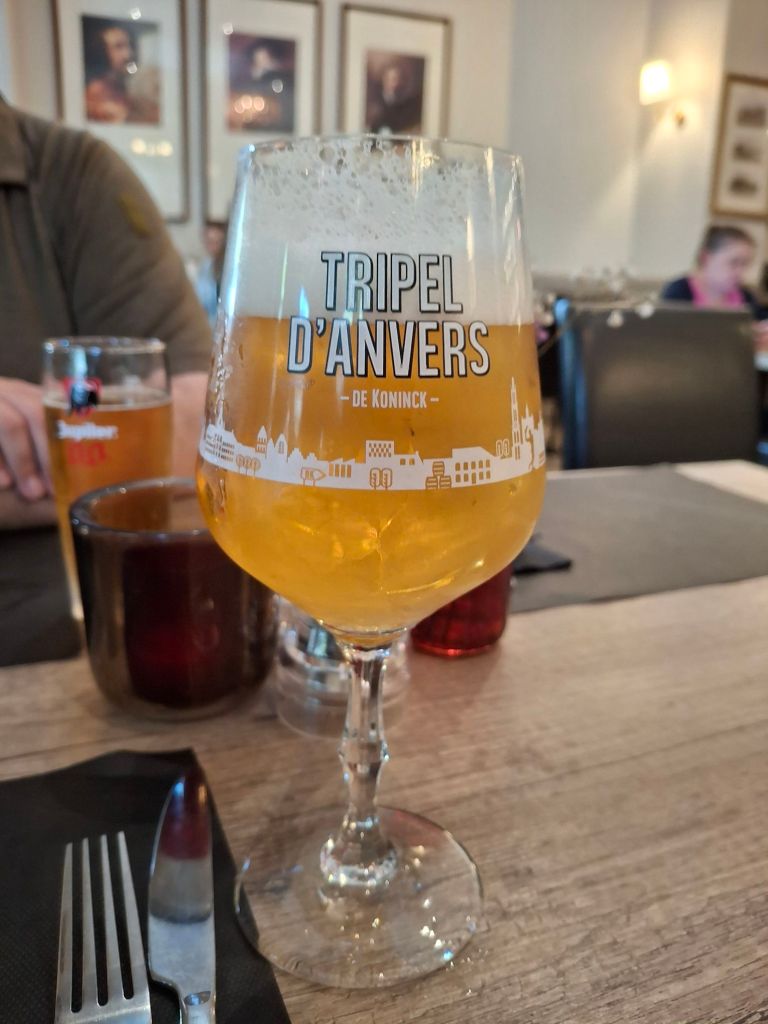
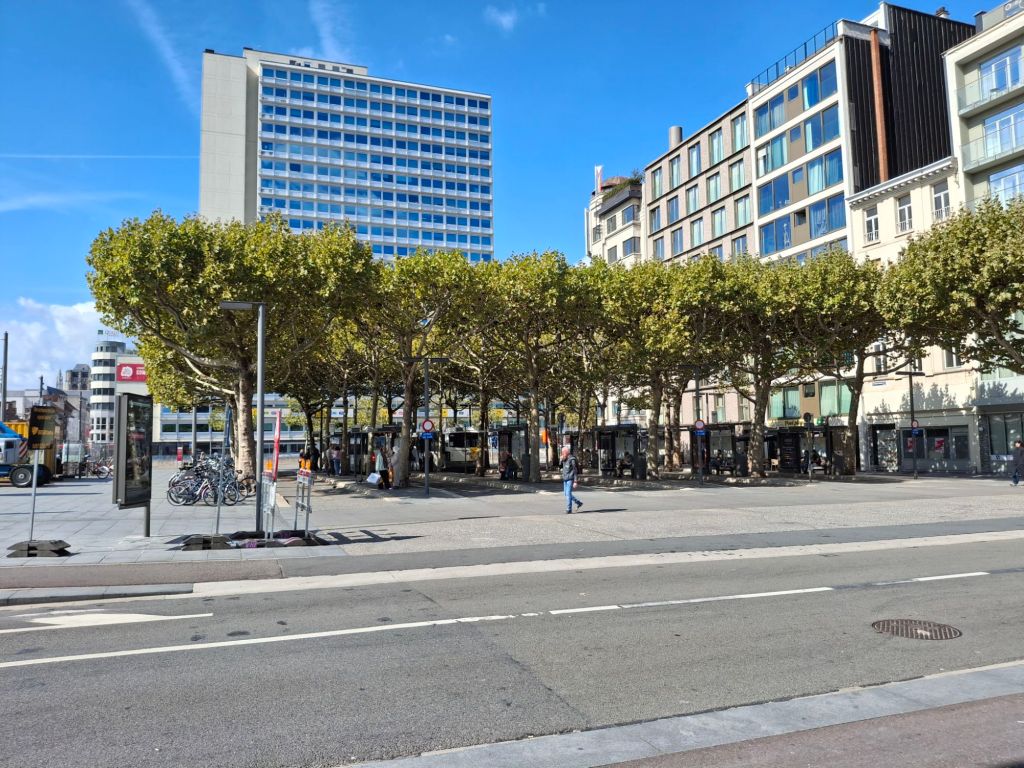
After our “metro at rush hour” experience in Lyon earlier in the year, I’d booked a room as close to the station as we could get, and I am making a note to myself here and now that this was a good idea and I should do it again. There’s the obvious practical advantage, of course, but it also makes it easier to avoid the magnetic draw of the historic, touristy bit. Plus there are trams and buses going to the historic, touristy bit, and plenty of places to eat. (Note: it would not be a good idea in Rotterdam, though.) In Antwerp there is also the zoo.
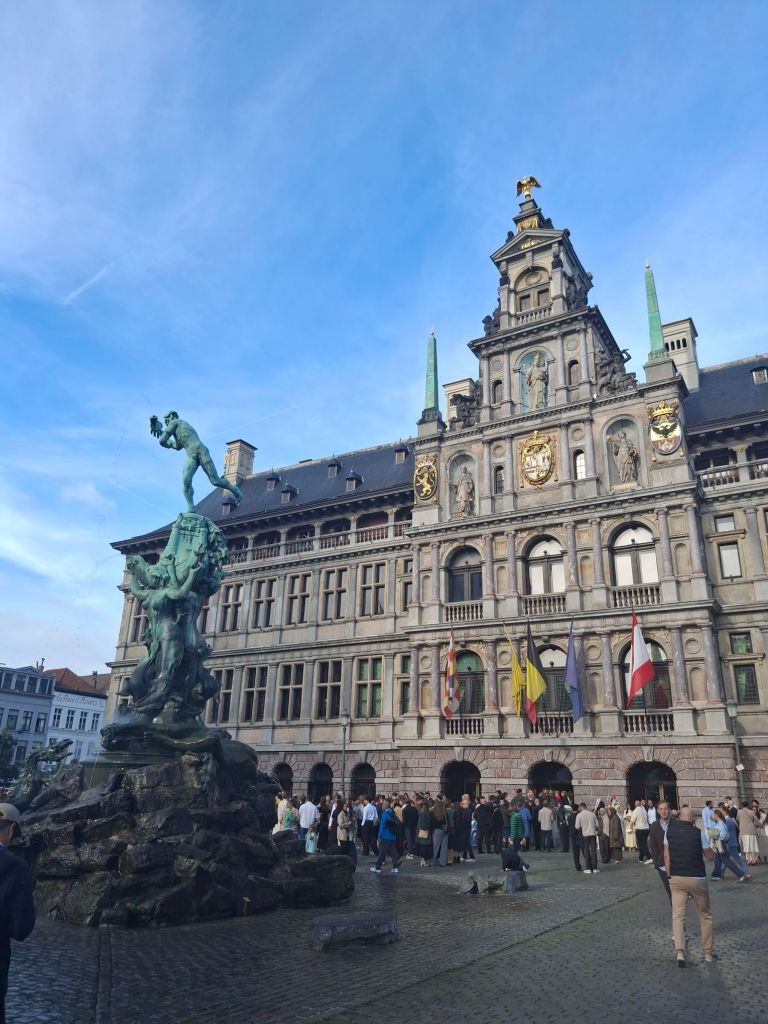
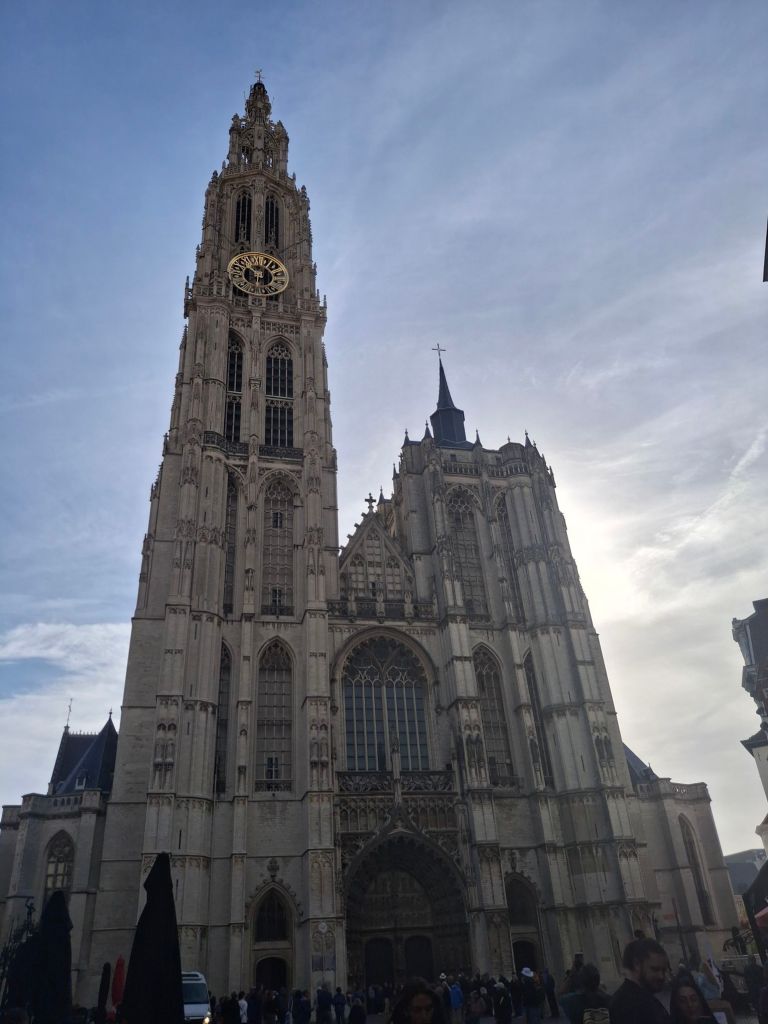
So that was our weekend: eating down the road from our hotel, wandering around the city in search of a playground; taking the tram to Melkmarkt for a glance at the square with the rococo fountain and the stepped gables, stopping to chat to a local mum and toddler (children are brilliant conversation starters), visiting the cathedral, and spending the entire afternoon at the zoo.
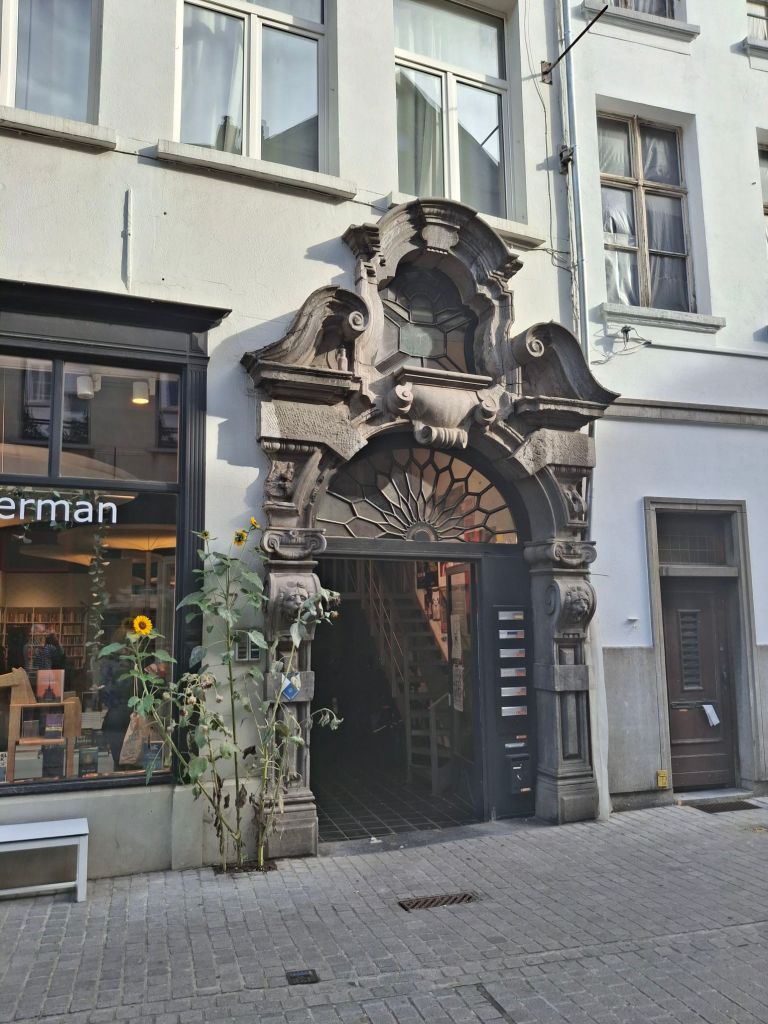
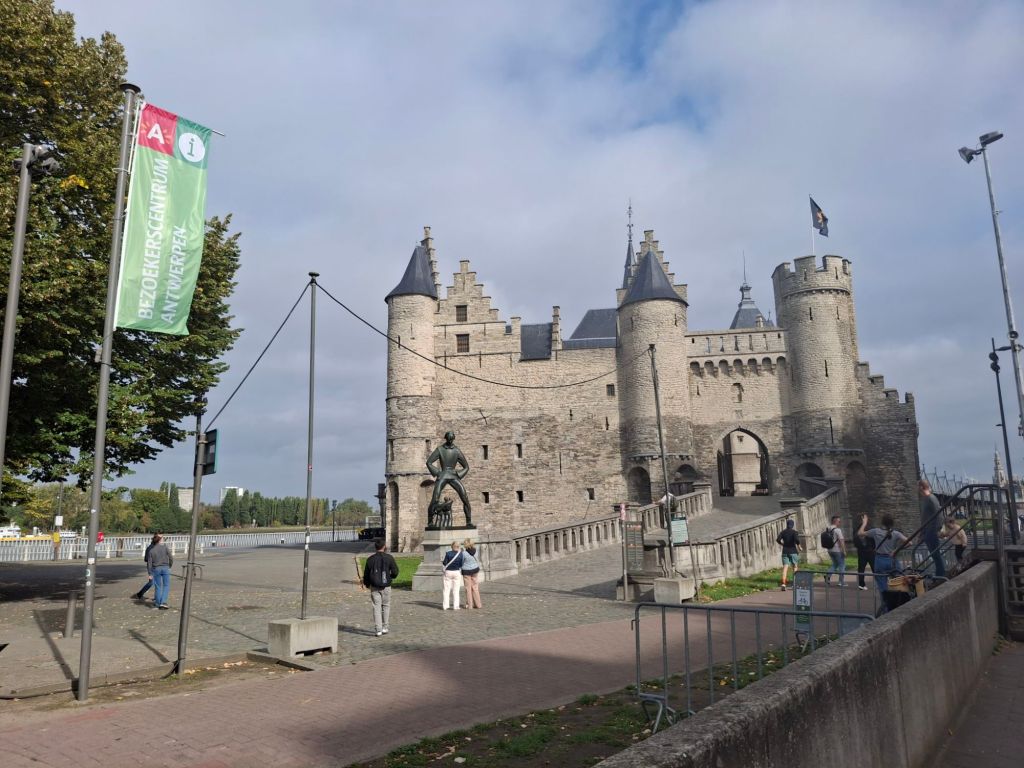
It was great. Chips with mayonnaise. Some awkward questions about what exactly is going on in Rubens’ Raising of the Cross and why is the baby sad. Coffee and toasties at a vegetarian café recommended by the local mum. A really satisfying wander around a Turkish-run ironmongery, resulting in the purchase of a pair of child’s sunglasses. A quick look at the exterior of the castle. Admiring art nouveau and art deco doorways.
We paid to get into the cathedral and into the zoo and didn’t regret either. In general I disapprove of places of worship charging entrance fees, but Antwerp cathedral is free for locals and under-18s, and there was a really excellent, thoughtful and thought-provoking, leaflet, and I found that I didn’t mind. As for the zoo, gosh, that was a lot of money, but that was also a lot of zoo, which managed to be surprisingly spacious given it’s right in the middle of town, behind the station.
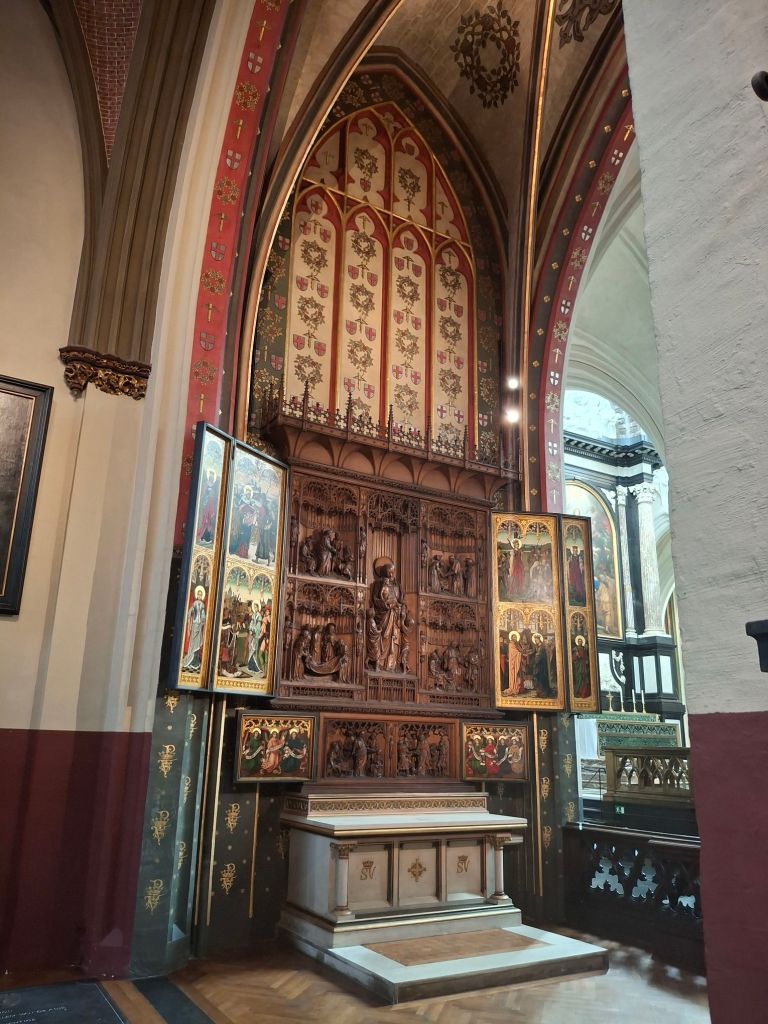
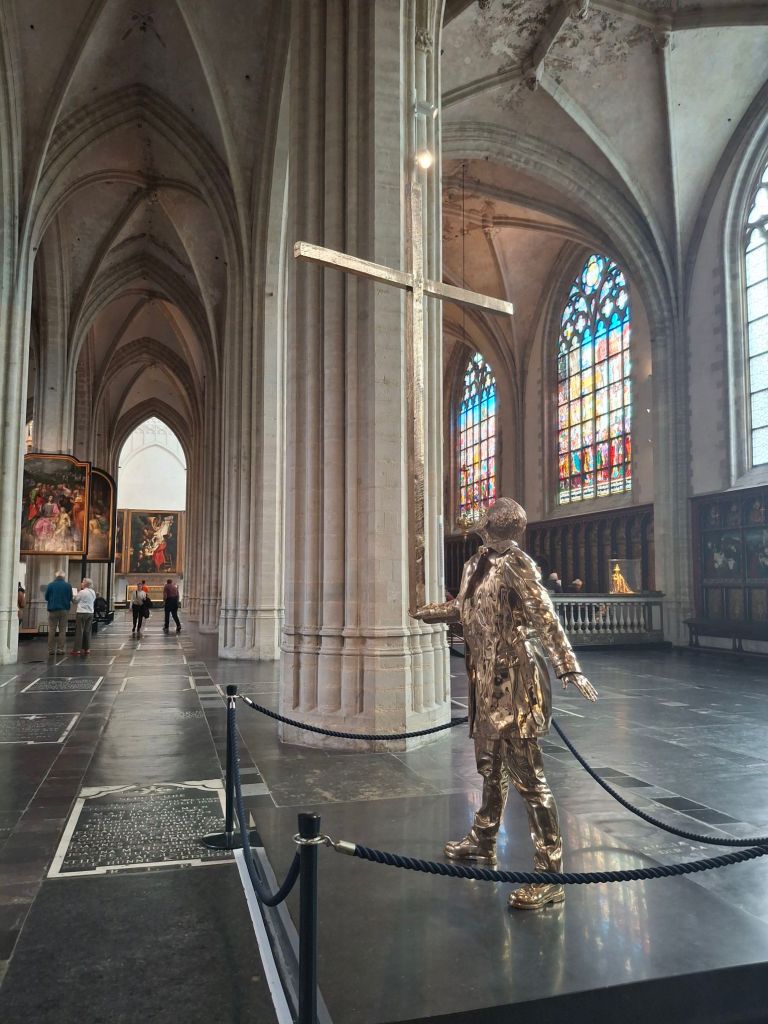
After the zoo we went into the station from the other side, and it did indeed look just like my jigsaw:
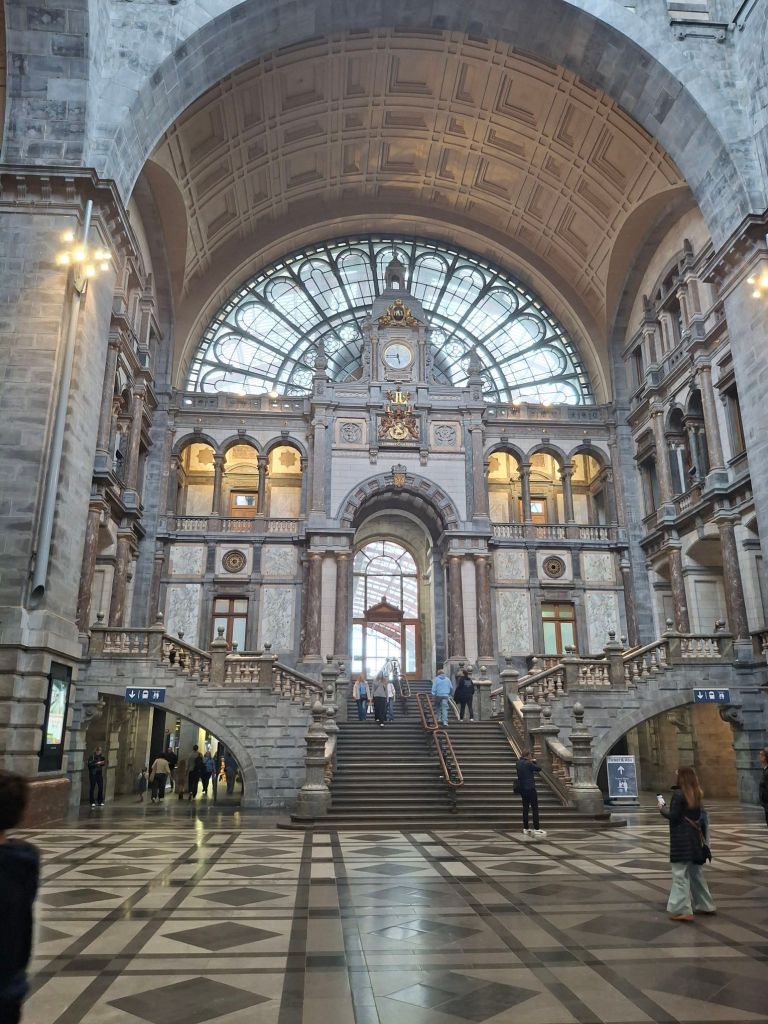
It was almost too perfect. I was relieved to turn around and see a Prêt à Manger.
On Sunday it was raining in Antwerp and we could see it wasn’t raining in Rotterdam, so we returned to the station (discovering that it is indeed such a famous monument that an Asian couple was getting wedding photos done on the steps) and took a train north.
There is nothing helpful near the station in Rotterdam. There are various shops and fast food places in the station itself, but once you’re outside it’s a wasteland of bank headquarters and other forbidding high rise office blocks. But we’d worked this out the last time we were there, and we put our bags in the luggage lockers and took a tram to Beurs, which is the middle of the shopping district. We got welly boots in Hema and burgers and chips in Hkiki, and this was all very satisfying.
And finally, having gone to the end of the line at Harwich, we went to the end of the line at Hoek too, and spent a quarter of an hour on the beach, digging in the sand and watching other people’s kites, and then, when we were tired of the breeze, half an hour in a bar, watching the waves roll in. We saw our ship come in, too; and a couple of hours later we boarded it, and overnight it carried us home.
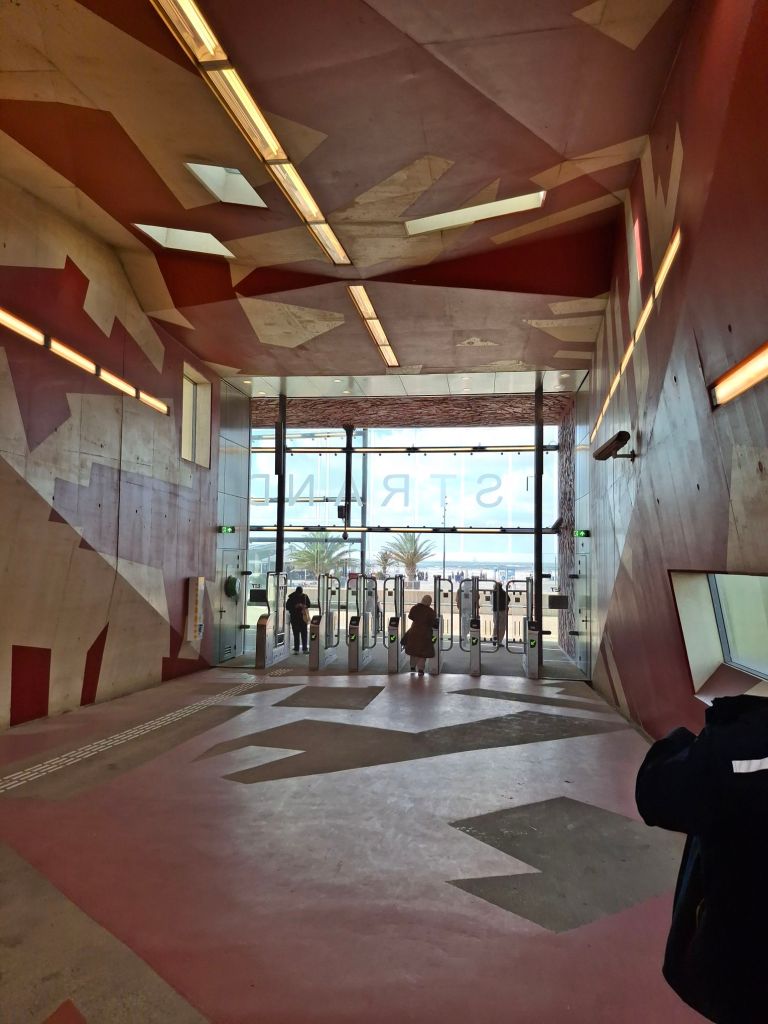
Straitened slipover
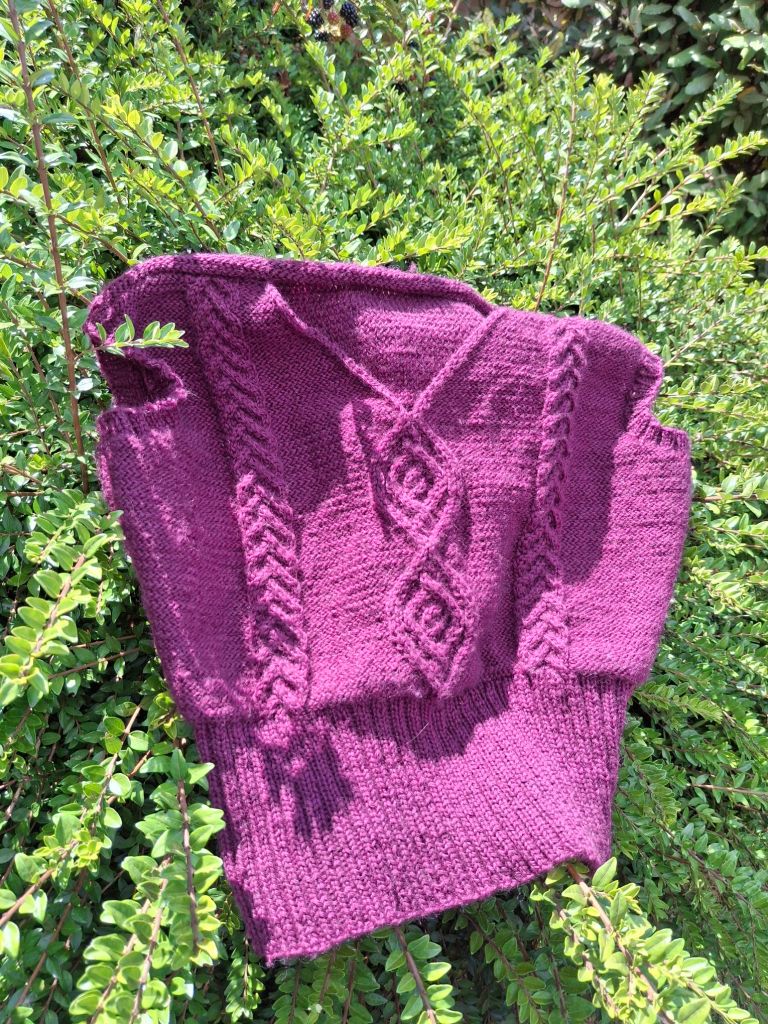
That’s straitened without a gh, you note. As in straitened circumstances. In this case, I had five balls of wool from the British Heart Foundation shop (three quid apiece, not bad for pure wool). The Internet could tell me absolutely nothing about it, so that was all I was ever going to have and I didn’t know what would play nicely with it. So I had five balls of wool. And this is what I did with them.
I started with a pattern from Knitting in Vogue, but I hadn’t even got to the end of the ribbing before it became obvious that I wasn’t going to have enough. So I made up my own pattern. I knitted tension squares (I hate knitting tension squares) and looked up cable patterns and did a lot of arithmetic. I started with the front, then did the back, sewed them together, then knitted on the smallest amount of rib that I could get away with, around the arm holes, and then went round and round the bottom edge with more rib until I ran out of yarn.
I’m really pleased with it. It’s the first pattern I’ve designed, it’s a great colour (the photo isn’t quite right; it’s more purple in real life), it gets to my waist (just about – I have a long back); it works. And I did all the ribbing on double-pointed needles because I didn’t have an appropriate cable one and I just wanted to get on with it. That feels quite badass. I only really regretted it a couple of times.
Now I think I want a high-waisted flared skirt in plum needlecord to go with it…
No such thing as bad weather (only bad kit)
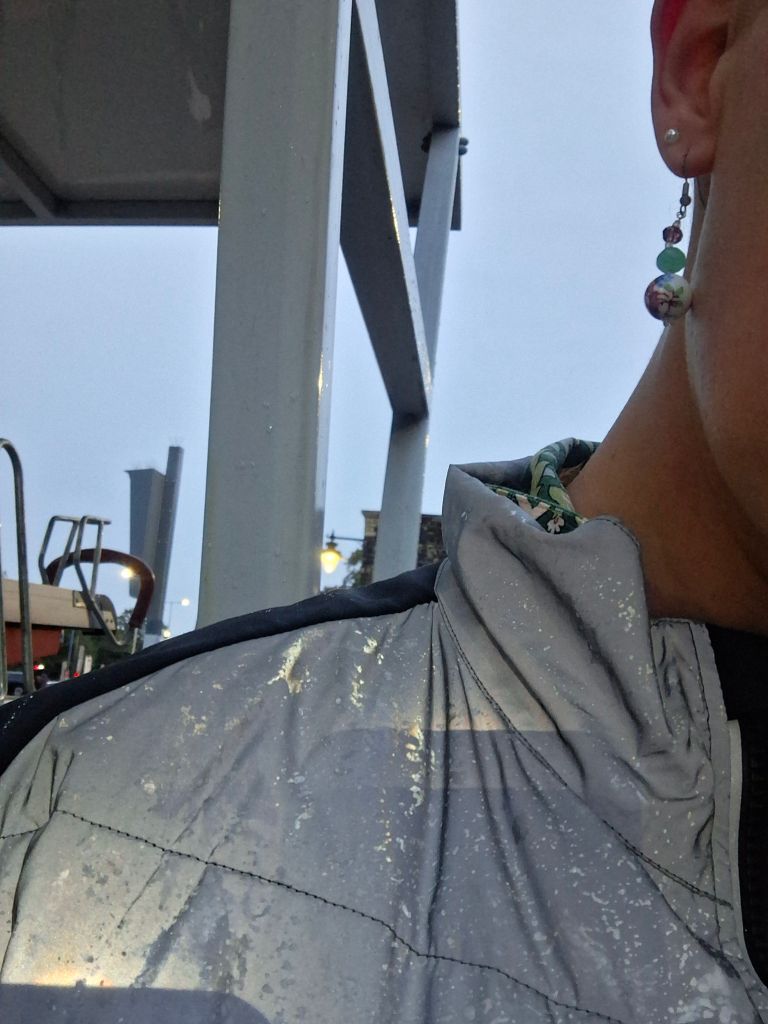
My town bike is waiting for a pair of new tyres so I had to take the cargo bike to the station this morning. Now, the cargo bike is a tank, as bikes go, it’s long and heavy, but it also has an electric motor so getting it up the hill is rather less of an effort than getting a Pendleton Somersby up there on pure pedal power. I appreciated that this morning: it’s wet, so I zipped my jacket up, but it’s not all that cold, so I’d have been uncomfortably hot by the time I got to the top if I’d been doing it unassisted.
Anyway, the bit I really enjoyed was going down the other side. There was no other traffic, it wasn’t wet enough to impede my vision, and the wind and the rain on my face were exhilarating. I once read somewhere that cycling may be the closest most of us get to knowing what it’s like to fly (as opposed to being flown, I mean). It certainly felt like that this morning.
Greengage and rosemary tart
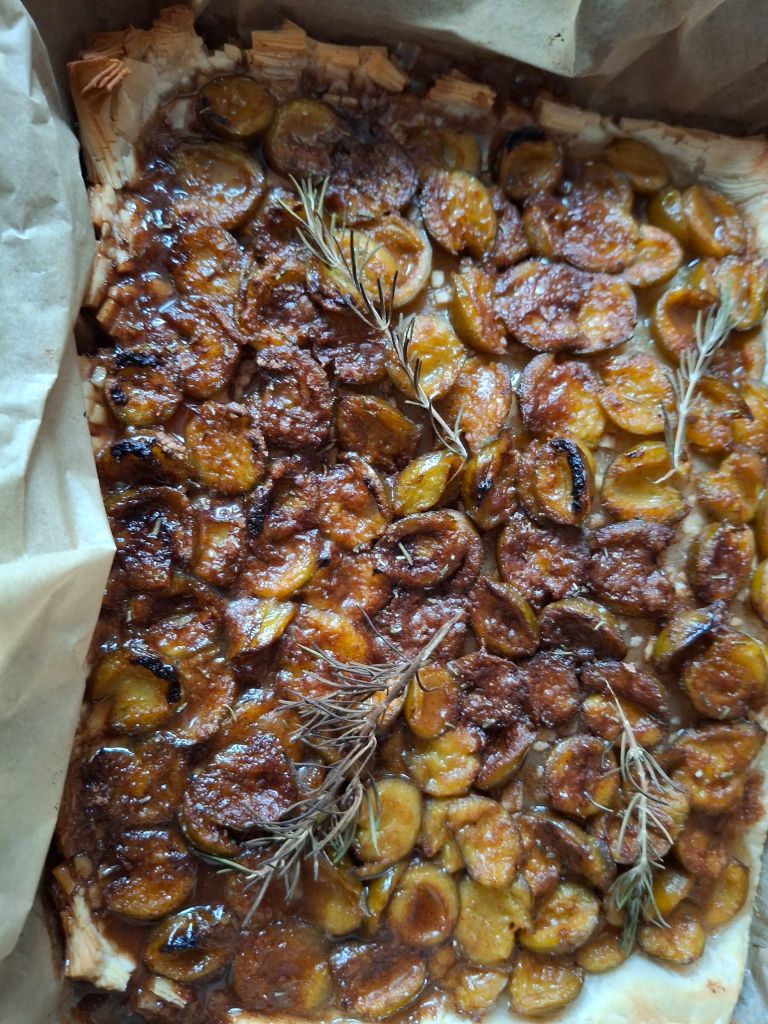
The plum trees have gone absolutely bonkers this year. We missed the best of the Victorias – we always do – because we were on the Isle of Wight, though I managed to freeze three trays full against the winter months. The greengage, though, is doing better than I’ve ever seen it. I’ve made six jars of jam, there’s easily as much fruit again still on the tree, and a load on the ground as well. (It’s been such a hard summer, I’m leaving that for the birds.)
This tart comes from the original Roasting Tin book. Rukmini Iyer uses huge, beautiful purple plums, which look much prettier cooked. But she had a food stylist and (I assume) didn’t have a glut of greengages. It is extremely tasty no matter how it looks.
Anyway, it’s dead easy: lay out ready-made puff pastry in a lined roasting tin, cover with stoned halved plums of whatever variety (this was 400g, about 5 minutes worth of picking and 20 of prepping), skin side down; mix 75g soft brown sugar with a teaspoonful of ground cinnamon and about the same of finely chopped rosemary and sprinkle it over the plums; add a few more sprigs of rosemary, and bake at 220°C (200°C fan) for half an hour.
It was the first time I’ve used the “Green Ginger” variety of rosemary, too. It’s the furthest away from the door, but I thought it would be worth including it in this one. I’m not sure how much of a difference it really made, but since the whole thing was very pleasant I’ll probably do it again next year. Maybe with more rosemary.
Sundays in the park
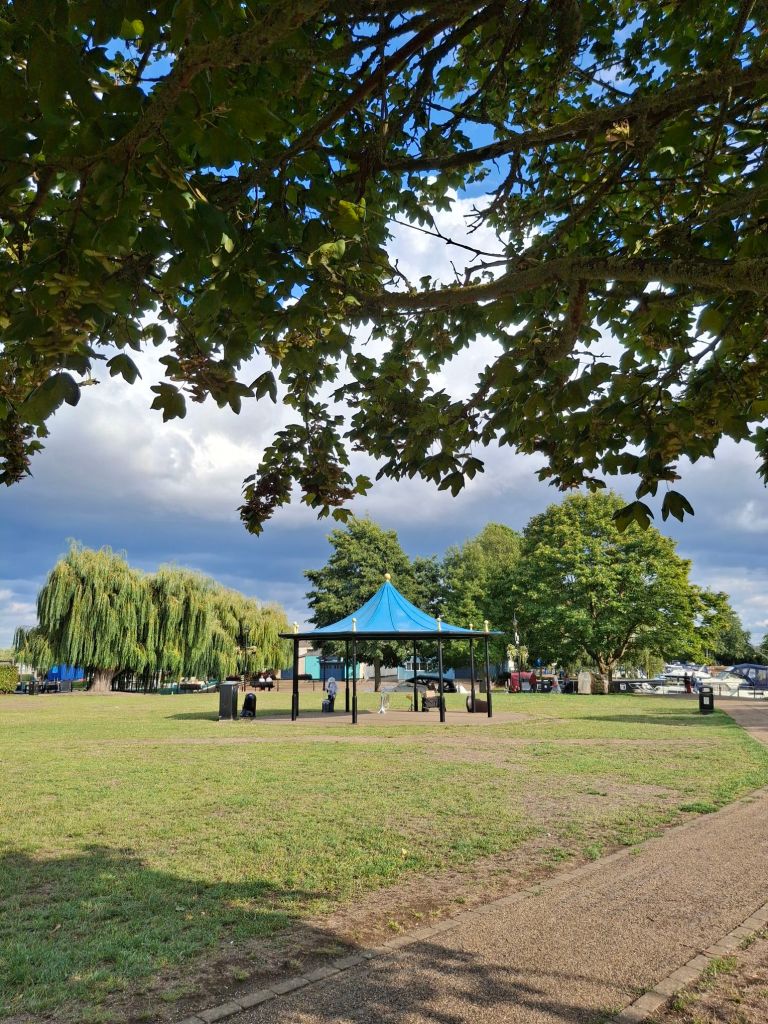
All through June and July and August, every Sunday afternoon that we weren’t doing anything else, we’ve gone down to the riverside to hear the brass band playing at the bandstand. Brass bands plural, rather; it’s a different group every week, coming in from the towns and villages all around. One thinks of brass as a Northern, industrial thing, but the council or whoever organises this doesn’t seem to have any trouble filling the schedule. Round here I suspect it’s more of a military, or legacy-military thing, or simply an enjoying-making-music thing.
It’s a lovely way to spend an afternoon, lazing under the trees, listening to live music, with the toddler running between our spot and the play area. In fact, it’s the one sort of concert where I feel really confident bringing a toddler. Maybe we send someone along the riverbank to the ice cream van.
It’s a brilliant community thing. The audience is always a mixture of friends of the band, regulars (their numbers growing through the summer as more and more people catch on) and passers-by. Last week we got there slightly late and found that our next door neighbours, plus extended family, had set up just in front of our usual spot. Yesterday there was one of the nursery families, who’d really just come for the slide and been pleasantly surprised by the music.
I say brass bands. Most of them were: some called themselves jazz orchestras or swing orchestras, but either way, there was a lot of brass involved. There has to be, really, if you want to make yourself heard outdoors with minimal amplification (any singers will get a mic, likewise the bass guitar if there is one, obviously, but that’s about as far as it goes).
Anyway, there’s a wide, if predictable, repertoire. There’s the jazz and the swing, obviously, and when it was one of the less specialist groups you could generally bet on the programme including: some show tunes, probably in medley form, a military march or two, some film music, TV themes (I know I’ve played that Star Trek compilation at some Saturday morning youth music scheme, a decade and a half before I saw any Trek, and I played cello; there must have been a version for full orchestra), a hymn, and some classic rock. It is extremely accessible, and that is entirely appropriate for the time and place. On Sunday I was standing next the climbing frame, alternately offering encouragement and singing along with The Teddy Bears’ Picnic (and getting a little thrown by the repeats not coming where I expected them).
It’s been hot, and dry (you may have noticed). Most weeks, the audience must have been hard to spot from the bandstand, hiding under trees or any other patch of shade. The grass got progressively more parched. The musicians generally took their jackets off. The willow trees stayed green, but there was a depressing expanse of yellow between us and them, and the sky was aggressively blue. This was about the only bearable outdoor activity. Abide with me, the band played a couple of weeks ago, fast falls the eventide, in glaring sunshine. Mind you, up the hill at the cathedral Evensong would just have started.
As the summer wore on, we evolved more and more elaborate seating arrangements (we are, I should say, by no means the only people with folding chairs and a festival trolley). Sometimes I brought a flask of tea; occasionally, a cake from the market; often, a punnet of strawberries. Somebody always has a better-looking picnic: full marks to the people the other week who’d fixed themselves up with a cream tea complete with fizz. My own Glyndebourne-level aspirations will have to wait another year.
Because it’s over. This Sunday was the last concert of the year. It was a bit of a toss-up whether we’d make it, having been away the night before. I’m glad we did. It was the right way to round out August. One last trip to the ice cream van. Some absolute bangers (technical term). A late, blessed, prolonged soaking has turned the grass green again. Towering grey clouds hint at more if we’re lucky. The folding chairs are back in the garage. The Lord’s My Shepherd (tune: Crimond), always imbued for me with a slightly beery, teary nostalgia, is lingering in my head, but the last tuba player has packed up and gone home.

