

In the introduction to my copy of Virginia Woolf’s The Years, Jeri Johnson draws attention to the way that certain pieces of furniture reappear in different settings through the book – the sort of thing it’s easy to do in film, but which requires considerable skill to pull off in a novel. I’ve been thinking of this a lot as I try to assimilate objects and artworks from my late father’s house into my own. Sometimes it’s been a bit of a challenge – twenty-first century walls are not, on the whole, tall enough to give nineteenth century portraits the breathing room they deserve – but this little prayer fits beautifully next our front door.
In Pa’s house (smaller than this one, and certainly fuller) it was clamped onto the end of a bookcase. It hung in the bathroom at the house before. And at the house before that, I’m pretty sure. I don’t know about the one before that; I was only four. Reading it over and over, it’s sunk into my head. I know it by heart, without ever having deliberately set out to learn it.
In fact, I’m not sure I’ve ever read this prayer aloud. I would find it difficult to do the play the man bit seriously; when I pray it in my head, which I quite often do when I need a prayer in the morning and can’t remember how the Collect for Grace begins, I can add a mental footnote (‘you know what I mean’). I remember Pa telling me how when he was a child he thought ‘play the man’ referred to a stage role, and ‘perform them’ followed on from that. That’s got me thinking about how nobody (hardly anybody) really gets what ‘performative’ means (me included), but that’s not really the point here.
In my memory I also see it quoted in the visitors’ book – ‘… laughter and kind faces; let cheerfulness abound with industry…’ in the spiky handwriting of a dear departed friend. I don’t remember a huge amount of industry happening in my childhood home (my mother, I am sure, would beg to differ) but it most definitely had its cheerful moments, many of them associated with that very friend.
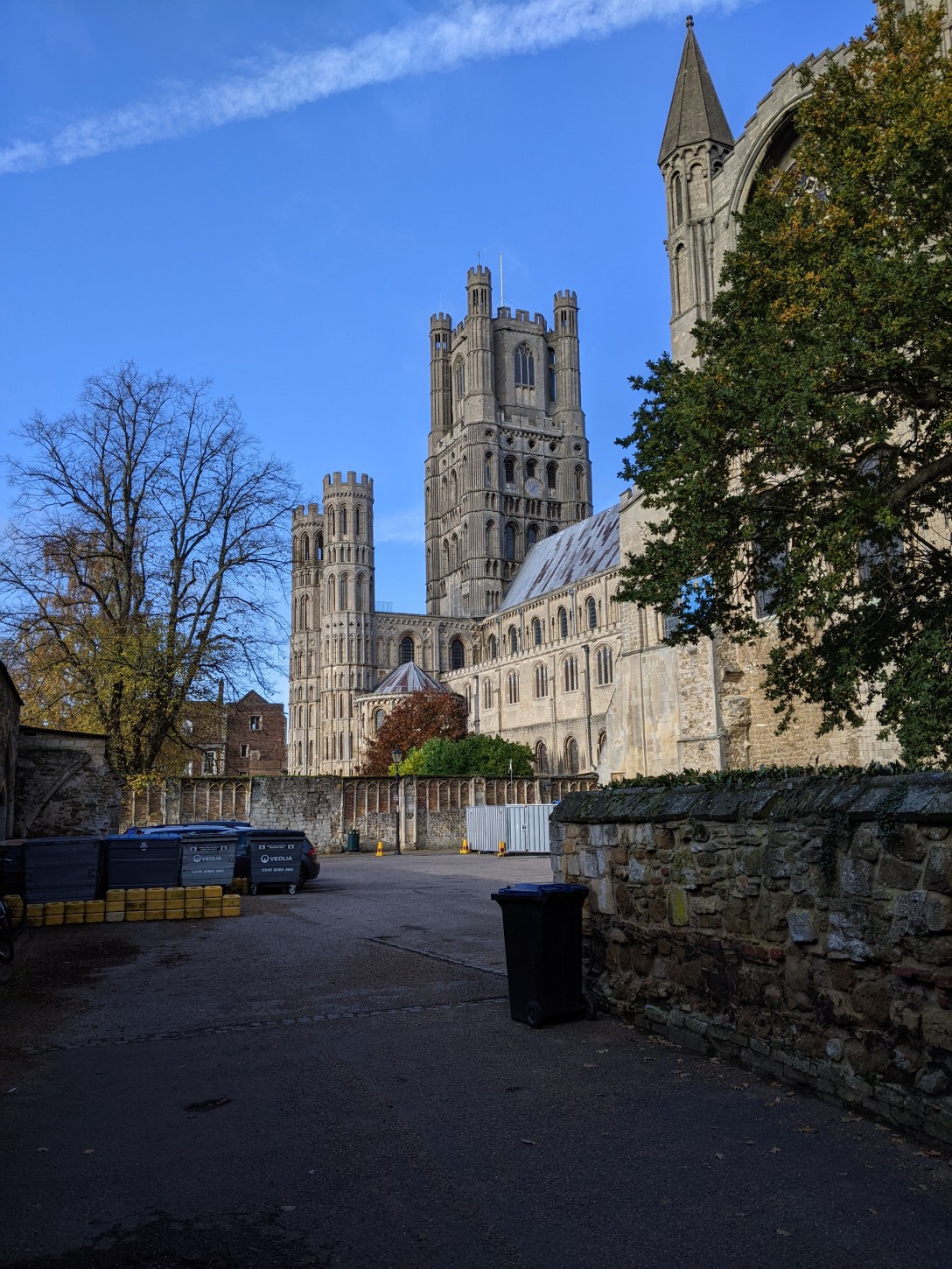
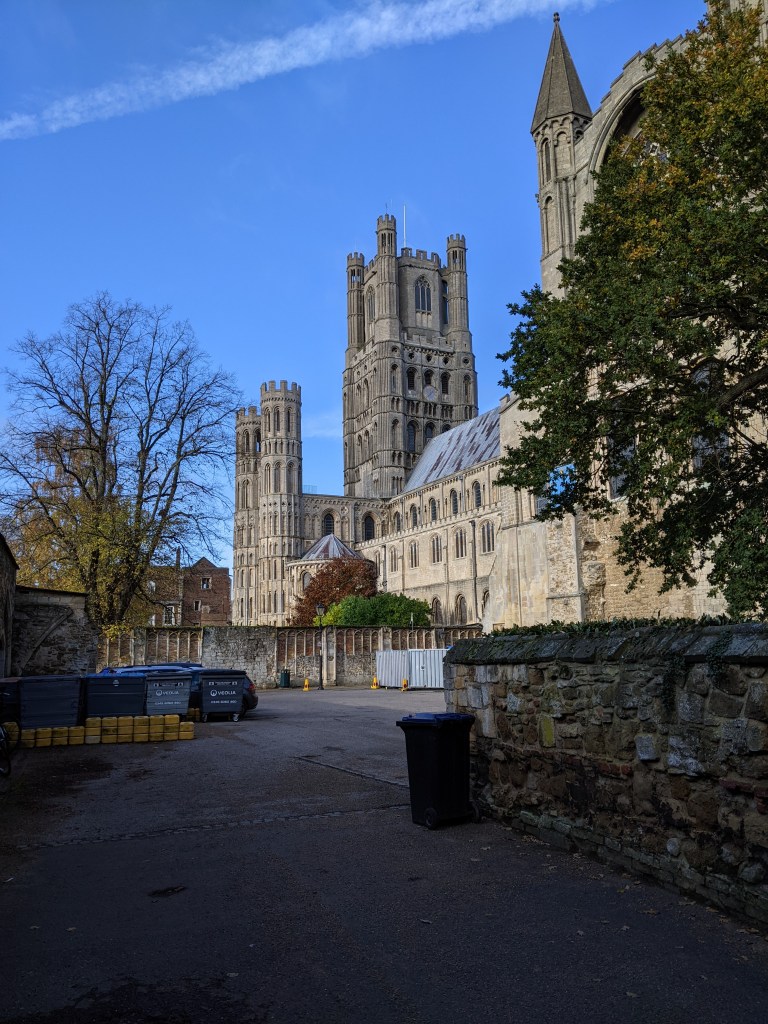
The angel – you can’t quite see in the photograph of a photograph – is from Southwell. We visited Southwell this summer, but I didn’t think to look for the angel. Nor did we look at the famous Southwell Leaves, which were in a part of the minster that looked a bit daunting to attempt with a pushchair. We did, however, find a memorial to the victims of the Katyn massacre – something we would most definitely have sought out had we known about it, as my husband’s great-grandfather was among those murdered. It brought us up short; we’d only diverted to Southwell to tick another cathedral off the list and find lunch. A surprise – a stop-and-think-for-a-moment – a remembering – keep it alive – keep them alive.
Remembering is an inexact art. Was that prayer really in the bathroom? My memory tried to put it in the bathroom at my father’s last house, too, but I know I unscrewed it from the bookcase myself. I’m getting confused with prayers for washing of hands. Already the family stories blur and swirl. My brother (happy birthday!) went to look for the house where those portraits must have hung, and now it’s a chip shop. Except that was twelve years ago, assuming he went when I assume he did. We write down what we can remember, and then wonder how long the writing survives. Digital decays fast: I shouldn’t be surprised if that framed prayer outlives this blog. As for the memory that goes with it, that’s another question. In the long view, it doesn’t really matter. If the prayer survives, it will be because somebody likes it, for the sake of its associations (my father, me, Southwell, who knows) or for its own. In the meantime, I see it as I put my shoes and coat on and prepare to leave the house:
Give us to go blithely on our business all this day, and bring us to our resting beds weary and content and undishonoured, and grant us in the end the gift of sleep.
 Kathleen Jowitt