100 untimed books: dog-eared

27. dog-eared
27. dog-eared

It’s not surprising that cookery books are the ones that come in for the most punishment. This one gets referred to mainly for the Christmas Eve meal (several courses, most of them fish, in great haste, between the carol service and Midnight Mass) and flavoured vodkas (most of them go like this: dump flavoured component in vodka; leave to steep; strain).

100 untimed books

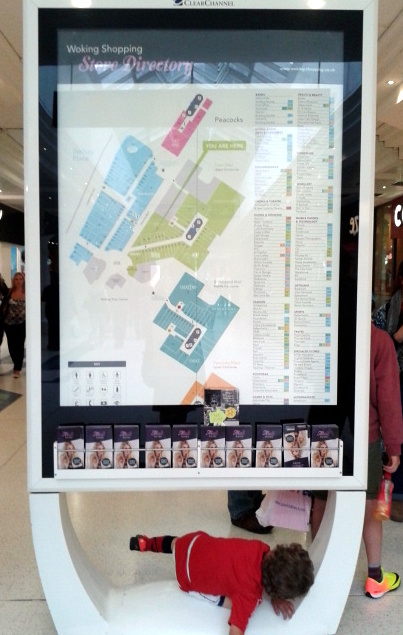
You Are Here: style and substance

2013-06-15 13.22.06
At least somebody knows where they are…

I’m half way through the latest set of edits on A Spoke In The Wheel. Latest of how many? I’ve lost count. It feels like about six, but it can’t really be as many as that. Three or more, anyway. And I am still finding scenes where it isn’t clear which room the characters are in, let alone whether they’re standing, sitting, or swinging from the lampshades.

Dialogue is easy for me. It’s the first thing that appears as the book begins to materialise. I start out with indeterminate blobs in an indeterminate landscape exchanging stinging banter with each other. Perhaps I should write radio plays instead. I have no regrets about my Write Whatever The Hell You Want policy, but sooner or later the time comes when I have to fill in the gaps. And that time is now. I’m working my way through A Spoke in the Wheelagain – and asking myself where people are, and what they’re doing, and then putting in things to indicate that.

I write a lot about characters who are stuck in their own heads. But heads are attached to bodies, and bodies have to be somewhere in space. I’ve had to think more about that this time around, since these particular characters have more reason than most to be aware of their bodies, but even so I keep running across scenes where I can’t tell whether people are in the kitchen or the living room, or which pub they’re in, or what’s happened to the character who must have been there three lines back, because they said something hilarious. Did they tidy themselves out of the way, and, if so, why?

The only way to fix it is piece by piece: adding in a chair here, a glass there, some TV noise in the background. And then, of course, I have to go back to the beginning and see whether my use of chairs and glasses and TV noise is consistent through the book. Every little change can have consequences, rippling forwards and backwards through the text. If I mention a coffee table in chapter 14 (because the bowl that held the jewellery that gets stolen in the burglary has to sit on something) then I have to go back to chapter 3 and make sure it’s there when my characters are eating pizza in front of the telly, or else explain how it comes into the house somewhere in between. It doesn’t come naturally to me, but it’s got to be done.

In a year or so I might try writing a murder mystery: something where I have to know exactly where everyone is, and exactly what they’re doing, all the time. In the meantime, I’m getting there. I am. On this edit, some pages have ended up without any red ink on them at all.

100 untimed books: driving

17. driving
17. driving

I don’t drive. I do cycle, though. So do many other people in my life. I bought this book for one of them as a birthday present and restrained myself with great difficulty from reading the whole thing before I wrapped it up.

Active Anglicans may well know Dave Walker from his work for the Church Times. His cycling cartoons are just as funny and well-observed.

100 untimed books

Second novel syndrome

DSCF0921

I thought I’d escaped second novel syndrome. By the time my first novel was out, I already had the first words of the second novel queuing up in my head, clamouring to be written down.

Speak Its Name didn’t make much of a splash, and that was something of a blessing. I was able to keep plugging away at A Spoke in the Wheel, here a word, there a paragraph, and by about April I had something that resembled a first draft.

Then I won a Betty Trask Award. And that was amazing and brilliant, and I am at this moment planning to spend my prize money on an epic Interrail trip around Europe, but it hasn’t half given the monsters a lot to talk about.

Here is a sample of some monster views on A Spoke in the Wheel:

  • this one’s not going to win you any awards, you know
  • it’s not as good as Speak Its Name
  • it is NEVER going to be as good as Speak Its Name
  • and everyone who reads both will know that and you will DISAPPOINT THEM
  • you’re a one-hit wonder
  • everyone who was impressed by the award? NOT IMPRESSED ANY MORE!
  • you have to create a COHERENT BRAND!!!
  • write what you know!!! why are you not WRITING WHAT YOU KNOW???

But that’s monsters for you. They don’t want you putting a substandard product out there, because then PEOPLE WILL LAUGH AT YOU.

And you know, it’s a reasonable point, if only they could make it without all the screaming. Nobody wants me to put a substandard product out there.

What I’d forgotten – what I always forget, every time – was that I’d been here before. I’d already run into moments of self-doubt, several times over the course of writing that first draft. I’d always been able to talk myself out of them. I thought this time was different, that this time it really was going to turn out to be unsalvageable.

That always happens, too. I always think it’s going to be unsalvageable, and it never is.

Second Novel Syndrome was only a recurrence of what had happened during the writing of the first. It’s always the same. I get a horrible sense of its not being good enough.

Then I see what’s wrong with it.

Then I see how to fix it.

And then I remember that all that the yelling really means is this:

It isn’t finished yet.

100 untimed books: going home

46. coming home
46. coming home

Quite often, a book catches my eye and I know the name because it’s been mentioned in another book. Here’s a case in point. Edmund de Waal is Elisabeth de Waal’s son; he talks about The Exiles Return in The Hare with Amber Eyes:

In December 1945 Elisabeth decides that she has to return to Vienna to find out who and what remains. And to rescue the picture of her mother and bring her home.

Elisabeth wrote a novel about her journey. It is unpublished. And unpublishable, I think, as I appraise it in typescript, 261 pages with painstaking tippexed corrections. The rawness of its emotion makes for uncomfortable reading.

It did in fact get published: Persephone, who specialise in obscure and out of print titles by women, brought it out in 2013. I bought it the other week, having read, and loved, The Hare with Amber Eyes earlier in the year.

100 untimed books

Questions that have arisen in the latest editing pass

  • Why does our hero have no male friends?
  • Shouldn’t he talk to his parents at some point?
    • Why do I write such appalling parents?
      • Am I turning into Mary Renault? (I wouldn’t mind her prose style, but I can’t stand her politics.)
  • Is Michael a strawman?
  • How common is it for garages to have taps?
    • Can we manage without a tap? Yes? Good.
  • What does Andy look like?
  • Does the geography of this town even work?
  • Do these thoughts actually need to be in italics?
  • Why, when the action occupies most of a year, does only one character celebrate a birthday?

Some of these I will attempt to answer or remove in the next editing pass. Others are left, as they say, as an exercise for the reader.

You do not have to read my book

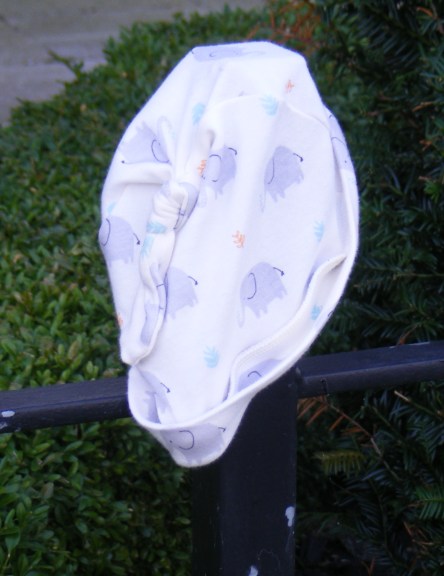
DSCF2408Occasionally a friend or family member will say to me, rather apologetically, that they haven’t bought my book. Or that they’ve bought it, but they haven’t got round to reading it yet. ‘It’s not my usual kind of thing, you see…’

I usually remark in reply that, had I started a business knitting and selling babies’ bonnets, for example, I would hardly expect my entire acquaintance to start sporting infantile headgear merely to show solidarity with me and my enterprise. Oh, if they happened to have a baby, or know a baby, and they bought one of my bonnets to present to this baby, I would be pleased and grateful, but I wouldn’t expect them to wear something so, um, unsuited to their personality or state of maturity.

Not everybody is going to like my book. Not everybody is going to be interested in Christian politics or student politics. Not everybody is interested in reading F/F (in fact, hardly anybody seems to be interested in reading F/F, and on the LGBT review blogs my purple passionflower cover looks very incongruous in amongst all those shirtless torsos on the explicit M/M works).

And that is absolutely fine. Not everybody has to like my book. Not everybody has to read my book. You don’t, if you don’t want to. ‘It was written by this person I know’ isn’t, in itself, a particularly good reason to read anything. (Although ‘It was written by this person I know, and I want to see if I recognise any mutual acquaintances’ might be; though you’ll be disappointed, in the case of my books.)

This goes for the next book, too. In fact, if what you liked about Speak Its Name was the Christian politics and the student politics, and you are not interested in cycling, chronic illness, or the parlous state of benefits in 21st century Britain, you are entirely at liberty to skip A Spoke in the Wheel. I hope you don’t need me to tell you that. You always were at liberty to skip any or all of my books, no matter how close or longstanding our relationship.

On the other hand, if you did like Speak Its Name, you might find that in A Spoke in the Wheel:

  • you like my prose style more generally
  • the overall theme of ‘finding out that you are, in fact, not such a terrible person as you feared you might be’ is also significant
  • the jump from a claustrophobically tight third person narrator to an unintentionally unreliable first person one isn’t actually all that huge
  • it’s still all about integrity

Christian Union kerfuffles: some useful questions to ask

DSC_0875

‘You write one little book about a Christian Union kerfuffle,’ I remarked earlier this week, ‘and every time there’s a Christian Union kerfuffle everyone goes all, I saw this and thought of you.’

This is perhaps unfair. Christian Union kerfuffles can happen at any British university, at any time, and anyone who happened to be even tangentially involved – on any side – will shudder gently to themselves at the memory and consider pouring a stiff drink. Many readers have told me, ‘Oh, I remember something just like this happening at __________ in the mid ____ies…’

On the other hand, perhaps it is fair. So far as I know, nobody apart from me has written about them in fiction. I can’t imagine why. (Other than the fact that they turn out to be very difficult to get published, I mean.) They generally attract enough drama, misunderstanding, and deeply felt and opposing idealism to fuel an epic.

It’s easy to understand why. Universities are full of people who have time, energy, and deeply held beliefs, who may be homesick or lonely or vulnerable, whose horizons have been suddenly and forcibly widened. There’s always a kerfuffle waiting to happen.

The most recent one happened at Balliol College, Oxford, earlier this term. I am not qualified to make a specific comment on the events at Balliol, for the following reasons:

  • it’s over a decade since I graduated
  • I went to a redbrick university, not Oxbridge
  • I live in Cambridge these days

What did I do when I read the story, then? I shuddered gently at the memory and considered pouring myself a stiff drink. It’s a general response to a general occurrence. As is this:

Over the years that I’ve been keeping an eye on these events I’ve developed a set of questions that I ask when I read stories like these. This is the big one:

  • Is this a simple question of secular versus sacred?

Because the story almost always appears to be about the Students’ Union versus the Christian Union, and it’s almost always a whole lot more complicated than that.

  • Whose voices are we not hearing?
  • What voices from other faiths?
  • Come to that, what about other Christian voices? Do we have a Roman Catholic take on the situation? Quaker? Orthodox? No? Well, what about the college chaplain?
  • If not, why not?
  • Is this particular Christian Union representative of all Christians?
  • Who’s affiliated to what? Do those affiliations tell us anything about the approaches, beliefs, or behaviour that can be expected?
  • Is everybody who they say they are? Are they as immediately involved as they claim to be?

I tried to give a fuller answer than we usually get to all of those questions when I wrote about a fictional kerfuffle at a fictional university. No, Stancester isn’t real, and nor is anything that happens there. But for all that it’s a familiar story, and it could have happened anywhere.