Much in here to feel ambivalent about, much to be ashamed of, much to be proud of.

Stories that make sense
Much in here to feel ambivalent about, much to be ashamed of, much to be proud of.

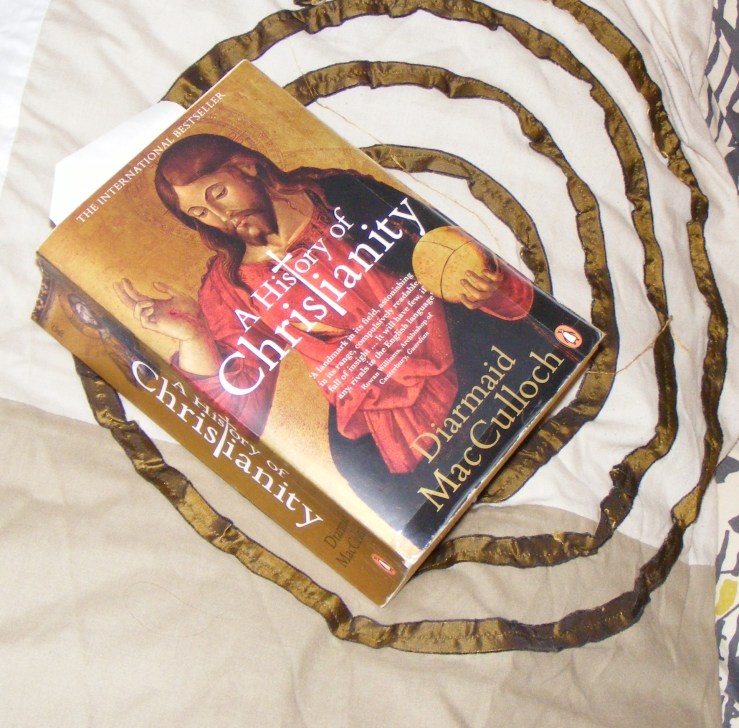
Last week I bought two things – well, I bought several things, but among them were:
I’d flicked through the book in the shop, as you do, but it was only when I’d brought it home and started at the beginning that the irony struck me.
I remembered the problem – my problem, I should say – with Julia Cameron.
Morning pages. Or, rather, her insistence that morning pages are essential, that, before you do anything else, you should dump the contents of your head into a notebook, and that if you have to get up early to do it, then that’s what you should do.
I understand the theory, and I am perfectly willing to admit that dumping the contents of my head into a notebook has been very useful to me on more than one occasion. I just can’t do it every day, and I definitely can’t do it first thing in the morning.
I am not a morning person. I am particularly not a morning person when it’s dark when I have to get up. And I have to get up at six thirty as it is. September hits me like a steamroller, every year, when the morning retreats that little bit further and whatever it is in my head that gets me out of bed stops working. If I were to set the alarm for 6.10am, I would spend the twenty minutes between it going off and my having to start getting ready for work lying in bed hating myself. I’ve tried it.
In fact, I was very happy to realise this morning that it’s now October and therefore not too depressing to look forward to the clocks going back.
And so morning pages are not an option for me. I am not even tempted. At this time of year, any sort of ritual that asks me to get up earlier than strictly necessary is not an option for me. So I’m not doing them.
I will, however, read the rest of the book with interest and an open mind.
It is not exactly news to me that some techniques work for some people and don’t work for others. What’s changed is my reaction to discovering that this is one that didn’t work for me. In past years I’d have given up on the whole thing in disgust. Now I’m prepared to pick and mix.
What I am working on at the moment is retaining the baby – in this case, Julia Cameron’s otherwise humane, compassionate and patient approach to the artistic process – while ditching the bathwater. She runs the bath too hot for me.
Bi blogger, author and editor A. M. Leibowitz has a list of favourite bisexual characters. I was delighted to see that Colette comes in second*, because she’s one of my favourite characters, too.
*Granted, the list is in alphabetical order, so the ranking is not really relevant. But still.

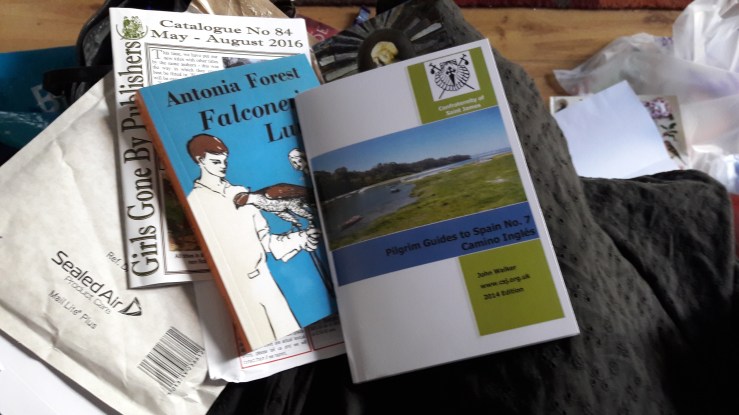
I’m going to walk the Camino Inglés to Santiago de Compostela next year. The journey of a thousand miles starts with a single step, so they say. The Camino Inglés isn’t anywhere near that long – it’s less than a hundred miles, in fact. Last time round I walked five hundred miles of the Camino Francés, but these days I have a full-time job.
Anyway, I reckon the journey starts with a decent guidebook.
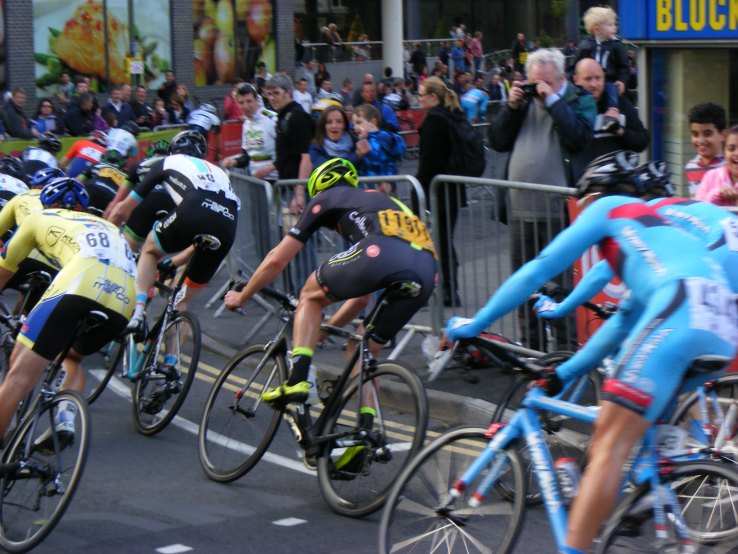
Wheels (that’s still its working title, and it’s still not going to be its real title) is rolling along quite nicely, sitting just under fifty thousand words. Much of what’s there at the moment is dialogue, stick figures having witty conversations in a thick fog. I’ll have to go back and put in the descriptions later.
So far, so familiar. What is a new experience for me is writing a first person narrator who’s… not unreliable, exactly, but not at all objective. True, I ended up with something similar in Speak Its Name, written in claustrophobically tight third person with a point of view character who wouldn’t come out even to herself. The difference is, Speak Its Name didn’t start out that way. It started out with multiple points of view, with multiple foibles and inconsistencies, but where I always knew what was ‘really’ going on.
Cutting everything down to fit into Lydia’s point of view was interesting. There are things that I knew and she didn’t. The most significant one is that Becky isn’t a trinitarian. If Lydia had known that – well, she’d have to deal with that, and it would add a huge chunk of drama onto a part of the book that really didn’t need any more drama. So I know that, and so do some of the other characters, whose thoughts on the matter we don’t hear, but Lydia never finds out.
Writing first person from scratch, I’m having to spend all my time in one character’s head, and I keep discovering things that he doesn’t know, and can’t know. He’s self-centred and often oblivious to subtext and body language. A friend read through the first couple of chapters few days ago, and made a throwaway comment about another character’s ‘flirtatious wink’.
‘Hang on,’ I said – to myself, ‘that wasn’t flirtatious!’ I wondered if I ought to clarify that it wasn’t flirtatious, and, if so, how.
Except the more I thought about it, the more I realised that… yes, it does make an awful lot more sense if she is flirting with him. Which puts a whole new complexion on the first half of the book, and leaves me with the problem of how to have her get over him, but it also makes the end a lot more convincing.
So now my challenge is to incorporate this new knowledge into the draft. My narrator can stay oblivious, but I can’t.
I thought that I really ought to write something about the recent kerfuffle around J. K. Rowling’s revelation that Remus Lupin’s lycanthropy is a metaphor for HIV, which I thought we all knew already, but apparently not.
More specifically, I thought that I really ought to write something about the claim, which took me right back to the Dumbledore-is-gay revelation, that if she wanted to write a gay character she should just write a gay character and stop fannying around with all this symbolism.
Then I thought that I really couldn’t face writing something about it.
Then I remembered that I already had.
I wonder: has anyone done a study on the correlation between section 28 and the underrepresentation of LGBT characters in UK teen lit?
— Kathleen Jowitt (@KathleenJowitt) September 10, 2016
Section 28 was in force when I was at school. This is what it said:
a local authority “shall not intentionally promote homosexuality or publish material with the intention of promoting homosexuality” or “promote the teaching in any maintained school of the acceptability of homosexuality as a pretended family relationship”
Local authorities are responsible for, among other things, public libraries and state schools, and one of the effects of this was the complete absence of LGBT characters in children’s and teen literature that was written or published in the UK. We didn’t have the British equivalents of David Levithan, Alex Sanchez, or Nancy Garden. Nobody would publish them. The one book with any queer characters in my school library that I remember was Dare, Truth or Promise – written and published in New Zealand. Mentioning Nancy Garden above reminds me that the school library did have The Year They Burned The Books. Oh, the irony.
My theory is that UK children’s publishers have never got over section 28; there’s a whole tradition missing here.
— Kathleen Jowitt (@KathleenJowitt) September 10, 2016
It took even Jacqueline Wilson, who famously doesn’t shy away from Difficult Issues, years to include a gay character.
— Kathleen Jowitt (@KathleenJowitt) September 10, 2016
(Somebody asked me which book that was in. It’s kind of a spoiler, but if you click on the tweet it should take you to the question and my answer.)
And if you can’t, or your publishers say you can’t, say it explicitly, you do it with symbolism.
— Kathleen Jowitt (@KathleenJowitt) September 10, 2016
Which is why I think the debate around JKR is missing some important context. Section 28 was repealed in 2003 – the year that OotP came out.
— Kathleen Jowitt (@KathleenJowitt) September 10, 2016
And it took a good few years for the UK teen publishing world to catch up, and yes, I do have a horse in this race:
I’m pretty sure I’d have found a publisher for Speak Its Name had I been in the USA, writing about a US setting.
— Kathleen Jowitt (@KathleenJowitt) September 10, 2016
Which is not to say that I think that it was a good idea to come out now (pun not exactly intended, but I’m not deleting it now I’ve noticed it) and say what the symbolism actually, like, means. If the reader didn’t pick it up the first time round then bashing them over the head with it isn’t going to help, and it’s just going to annoy the ones who got it, didn’t like it, and were doing their best to ignore it.

I picked this book up because of the title; I’ve been thinking a lot about spirals and labyrinths, and the recursive nature of experience, of late, and this does have some things to say about that.
Molluscs only ever make a single shell, but it’s one they’ll never grow out of… They are among the few animals on the planet that wander around carrying with them the same body armour they had as babies; the pointy tip or inmost whorl is the mollusc’s juvenile shell. Day by day, the mollusc shell slowly expands, making room for the soft animal growing inside.
A mollusc carries its best years around with it. It carries all its years around with it.
Over the next few months I’ll be writing about my preparation for walking the Camino Inglés, from the north coast of Spain to the city of Santiago de Compostela. I’m planning to do the walk in May next year, fitting it in between my stepsister-in-law’s wedding and my father’s seventy-fifth birthday party. We’ll see how that works.
I walked the Camino Frances in 2007, between university and the real world, and have been wanting to do it again ever since. However, taking eight weeks to walk it isn’t really compatible with having a full-time job, and so I’d assumed that I’d have to wait until retirement – which is a way off, and maybe even getting further away. It only occurred to me fairly recently that I could fit the Camino Inglés into a fortnight.
As always, the things I most need to work on are physical fitness and the language. Living in Cambridge, I don’t get much practice with anything steeper than the bridge over the Cam, so I’m thinking about nipping down south to stay with my parents and walk the Isle of Wight Coast Path. As for the language, I suspect that the (Castilian) Spanish that I learned last time around will come back to me, but I’d also like to learn some Galician as well, since my pilgrimage will be entirely within Galicia.
I’ll write more about this as my plans crystallise. In the meantime, my friend Jo is cycling the Camino Frances, along with her husband and another friend, as I write, and so I’m going to send you over to her blog, Wheels Along the Camino, for some stunning photos and thoughtful reflection.
Find out what works for you, and do that.
And don’t panic if it doesn’t immediately seem to involve writing.

We didn’t have a television when I was growing up. This did not stop me collecting all the Blue Peter annuals I could find. (I collected Brownie annuals, too, and there wasn’t a pack near me to belong to.) I was mostly interested in the ‘makes’: step-by-step instructions of how to make various craft projects.
 Kathleen Jowitt