The moving finger writes

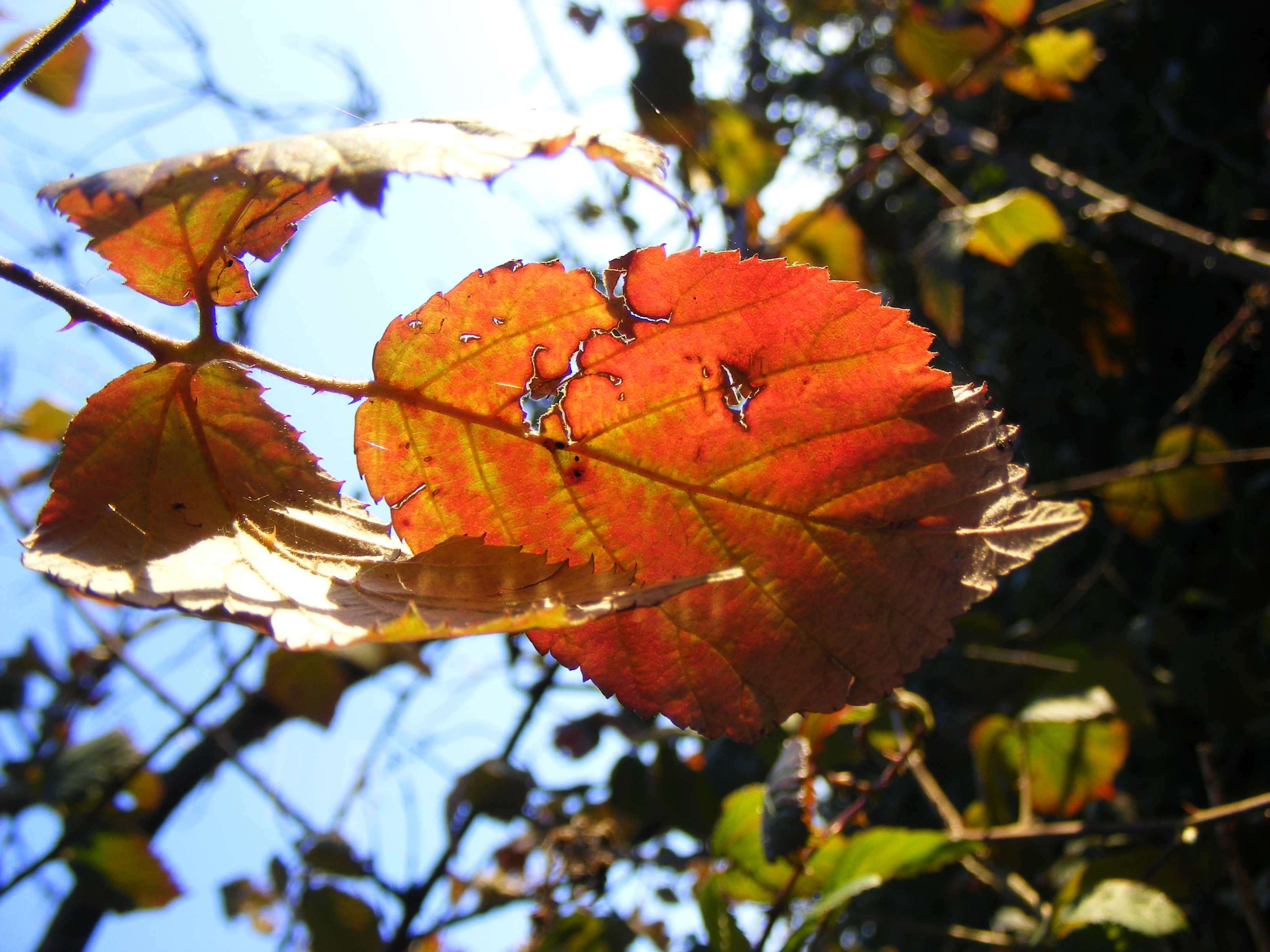
A jagged-edged leaf, with some cracks and holes in it orange-red in full sunlight, on a thorny stem, with other leaves and blue sky beyond.

We’re into the final stretch of the Church year – All Saints’ tide; Kingdom season; the season of remembrance; whatever you like to call it. November. The readings at daily prayer (more like twice-weekly prayer, for me, but we will not dwell on that) get distinctly apocalyptic – quite literally. We get Revelation. We also get Daniel.

The book of Daniel is a load of fun if you’re eight. I still enjoy it now. You get the title character in the lions’ den; you get Shadrach, Meshach and Abednego in the fiery furnace; you get the moving finger; you get duelling angels; you get the four great beasts and the ten horns; you get the statue with feet of clay. You get the obvious Sunday school morality (faithfulness rewarded in the face of horrific torture and certain death!) and the esoteric (mene, mene, tekel, parsin). You get memorable catchphrases: feet of clay; the writing on the wall.

And it always feels particularly apposite in November. For a start, there are US elections every other year, and I don’t know about you, but for quite a long time I’ve been approaching those with a sort of “Oh God, what now?” that teeters on the line between prayer and despair. (This year turned out brilliantly, yes; an answer to prayer, in the form of hard work, organising, mobilisation, and, no doubt blazing righteous fury – but I didn’t know that for the first few chapters.) For a long time, Nebuchadnezzar’s dream of a mighty but flawed statue representing mighty but flawed kingdoms and Daniel’s tribulations with successive rulers, have seemed to have had rather a lot to say to a time in which we’re all nervously watching to see what the all-powerful, arrogant, not-exactly-stable, head of state is going to do next.

Enough of that. Considerably more frivolously, November is National Novel Writing Month. Or it used to be: as far as I understand it, NaNoWriMo dissolved in a puff of methane while I wasn’t paying attention. Something about generative AI, and possibly also volunteer misconduct. I’m not going to look it up now. Anyway, NaNoWriMo used to be a challenge in which one attempted to write a novel (50,000 words, which these days is considered to be on the short side) with one’s own pen/pencil/word processor and mind, during the month of November. I attempted it three or four times, succeeded once (the eventual result of that was Speak Its Name, not that much of those original 50,000 words made it into the published version), and generally found it incompatible with a full-time job.

But that wasn’t my point. So, back before generative AI ruined everything, NaNoWriMo participants famously found all sorts of ways to pad their word count. Spell out acronyms. Uncontract contractions. Repeat everything you could possibly get away with repeating.

Back to Daniel. The story that ends with Shadrach, Meschach, and Abednego in the fiery furnace begins with Nebuchadnezzar

My Pa used to tell a story of a man who, having been assigned Daniel 3 to read, dutifully read out the dimensions of the golden calf, and the list of

the princes, the governors, and the captains, the judges, the treasurers, the counsellors, the sheriffs, and all the rulers of the provinces

who turn up to worship it. They come up twice, with every single rank listed again, in the first three verses. And they are instructed as follows:

at what time ye hear the sound of the cornet, flute, harp, sackbut, psaltery, dulcimer, and all kinds of musick, ye fall down and worship the golden image that Nebuchadnezzar the king hath set up

And then they hear

the sound of the cornet, flute, harp, sackbut, psaltery, and all kinds of musick

But! Some snitches report to Nebuchadnezzar that, despite his having commanded

that every man that shall hear the sound of the cornet, flute, harp, sackbut, psaltery, and dulcimer, and all kinds of musick, shall fall down and worship the golden image

Shadrach, Meshach and Abednego are very naughty boys and have not done so.

So Nebuchadnezzar summons them and asks if they are absolutely sure about this not worshipping the golden calf, when they hear the… well, you know how this is going to go.

At which point the old buffer who was reading the lesson gave up and simply said,

(Band as before.)

Do you think Daniel was doing NaNoWriMo?

Q & A Tag: The Debut Novel

Good luck to everyone attempting NaNoWriMo!  I haven’t been able to make NaNoWriMo work for me since I started working full-time, and also I’m in the middle of a non-writing fortnight, so I’m not taking part. I’m reading instead.

And what I have been reading, among other things (Ankaret Wells‘ Anna Chronistic and the Scarab of Destiny came out yesterday, just saying…) is Speak Its Name. This is partly in search of details I’ve got wrong in The Real World (Rory never went to St Mark’s! Gabe has always had a surname, and it isn’t Murtagh!) but mostly because I happened to pick it up and start flicking through, and then decided I might as well keep reading…

Then I remembered that an early draft had an epic ecumenical argument about Hallowe’en, which might have made a good deleted scene. I couldn’t find it. I did find that all the early drafts meandered all over the place (which I had remembered) were quite unbelievably camp (which I hadn’t).

So all in all this seemed like a good moment to answer a Q & A that I’ve been meaning to do for a while: Niamh Murphy‘s ‘The Debut Novel’ Q & A tag.

DSCF0414

What is the title and genre of your debut novel?

Speak Its Name is a contemporary f/f novel about a Christian student finding her way out of the closet against a backdrop of student politics.

What gave you the idea to start writing it?

Originally I wanted to tell the story of an episode of the great Christian Union wars of the early 2000s. If you weren’t at university in the early 2000s, or didn’t get involved in student politics if you were, then you may well have missed these entirely, but they still crop up from time to time. There’s almost always more going on than makes the press. This was certainly the case in the kerfuffle that I got involved in, and I wanted to tell what really happened.

Unfortunately (or, perhaps, fortunately!) ‘what really happened’ was actually quite boring. Looking back, I feel like Lord Palmerston:

“Only three people have ever really understood the Schleswig-Holstein business—the Prince Consort, who is dead—a German professor, who has gone mad—and I, who have forgotten all about it.”

How long did it take you to finish?

A long time! I wrote the first word of the first draft in November 2007, having spent much of the summer planning. By the summer of 2014, I thought it was more or less done. I eventually published it in February 2016.

What was the biggest challenge you had when writing it?

The moment when I realised that actually the whole thing needed to be written in the point of view of a character who at that juncture had absolutely nothing. And who wouldn’t come out even to herself until half way through the book.

This development had its advantages, though: for one thing, it made it much easier to incorporate the political storyline. And it made the book much better overall, much tighter, and less susceptible to in-jokes and digressions.

How did you get it published, indie or trad?

After spending a summer trying to interest agents in the book, I gave up and decided to self-publish – a decision I’ve never regretted. Speak Its Name was shortlisted for the Betty Trask Prize in 2017, after which I did get some more interest from the traditional publishing world, but we decided pretty much simultaneously that it wasn’t an avenue that any of us wanted to pursue.

What was the most important thing you learnt from the process?

How to write a novel. That might sound flippant, but I’m serious. I started with a string of real life events and a handful of characters. Over the years I learned: to let my characters make their own mistakes; how to harness my own emotions to make my characters’ reactions convincing; how to get characters to drive plot; what to leave out; what to take out; how much I really enjoy editing.

What are you working on right now?

I’m working on the sequel. It’s called The Real World and it picks up the action about three years after the end of Speak Its Name. As the title suggests, the characters are having to adjust to life after graduation, and none of them have picked a particularly easy path (if such a thing even exists). There are difficult decisions to be made and challenging situations to work through.

But I’ve actually got to the stage where I put it away for a few months and try to ignore it, so that I can return to it with fresh eyes.

In the meantime I’m writing some shorter pieces, a couple of which are also set in Stancester. One is a prequel to Speak Its Name – Becky’s first term at university – which I’ll be offering as an incentive to sign up to my email newsletter, when I actually get around to setting that up. The other is more of a standalone, and I’m aiming to submit it to the Reconciling the Rainbow anthology.


Q & A Tag: The Debut