Holiday at home

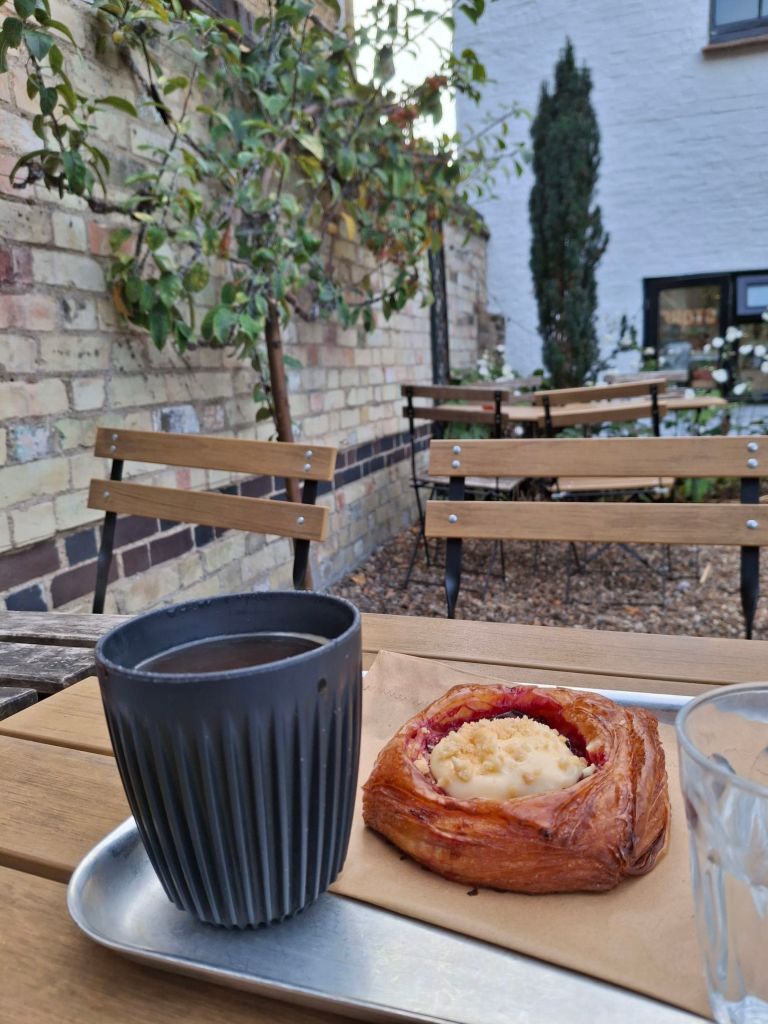
A cup of black coffee and a Danish pastry on a table in a walled garden
Starting the week with really nice coffee

One of the most infuriating cases of semantic drift is the word staycation. It was an irritatingly twee portmanteau in the first place, but it did at least serve a useful purpose, describing that thing where you take a few days at work to stay at home and do nothing in particular, maybe take some sandwiches out to the park and read a book under a tree. I am all in favour of this. I make a point of doing it at least once a year.

But now it’s been appropriated by the travel industry to mean “a holiday in the UK”, thereby implying that a holiday that doesn’t involve a flight and a passport isn’t really a holiday, thereby attempting to make those who can’t afford or don’t want to leave the country feel bad about their circumstances or their choices.

I am not having this. If you’re leaving your house and staying somewhere else and doing something enjoyable and not working, it’s a holiday. You’re not telling me that every joyous seaside summer of my childhood was a mere staycation.

I’m not really talking about either of those things in this post, though. I’m talking about the attempt to adopt a mindset that looks something like this:

I live in a place that’s really quite beautiful and really quite interesting, the sort of place that other people visit on holiday. What can I do to appreciate this and make  it more than merely my everyday?

I mean, I got an email the other day from a steam train excursions company inviting me to go and look at “the serene beauty of Ely”, so I’m clearly onto something here. And so are they. It does have a serene beauty.

So what does it look like when I don’t, in fact, have to take a train to experience this serene beauty? Mostly, making today the day I get out for a walk/pop into that interesting-looking shop/use the coffee cup I really like/do a very bad sketch of the angel on the Old Palace. Allowing myself to take some time to be interested.

And then: How do I do this when I have a job to do and can’t just skip out to do a two-hour self-guided walk? How can I do this when funds are limited and I can’t eat at the Old Fire Engine House every week? How do I do this when non-working days are occupied with childcare? How do I do this when looking after the house is my responsibility, not that of some briefly-met and charming apartment owner or hotel proprietor? How do I do this, in short, when everything else still needs doing?

And the answer is, as it often is for me, doing what I can in the time available, and paying attention. If I would order a coffee and a pastry and sit at a table and people-watch if I were in, I don’t know, Bordeaux, I can do it in Ely. If we would go to a recommended child-friendly museum abroad – well, Ely’s museum is great, it has an exhibit where you can fill a basket with wooden vegetables, if that’s your thing, and meanwhile I learn about what keeps the landscape around me working (pumps and drainage ditches). One of these years I’m going to walk the labyrinth in Chartres cathedral, but in the meantime there’s a perfectly good one here. At home, I can take my coffee out into the garden for ten minutes, or stand at the kitchen window and watch the birds.

You might very well say that it is easy in Ely, where a wonder of the medieval world is my regular place of worship, where the tourist information centre squats in a house that belonged to a ruler of the nation, where the buildings are made of old brick that glows in autumn sunlight, where there’s a plaque commemorating James Bond’s Little Nellie on the side of the gelateria. You might very well point out that before I lived in Ely I lived in Cambridge, which must be in the top ten UK tourist cities. I’ve been in no danger of running out of things to look at.

And I would say, yes, and before Cambridge I lived in Woking (“ugh, Woking“, say colleagues), which is generally agreed to be an uninteresting commuter town in the South East – and, because I have been trying to live like this for a long time, I found interesting things there too. Woking is where the Martians land in The War of the Worlds. Once I cycled out to find the place identified in the book (it isn’t right in the centre, where the magnificent tripod sculpture stands). There’s the site of Anne Boleyn’s palace. There’s the country’s first mosque. There was an unexpected cycle race that sparked a decade-long enthusiasm for the sport. And apart from all that, I explored, I walked down streets to see what there was at the other end, I kept my eyes open. I could do that anywhere.

Julia Cameron advises taking time every week for an “artist date” – not to create art, not necessarily to experience it (though you might do), but just to fill up on colour and taste and sound and smell, to encounter something other than the inside of one’s own head, to be able to return to one’s creative work refreshed and enthused and replenished. That is part of what I’m doing here, I think.

And of course it also makes me more at home. When I follow these streets, I get to know these streets, I get to recognise my neighbours. When I know my town, I can share my town.

Do I succeed all the time? Of course not. There are plenty of days where it’s back to back meetings and lunch is a sandwich in front of the computer, and if I go into town it’s a frantic errand for a box of eggs and I don’t spare a thought for Oliver Cromwell as I dash into the Co-op opposite his house. Often the holiday at home isn’t even an aspiration, let alone a reality. But when I manage it, I enjoy it.
Long weekend in the Low Countries, by rail, sea, and jigsaw puzzle

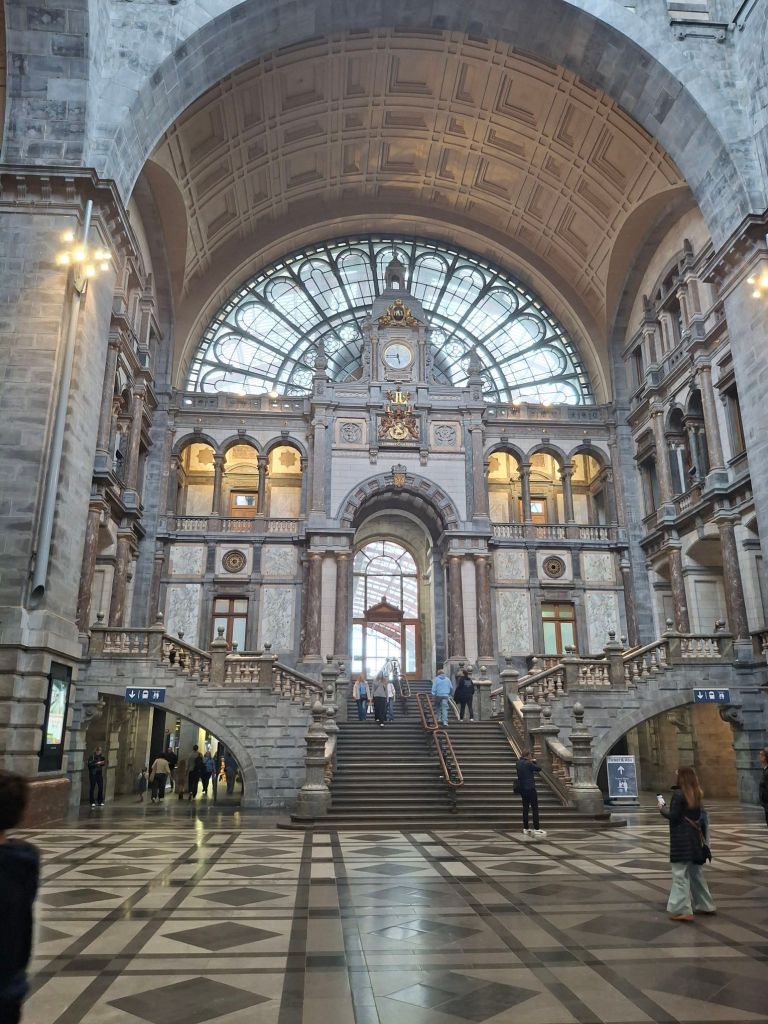
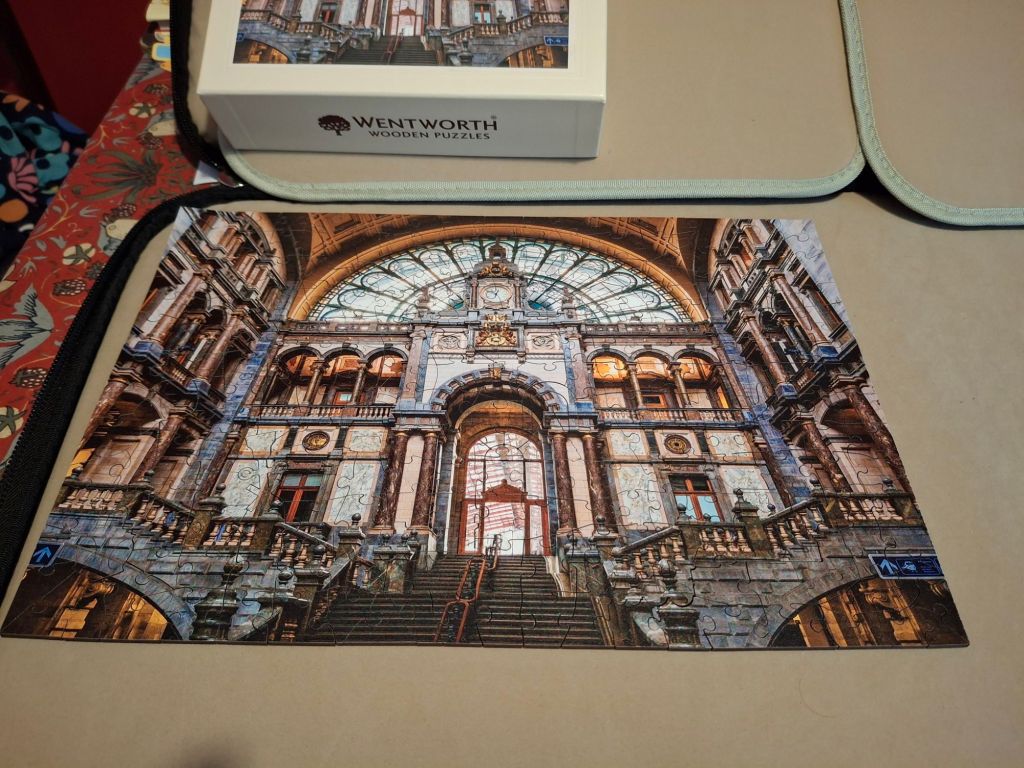
Antwerpen Centraal, Anvers Central, Antwerp Central station is a magnificent neo-Romanesque monument. I knew this, because I have a jigsaw puzzle which features the entrance hall.

So of course I had to go and look at it.

A completed jigsaw puzzle, next to its box. The image is a railway station hall with a lot of grey stone columns, a huge semi-circular window at the top, and some gilt decorations.

We were actually planning to go last year, before my mother died. That trip happened last June in the end, but was rather curtailed, and Antwerp was one of the bits we had to cut. So this year it got a trip of its own.

We took the night ferry from Harwich and, having taken the whole day off in order to get there with minimal stress, thought we might as well stay on the train to Harwich Town at the end of the line. It made for a pleasant, if breezy, wander, but it seemed to have jumped straight into the off-season and very little was open. That, combined with a poorly toddler who didn’t like the wind at all, rather limited our options. We were extremely relieved to find that a place called Tea@Patricia’s was open and serving very good cakes.

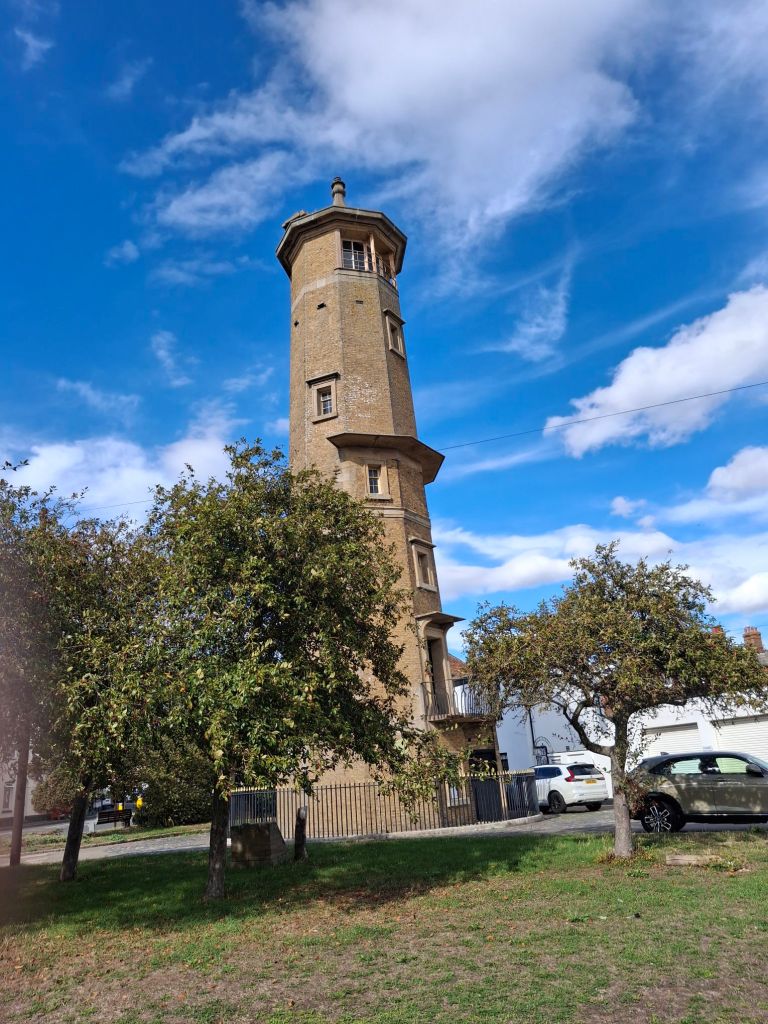
Tall lighthouse in grey-brown brick. It's a little way inland so there are trees, grass and cars around the base.
High lighthouse (there is a low lighthouse, too; I didn’t get a picture but I did get the principle. I’ve read Swallows and Amazons)
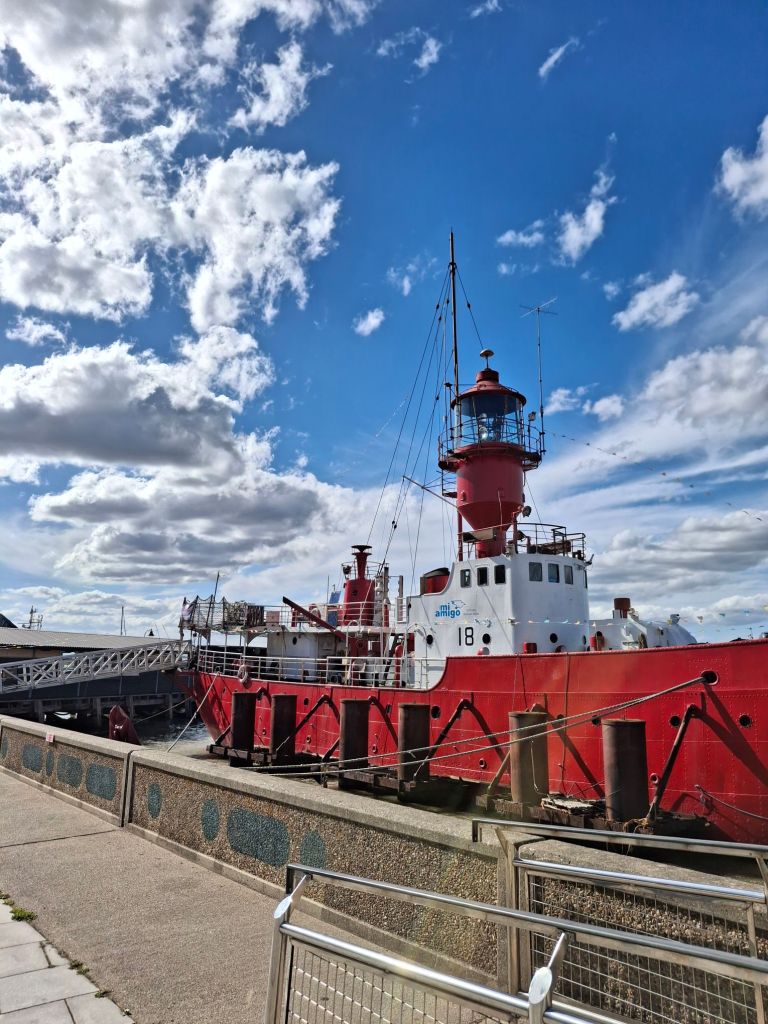
Boat with red hull, white deckhouse, and huge lamp in a red setting
Retired lightship, now home to an extremely pseudo pirate radio station (pseudo pirating, I mean: there’s a banner for BBC Essex round the other side)
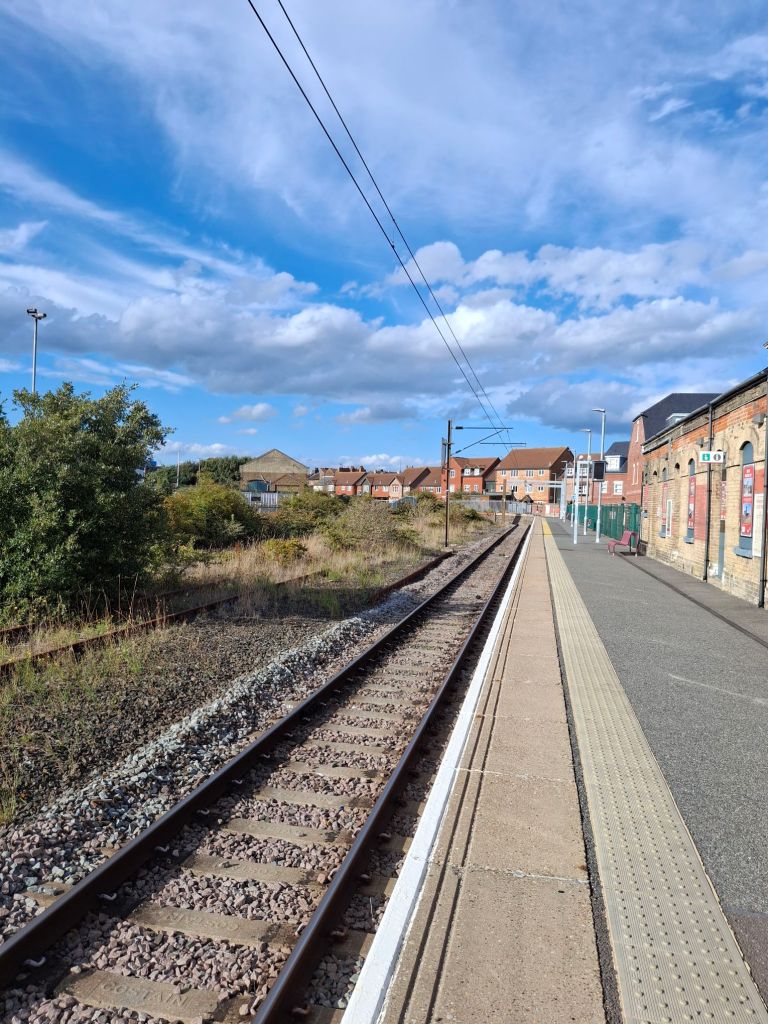
Single track railway line running alongside a single storey station building and coming to a stop at a wooden fence
End of the line

Even Patricia wouldn’t stay open until check-in opened, though, so we decided that the ferry terminal was as good a place as any to eat fish and chips. Very good fish and chips, as it turned out. (Take the train to Dovercourt and go to the Fish House.) I have no complaints about the food in Harwich.

Over the years my overnight ferry bookings have become steadily less spartan. Back in 2007 it was a reclining seat. Ten years later it was a cabin, but nothing fancy. This time round we went for the one with two beds (one double, one single), room to turn around in the bathroom, and a window. Luxury. But I am appreciating sleep more these days, and also somebody has to stay in the cabin after child bedtime, so it’s worth making it slightly nicer.

Anyway, no matter how luxurious, or otherwise, one’s sleeping arrangements, it is exciting to see the ship coming in, and a pain in the backside to get through security and entry/exit (I seem to have defective fingerprints; the officers keep asking me to press harder when I’m already pressing as hard as I can), and it is a long walk up the ramp, and it is very exciting indeed to step on board. And, assuming one gets to sleep, it’s great fun to go to sleep in one country and wake up in another. I’ve done this crossing a few times now, and the red lighthouse at Hoek van Holland is becoming a friend.

Then it’s light rail to Schiedam and main line into the middle of Rotterdam, and then you’re really talking connections. I saw a Swiss loco, complete with boxy pantograph and Jungfrau branding, trundling through the middle of Rotterdam Centraal as if we were thousands of metres above sea level rather than flirting with minus figures. We were only going to Belgium, but, you know, it’s still pretty cool to just buy a ticket to a different nation state from a machine in the booking hall and then step onto a train.

A direct train to Antwerp, bound for Brussels and stopping at Breda and Noorderkempen on the way. I was hoping for a double decker, but I don’t think they run those on the Eurocity route. I got a window seat, anyway. Coming from the Fens, it’s a familiar landscape you see from it, flat and green with trees and ditches ruling it into neat rectangles. Sometimes Doggerland feels like it’s only just under the surface of the water.

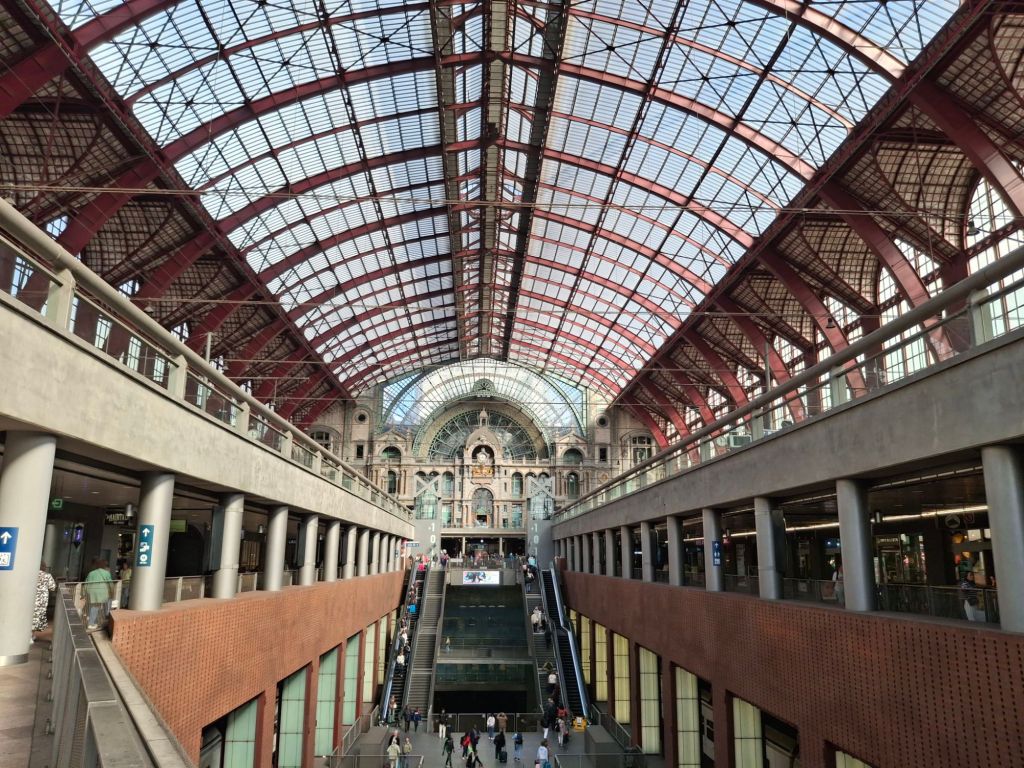
And then Antwerp. Of course, arriving, you don’t get the magnificence that the residents see when they book their tickets. It’s not bad, though. Arriving from the Netherlands, the train pulls up somewhere close to the Earth’s mantle and if the lifts are broken (they were) you have to navigate a series of stairs and escalators (roltrap in Dutch, lovely word), and as you ascend you see more and more of the  back view of that gigantic fanlight. There’s a certain Brutalist grandeur to the concrete platforms that draw the eye there, I suppose.

A railway station. At the centre of the image, in the distance, is a neo-Romanesque facade.

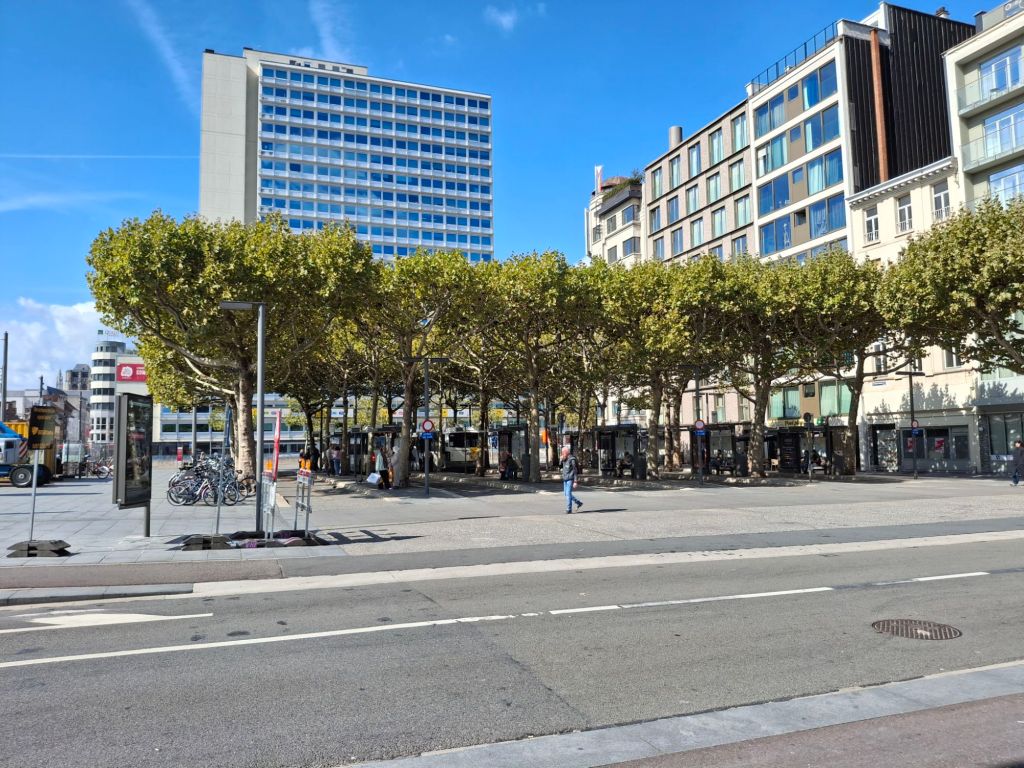
After our “metro at rush hour” experience in Lyon earlier in the year, I’d booked a room as close to the station as we could get, and I am making a note to myself here and now that this was a good idea and I should do it again. There’s the obvious practical advantage, of course, but it also makes it easier to avoid the magnetic draw of the historic, touristy bit. Plus there are trams and buses going to the historic, touristy bit, and plenty of places to eat. (Note: it would not be a good idea in Rotterdam, though.) In Antwerp there is also the zoo.

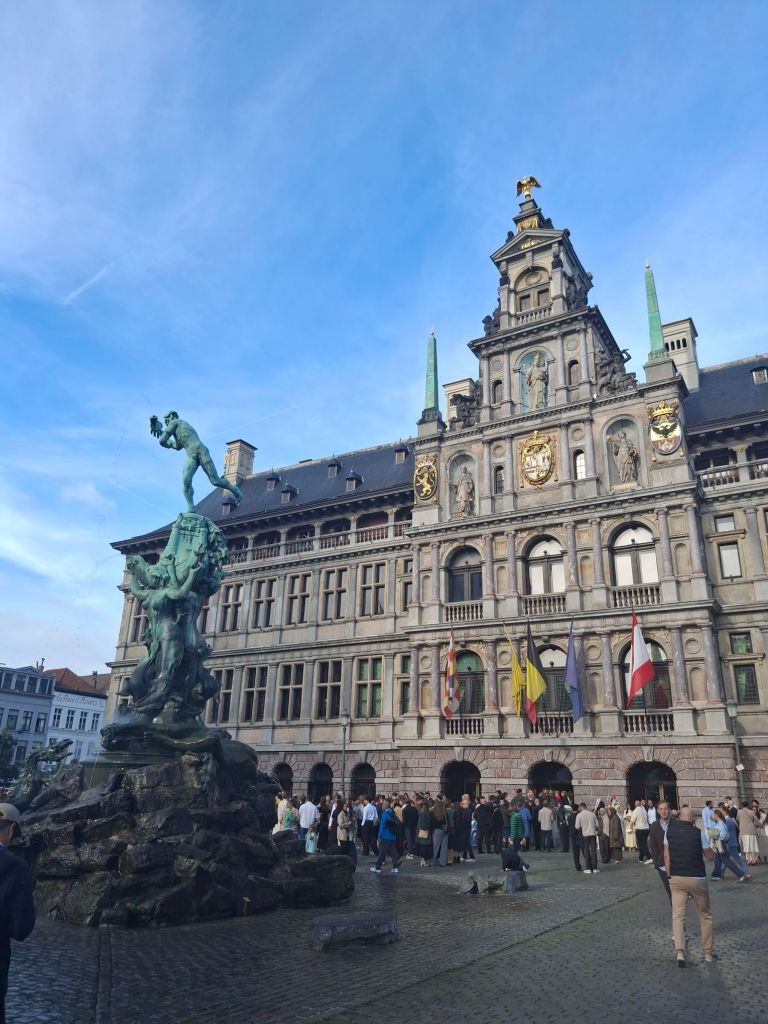
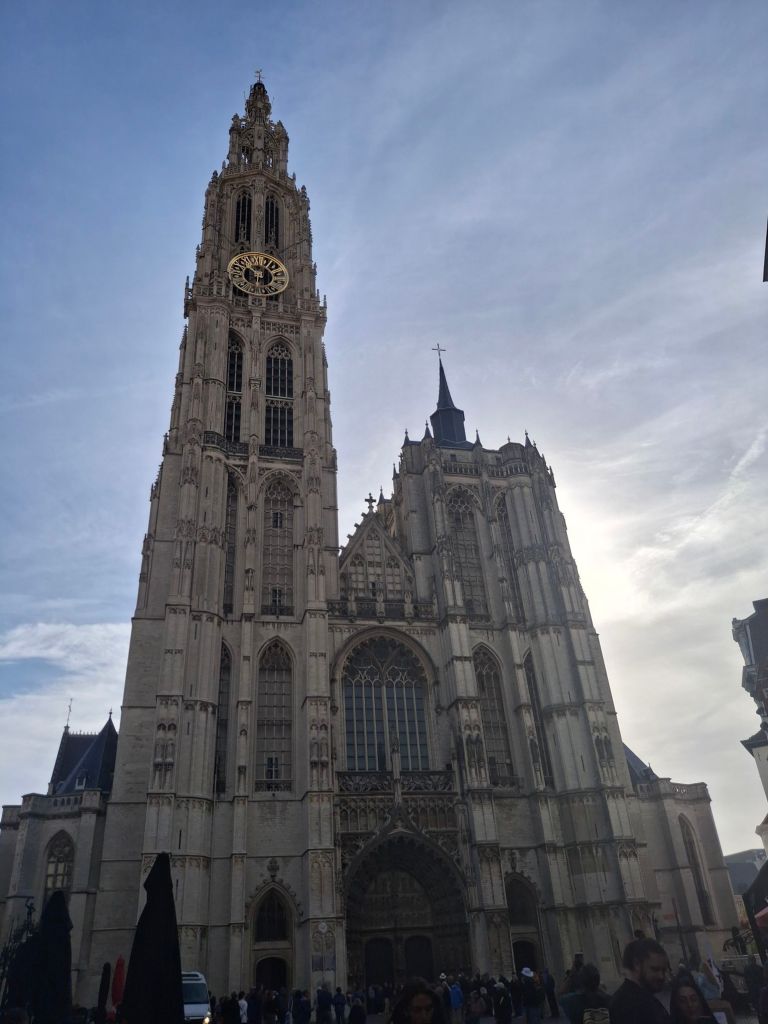
So that was our weekend: eating down the road from our hotel, wandering around the city in search of a playground; taking the tram to Melkmarkt for a glance at the square with the rococo fountain and the stepped gables, stopping to chat to a local mum and toddler (children are brilliant conversation starters), visiting the cathedral, and spending the entire afternoon at the zoo.

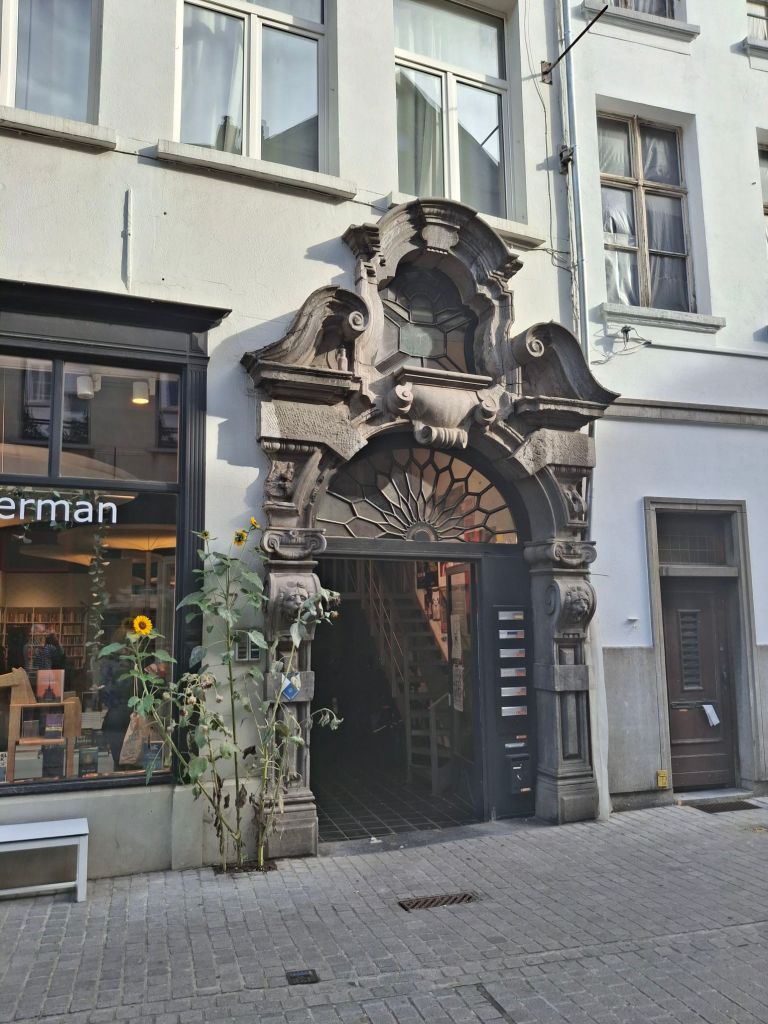
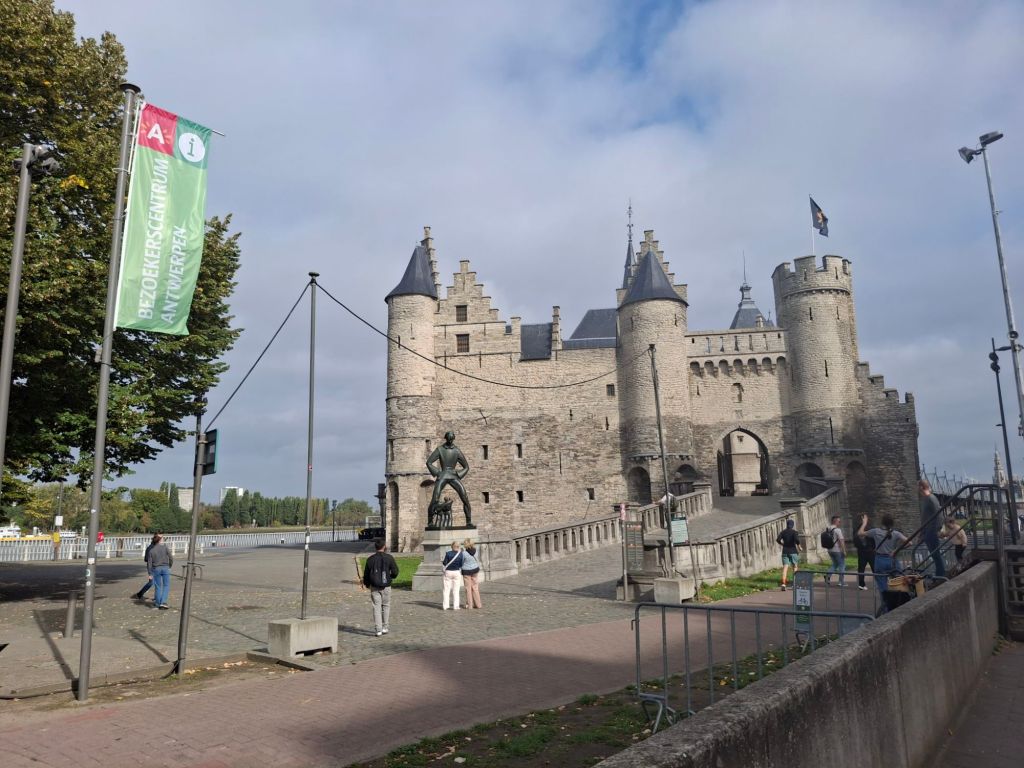
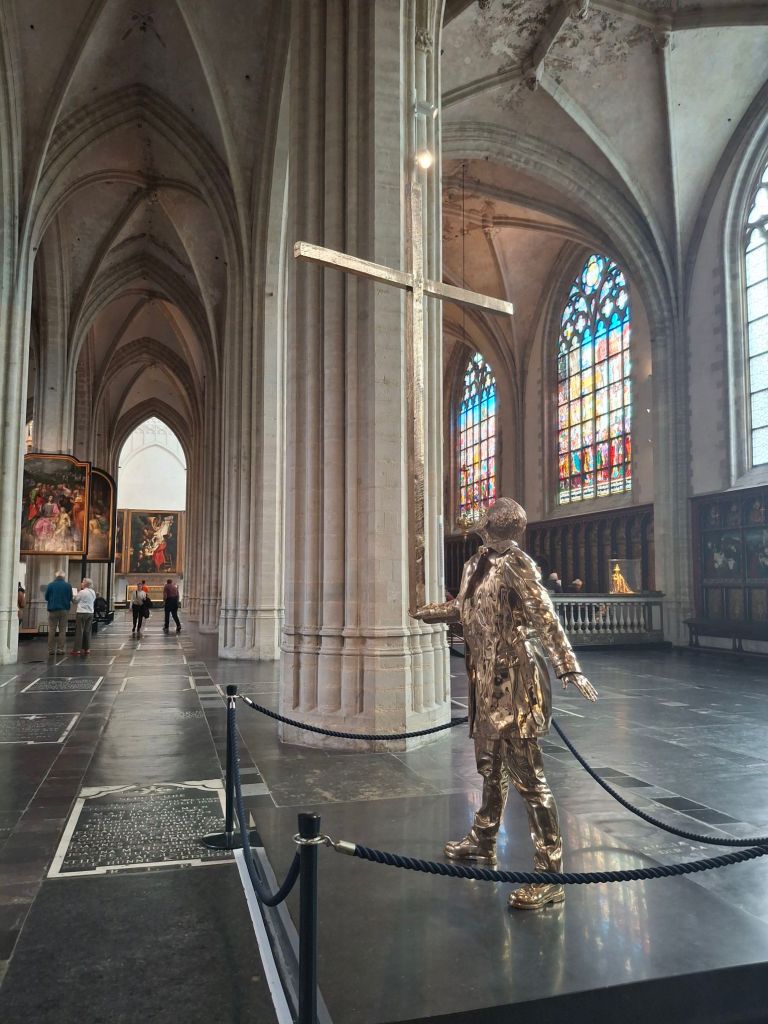
It was great. Chips with mayonnaise. Some awkward questions about what exactly is going on in Rubens’ Raising of the Cross and why is the baby sad. Coffee and toasties at a vegetarian café recommended by the local mum. A really satisfying wander around a Turkish-run ironmongery, resulting in the purchase of a pair of child’s sunglasses. A quick look at the exterior of the castle. Admiring art nouveau and art deco doorways.

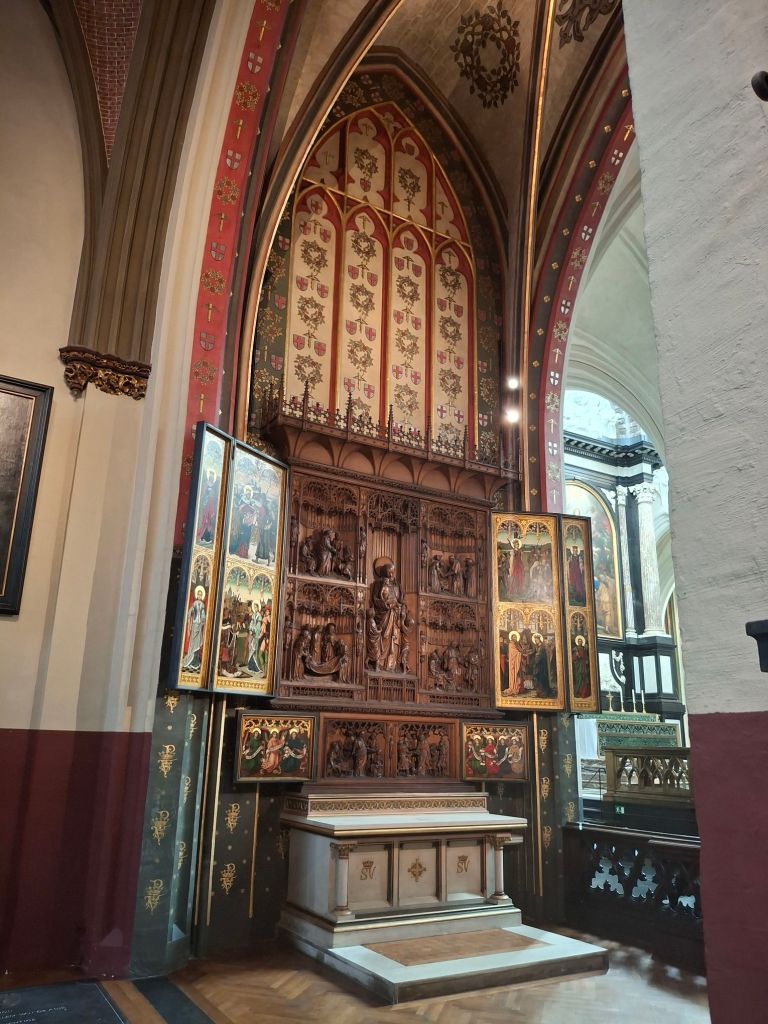
We paid to get into the cathedral and into the zoo and didn’t regret either. In general I disapprove of places of worship charging entrance fees, but Antwerp cathedral is free for locals and under-18s, and there was a really excellent, thoughtful and thought-provoking, leaflet, and I found that I didn’t mind. As for the zoo, gosh, that was a lot of money, but that was also a lot of zoo, which managed to be surprisingly spacious given it’s right in the middle of town, behind the station.

After the zoo we went into the station from the other side, and it did indeed look just like my jigsaw:

A railway station hall with a lot of grey stone columns, a huge semi-circular window at the top, and some gilt decorations. This is the same view as the picture in the jigsaw at the top of this post, but the frame is taller so we see more of the floor and ceiling. Also there are people in this shot.

It was almost too perfect. I was relieved to turn around and see a Prêt à Manger.

On Sunday it was raining in Antwerp and we could see it wasn’t raining in Rotterdam, so we returned to the station (discovering that it is indeed such a famous monument that an Asian couple was getting wedding photos done on the steps) and took a train north.

There is nothing helpful near the station in Rotterdam. There are various shops and fast food places in the station itself, but once you’re outside it’s a wasteland of bank headquarters and other forbidding high rise office blocks. But we’d worked this out the last time we were there, and we put our bags in the luggage lockers and took a tram to Beurs, which is the middle of the shopping district. We got welly boots in Hema and burgers and chips in Hkiki, and this was all very satisfying.

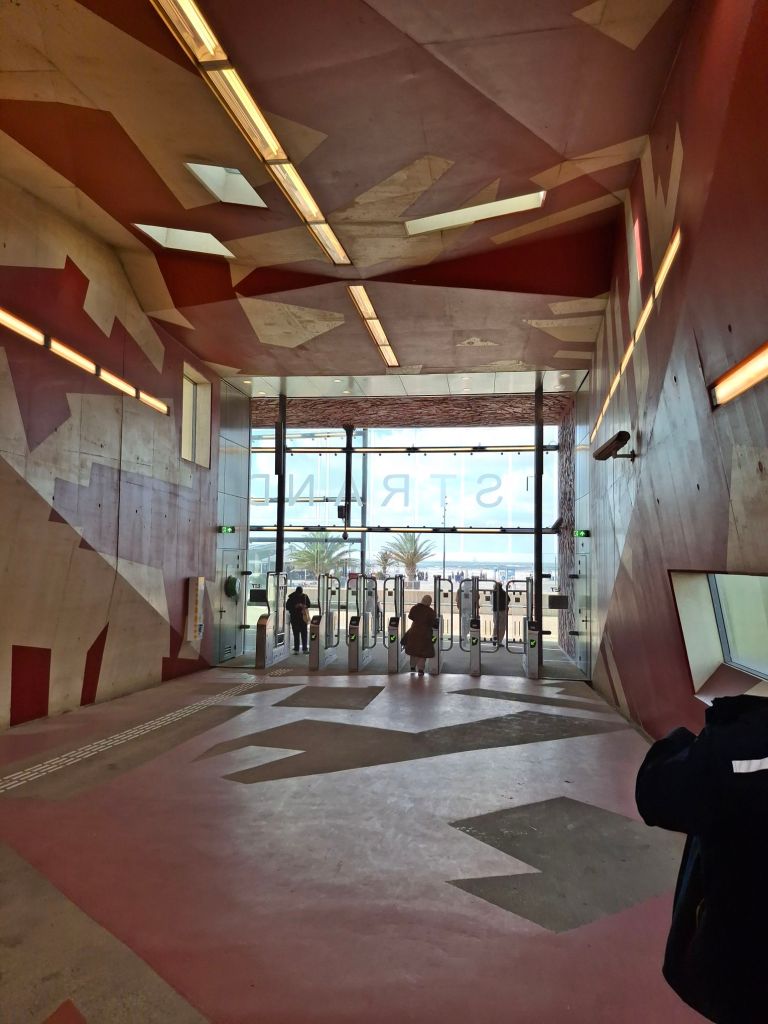
And finally, having gone to the end of the line at Harwich, we went to the end of the line at Hoek too, and spent a quarter of an hour on the beach, digging in the sand and watching other people’s kites, and then, when we were tired of the breeze, half an hour in a bar, watching the waves roll in. We saw our ship come in, too; and a couple of hours later we boarded it, and overnight it carried us home.

Automatic ticket barriers at a metro station; beyond them, sand and sea can be seen through the plate glass wall