Mapping Barchester

Strelsau
Strelsau, recreated from textual evidence in ‘The Prisoner of Zenda’, ‘Rupert of Hentzau’ and ‘The Heart of Princess Osra’

I’ve always had a thing for fictional countries. Ruritania, Evallonia, Syldavia, you name it. Gondal, Gaaldine and Angria. Slavonia. (Points if you can name the works they appear in.)

More recently – fine, over the last fifteen years – my focus has narrowed and I’ve become interested in fictional cathedral cities. Fictional English cathedral cities. I’m not aware of examples from outside my own country, but I may not have been paying attention.

There seem to be two main ways to create one.

You can rename an existing city and all its environs, as Susan Howatch does to make Salisbury into Starbridge. Or, to take a more extreme example, you can rename everything in an entire region, as Thomas Hardy does. Even Oxford – sorry, Christminster – isn’t safe.

Or you can be a little bit fuzzy about geography. You can imply that you’re referring to a real city –

The Rev. Septimus Harding was, a few years since, a beneficed clergyman residing in the cathedral town of ––––; let us call it Barchester. Were we to name Wells or Salisbury, Exeter, Hereford, or Gloucester, it might be presumed that something personal was intended; and as this tale will refer mainly to the cathedral dignitaries of the town in question, we are anxious that no personality may be suspected. Let us presume that Barchester is a quiet town in the West of England, more remarkable for the beauty of its cathedral and the antiquity of its monuments than for any commercial prosperity; that the west end of Barchester is the cathedral close, and that the aristocracy of Barchester are the bishop, dean, and canons, with their respective wives and daughters.

The Warden, Anthony Trollope

– or you can swear that you’re not . You can stretch the map and squeeze in an extra county or two:

The diocese of Lindchester is not large, squashed as it is between Lichfield to the south and Chester to the north; so don’t worry, we will not be travelling far.

Acts and Omissions, Catherine Fox

(Incidentally, I’m convinced that this is the only possible way to fit Ruritania in where Anthony Hope puts it: between Germany and Bohemia. Most adaptations make it far too small and far too far east. Roll up that map of Europe: this is fiction.)

My own approach is somewhere between the two. I plonked Stancester down on top of a real town (Ilchester – the crossroads is a dead giveaway if you look at a map of Roman Britain, though I appear to have drawn the below map of Stancester before visiting Ilchester and writing the chapter headings that deal with its history). The geography is plausible, but the rest is pretty much all made up. I suppose I think of it as a slightly alternate universe, where the railway went through there instead of through Yeovil, though I still haven’t worked out what that means for the Great Western line. I may have inadvertently erased Wells in the process. I didn’t mean to, but I’m not sure it’s plausible to have two cathedrals of such antiquity so close to each other.

Stancester
Stancester: the map I worked from, though it probably didn’t end up being entirely accurate

Or, of course, you can borrow somebody else’s, as Angela Thirkell did.

Or not put any thought into the matter at all, supplying no identifying detail. Kate Lace, I’m looking at you. And your Westhampton. Look, I know The Chalet Girl is filed under ‘romance’ or ‘chicklit’, but if you’re going to do Barchester you might put a little effort in. And do some research, and by ‘do some research’ I mean ‘not sending your Bible-bashing eco-warrior fundie bishop to a fundraising event wearing a “soutane”.’ I’m comparatively High Church – I once went to Sainsbury’s wearing a cassock – and I had to Google ‘soutane’. Turns out it’s a cassock.

Sorry, rant over.

For some reason there’s a lot more going on in the south and west than there is in the north and east, and if one assumed these cities all existed in the same universe England would have to reach further out into the Channel than it currently does. The Archbishop of Canterbury* (even Thomas Hardy didn’t overwrite Canterbury, so far as I know) has far more fictional dioceses to look after than does the Archbishop of York**. ‘Write what you know.’ Or, rather, ‘overwrite what you know’.

But where are they really? They’re not anywhere really, because this is fiction. Even if they started out being based on somewhere ‘real’, they become very different in their passage through the author’s head. Even if they keep the original name – Morse’s Oxford, for example – they remain a portrait of a city of thousands of souls as seen through a single pair of eyes.

And authors get things wrong, and so do readers. A recent reviewer thought that Speak Its Name had a very convincing Oxford atmosphere. I fear that Oxford would disagree. In fact, the point of Stancester is rather that it isn’t Oxford. Of current British students, only an extremely bitter Cambridge one would mistake Stancester for Oxford, and even they would only be pretending.

Besides, if I’d meant to write about Oxford, I’d have called it Christminster. Or would I? Never mind. The lovely thing about fictional places is that they aren’t real. You can write them any way you like, and write anything you like about them. Just make sure you get your soutane straight.


*Barchester; Christminster (plus everywhere else in Wessex); Starbridge; Westhampton (I would guess, unless maybe it’s meant to be somewhere in the Midlands?); Stancester, sorry…

** Lindchester… er, that’s it.
 

Talk of the Town


Antoinette before Bertha

I’ve been thinking more about Me Before You and ableism, and I think I’ve finally managed to pin down what disturbs me about the book. Spoilers, as before, for that book, and also for Wide Sargasso Sea by Jean Rhys and Jane Eyre by Charlotte Brontë, and for my Speak Its Name. As ever, there’s a picture first so that you have a chance to click away.

always another way of looking at the world

Another story from another book club

My current book club has a practice of actually discussing the book, which was a bit of a culture shock, but, you know, I’m getting used to it. There was an interesting discussion last time around about Wide Sargasso Sea, Jean Rhys’ reply to Jane Eyre. One member of the group had found the book dissatisfying. The bookseller had described it to them as a ‘feminist work’, and they were disappointed that the main character, Antoinette, retained very little agency and ended up thoroughly subjugated – in fact, in the same attic in which Brontë’s Rochester had incarcerated her over a century before.

I felt, and argued, strongly that Wide Sargasso Sea is indeed a feminist work. I don’t think that the fact that Jane Eyre still happens, that Rochester’s wife still ends up in the attic, stops it being feminist. I don’t believe that a book has to end ‘and they smashed the patriarchy and lived happily ever after’ for it to be feminist. I believe that feminist literature has as much of a responsibility to present the problems inherent in the world in which we’re currently living, and the consequent detriment to women, as it does to offer a glimpse of a world beyond that. If not, Virago’s output for most of the seventies, eighties and nineties was a huge waste of time. There has to be a place for books that portray the unpleasant aspects of the world we live in.

I put some things into Speak Its Name that I don’t agree with. Religiously-motivated abuse, homophobia, one-true-wayism. In fact, I put them in because I don’t agree with them. I think they’re absolutely awful. But they happen. I don’t think they should happen. I don’t think they have to happen. If my writing Speak Its Name (and generally being loudly queer and Christian) can contribute in even a minuscule fashion to a world where they stop happening, then I’ll be delighted. Besides, a novel where nothing controversial ever happens and all the characters agree with the author’s worldview is not going to be a very good book*.

So why am I still so suspicious of Me Before You?

After all, I’ve just said that it’s not anti-feminist to point out that it wasn’t much fun being a woman in a westernised culture in the early nineteenth century.

It’s not homophobic to point out that it’s not much fun being a lesbian in a socially/religiously conservative milieu.

It doesn’t have to be ableist to point out that it’s not much fun being disabled in early twenty-first century Britain.

The problem for Moyes is, I think, that she hasn’t quite picked up how much of the unpleasantness is contextual.There are moments where she almost gets it – the scene at the racecourse, with its accessibility nightmare topped off by the revelation that Will doesn’t like horseracing anyway, which would probably have emerged earlier had Lou not gone into ‘able saviour’ mode, is a lovely satirical demonstration of the social model of disability at work. But Moyes and her hero Will both seem to have bought into the idea that this is how things are always going to be. Disabled parking spaces will never be in an appropriate place, ramps will always be too steep, well-meaning non-disabled people will never stop to ask what a disabled person actually wants or needs… This is always going to be a world, says Me Before You, that a disabled person literally would not want to live in. And it never stops to ask whether that might be something to do with the world as opposed to the person.

I don’t believe that. I don’t believe that’s the way that the world has to be. Sadly, I don’t believe that Me Before You‘s lazy assumptions about what being disabled is actually like have contributed to changing it.


*There were originally three speeches in Speak Its Name that express my pure opinions, which I would have happily claimed for myself regardless of who was saying them or what the context was. Two of them I gave to Peter. One of those was the rant about bus preservation, which isn’t particularly relevant to this post and got deleted anyway. The other comes a couple of paragraphs before the end of the Summer chapter, where he tells Lydia that God always welcomes her, and that anyone in the Church who doesn’t has got it’s wrong. That’s all me. Well, my High Church reader pointed out that Peter would say ‘the Church here on earth’, but apart from that it’s me.

And the third was Abby’s point, very near the end, about the hidden bisexuals. At the time I wrote it, that was my own experience. Not any more – but that’s another story.

Overload before Me before You

Here’s how this post works. I talk a bit about a book club I used to belong to. Then there’s a picture of an electricity pylon. Then there’s a content note. Then there’s the same picture of an electricity pylon. Then there are spoilers for Me Before You by Jojo Moyes, and for Overload by Arthur Hailey. If you wish to avoid spoilers, stop reading before you get to the pylon.

My previous office had a book club. From the beginning the emphasis was more on the ‘club’ than the ‘book’. At first we waited until everyone had read the book before we arranged the meeting. When we realised that it had taken us two years to read eight books we started going ahead with the meetings regardless of how many people had got through the one in question. The result of that was that the meetings became five minutes of book talk against two hours of gossip. The night we were meant to talk about Me Before You was hijacked by… in fact, I think it was my leaving do – and we never talked about the book at all. It’s been in the news, and therefore my mind, recently, and so I’m going to talk about it now.

Here is that picture of the electricity pylon that I was telling you about

[content note: discussion of euthanasia in fiction in the remainder of this post and in the external posts linked to]

Here is that picture of the electricity pylon that I was telling you about

I’ve been following the coverage around the release of the film version of Me Before You with some interest. I was troubled by the book at the time that I read it, over two years ago now, but what with one thing and another (read: my leaving do) never got around to discussing it.

If you want an itemised list of the problematic aspects of Me Before You, I can’t do better than refer you to this comprehensive sporking by Cara Liebowitz.In fact, I’m going to quote her summary, too:

“Me Before You” is a novel turned movie that focuses on Louisa, who takes a job as a personal care attendant for a wealthy quadriplegic man who hates himself, her, and everyone around him, in that order. She falls in love with him, though she can’t dissuade him, in the end, from going to Dignitas in Switzerland to end his life. Because being disabled is soooooooooo terrible and tragic, didn’t you know?! /sarcasm

The problematic aspects of Me Before You can be sorted into the following categories:

  • ableist attitudes coming from a sympathetic but ill-informed character, deliberately intended to present them as ill-informed
  • ableist attitudes coming from an unsympathetic character, deliberately intended to present them as unsympathetic
  • relatively realistic portrayals of the obstacles
  • coming from a sympathetic character, unintentionally presenting an ableist attitude as objective fact
  • an overarching ableist assumption by the author herself

My impression is that I would sort these differently from the way that Liebowitz does, and other readers will of course sort them their own ways. I’ll also refer you to this post by disabled writer David Gillon. Whether Jojo Moyes would agree with any of us is of course another question, and to a certain extent is irrelevant.

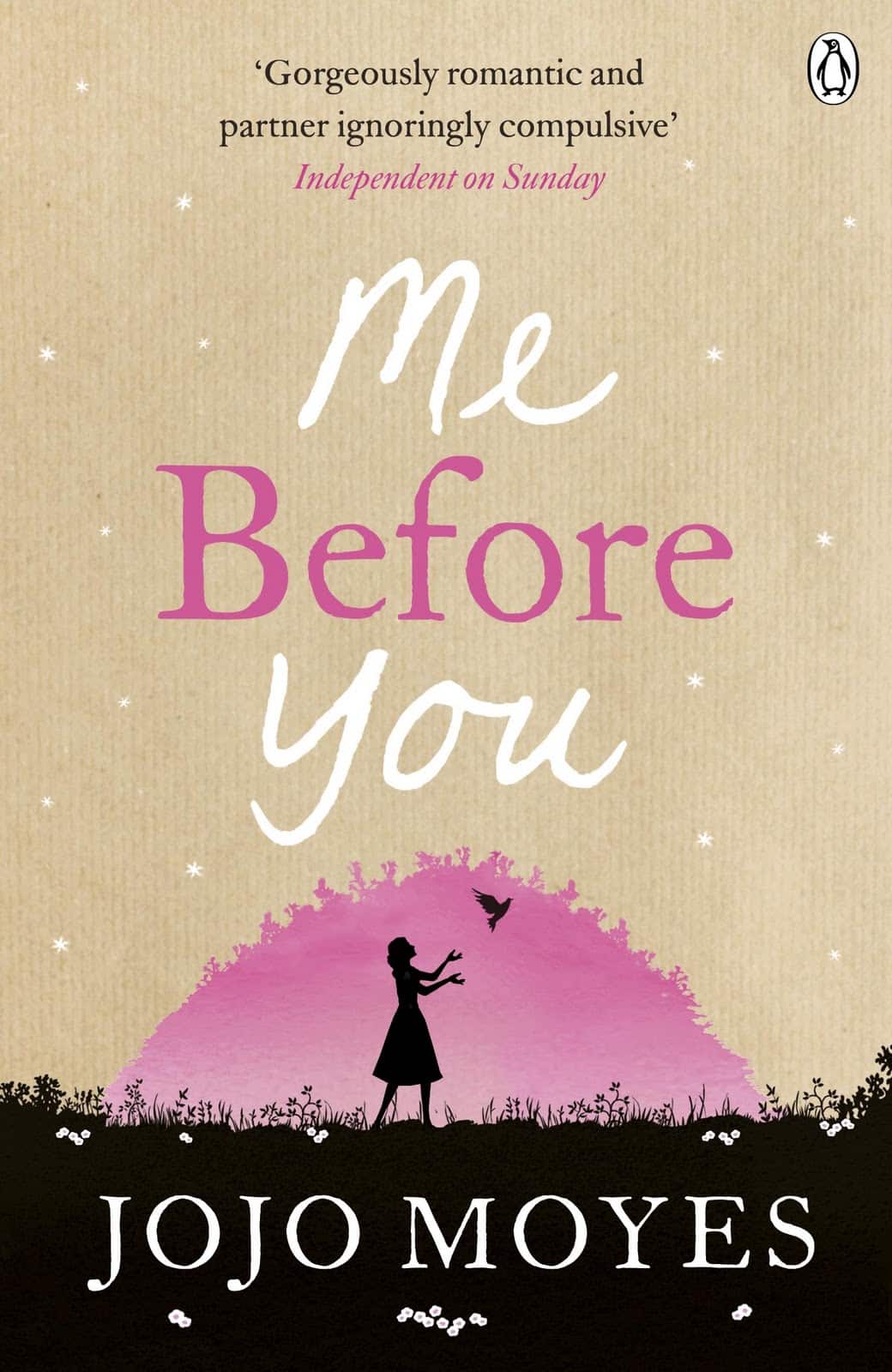
My own feeling is that she forfeits the benefit of the doubt. Choosing the ending that she does – for which I was basically prepared from the start by the cover of the paperback edition I read, which makes some problematic assumptions of its own – she acquiesces to the prevailing cultural narrative that it’s better to be dead than disabled. She never really interrogates that, not in any meaningful way, and the net result is that Will gets no character development whatsoever.

Of course there’s an argument to be made about autonomy, and personal choice, and what that looks like when physical capability is restricted, but, contrary to the protestations of the film director, the direction that Me Before You chooses doesn’t feel like the ‘brave’ one to me. In fact, it felt far less progressive than Arthur Hailey’s Overload, which, though it was written thirty-three years earlier, I’d read only a couple months before.

Overload is magnificently tacky, and occasionally plain bizarre. It has ecoterrorism, irresponsible parenting (don’t let your children fly kites near overhead lines, people), a man who loses his penis and is promised a prosthetic one, some frankly appalling health and safety failings, and an equally appalling protagonist who spends the book shagging his way around the female half of the cast list. And mostly this makes my skin crawl, but

One of said cast list is Karen Sloan, who is a far less miserable and more interesting fictional quadriplegic than Will Trainor. She’s portrayed as a sociable, attractive woman who desires and enjoys sex, who desires and enjoys life. She has a fulfilling social life. A neighbour’s child regards it as a privilege to perform small acts of care for her.  Her eventual death, when the overload of the title leads to her respirator running out of battery, is presented as a tragic accident, not a ‘merciful release’.

I’ve been taking notes on how not to fail on my own account. After all, Wheels or Bonk or whatever we’re calling it these days has a disabled main character and a non-disabled narrator who starts out as a clueless jerk. Some things I’m going to try:

  • undermining my unreliable narrator from page one
  • reading around the subject more. A lot more.
  • extrapolating from my own experience
  • having a happy ending for everyone
  • getting a friend who has a similar condition to my disabled character to read the damn thing and tell me where I’ve messed up
  • offering her copious amounts of gin for her trouble

It really doesn’t feel like rocket science. Perhaps ‘fail less than Me Before You‘ is just a very low bar.

Unreliable narrators: a pet peeve

In this post I talk about unreliable narrators in works by various authors, some of whom are or were very prolific, and some of whom are famous for only one or two works. I don’t name any of the books, but in some cases it won’t be difficult to work out. I also discuss the career choices of characters in Little WomenThe Princess Diaries, and the Chalet School series. I’d advise you not to read on if spoilers particularly bother you.

I am also more opinionated than usual, and don’t apologise for it, though I respect your right to enjoy books that I don’t, or not enjoy books that I do. This is, as ever, implied.

Here follows a picture of some street art to give you a chance to escape.

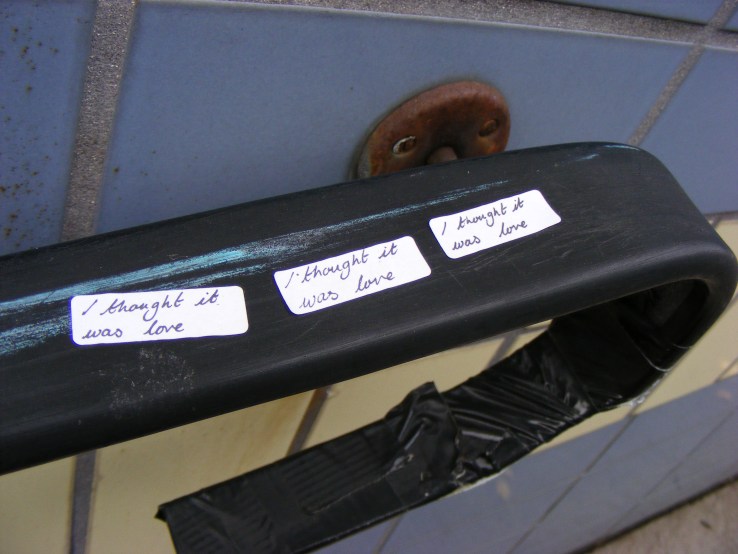
"I thought it was love"
“I thought it was love”

I mentioned a couple of weeks ago that I enjoy writing unreliable narrators. I enjoy reading them, too. I like to see convincing human beings with their own little biases and weaknesses, who think they’re being ever so objective but are in fact revealing their assumptions and prejudices on every page.

What I am not so keen on is the recent trend for malicious, self-consciously unreliable narrators, the ones who turn on you when you get to the end of the book and say, ‘oh, sorry, did you believe me? MORE FOOL YOU! I’m WRITING A BOOK, you know, and I can write LIES if you like!’

There are two reasons why it annoys me.

Firstly, it breaks the fourth wall and, with it, the implied understanding between author and reader.

I’ve never been particularly interested in reading about writers. I remember getting annoyed by the number of heroines of children’s books who wanted to be, or indeed became, writers. There are an awful lot of them, starting with Jo March in Little Women and stretching all the way to Mia Thermopolis in The Princess Diaries. Almost certainly further, in fact. Joey Maynard in the Chalet School was particularly irritating: she was in a school story, writing school stories. How far down did it go? There are good reasons for this, of course, like the dearth of respectable careers for women in the nineteenth century, but I always felt it betokened a certain lack of imagination.

Something of this irritation has carried over into my reaction to unreliable narrators. I don’t want to be reminded all the time that I’m reading something that’s been written. If good prose is like glass, allowing you to see through it to the story, then reading about writers writing is like a frosted bathroom screen – and getting to the end of a story that turns out to have an unreliable narrator is like walking through a plate glass window. Dramatic, but not actually something you want to do all that often.

Which brings me to my second objection. It’s a bit overdone, and I think it could do with a rest. It’s not just the thriller writers who are at it: big litfic names like Ian McEwan and Lionel Shriver have produced knowing, irritating, unreliable narrators in the last decade or so, and there are only so many times that I can enjoy reaching the end of a book to find that everything that came before is basically meaningless. Apart from anything else, a character who’ll pull that on you is probably not a character with whom you want to share too much headspace.

So far as I’m concerned, you get one free pass on that trick. Not one free pass per author, either. One free pass per reader. And Agatha Christie took mine, years ago.


On letting characters be human

When humans act like humans, and rabbits act like rabbits...
When humans act like humans, and rabbits act like rabbits…

Characters are human. (Well, unless they’re rabbits, or purple aliens from the planet Zog.) That being so, they need to act like humans. (Or rabbits, or purple aliens from the planet Zog – but if you want the reader to relate to them, they’d better act at least a little bit like humans too.)

The most difficult thing I found, writing Speak Its Name, was letting characters act in ways that are damaging, malicious, or just plain stupid. I am, myself, pretty conflict-averse, and would like nothing better than for everybody to sort out their differences over a cup of tea. But not all my characters are, nor should they be if I want my book to be at all interesting, and sometimes I have to just let them have a row. As a reader, I often find myself muttering ‘No! Don’t! Run away now!’, knowing all the while that yes, they’re going to stay right there and do it. Because that’s who they are, that’s how they’re written, and if I were them and I were in that situation I’d probably do exactly the same thing. As a reader, I have a certain detachment. As a writer, I have to step back and let them ruin their own lives.

The only story I have come across where nobody acts out of either incompetence or malice is The Martian, and the only reason that gets away with it is because the inhospitable expanse of space and the implacable nature of physics provides enough challenge to drive the plot. Elsewhere, we rely on human frailty and incompatibility to do it, and there’s plenty of that around.

People are not perfect. People say the wrong thing, people act selfishly, stupidly, irrationally. They do the right thing for the wrong reasons. They do the wrong thing for the right reasons. Why should fictional people be any better than the rest of us?

Then there’s ‘use your words’. It’s excellent advice for the real world, but until the real world actually starts acting like that, it’s not much help for fiction. Yes, the plot where the heroine never tells the hero that the man she was hugging was her brother is a cliché, but has anybody actually written it since about 1895? It’s irritating because it’s not believable, but unbelievable competence is just as irritating.

‘I feel that if a person can’t communicate, the very least he can do is to shut up,’ said Tom Lehrer, and in real life that’s what most people do. Expecting all of your characters to communicate all of the time is implausible, even if – no, particularly if – it’s about something very personal and important. Doubly so if they’re from a background that expects them to – what’s that revolting phrase? – keep calm and carry on. Let’s just say that I was not at all surprised when the marriage of Amy Pond and Rory Williams broke up.

What I really want is consistency. I can just about believe that the entire cast of The Martian would maintain the peak of competence for the duration of the action, but only because they’re very highly trained astronauts and scientists, and only just about. You can give me a character who uses their words if you like, but you’d better make me believe that they were brought up to it, or that they’ve done a lot of work on their communication skills.

Theoretically, it ought to be possible  to write a convincing story where the heroine has a very good reason for not revealing her brother’s identity, and the hero is just the suspicious, possessive type to jump to conclusions. In Speak Its Name I have one character who withholds vital information from everybody – almost including herself – for a good third of the book because she honestly believes that this is the kindest and best thing to do. Humans don’t always act for the best, and nor should characters.

Having said all that, I was very relieved indeed to have an excuse to take out the next two weeks’ worth of deleted scenes, because I actually didn’t enjoy letting one of my favourite characters act like an idiot.

University of Barchester: a question of genre

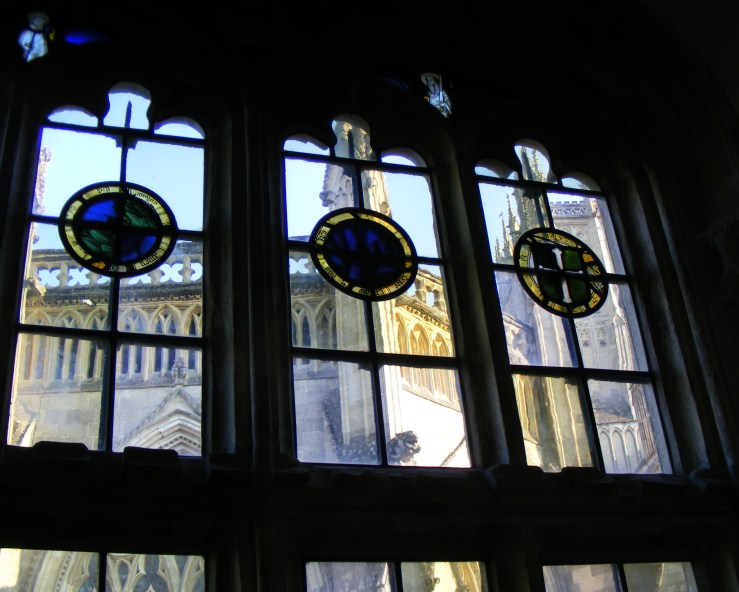
3-2013 August Wells 028Somebody asked me today, ‘What sort of stuff do you write?’ And I, as ever, went, ‘Erm…’

I’ve never been good with genre. At one point I deleted the entire genre column from my iTunes. It seemed silly to have Carmen, Hildegard of Bingen and Haydn all filed under ‘Classical’, but separating them out into ‘Opera’, ‘Sacred Vocal (medieval)’ and, well, ‘Classical’, I suppose, was far too much like hard work for something I didn’t much care about.

I feel rather the same way about books. There are certain tropes that I like, but they aren’t exclusively found in any particular genre. For example, I like stories about large, messy households with complicated but functional relationships. One starts with Ballet Shoes – at least, I did – but one might equally read one of Streatfeild’s books for adults. Grass in Piccadilly, for example. Back to children’s books, and there’s the Casson family series. From there it’s not a long leap to school stories (but not all school stories, by any means) – but it’s also not far to science fiction. A spaceship is, after all, just another sort of household.

This is possibly the reason that nobody is prepared to publish Speak Its Name: if I don’t know which shelf it should go on, how on earth will anyone else? Usually I evade the question by admitting that the working title was, for several years, University of Barchester.

Speak Its Name does owe something to Anthony Trollope and the horrible high-minded mess depicted in The Warden. Trollope’s successors, too. It’s just that the chief players in my ecclesiastical scandal are about thirty-five years younger than theirs. Speak Its Name isn’t, admittedly, the first in the University of Barchester subgenre: it’s partly an irritated riposte to the bit in Dear Bob – which might have been the first Univ. Barset book – where concern over the protagonist’s sexual orientation all turns out to just be a hilarious misunderstanding.

And then there’s the other thread: the succession of American teen coming-out books, starting, I suppose, with Annie On My Mind, and continuing in the present day with the works of David Levithan and Alex Sanchez. We didn’t, and don’t have anything like the same tradition over here. Even Jacqueline Wilson, prolific and prepared to deal with ‘difficult’ issues as she is, has only included one gay main character that I’ve noticed. I suspect that’s due to the lingering effects of Section 28. When I was a teenager, the only teen book I came across that dealt with anything resembling LGBT themes was Dare, Truth or Promise, which was published in New Zealand. I don’t know how it got into the school library, but I’m very glad it did.

Having said that, Speak Its Name was never intended to be a teen book, and it isn’t one now. Too much swearing, for a start, and the characters are just that tiny bit too old. Oh well, whatever. I say ‘University of Barchester’, and the sort of people who would be interested in that kind of a book know exactly what I mean. I say ‘University of Barchester with a strong f/f element’ and that pretty much covers it. One of the great advantages of self-publishing is that I no longer have to care.

While I’m on that note: yesterday evening I sent off the application form to get an ISBN. Shit got real.