Mapping Barchester

Strelsau
Strelsau, recreated from textual evidence in ‘The Prisoner of Zenda’, ‘Rupert of Hentzau’ and ‘The Heart of Princess Osra’

I’ve always had a thing for fictional countries. Ruritania, Evallonia, Syldavia, you name it. Gondal, Gaaldine and Angria. Slavonia. (Points if you can name the works they appear in.)

More recently – fine, over the last fifteen years – my focus has narrowed and I’ve become interested in fictional cathedral cities. Fictional English cathedral cities. I’m not aware of examples from outside my own country, but I may not have been paying attention.

There seem to be two main ways to create one.

You can rename an existing city and all its environs, as Susan Howatch does to make Salisbury into Starbridge. Or, to take a more extreme example, you can rename everything in an entire region, as Thomas Hardy does. Even Oxford – sorry, Christminster – isn’t safe.

Or you can be a little bit fuzzy about geography. You can imply that you’re referring to a real city –

The Rev. Septimus Harding was, a few years since, a beneficed clergyman residing in the cathedral town of ––––; let us call it Barchester. Were we to name Wells or Salisbury, Exeter, Hereford, or Gloucester, it might be presumed that something personal was intended; and as this tale will refer mainly to the cathedral dignitaries of the town in question, we are anxious that no personality may be suspected. Let us presume that Barchester is a quiet town in the West of England, more remarkable for the beauty of its cathedral and the antiquity of its monuments than for any commercial prosperity; that the west end of Barchester is the cathedral close, and that the aristocracy of Barchester are the bishop, dean, and canons, with their respective wives and daughters.

The Warden, Anthony Trollope

– or you can swear that you’re not . You can stretch the map and squeeze in an extra county or two:

The diocese of Lindchester is not large, squashed as it is between Lichfield to the south and Chester to the north; so don’t worry, we will not be travelling far.

Acts and Omissions, Catherine Fox

(Incidentally, I’m convinced that this is the only possible way to fit Ruritania in where Anthony Hope puts it: between Germany and Bohemia. Most adaptations make it far too small and far too far east. Roll up that map of Europe: this is fiction.)

My own approach is somewhere between the two. I plonked Stancester down on top of a real town (Ilchester – the crossroads is a dead giveaway if you look at a map of Roman Britain, though I appear to have drawn the below map of Stancester before visiting Ilchester and writing the chapter headings that deal with its history). The geography is plausible, but the rest is pretty much all made up. I suppose I think of it as a slightly alternate universe, where the railway went through there instead of through Yeovil, though I still haven’t worked out what that means for the Great Western line. I may have inadvertently erased Wells in the process. I didn’t mean to, but I’m not sure it’s plausible to have two cathedrals of such antiquity so close to each other.

Stancester
Stancester: the map I worked from, though it probably didn’t end up being entirely accurate

Or, of course, you can borrow somebody else’s, as Angela Thirkell did.

Or not put any thought into the matter at all, supplying no identifying detail. Kate Lace, I’m looking at you. And your Westhampton. Look, I know The Chalet Girl is filed under ‘romance’ or ‘chicklit’, but if you’re going to do Barchester you might put a little effort in. And do some research, and by ‘do some research’ I mean ‘not sending your Bible-bashing eco-warrior fundie bishop to a fundraising event wearing a “soutane”.’ I’m comparatively High Church – I once went to Sainsbury’s wearing a cassock – and I had to Google ‘soutane’. Turns out it’s a cassock.

Sorry, rant over.

For some reason there’s a lot more going on in the south and west than there is in the north and east, and if one assumed these cities all existed in the same universe England would have to reach further out into the Channel than it currently does. The Archbishop of Canterbury* (even Thomas Hardy didn’t overwrite Canterbury, so far as I know) has far more fictional dioceses to look after than does the Archbishop of York**. ‘Write what you know.’ Or, rather, ‘overwrite what you know’.

But where are they really? They’re not anywhere really, because this is fiction. Even if they started out being based on somewhere ‘real’, they become very different in their passage through the author’s head. Even if they keep the original name – Morse’s Oxford, for example – they remain a portrait of a city of thousands of souls as seen through a single pair of eyes.

And authors get things wrong, and so do readers. A recent reviewer thought that Speak Its Name had a very convincing Oxford atmosphere. I fear that Oxford would disagree. In fact, the point of Stancester is rather that it isn’t Oxford. Of current British students, only an extremely bitter Cambridge one would mistake Stancester for Oxford, and even they would only be pretending.

Besides, if I’d meant to write about Oxford, I’d have called it Christminster. Or would I? Never mind. The lovely thing about fictional places is that they aren’t real. You can write them any way you like, and write anything you like about them. Just make sure you get your soutane straight.


*Barchester; Christminster (plus everywhere else in Wessex); Starbridge; Westhampton (I would guess, unless maybe it’s meant to be somewhere in the Midlands?); Stancester, sorry…

** Lindchester… er, that’s it.


Talk of the Town


Unlikely writing techniques 5: write whatever the hell you like

This is not exactly a new idea. I have heard it expressed thus:

Write drunk. Edit sober.

Google tells me that Hemingway didn’t say that. I don’t write drunk myself, because if I’m drunk I’m either in company or about to fall asleep. None the less, it points towards a helpful concept.

Or – which perhaps gets closer to the point that Hemingway might have been trying to make, assuming he’d said anything like, Write drunk, edit sober:

Begin by putting in everything you like. Finish by taking out everything you can.

I don’t know who said that, but I owe them a lot. Do you know? Google’s no help at all; it’s just sending me to sanctimonious anti-procrastination blogs.

Here are some important principles:

  1. Nothing is going to be perfect on a first attempt.
  2. If something is not fun, people are less likely to do it.
  3. There is nothing wrong with making it fun.

There is a lot of suspicion about this kind of thinking. Received wisdom says If It’s Not Difficult, It’s Not Worthwhile, and No Pain, No Gain, and other upright, joyless maxims.

To all of which I say, well, maybe. But I feel very strongly that the reverse does not hold true. The fact that a writer made themselves absolutely miserable during the writing process does not automatically make the finished project readable. In fact, it makes it very likely that there will never be a finished project.

What writing whatever the hell you like looks like will vary. Here are some examples.

Skipping the difficult bits

I’ll say more about this another day, because I suspect it’s of limited application, but I am living proof that there are more ways to approach writing than –

Begin at the beginning, and go on until you get to the end, and then stop.

If what’s in my head at the moment is the climactic battle scene, then I write the climactic battle scene and trust that the rest will follow. Personally, I find it very useful to have something to aim at.

You might not want to skip straight to the climactic battle scene, but if you’re having trouble working out how your antagonists meet in the first place, it’s worth beginning with the very vivid picture that you’ve had in your head for weeks, with one of them hiding up a tree and the other eating a picnic underneath it. Or whatever it is.

But really, when the entire internet is banging on about how important it is to nail the first line, is it surprising that many writers never get to the second line? Skip the first line. It’ll come in its own good time.

Writing ‘unpopular’ themes

Anyone who’s interested in being published conventionally by somebody else should probably skip this section, because I’m writing this from a place where I don’t give a damn about pleasing anybody else, and I’ve never worked out how to please a publisher.

Nobody this side of the Pond wants to publish a book about an evangelical Christian lesbian at university, with bonus internecine student politics. But I wanted to write it, and it turned out that a fair few other people wanted to read it. And it may sound like a statement of the obvious, but if I hadn’t been writing what I wanted, I doubt I’d have been able to finish it.

If all of us stuck to writing what publishers thought would sell, fiction would be very pale, male and stale. The #WeNeedDiverseBooks hashtag exists for a reason, and if you have more patience than me and are prepared to persuade a  mainstream publisher to pick up a story that looks a bit different from everything else on the shelves then I wish you the very best of luck.

And, not to seem too serious, if you want to write about Romans when conventional wisdom says it’s going to be Vikings for the next five years, then go with the Romans.

Writing ‘unnecessary’ things

I also put in all sorts of self-indulgent in-jokes, trying-too-hard symbolism, author filibusters, and mots d’escalier, because it amuses me to do so. Sometimes ‘what I’d have said to Mrs Smith about my missing homework if only I’d thought of it in time’ becomes a piece of sparkling dialogue. Once, writing under a different name, I gave the heroine a Cousin Teresa in a nod to the Saki story, and Cousin Teresa ended up a very important character. There’s a bit in Speak Its Name that got there purely because I’d been dealing with too many standing orders committees and wanted to relieve my feelings by writing a truly incompetent motion.

Sometimes… Well, that’s where we get to:

The second half

You will have noticed that I’ve talked a lot about the ‘putting in’, the ‘drunk writing’, and not much about the ‘sober editing’, the ‘taking out’. That’s partly because you may end up taking out less than you expect of what you put in when you were writing what the hell you felt like. Or you may not. I don’t know. Rory’s dreadful motion to the Students’ Union stayed in; Peter’s thoughts on Bristol VRs didn’t. Nor did quite a lot of stuff that seemed very necessary and worthy when I wrote it.

But it’s mostly because my main point today is about having fun, and giving oneself permission to have fun. I might talk more about editing another time, but in the meantime I’m going to refer you to Joanne Harris, who talks more sense about writing than pretty much anyone else on Twitter.

None of which is to say that editing cannot be fun, or at the very least satisfying. I rather enjoy it, myself (and don’t think I don’t know about cutting huge chunks that I really loved writing); I understand that for others it can feel like cutting off one’s own arm. In which case, changing the metaphor may help.

I try to think of it like this: collecting a hundred thousand words was like quarrying a block of marble out of a hillside, and the editing is removing everything that doesn’t look like a story.

 

Talk of the Town


100 untimed books: road trip

66. road trip
66. road trip

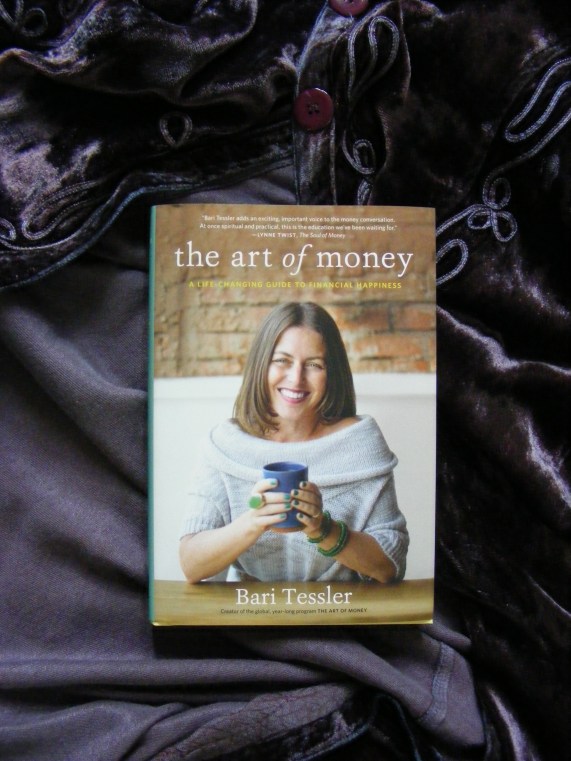
If Swallows and Amazons was among the best children’s series of the twentieth century, the Casson family series has got to be up there for the twenty-first. Saffy’s Angel remains my favourite, mostly because Saffy herself is.

And the sequence where Caddy, having eventually and reluctantly passed her driving test, is prevailed upon by her younger siblings to drive to Wales to look for the eponymous angel, is hysterical.

I thought about taking the label off, but it seemed disingenuous to pretend either that I don’t buy books in charity shops, or that I always remember to take the price tag off things.

100 untimed books

Purple Prose is on its way

DSCF1447.JPG

I was delighted to receive my print copy of Purple Prose: Bisexuality in Britain a couple of weeks ago. It’s a great book about what being bisexual is really like, as told by people who are, and who aren’t apologising for it.

It tackles some of the most biphobic myths head-on and equips the reader to reject them. It talks about being bisexual and disabled, being bisexual at work, being bisexual as a person of faith, being bisexual as a person of colour, about different configurations of relationships… the list goes on.  There’s a real sense of community about it. I wish I’d read it years ago; it would have saved me unutterable quantities of angst.

My (admittedly still somewhat angsty) poem on bisexuality, marriage and vocation concludes the chapter on bisexuality and religion, and I’m proud to have been part of this project.

It’s published by Thorntree Press and is available for pre-order on Amazon now.

Unlikely writing techniques 4: pick your pen up…

genuine work in progress

… that’s it.

I do most of my writing on the train. My daily rail journey is fifty-five miles each way; it takes about as many minutes. Once I’ve read the office and put my make-up on, I have about forty minutes left. It’s a regular, predictable slot of time, with reliably unreliable internet access, that I can devote to writing. I write all the way from Royston to King’s Cross.

Well, that’s the theory. In reality, of course, it’s earlier in the morning than I’d like it to be, I’m sleepy, I’d rather be in bed, I am wondering why the hell I commute into London anyway, and I am not feeling in the least inspired. I might have thought of what to write next as I cycled to the station, but I equally well might have not done so.

If I’m in that sort of mood, I make a bargain with myself. I do not have to write anything. All I have to do is get out my notebook and my pen, and find the last thing that I wrote, the next blank page.

And then I wait.

Sometimes it works instantaneously. I catch sight of the last thing I wrote the previous day, and I remember what was going to happen next. Suddenly the train’s passing Stevenage and I’m most of the way down a page.

Sometimes – less often, actually – it doesn’t. In which case I accept that it probably isn’t going to happen, read something instead, and try again on the way home.

Barbara Sher and Havi Brooks would call this an example of a CWU. Officially this stands for Complete Willingness Unit, but Havi is a great advocate of renaming boring initials, and I’m a trade unionist, so in my head there is a bunch of grumpy postmen saying, ‘Our members are prepared to take the lids off their pens, but that is as far as they will go.’

Sometimes I make it Cockatrices and Wyverns Union. But they still have postbags.

Talk of the Town


August Reviews

Reading Twitter this evening, I’ve become aware of an initiative called #AugustReviews, which encourages readers to go to Amazon and leave one review on one book that they’ve read. This post by Terry Tyler gives a comprehensive explanation of the why and wherefore (and this post by Rosie Amber gives a very thorough description of the how, and the how it doesn’t have to be as intimidating as one might think).

I’m ambivalent about Amazon myself. As a good trade unionist I try to avoid buying things on there (I live in Cambridge, not far from Heffers and a huge quantity of charity shops; I own a Kobo; generally this is fairly easy for me) but it’s an ill wind, etc, and Amazon has been very good for independent authors. Me included. And yes, we like reviews, and no, the book didn’t have to come from Amazon in the first place.

Mine is here (UK) and here (US) if you’re suddenly feeling the urge to leave a review of it. But I think I’d be behind this idea even if I didn’t have a horse in the race, and I’d encourage you to review any book you’ve enjoyed. At the very least it’ll cheer an author up.

Review at the Cosy Dragon

A four-star review for Speak Its Name over at the Cosy Dragon, who says:

I think it offers a unique entry into being queer in a Christian community, and I think it can help many people in their journey towards being comfortable with themselves

She questions whether it’s realistic for so few of my student characters to have jobs – and yes, it is indeed a UK thing. Of course, UK things have gone tits-up of late, with tuition fees heading north and interest rates on student loans stratospheric, and if I were starting from scratch today I would probably give a few more of my characters part-time work during term time. In fact:

Peter – probably, but he still has to find time to be a sacristan. What I might do would be to give Tanya an administrative assistant as well as a pastoral assistant, and make that Peter.

Georgia – definitely, though it’s possible that she’s also getting some paid music gigs – soloist for Stancester Choral Society oratorios, etc.

Will – no, still too rich to need a job.

Olly – yeah, why not?

Colette – no, when you’re doing a science you don’t have time to do much else.

Becky – yes, though where she finds the energy I don’t know.

But:

Lydia – no, she’s always been discouraged from doing it at home, and has assumed that the rules for university are the same.

So there you go. What they do in the holidays is, of course, another matter – even Will probably does an internship or two – and the only one who definitely doesn’t have a summer job is Lydia.


Unlikely writing techniques 3: put your pen down…

DSCF1238

… or turn your computer off, whatever.

If I’m feeling a bit stuck, I try to get out of doors and do something that makes writing completely impractical. I go for a walk; I ride my bike; I go swimming. Sometimes I combine it with the technique described last week and walk four miles downstream to The Bridge (that’s the name of the pub) where I buy a pint of something interesting looking and sit down to talk to the book for an hour.

Quite often, I find that turning away from the blank page and the blinking cursor is enough to unstick whatever’s stuck. Words are perverse things: they hide in odd corners of my mind when I think I ‘should’ be writing, and come out when they think I can’t catch them. Sometimes whole sentences will form as I walk, or an important fact will make itself known. I don’t think I stopped dead in the middle of the path and exclaimed, ‘Oh! Gianna’s a silversmith!’ but it’s possible. It felt like sufficiently major breakthrough to justify that.

And at the very worst, even if I’m no further ahead with the current book, I tend to have realised that there is, in fact, more to life than the current book.

Talk of the Town