Antoinette before Bertha

I’ve been thinking more about Me Before You and ableism, and I think I’ve finally managed to pin down what disturbs me about the book. Spoilers, as before, for that book, and also for Wide Sargasso Sea by Jean Rhys and Jane Eyre by Charlotte Brontë, and for my Speak Its Name. As ever, there’s a picture first so that you have a chance to click away.

always another way of looking at the world

Another story from another book club

My current book club has a practice of actually discussing the book, which was a bit of a culture shock, but, you know, I’m getting used to it. There was an interesting discussion last time around about Wide Sargasso Sea, Jean Rhys’ reply to Jane Eyre. One member of the group had found the book dissatisfying. The bookseller had described it to them as a ‘feminist work’, and they were disappointed that the main character, Antoinette, retained very little agency and ended up thoroughly subjugated – in fact, in the same attic in which Brontë’s Rochester had incarcerated her over a century before.

I felt, and argued, strongly that Wide Sargasso Sea is indeed a feminist work. I don’t think that the fact that Jane Eyre still happens, that Rochester’s wife still ends up in the attic, stops it being feminist. I don’t believe that a book has to end ‘and they smashed the patriarchy and lived happily ever after’ for it to be feminist. I believe that feminist literature has as much of a responsibility to present the problems inherent in the world in which we’re currently living, and the consequent detriment to women, as it does to offer a glimpse of a world beyond that. If not, Virago’s output for most of the seventies, eighties and nineties was a huge waste of time. There has to be a place for books that portray the unpleasant aspects of the world we live in.

I put some things into Speak Its Name that I don’t agree with. Religiously-motivated abuse, homophobia, one-true-wayism. In fact, I put them in because I don’t agree with them. I think they’re absolutely awful. But they happen. I don’t think they should happen. I don’t think they have to happen. If my writing Speak Its Name (and generally being loudly queer and Christian) can contribute in even a minuscule fashion to a world where they stop happening, then I’ll be delighted. Besides, a novel where nothing controversial ever happens and all the characters agree with the author’s worldview is not going to be a very good book*.

So why am I still so suspicious of Me Before You?

After all, I’ve just said that it’s not anti-feminist to point out that it wasn’t much fun being a woman in a westernised culture in the early nineteenth century.

It’s not homophobic to point out that it’s not much fun being a lesbian in a socially/religiously conservative milieu.

It doesn’t have to be ableist to point out that it’s not much fun being disabled in early twenty-first century Britain.

The problem for Moyes is, I think, that she hasn’t quite picked up how much of the unpleasantness is contextual.There are moments where she almost gets it – the scene at the racecourse, with its accessibility nightmare topped off by the revelation that Will doesn’t like horseracing anyway, which would probably have emerged earlier had Lou not gone into ‘able saviour’ mode, is a lovely satirical demonstration of the social model of disability at work. But Moyes and her hero Will both seem to have bought into the idea that this is how things are always going to be. Disabled parking spaces will never be in an appropriate place, ramps will always be too steep, well-meaning non-disabled people will never stop to ask what a disabled person actually wants or needs… This is always going to be a world, says Me Before You, that a disabled person literally would not want to live in. And it never stops to ask whether that might be something to do with the world as opposed to the person.

I don’t believe that. I don’t believe that’s the way that the world has to be. Sadly, I don’t believe that Me Before You‘s lazy assumptions about what being disabled is actually like have contributed to changing it.


*There were originally three speeches in Speak Its Name that express my pure opinions, which I would have happily claimed for myself regardless of who was saying them or what the context was. Two of them I gave to Peter. One of those was the rant about bus preservation, which isn’t particularly relevant to this post and got deleted anyway. The other comes a couple of paragraphs before the end of the Summer chapter, where he tells Lydia that God always welcomes her, and that anyone in the Church who doesn’t has got it’s wrong. That’s all me. Well, my High Church reader pointed out that Peter would say ‘the Church here on earth’, but apart from that it’s me.

And the third was Abby’s point, very near the end, about the hidden bisexuals. At the time I wrote it, that was my own experience. Not any more – but that’s another story.

100 untimed books: yellow

89. yellow
89. yellow

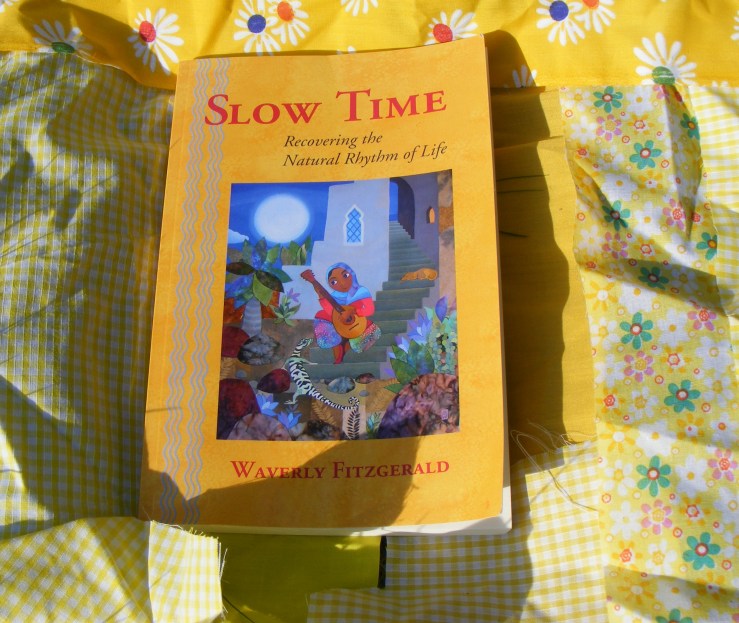
I’ve seen Slow Time described as ‘The Artist’s Way, but for time’. It’s a twelve-week workbook for exploring one’s relationship with time and seasons, and, like all these things, you skip the bits that make you roll your eyes (the astrology, for me) and play with the bits that appeal.

I wouldn’t recommend it to hardcore Quakers who Don’t Do Festivals, but I was surprised how much I, as a wacky but orthodox Anglican, got out of it.

100 untimed books

Overload before Me before You

Here’s how this post works. I talk a bit about a book club I used to belong to. Then there’s a picture of an electricity pylon. Then there’s a content note. Then there’s the same picture of an electricity pylon. Then there are spoilers for Me Before You by Jojo Moyes, and for Overload by Arthur Hailey. If you wish to avoid spoilers, stop reading before you get to the pylon.

My previous office had a book club. From the beginning the emphasis was more on the ‘club’ than the ‘book’. At first we waited until everyone had read the book before we arranged the meeting. When we realised that it had taken us two years to read eight books we started going ahead with the meetings regardless of how many people had got through the one in question. The result of that was that the meetings became five minutes of book talk against two hours of gossip. The night we were meant to talk about Me Before You was hijacked by… in fact, I think it was my leaving do – and we never talked about the book at all. It’s been in the news, and therefore my mind, recently, and so I’m going to talk about it now.

Here is that picture of the electricity pylon that I was telling you about

[content note: discussion of euthanasia in fiction in the remainder of this post and in the external posts linked to]

Here is that picture of the electricity pylon that I was telling you about

I’ve been following the coverage around the release of the film version of Me Before You with some interest. I was troubled by the book at the time that I read it, over two years ago now, but what with one thing and another (read: my leaving do) never got around to discussing it.

If you want an itemised list of the problematic aspects of Me Before You, I can’t do better than refer you to this comprehensive sporking by Cara Liebowitz.In fact, I’m going to quote her summary, too:

“Me Before You” is a novel turned movie that focuses on Louisa, who takes a job as a personal care attendant for a wealthy quadriplegic man who hates himself, her, and everyone around him, in that order. She falls in love with him, though she can’t dissuade him, in the end, from going to Dignitas in Switzerland to end his life. Because being disabled is soooooooooo terrible and tragic, didn’t you know?! /sarcasm

The problematic aspects of Me Before You can be sorted into the following categories:

  • ableist attitudes coming from a sympathetic but ill-informed character, deliberately intended to present them as ill-informed
  • ableist attitudes coming from an unsympathetic character, deliberately intended to present them as unsympathetic
  • relatively realistic portrayals of the obstacles
  • coming from a sympathetic character, unintentionally presenting an ableist attitude as objective fact
  • an overarching ableist assumption by the author herself

My impression is that I would sort these differently from the way that Liebowitz does, and other readers will of course sort them their own ways. I’ll also refer you to this post by disabled writer David Gillon. Whether Jojo Moyes would agree with any of us is of course another question, and to a certain extent is irrelevant.

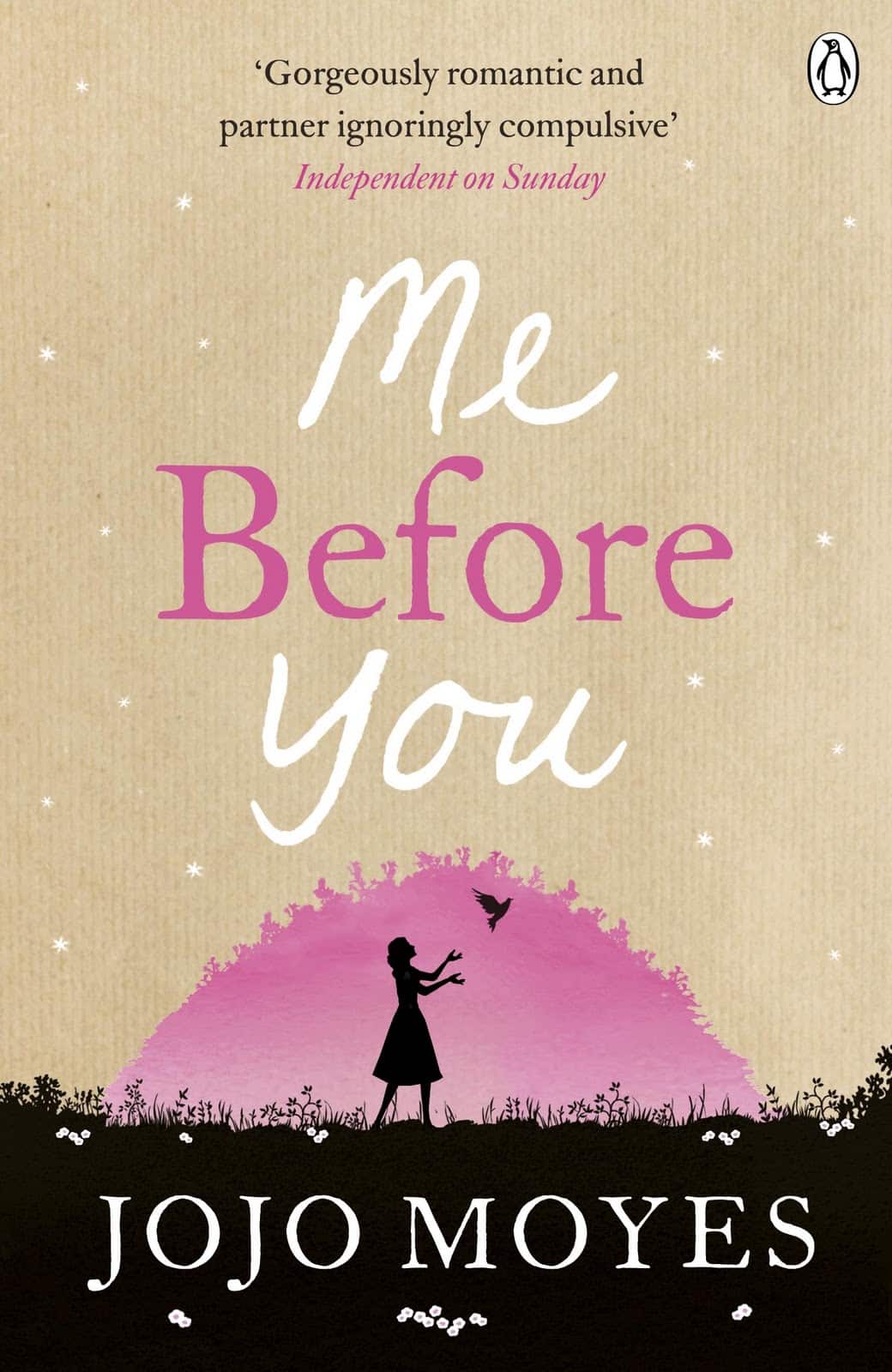
My own feeling is that she forfeits the benefit of the doubt. Choosing the ending that she does – for which I was basically prepared from the start by the cover of the paperback edition I read, which makes some problematic assumptions of its own – she acquiesces to the prevailing cultural narrative that it’s better to be dead than disabled. She never really interrogates that, not in any meaningful way, and the net result is that Will gets no character development whatsoever.

Of course there’s an argument to be made about autonomy, and personal choice, and what that looks like when physical capability is restricted, but, contrary to the protestations of the film director, the direction that Me Before You chooses doesn’t feel like the ‘brave’ one to me. In fact, it felt far less progressive than Arthur Hailey’s Overload, which, though it was written thirty-three years earlier, I’d read only a couple months before.

Overload is magnificently tacky, and occasionally plain bizarre. It has ecoterrorism, irresponsible parenting (don’t let your children fly kites near overhead lines, people), a man who loses his penis and is promised a prosthetic one, some frankly appalling health and safety failings, and an equally appalling protagonist who spends the book shagging his way around the female half of the cast list. And mostly this makes my skin crawl, but

One of said cast list is Karen Sloan, who is a far less miserable and more interesting fictional quadriplegic than Will Trainor. She’s portrayed as a sociable, attractive woman who desires and enjoys sex, who desires and enjoys life. She has a fulfilling social life. A neighbour’s child regards it as a privilege to perform small acts of care for her.  Her eventual death, when the overload of the title leads to her respirator running out of battery, is presented as a tragic accident, not a ‘merciful release’.

I’ve been taking notes on how not to fail on my own account. After all, Wheels or Bonk or whatever we’re calling it these days has a disabled main character and a non-disabled narrator who starts out as a clueless jerk. Some things I’m going to try:

  • undermining my unreliable narrator from page one
  • reading around the subject more. A lot more.
  • extrapolating from my own experience
  • having a happy ending for everyone
  • getting a friend who has a similar condition to my disabled character to read the damn thing and tell me where I’ve messed up
  • offering her copious amounts of gin for her trouble

It really doesn’t feel like rocket science. Perhaps ‘fail less than Me Before You‘ is just a very low bar.

Unreliable narrators: a pet peeve

In this post I talk about unreliable narrators in works by various authors, some of whom are or were very prolific, and some of whom are famous for only one or two works. I don’t name any of the books, but in some cases it won’t be difficult to work out. I also discuss the career choices of characters in Little WomenThe Princess Diaries, and the Chalet School series. I’d advise you not to read on if spoilers particularly bother you.

I am also more opinionated than usual, and don’t apologise for it, though I respect your right to enjoy books that I don’t, or not enjoy books that I do. This is, as ever, implied.

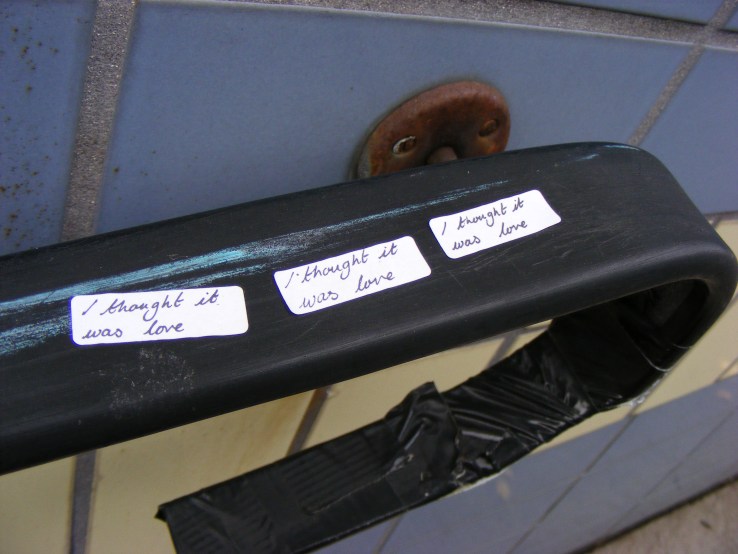
Here follows a picture of some street art to give you a chance to escape.

"I thought it was love"
“I thought it was love”

I mentioned a couple of weeks ago that I enjoy writing unreliable narrators. I enjoy reading them, too. I like to see convincing human beings with their own little biases and weaknesses, who think they’re being ever so objective but are in fact revealing their assumptions and prejudices on every page.

What I am not so keen on is the recent trend for malicious, self-consciously unreliable narrators, the ones who turn on you when you get to the end of the book and say, ‘oh, sorry, did you believe me? MORE FOOL YOU! I’m WRITING A BOOK, you know, and I can write LIES if you like!’

There are two reasons why it annoys me.

Firstly, it breaks the fourth wall and, with it, the implied understanding between author and reader.

I’ve never been particularly interested in reading about writers. I remember getting annoyed by the number of heroines of children’s books who wanted to be, or indeed became, writers. There are an awful lot of them, starting with Jo March in Little Women and stretching all the way to Mia Thermopolis in The Princess Diaries. Almost certainly further, in fact. Joey Maynard in the Chalet School was particularly irritating: she was in a school story, writing school stories. How far down did it go? There are good reasons for this, of course, like the dearth of respectable careers for women in the nineteenth century, but I always felt it betokened a certain lack of imagination.

Something of this irritation has carried over into my reaction to unreliable narrators. I don’t want to be reminded all the time that I’m reading something that’s been written. If good prose is like glass, allowing you to see through it to the story, then reading about writers writing is like a frosted bathroom screen – and getting to the end of a story that turns out to have an unreliable narrator is like walking through a plate glass window. Dramatic, but not actually something you want to do all that often.

Which brings me to my second objection. It’s a bit overdone, and I think it could do with a rest. It’s not just the thriller writers who are at it: big litfic names like Ian McEwan and Lionel Shriver have produced knowing, irritating, unreliable narrators in the last decade or so, and there are only so many times that I can enjoy reaching the end of a book to find that everything that came before is basically meaningless. Apart from anything else, a character who’ll pull that on you is probably not a character with whom you want to share too much headspace.

So far as I’m concerned, you get one free pass on that trick. Not one free pass per author, either. One free pass per reader. And Agatha Christie took mine, years ago.


100 untimed books: playing

7. playing
7. playing

My family game is Racing Demon*. It’s a fast, vicious game played with several packs of cards, which get strewn across the table in the course of play and have to be sorted out at the end of the round. Therefore it’s useful to have cards with distinctive backs. It’s rough on the cards: therefore it’s useful to have a lot of cheap packs.

Over the years, I’ve collected quite a few packs of playing cards. If all my aunts and uncles and cousins turn up at once, I’ll be ready. It’s become a bit of a thing. At least this means that people always know what to give me for Christmas. Playing cards, or books about playing cards. This was one of them.

100 untimed books

*Rules vary: that link was the best description on the first page of Google, but in our house it’s ten points for a king, none for going out (going out is advantage enough in itself, for heaven’s sake!). And adding an extra card to your hellpile if you went out in the last round is not optional at all. You do get to take it off again if somebody else goes out in the next one, though.

Déjà vu

Massive progress
Massive progress

Major existential crisis vs minor annoyance

A friend asked me the other day how things were going with the current book. This was my reply:

I’ve dragged it kicking and screaming to 16K and have hit the stage where I think it’s all terrible and the characters are cardboard and I haven’t done enough research and it shows and I’ve got everything wrong and should just dump the entire project.

Interestingly, this state of affairs didn’t particularly bother me. Because, as I went on to say, I remember this happening last time round. In fact, I officially gave up on Speak Its Name at least twice because I thought it was all terrible and the characters were cardboard and I hadn’t done enough research and it showed and I’d got everything wrong. So I just dumped the entire project.

Except I didn’t, obviously, because twice – or more – I came back to it, dug in again, and sorted out what was wrong.

This time round, I see exactly what’s going on. I recognise the stuckness as a minor annoyance rather than a major existential crisis. I also see why it’s feeling stuck.

Massive mess vs massive progress

The picture at the top of the page shows the sitting room of the flat we rented in Woking, during the process of packing up almost everything to move it to Cambridge. For tedious work-related reasons, I did most of the packing while my partner started his job out east (he did all of the driving, so it worked out more or less even).

I hate moving house. It’s commonly said to be one of the most stressful experiences of modern life, and I’ve done it far more times than I ever wanted to. What that means is, I’m getting better at it.

Here, an extract from our chatlogs:

K: the packing is getting me down
I think it gets worse before it gets better

T: yeah

K: I am hoping that you will come back and see Massive Progress
I am just seeing Massive Mess

T: That is what progress usually looks like

K: heh
ALL OF THE THINGS

T: One hundred percent of them

K: yes
and they all need to be in boxes
or somewhere else that is not in the flat

The more often it comes, the easier it is to recognise it

The first time I got depression, I didn’t know what it was. I didn’t know there was an ‘it’ to know: it works by erasing all your previous frame of reference, so you start believing that this grey expanse of meh is all there ever was and all there ever will be.

The first time it went away was because of a change of scenery and Bruckner’s fourth symphony. It was as if someone had switched the lights on; and that was when I learned not to mistake a low mood for a loss of faith. I can forgive myself for having been mistaken, though: it was a very, very ongoing low mood.

The next time was when several awful things (two bereavements, a bedsit with leaks and mice, a temp job in a cellar) all showed up in a bandwagon and depression jumped on.

The time after that I went to see the doctor about it and he said, yes, depression. My brain lying to me about the way things are, not the way things actually are.

A while after that, I started recognising the feeling that I should break up with my partner for his own good as not just a very bad idea, but a symptom of the returning visitor.

These days, it comes and goes, and I get better and better at recognising it. I’ve got to know its little ways so well that I could almost mark it on the calendar, and when it turns up say, ‘oh, yes, August’.

Twenty-four per cent

The current wordcount for Wheels (I thought briefly about changing the title to Bonk this morning, but I fear I’d disappoint a lot of Jilly Cooper fans) is 19,354. Assuming I’m aiming for eighty thousand words, that puts me just under a quarter of the way there.

Actually, it puts me nowhere near a quarter of the way there. I’m not expert enough yet to guess how much editing and reading and re-editing and re-reading I’m going to need to do once I’ve got the first draft down, but I know it’s going to be a lot. I can tell that from looking at what there is of the first draft.

That’s why I’m thinking it’s all terrible and the characters are cardboard and I haven’t done enough research and it shows and I’ve got everything wrong.

You don’t realise how much stuff you have until you try to put it all into boxes, and then you have boxes everywhere and also stuff everywhere. Moving is always horrible. Depression is always horrible. The more often you have to deal with either, the better tools you pick up and the quicker you are to recognise what’s wrong, but at no stage does this make them fun.

At twenty-four per cent, the book is terrible and the characters are a bit thin, and I do need to do more research, and I probably have got some stuff wrong. And, yes it does show.

The vital information that I was missing at this point in the last book is that this is all true, but nothing is wrong. This is just the way that things look at sixteen thousand or nineteen thousand words into the first draft. Massive progress looks like massive mess. It can’t possibly look like anything else, not until I get a long way further in.

I’ve been here before, and it’s much less scary this time around.


Talk of the Town


100 untimed books: go west

79. go west
78. go west

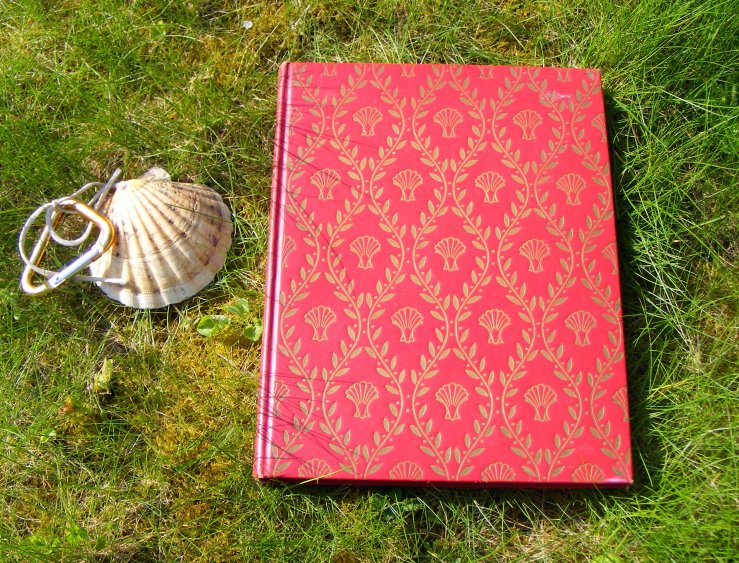
Go west? Follow the road west to Santiago de Compostela, or perhaps even further west, to Finisterre, the end of the world. The shell I took with me; the book is The Scallop: studies of a shell and its influences on humankind, edited by Ian Cox and published in 1957 to mark the sixtieth anniversary of the Shell Transport and Trading Company, Ltd. Yes, that Shell. It’s rather a lovely book, whatever reservations one might have about the publisher, with a wide-ranging expanse of subject and expertise, from the biological (the habits of the shellfish themselves), to the theological-historical (the Camino de Santiago, my own special interest).

100 untimed books

The worst writing advice I’ve ever received

It’s a bit specific, so I’m going to have to give you some context.

Back in the days when I was hung up on getting external validation for my writing, I submitted various short stories to various places. Some of them were good; some of them weren’t. One of them got published. They gave me a chance to play around in different genres and styles, and also to find out that the short story isn’t my favourite form. All useful information.

Among other things, I discovered that I enjoy writing slightly unreliable narrators – narrators who are so caught up in their own world-view that they don’t realise that they are unreliable. The narrator of the story in question was one of them: a creepy man on a train eyeing up a fellow commuter who’s quietly minding her own business.

The publisher to whom I sent this has a pool of readers who comment on a story. Half the ones who looked at mine seemed to have issues with the concept of ‘unreliable narrator’. One line ‘inadvertently makes him seem like a stalker’, said one of them. Nothing inadvertent about it, mate, and I didn’t think I’d been overly subtle.

The worst writing advice I’ve ever received, however, came from somebody who objected to a line in the first paragraph:

She gets the same train. Every morning, 0752, there she is. Crimson coat, straight blonde hair, gorgeous legs. I don’t know her name or where she works. I only know that she gets on one stop after me, gets off at London Waterloo, and heads straight down to the Tube, where it’s impossible to follow her. Not that I’d do something like that, I mean. Obviously. What I’m saying is, I get fifty-four minutes every morning to sit opposite her, or beside her, or behind her, and to look at her, and to wonder…

This particular reader didn’t like the elliptical ‘Crimson coat, straight blonde hair, gorgeous legs’. Fair enough. They suggested I replace it with

Her tight leggings outline her gorgeous legs.

At which point I drew a horrified breath, laughed a bit, and decided that it was not worth submitting anything further to this publisher, because their idea of what made for a good story was a very long way away from mine.

The problem is, of course, that this reader had clearly received some pretty appalling advice of their own: that the passive voice must never, ever, ever be used. (See what I did there?) And if the result is horrifically clumsy, if it assigns nonsensical agency to an inanimate object, well, who cares? We’re following the rules, and that’s the important thing. I suppose Nicky Morgan would approve.

Anyway, this was more or less where I stopped giving a damn what other people thought about my writing, and started trusting my own judgement. Learning to trust one’s own judgement was, it turns out, a prerequisite for publishing my own writing under my own name. So perhaps it wasn’t such bad advice after all.