Unlikely writing techniques 2: take the book for a drink

The practice of buying your project a beer, like many others I’ve come to use regularly, comes from Havi Brooks’ The Fluent Self. Thoroughly recommended for feeling less like a giant disaster.

Raspberries in cream soda
What a cool drink might look like. This is not sour cherry lemonade, obviously; it’s actually cream soda with frozen raspberries in it. I didn’t take a picture of the sour cherry lemonade because my phone had run out of battery, and also I had other things on my mind.

A couple of Tuesdays ago, opening my notebook after a fortnight’s hiatus, I was conscious of a nasty suspicion of impending stuckness. I’ve written before about how stuckness scares me much less than it used to, but I was still a bit scared by this one. Apart from anything else, the idea behind the deliberate hiatus was to pre-empt the stuckness.

I was hanging around in London for an hour after work before catching the train home. I’d thought that I’d sit somewhere and have a cup of coffee and do some writing. After all, the stuckness hadn’t quite landed. Yet. I thought I had another few hundred words that I could squeeze out.

I went to a bar that came in just below my ‘not for the likes of us’ cut-off, and I sat outside under a parasol, and I ordered a sour cherry lemonade. Across the square, people were watching a big screen with the Williams sisters playing the Wimbledon doubles. I got my notebook and pen out of my handbag.

I’d meant to just work on the book itself, but instead I wrote:

The problem is, I feel I haven’t really got a handle on Polly.

I kept writing, and new possibilities emerged:

This may not actually be a problem if Ben hasn’t got a handle on her either.

Do I need to write something from Polly’s POV and be prepared to junk it?

Do I need to keep ploughing on with Ben and trust that Polly will come through his self-absorption for me as well as the reader?

Then I wrote the thing that was at the root of the stuckness:

I am afraid of running out of plot before I get anywhere near the target word count.

But I had an answer to that, too:

Does Ben have any sort of love life aside from Polly? Has he ever had one? If so, it’s going to have been a mess.

The answer, it seemed, was yes. But it only raised further questions. I knew some of the answers, but not all of them:

(Mélanie, soigneur, tracks him down – but how, why, has she left the team or something – parents tell her where he lives hoping she’ll get him back into the sport. OK, so what happens, is this before or after the middle of the book, it’s got to be after the CC debacle or it’ll anticipate the blackmail aspect, what do Polly and Vicki make of it?)

Then I ordered a vegetarian scotch egg. And very tasty it was too.

I kept writing:

So Polly’s just beginning to fall for Ben, no, not even fall for, look kindly on, and then Mélanie turns up WHILE VICKI’S AWAY WITH GIANNA. Ben neglects Polly, she gets back together with Michael

Why don’t Ben and Mélanie work?

Because the thing that they have in common is misery.

How does it end?

Ben realises that he’s happier 9-5ing than he ever was cycling, even with a team he liked

and Mélanie doesn’t get his responsibilities

nothing awful happens to Polly – in fact, Michael happened to look round so she was fine – but Ben feels awful about it – maybe a burglary?

(what is it? doesn’t go back to organise a meal? ends up staying out all night?

Mélanie doesn’t see Polly as a sexual threat. Ben finds this perversely irritating.

he’s pleased to see her – cross with his parents – painful memories

Polly’s cautiously pleased

Vicki doesn’t approve at all, thinks he should move on or at least make his mind up

maybe Mélanie secretly wants to expose Grande Fino and is looking for other

Bang. I wrote 863 words on the theme of ‘Mélanie secretly wants to expose Grande Fino and is looking for other people to help’ on the train home. By the end of those 863 words most of the rest of the braindump was out of date (Vicki wasn’t away, Polly and Michael were already an item…) but I had the makings of a creditable subplot.

I still don’t have a handle on Polly, but I expect she’ll make herself known in time. I might go out and get a drink and see if she turns up.
Talk of the Town

What you think the project is, and what the project really is

Minor spoilers for Speak Its Name in this, including an extract from a chapter very near the end.

Visibility charm
Visibility charm

I mentioned last time that my main purveyor of author tracts (warning: that’s a link to TV Tropes, and if you follow it you may lose the rest of the day) in Speak Its Name was Peter. Which is not really surprising, when you consider that the book started out as a story of how getting too interested in student and/or Christian politics can play havoc with what you thought was a vocation to ordained ministry. That’s pretty much where I was when I started writing it, after all, so it made sense to bestow some of my own opinions upon the character who was dealing with that.

The other one was Abby, who is Lydia’s cousin, and who is in some ways much closer to an author avatar (TV Tropes again), or at least an author caricature. (‘A self-insert who turns up at the end to pontificate,’ was how I put it to one of my editors.) I am not blonde, or pregnant, or given to wearing pink, but at the time of writing I was very aware that I looked a lot like the Perfect Christian Woman. And – aside from the fact that my family is much less of a clusterfuck than the Hawkins – this was very much what my experience looked like.

‘What I wanted to say,’ Abby said, ‘was that I know that our family is not at all helpful when it comes to relationships that happen in anything like the real world, and that I know that your parents are if anything less helpful than my parents and that – if you wanted me to – I would come out.’

Lydia choked on her prosecco. ‘What?

Abby told Colette, in a stage whisper, ‘I said it wasn’t a helpful family.’ Then, in more serious tones. ‘I’m bi.’

Lydia could think of nothing to say. Colette, clearly amused, said, ‘She looked less shocked when I told her I had a crush on her.’

Abby smiled, though it looked like an effort. ‘I wasn’t ever going to tell anyone. Not in the family, at least. It never occurred to me that I might not be the only one.’

‘Same,’ Lydia just managed to squeak. ‘Does Paul know?’

‘Of course – I wouldn’t have married him if I couldn’t tell him that.’

‘People must do,’ Lydia said. ‘Oh, God, this must happen all the time.’

Abby nodded. ‘I know four or five – happily married, most of us, still in love, still Christian, still trying to find a way to be truthful, always knowing how bloody lucky we are: that we could so easily have gone the other way, fallen for someone we couldn’t take to church with us…’

Except… when I was reading it through, on the second to last editing pass, I was struck by the horrifying thought, Good grief, that sounds miserable.

And then I remembered that was me, that the last paragraph there describes precisely the way I thought about myself and my faith and my bisexuality at the time I was writing. I might as well have put it in there so that I could say to anyone who asked, ‘You know the bit with Abby at the end? That’s basically where I am.’

Not any more. Somewhere in the writing process I’d moved far beyond where Abby was. I was mostly out, as opposed to being mostly closeted. I’d stopped thinking that the only appropriate way for me to be bisexual was quietly. I’d realised what a mess I’d made of myself by trying to do that. I’d started speaking up, and out.

The project is never what you think it is. I thought Speak Its Name was about vocation, and politics, and faith, and sexual orientation, and it is, but it is mostly about being OK with who I am, and I had to learn more about that before I could finish it. Writing a book changed the book, and changed me.

I suspect that writing Wheels will have something to teach me about working too hard and physical capacity and the importance of not doing things. I asked to learn more about that, after all.

I suspect that I do not currently have the breadth of understanding to imagine what it’s going to teach me. I suspect that it’s going to go far beyond juggling my working patterns and keeping every other weekend free. I suspect that it’s going to take me apart and put me back together again, and maybe I’ll notice while it’s actually happening, and maybe I won’t. Maybe, like last time, I’ll just happen to glance back over my shoulder and think, Good grief, is that where I was? What a very long way I’ve come.

Overload before Me before You

Here’s how this post works. I talk a bit about a book club I used to belong to. Then there’s a picture of an electricity pylon. Then there’s a content note. Then there’s the same picture of an electricity pylon. Then there are spoilers for Me Before You by Jojo Moyes, and for Overload by Arthur Hailey. If you wish to avoid spoilers, stop reading before you get to the pylon.

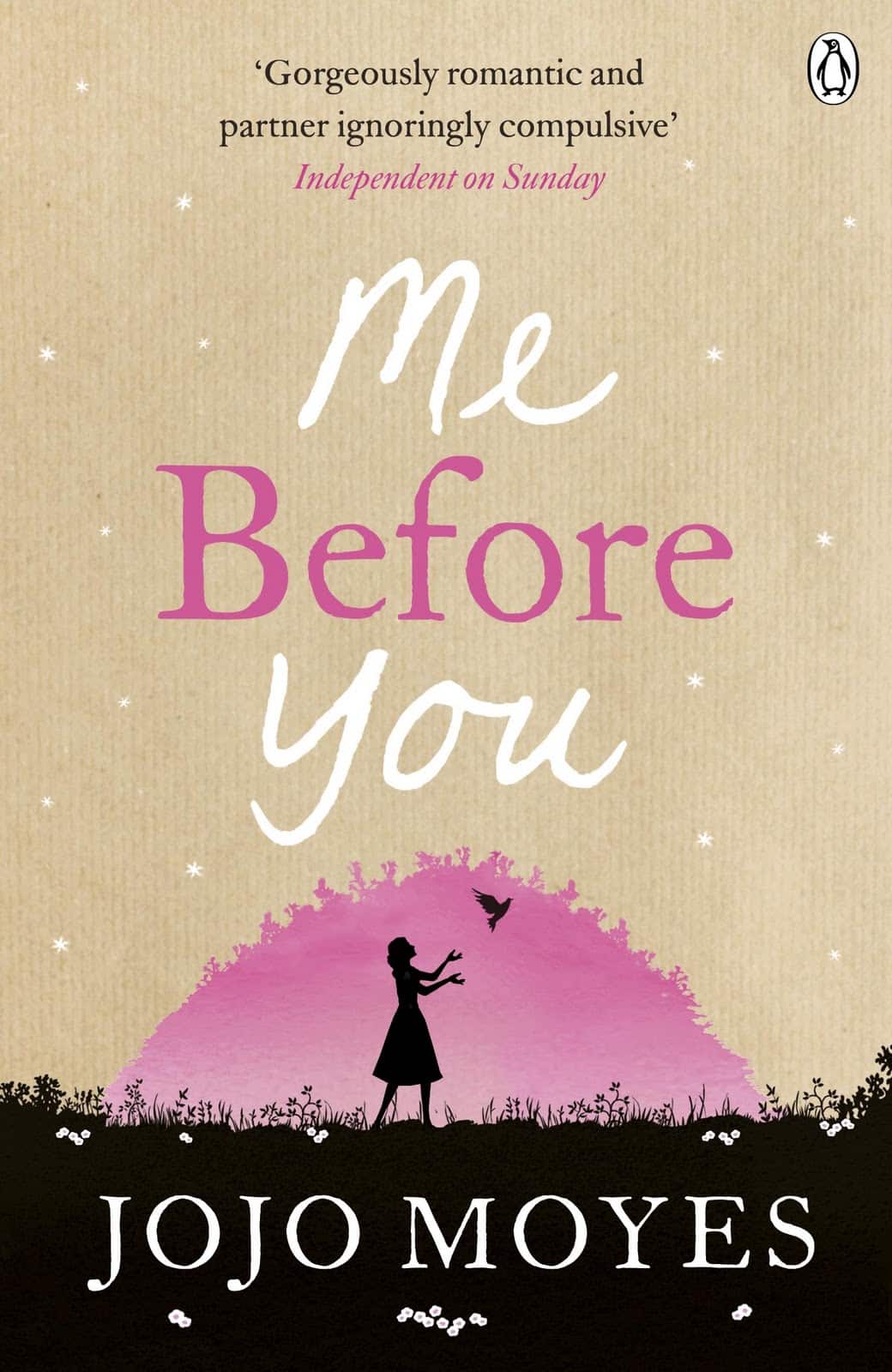
My previous office had a book club. From the beginning the emphasis was more on the ‘club’ than the ‘book’. At first we waited until everyone had read the book before we arranged the meeting. When we realised that it had taken us two years to read eight books we started going ahead with the meetings regardless of how many people had got through the one in question. The result of that was that the meetings became five minutes of book talk against two hours of gossip. The night we were meant to talk about Me Before You was hijacked by… in fact, I think it was my leaving do – and we never talked about the book at all. It’s been in the news, and therefore my mind, recently, and so I’m going to talk about it now.

Here is that picture of the electricity pylon that I was telling you about

[content note: discussion of euthanasia in fiction in the remainder of this post and in the external posts linked to]

Here is that picture of the electricity pylon that I was telling you about

I’ve been following the coverage around the release of the film version of Me Before You with some interest. I was troubled by the book at the time that I read it, over two years ago now, but what with one thing and another (read: my leaving do) never got around to discussing it.

If you want an itemised list of the problematic aspects of Me Before You, I can’t do better than refer you to this comprehensive sporking by Cara Liebowitz.In fact, I’m going to quote her summary, too:

“Me Before You” is a novel turned movie that focuses on Louisa, who takes a job as a personal care attendant for a wealthy quadriplegic man who hates himself, her, and everyone around him, in that order. She falls in love with him, though she can’t dissuade him, in the end, from going to Dignitas in Switzerland to end his life. Because being disabled is soooooooooo terrible and tragic, didn’t you know?! /sarcasm

The problematic aspects of Me Before You can be sorted into the following categories:

  • ableist attitudes coming from a sympathetic but ill-informed character, deliberately intended to present them as ill-informed
  • ableist attitudes coming from an unsympathetic character, deliberately intended to present them as unsympathetic
  • relatively realistic portrayals of the obstacles
  • coming from a sympathetic character, unintentionally presenting an ableist attitude as objective fact
  • an overarching ableist assumption by the author herself

My impression is that I would sort these differently from the way that Liebowitz does, and other readers will of course sort them their own ways. I’ll also refer you to this post by disabled writer David Gillon. Whether Jojo Moyes would agree with any of us is of course another question, and to a certain extent is irrelevant.

My own feeling is that she forfeits the benefit of the doubt. Choosing the ending that she does – for which I was basically prepared from the start by the cover of the paperback edition I read, which makes some problematic assumptions of its own – she acquiesces to the prevailing cultural narrative that it’s better to be dead than disabled. She never really interrogates that, not in any meaningful way, and the net result is that Will gets no character development whatsoever.

Of course there’s an argument to be made about autonomy, and personal choice, and what that looks like when physical capability is restricted, but, contrary to the protestations of the film director, the direction that Me Before You chooses doesn’t feel like the ‘brave’ one to me. In fact, it felt far less progressive than Arthur Hailey’s Overload, which, though it was written thirty-three years earlier, I’d read only a couple months before.

Overload is magnificently tacky, and occasionally plain bizarre. It has ecoterrorism, irresponsible parenting (don’t let your children fly kites near overhead lines, people), a man who loses his penis and is promised a prosthetic one, some frankly appalling health and safety failings, and an equally appalling protagonist who spends the book shagging his way around the female half of the cast list. And mostly this makes my skin crawl, but

One of said cast list is Karen Sloan, who is a far less miserable and more interesting fictional quadriplegic than Will Trainor. She’s portrayed as a sociable, attractive woman who desires and enjoys sex, who desires and enjoys life. She has a fulfilling social life. A neighbour’s child regards it as a privilege to perform small acts of care for her.  Her eventual death, when the overload of the title leads to her respirator running out of battery, is presented as a tragic accident, not a ‘merciful release’.

I’ve been taking notes on how not to fail on my own account. After all, Wheels or Bonk or whatever we’re calling it these days has a disabled main character and a non-disabled narrator who starts out as a clueless jerk. Some things I’m going to try:

  • undermining my unreliable narrator from page one
  • reading around the subject more. A lot more.
  • extrapolating from my own experience
  • having a happy ending for everyone
  • getting a friend who has a similar condition to my disabled character to read the damn thing and tell me where I’ve messed up
  • offering her copious amounts of gin for her trouble

It really doesn’t feel like rocket science. Perhaps ‘fail less than Me Before You‘ is just a very low bar.

Déjà vu

Massive progress
Massive progress

Major existential crisis vs minor annoyance

A friend asked me the other day how things were going with the current book. This was my reply:

I’ve dragged it kicking and screaming to 16K and have hit the stage where I think it’s all terrible and the characters are cardboard and I haven’t done enough research and it shows and I’ve got everything wrong and should just dump the entire project.

Interestingly, this state of affairs didn’t particularly bother me. Because, as I went on to say, I remember this happening last time round. In fact, I officially gave up on Speak Its Name at least twice because I thought it was all terrible and the characters were cardboard and I hadn’t done enough research and it showed and I’d got everything wrong. So I just dumped the entire project.

Except I didn’t, obviously, because twice – or more – I came back to it, dug in again, and sorted out what was wrong.

This time round, I see exactly what’s going on. I recognise the stuckness as a minor annoyance rather than a major existential crisis. I also see why it’s feeling stuck.

Massive mess vs massive progress

The picture at the top of the page shows the sitting room of the flat we rented in Woking, during the process of packing up almost everything to move it to Cambridge. For tedious work-related reasons, I did most of the packing while my partner started his job out east (he did all of the driving, so it worked out more or less even).

I hate moving house. It’s commonly said to be one of the most stressful experiences of modern life, and I’ve done it far more times than I ever wanted to. What that means is, I’m getting better at it.

Here, an extract from our chatlogs:

K: the packing is getting me down
I think it gets worse before it gets better

T: yeah

K: I am hoping that you will come back and see Massive Progress
I am just seeing Massive Mess

T: That is what progress usually looks like

K: heh
ALL OF THE THINGS

T: One hundred percent of them

K: yes
and they all need to be in boxes
or somewhere else that is not in the flat

The more often it comes, the easier it is to recognise it

The first time I got depression, I didn’t know what it was. I didn’t know there was an ‘it’ to know: it works by erasing all your previous frame of reference, so you start believing that this grey expanse of meh is all there ever was and all there ever will be.

The first time it went away was because of a change of scenery and Bruckner’s fourth symphony. It was as if someone had switched the lights on; and that was when I learned not to mistake a low mood for a loss of faith. I can forgive myself for having been mistaken, though: it was a very, very ongoing low mood.

The next time was when several awful things (two bereavements, a bedsit with leaks and mice, a temp job in a cellar) all showed up in a bandwagon and depression jumped on.

The time after that I went to see the doctor about it and he said, yes, depression. My brain lying to me about the way things are, not the way things actually are.

A while after that, I started recognising the feeling that I should break up with my partner for his own good as not just a very bad idea, but a symptom of the returning visitor.

These days, it comes and goes, and I get better and better at recognising it. I’ve got to know its little ways so well that I could almost mark it on the calendar, and when it turns up say, ‘oh, yes, August’.

Twenty-four per cent

The current wordcount for Wheels (I thought briefly about changing the title to Bonk this morning, but I fear I’d disappoint a lot of Jilly Cooper fans) is 19,354. Assuming I’m aiming for eighty thousand words, that puts me just under a quarter of the way there.

Actually, it puts me nowhere near a quarter of the way there. I’m not expert enough yet to guess how much editing and reading and re-editing and re-reading I’m going to need to do once I’ve got the first draft down, but I know it’s going to be a lot. I can tell that from looking at what there is of the first draft.

That’s why I’m thinking it’s all terrible and the characters are cardboard and I haven’t done enough research and it shows and I’ve got everything wrong.

You don’t realise how much stuff you have until you try to put it all into boxes, and then you have boxes everywhere and also stuff everywhere. Moving is always horrible. Depression is always horrible. The more often you have to deal with either, the better tools you pick up and the quicker you are to recognise what’s wrong, but at no stage does this make them fun.

At twenty-four per cent, the book is terrible and the characters are a bit thin, and I do need to do more research, and I probably have got some stuff wrong. And, yes it does show.

The vital information that I was missing at this point in the last book is that this is all true, but nothing is wrong. This is just the way that things look at sixteen thousand or nineteen thousand words into the first draft. Massive progress looks like massive mess. It can’t possibly look like anything else, not until I get a long way further in.

I’ve been here before, and it’s much less scary this time around.


Talk of the Town


On letting characters be human

When humans act like humans, and rabbits act like rabbits...
When humans act like humans, and rabbits act like rabbits…

Characters are human. (Well, unless they’re rabbits, or purple aliens from the planet Zog.) That being so, they need to act like humans. (Or rabbits, or purple aliens from the planet Zog – but if you want the reader to relate to them, they’d better act at least a little bit like humans too.)

The most difficult thing I found, writing Speak Its Name, was letting characters act in ways that are damaging, malicious, or just plain stupid. I am, myself, pretty conflict-averse, and would like nothing better than for everybody to sort out their differences over a cup of tea. But not all my characters are, nor should they be if I want my book to be at all interesting, and sometimes I have to just let them have a row. As a reader, I often find myself muttering ‘No! Don’t! Run away now!’, knowing all the while that yes, they’re going to stay right there and do it. Because that’s who they are, that’s how they’re written, and if I were them and I were in that situation I’d probably do exactly the same thing. As a reader, I have a certain detachment. As a writer, I have to step back and let them ruin their own lives.

The only story I have come across where nobody acts out of either incompetence or malice is The Martian, and the only reason that gets away with it is because the inhospitable expanse of space and the implacable nature of physics provides enough challenge to drive the plot. Elsewhere, we rely on human frailty and incompatibility to do it, and there’s plenty of that around.

People are not perfect. People say the wrong thing, people act selfishly, stupidly, irrationally. They do the right thing for the wrong reasons. They do the wrong thing for the right reasons. Why should fictional people be any better than the rest of us?

Then there’s ‘use your words’. It’s excellent advice for the real world, but until the real world actually starts acting like that, it’s not much help for fiction. Yes, the plot where the heroine never tells the hero that the man she was hugging was her brother is a cliché, but has anybody actually written it since about 1895? It’s irritating because it’s not believable, but unbelievable competence is just as irritating.

‘I feel that if a person can’t communicate, the very least he can do is to shut up,’ said Tom Lehrer, and in real life that’s what most people do. Expecting all of your characters to communicate all of the time is implausible, even if – no, particularly if – it’s about something very personal and important. Doubly so if they’re from a background that expects them to – what’s that revolting phrase? – keep calm and carry on. Let’s just say that I was not at all surprised when the marriage of Amy Pond and Rory Williams broke up.

What I really want is consistency. I can just about believe that the entire cast of The Martian would maintain the peak of competence for the duration of the action, but only because they’re very highly trained astronauts and scientists, and only just about. You can give me a character who uses their words if you like, but you’d better make me believe that they were brought up to it, or that they’ve done a lot of work on their communication skills.

Theoretically, it ought to be possible  to write a convincing story where the heroine has a very good reason for not revealing her brother’s identity, and the hero is just the suspicious, possessive type to jump to conclusions. In Speak Its Name I have one character who withholds vital information from everybody – almost including herself – for a good third of the book because she honestly believes that this is the kindest and best thing to do. Humans don’t always act for the best, and nor should characters.

Having said all that, I was very relieved indeed to have an excuse to take out the next two weeks’ worth of deleted scenes, because I actually didn’t enjoy letting one of my favourite characters act like an idiot.

Eights and tens

Eight cars
If each car signifies one thousand words… we’ll need a bigger car park

A pedant’s definition of ‘decimate’ is to dispose of one tenth of whatever one’s seeking to dispose of. I don’t know whether there’s an equivalent expression, to produce one tenth of whatever one’s seeking to produce. It would be quite useful at the moment.

On Thursday night I typed up several pages of longhand, and was immoderately pleased to find out that it tipped the word count of the new novel over the eight thousand mark. Eight thousand and seven, to be precise. This is particularly satisfying because Speak Its Name ended up at ‘about eighty thousand words’. And some basic maths will tell you that 8,000:80,000 translates neatly to 1:10.

This does not, of course,  mean that the new book is one tenth finished. Speak Its Name went up to 115,000, after all – though I hope that I’ve got more of an idea of what I’m doing this time round. The current eight thousand and seven words don’t feel like a tenth of a book.

What I’ve got so far feels too nebulous, too insubstantial to be the backbone that ‘a tenth’ implies. That’s partly because I’m writing, as I always do, a scene here and a line there, a page from the beginning and a conversation from the end. I get one little snippet down on paper and it spawns three or four in completely different places in the plot.

At this stage I don’t think too much about structure; I just hang on as best I can and catch as much of it as possible. I’m not reading these words yet, because I don’t think they’d stand up to it. I’d either destroy them or get depressed. It doesn’t matter. There’s time. There’s plenty of time.

All the same: eight thousand words are down. Eight thousand out of eighty thousand – ish.

Interview with me at Quite Irregular

I’m talking about Speak Its Name with Jem Bloomfield over at his blog today. If you want to know more about my writing process, my decision to self-publish, and where Lydia, Colette and Peter might be going next, go and have a look over there.

Then, if you are at all interested in feminism, Golden Age detective fiction or Shakespeare (not to mention the Church, Taylor Swift or Movember), wander around the rest of Quite Irregular. It’s one of my favourite blogs and I’m delighted to appear there.

“So how long did it take you?”

It didn't exactly start with a bishop...
It didn’t exactly start with a bishop…

If I had a page of Frequently Asked Questions (I might some day – who knows?) this one would be at the top of it. And I always umm and ahh a bit when I answer it.

There are two answers, really.

In the autumn of 2007 I was writing about six people whose lives are affected by a political complication in which they are passively and tangentially involved. The point of view was passed around the six of them. They had their own views. They expounded upon their own views at great length.

That was about as interesting as it sounds, and I picked it up and put it down several times over the next few years. I restarted it completely in 2011. It got to about 95,000 words of scenes that worked reasonably well on their own, but lacked any coherency or interest when stitched together. Several times I decided that it was boring and gave up with it. I wrote down scenes when they occurred to me, and after a while they stopped occurring to me. By 2012 I had abandoned it.

Then Synod happened. Synod happened, and I learned how it felt to be comprehensively screwed over by a Church that I loved, that I had no intention of leaving, but which had made it very plain that it didn’t want me. It hurt. It hurt a lot.

I wrote a blog post but, like the Very Hungry Caterpillar, I was still hungry. No, not hungry. The other one. Angry. And I had a character sitting around in my head. She was the love interest of one of the original six. I didn’t have anything written from her point of view. But she was a character who’d been comprehensively screwed over by the Church she loved. So, having written what I felt like, I wrote what she felt like.

I was still angry into the new year. I ranted about it to anyone who would listen. I even used the story of Synod in a training exercise at work, where we were asked to give a brief verbal presentation on something we felt strongly about, because, my God, I felt strongly about that. And I kept writing.

Ninety-five per cent of what is now Speak Its Name was written after that Synod vote. (The remaining five per cent is mostly chapter headings and background infodumps, with the odd scene in which it was easy to flip the point of view.)

Now that I’d started writing Lydia from her own point of view, it became obvious that this was her story. I remembered a truism from somewhere: the hero of a story is the person who changes the most over the course of it. That was definitely Lydia.

Over the next two years, she took over the book. The six original viewpoints became three, and Lydia was one of them. From Georgia, Peter, Olly, Colette, Will and Becky, the focus shrank to Colette, Peter and Lydia.

Eventually I realised that Lydia had to be the sole voice, that the whole book had to be written from her point of view. This was not a welcome realisation. In early versions, her sexuality was the big reveal at the half-way point. It was meant to be a huge surprise to the reader and to all the rest of the cast. I had no idea how to write a character who wouldn’t even come out to herself until half-way through the plot.

I had another problem. The political plot was tedious. Too many committee meetings; too much talking; too many petty differences that took too much explaining.

Fortunately, moving everything that wasn’t from Lydia’s point of view into a separate document clarified things considerably. It cut out most of the committee meetings, not to mention a sub-plot about a pregnancy scare and a rant about Bristol VRs (buses, if you’re wondering). I read through what was left and worked out what was missing. I found that I could rework existing scenes to fill some of the gaps. Some of them had to be written from scratch.

After that, all I had to do was sort out the first half of the book. Go back to act 1 and place the gun on the mantelpiece so that when we get to act 3 nobody’s surprised when it gets fired. Scatter a few bullets around the place. Rewrite pretty much everything, because I hadn’t been letting anybody see inside Lydia’s head, and so there were huge chunks missing. After all, I’d had to take huge chunks out.

Over the next few weeks I’ll be posting some of the deleted scenes on here. If you’re wondering how Will came to live in such a dangerously liberal household as 27 Alma Road, what Becky told the Equalities Officer, or what Peter actually thinks about Bristol VRs, well, you’ll find out…

A difficult matter

Tuppence, who shares her name with none of my characters (though was named after one of Agatha Christie's)
Tuppence, who shares her name with none of my characters (though was named after someone else’s)

Firstly, I’m pressing the ‘make available’ button on Speak Its Name a week today. Hurrah!

Secondly, there’s an interesting post over at Women and Words about naming characters. The naming of cats is, famously, a difficult matter. The naming of characters tends to be easier, though that doesn’t mean it’s not something that I think about a lot. It’s something I do a lot, naming characters. Sometimes I name a character again and again.

Some names stick. Lydia has always been Lydia and her mother has always been Judy. Peter and Colette could never have been anything else. I don’t know why. They just couldn’t.

Sometimes I have good plot-related reasons for naming characters certain things. When you know that Lydia’s sister is called Rachel you can infer a lot about their parents and their upbringing. Sometimes I have good plot-related reasons which never actually make it into the plot. Colette’s middle initial is R. It stands for Rosalind, after Franklin. I think that may be the first time I’ve ever typed the full name in this context – it certainly doesn’t make it into the final text – but having it in the back of my mind all the time that I was writing made a difference to the way I wrote Colette.

Minor characters are trickier. Sometimes I get overly attached to a particular letter. L, for example. Whether it’s because I’d started out with Lydia as non-negotiable and my mind got stuck on L, or it’s some troubled corner of my psyche that insists on giving my characters the major consonant sounds of my own name, I don’t know. But I’ve written out a Lily, a Hollie and a Lucy, and have had to remind myself severely that no, I can’t have a Lizzie, and I can’t really have an Elizabeth, either, because I’ve already got an Ellie. I could have had Beth, I suppose. Maybe there’ll be a Beth in the next book.

Another problem is a side-effect of a long writing time. Sometimes I’ve been working with a character name for years and then somebody with the same name comes into my life and it’s just too confusing. I’ve had to change three names in Speak Its Name for that reason. In one case I managed to give a character the exact same name as a senior member of staff in a future employer, which could have been awkward. It was a name I liked, too. Thank goodness for Find and Replace, that’s all I can say.

Sometimes there’s nothing wrong with a name except for the fact that it’s completely implausible for a character of a certain age at a certain date. Georgia, for example, started out as Gina. I like the name very much, or I wouldn’t have used it in the first place, but I’m not sure that anyone’s been christened Gina since about 1955.

The one thing that does strike me as I run through my dramatis personae is the number of names that match pets I’ve known over the years. William was a black labrador. Lydia was a tortoiseshell cat. Ollie is a black and white cat, and you could even make a case for Gin’ginia, though his real name was Marco Polo. The personalities don’t really correspond – except possibly in the case of William, who was stunningly immature and given to dragging people to places they weren’t very interested in going to. It must be something about a name that’s familiar enough to work with but which doesn’t have any particular human associations.

Having said that, I really can’t see myself naming a character Ebenezer, Elegy or Tuppence any time soon, despite the fact that all those names were borrowed from books in the first place. Or perhaps even because of it.