100 untimed books: dinosaurs

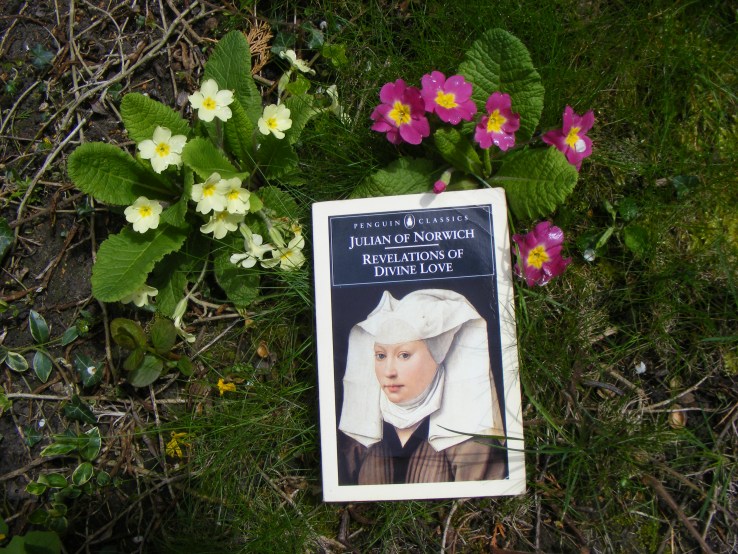
58. dinosaurs
58. dinosaurs

100 untimed books challenge: the challenge post

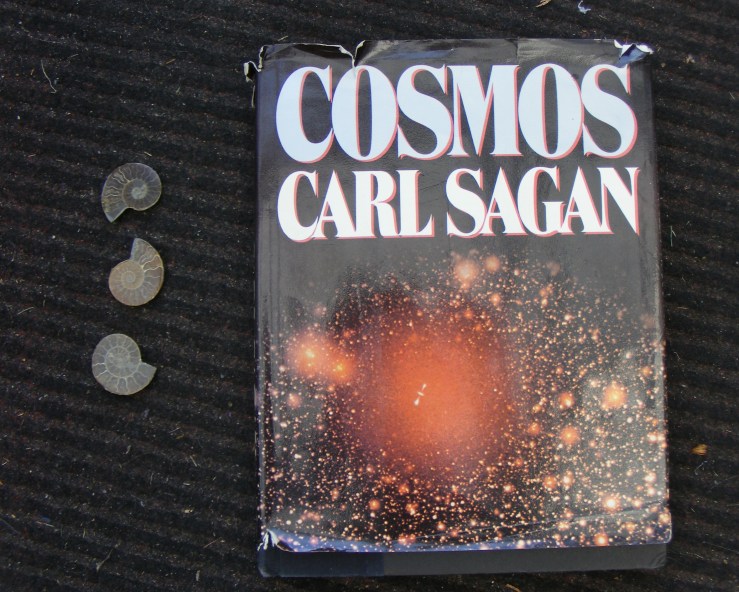
In our house Carl Sagan is a great favourite. We particularly enjoy his demolition of the ‘life on Venus’ theory, and the appearance of any logical fallacy is greeted with ‘Conclusion: dinosaurs!’

Never mind Venus, we don’t seem to have any dinosaurs in the house, but we did have some ammonites.

Ask me anything

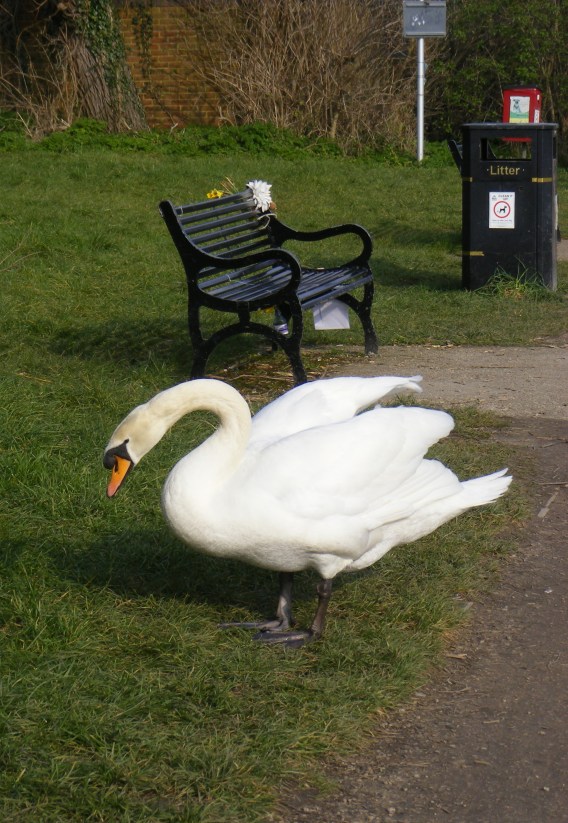
A threatening-looking swan, for no particular reason.

Well, anything within reason.

Well, anything within reason about Speak Its Name.

You can ask me about Wheels, too, though that’s almost certainly not going to be its name, and I might not answer due to a) being paranoid; b) not actually knowing the answer.

But seriously, if there are things you want to know about me and my writing, comment on this post, and I’ll do my best to give an interesting and coherent answer.

Deleted scene: Colette goes off the rails I

‘Are you frustrated, then?’ Becky asked, later, while Georgia was at the bar. There was nobody within earshot; the Lamb and Flag was reliably quiet, even on a shamrock-draped Saturday, and the jukebox was pumping out Britney Spears by way of cover.

Colette stood to feed it another pound. ‘Yes. No. It was a stupid comment. I didn’t mean it.’

Becky narrowed her eyes. ‘You’re not usually the one to suggest going to the pub. And you don’t usually have vodka in your room.’

She queued three songs at random, and did not turn back to face Becky while she spoke. ‘Birthday present. I keep forgetting to buy lemonade to go with it.’

‘Not saving it for a special occasion?’

Colette flopped back into her chair and sighed. ‘There will never be a special occasion. Today’s as good as it’s going to get.’

Becky raised her eyebrows; but Georgia came back just then, and started talking about AngthMURC committee elections, and the conversation moved on. They spoke afterwards of Peter’s prospects of being chosen for ordination, the Fellowship question, whether Liam had in fact been worth the fuss, and end of term deadlines; left when last orders was rung; and meandered home three abreast in the rain.

‘Well,’ Georgia said once they were safely inside, ‘I hope that’s going to do the trick and knock me out, so I’m going to make the most of it and go to bed now.’ Impulsively, she hugged first Becky, then Colette. ‘Thanks, guys. If I ever do anything that stupid again, I’m coming to you.’

‘No worries,’ Becky said; ‘any time. Night.’ Feeling that she had played nursemaid long enough, she turned to Colette. ‘I think I’ll turn in, too. What with three pints of Corbett’s Old Gutrot or whatever it was, I could do with some shut-eye.’

‘Night, then,’ Colette said.


Peter came in some time later, exhorting the world to shake it like a Polaroid picture, and found her half way through both the vodka and an obscure 1980s action film, curled on the sofa with all the cushions stacked under her left elbow.

‘Hey,’ he said, gently.

‘Hi.’ She moved a box of cranberry juice from the table to the floor.

‘How’s things?’

She nodded. ‘Yeah. Could be worse. Have a drink?’

He’d had a few, but still. ‘Thanks. What is this film?’

‘Dunno – I’m waiting for an ad break to find out.’ She poured surprisingly tidily. ‘Here you go.’

He sipped delicately at the vodka-and-cranberry – mostly vodka, it seemed. ‘You’re up late.’

She grimaced. ‘Don’t much want to go to bed.’

‘Why not?’ He sat down on the sofa next her.

She drew her knees up – more relaxed, but at the same time more defensive. ‘Turn the lights off: have to think.’

‘Not sleeping?’

‘Not soon enough.’ She leaned her head, experimentally, or so it seemed, on his shoulder.

He patted it awkwardly. ‘You’re not happy.’

She made no answer, but put her hand to his face and pulled his head down to hers in a contorted attempt at a kiss. It was not a particularly good kiss, but he could not help responding. Later, he wished he had paid more attention, but then he was conscious only of horrified enjoyment. ‘Be careful what you wish for,’ he murmured, as Colette abandoned the idea and slipped sideways into his lap.

‘Mm?’

He put his arms carefully around her. For a moment, all he could hear was her breathing, and his own. ‘Oh, Colette,’ he said. ‘Not like this.’

‘It’s the only way it’ll ever happen,’ she said, looking up at him, flushed, bright-eyed.

‘I know. But still.’

He held her, very still, for perhaps ten seconds, then laid a chaste kiss on her forehead. ‘Not like this,’ he said again.

‘Right,’ she said. ‘Yes. I see.’ She sat up, unfolded her legs, and yawned pointedly. ‘In which case I think I’ll go to bed.’


She was up before him the next morning. He found her sitting in exactly the same spot and the same attitude as last night, but with clothes replaced by pyjamas, and a cup of tea in her hand. The two sticky glasses still stood on the coffee table.

‘Hello,’ she said bleakly. ‘You were quite right.’

Peter smiled. ‘Damn. I was kind of hoping you wouldn’t have thought better of it.’

‘I would if I could,’ she said. ‘Or I wouldn’t if I could. You know what I mean. You’re so nice; you deserve it.’

‘Let me know if you ever do.’ He bent to pick up the glasses; she reached out impulsively and squeezed his hand.

‘I will. Thank you.’

‘It was nothing.’

‘Precisely,’ Colette responded, with a trace of her usual edge, and Peter knew that it was never going to be quite the same again.

5-star review from Inked Rainbow Reads

There’s an excellent review of Speak Its Name by Amy at Inked Rainbow Reads, who says:

This is an ideal read for anyone trying to make sense of Christian faith and being LGBTQ or being friends and family of LGBTQ people. The characters and setting feel real, and it’s so well-written with rich detail. It could be difficult for some readers to revisit a painful past, but others will find a kinship with Lydia and her group of friends.


Virginia Woolf on illness

Considering how common illness is, how tremendous the spiritual change it brings, how astonishing, when the lights of health go down, the undiscovered countries that are then disclosed…what ancient and obdurate oaks are uprooted in us by the act of sickness…it becomes strange indeed that illness has not taken its place with love and battle and jealousy among the prime themes of literature. – Virginia Woolf

This has a certain relevance to the next book, yes…

On letting characters be human

When humans act like humans, and rabbits act like rabbits...
When humans act like humans, and rabbits act like rabbits…

Characters are human. (Well, unless they’re rabbits, or purple aliens from the planet Zog.) That being so, they need to act like humans. (Or rabbits, or purple aliens from the planet Zog – but if you want the reader to relate to them, they’d better act at least a little bit like humans too.)

The most difficult thing I found, writing Speak Its Name, was letting characters act in ways that are damaging, malicious, or just plain stupid. I am, myself, pretty conflict-averse, and would like nothing better than for everybody to sort out their differences over a cup of tea. But not all my characters are, nor should they be if I want my book to be at all interesting, and sometimes I have to just let them have a row. As a reader, I often find myself muttering ‘No! Don’t! Run away now!’, knowing all the while that yes, they’re going to stay right there and do it. Because that’s who they are, that’s how they’re written, and if I were them and I were in that situation I’d probably do exactly the same thing. As a reader, I have a certain detachment. As a writer, I have to step back and let them ruin their own lives.

The only story I have come across where nobody acts out of either incompetence or malice is The Martian, and the only reason that gets away with it is because the inhospitable expanse of space and the implacable nature of physics provides enough challenge to drive the plot. Elsewhere, we rely on human frailty and incompatibility to do it, and there’s plenty of that around.

People are not perfect. People say the wrong thing, people act selfishly, stupidly, irrationally. They do the right thing for the wrong reasons. They do the wrong thing for the right reasons. Why should fictional people be any better than the rest of us?

Then there’s ‘use your words’. It’s excellent advice for the real world, but until the real world actually starts acting like that, it’s not much help for fiction. Yes, the plot where the heroine never tells the hero that the man she was hugging was her brother is a cliché, but has anybody actually written it since about 1895? It’s irritating because it’s not believable, but unbelievable competence is just as irritating.

‘I feel that if a person can’t communicate, the very least he can do is to shut up,’ said Tom Lehrer, and in real life that’s what most people do. Expecting all of your characters to communicate all of the time is implausible, even if – no, particularly if – it’s about something very personal and important. Doubly so if they’re from a background that expects them to – what’s that revolting phrase? – keep calm and carry on. Let’s just say that I was not at all surprised when the marriage of Amy Pond and Rory Williams broke up.

What I really want is consistency. I can just about believe that the entire cast of The Martian would maintain the peak of competence for the duration of the action, but only because they’re very highly trained astronauts and scientists, and only just about. You can give me a character who uses their words if you like, but you’d better make me believe that they were brought up to it, or that they’ve done a lot of work on their communication skills.

Theoretically, it ought to be possible  to write a convincing story where the heroine has a very good reason for not revealing her brother’s identity, and the hero is just the suspicious, possessive type to jump to conclusions. In Speak Its Name I have one character who withholds vital information from everybody – almost including herself – for a good third of the book because she honestly believes that this is the kindest and best thing to do. Humans don’t always act for the best, and nor should characters.

Having said all that, I was very relieved indeed to have an excuse to take out the next two weeks’ worth of deleted scenes, because I actually didn’t enjoy letting one of my favourite characters act like an idiot.

100 untimed books: another country

51. another country
51. another country

I’ve only recently discovered Patrick Leigh Fermor, and won’t say much about him now because I’ve got a longer post in mind. But this book is about other countries, and about the other country that is the past – Europe of the thirties as seen on foot, and remembered from the other side of the Second World War.

The background represents some of my own wanderings.

100 untimed books

Deleted scene: the Students’ Union general meeting

Picture doubly relevant to this scene. Or half relevant. Or something.

I take you to all the exciting locations. Actually, this happens after the SU meeting; it follows straight on from the current chapter 2 of the Lent term. Had it made it into the final version I’d have made a couple of changes, but it… didn’t. So I’m not.


Will was ranting to some other Fellowship members. Peter thought it best not to interrupt, and so walked home with Olly, who was accosted at every pace by people congratulating him on his speech.

‘I didn’t realise you were going to speak in favour,’ Peter said, once they were out of the Venue. ‘Not that I expected you to speak against – I mean, I hadn’t thought you’d be interested in the question at all.’

‘Yeah?’ Olly smiled. ‘I dunno, it just seemed like the thing to do…’

‘I mean,’ Peter pursued, ‘I wasn’t surprised at Tim speaking, because he’s such a stereotypical Catholic with a chip on his shoulder, and he’s been threatening to do something like this for years, but you’ve never seemed to care much, when we’ve talked about it at home or whatever…’

‘Just because I don’t talk,’ Olly said darkly, ‘doesn’t mean I don’t listen. And if it comes to it, it’s not so much about… well, it’s not so much about taking a side swipe at Evangelical Christianity, as it is about seeing things properly labelled. It’s the rationalist in me.’

Peter wondered what Olly had been going to say that it was not so much about. He would not have been so surprised had it been something to do with impressing Georgia.

‘Which wouldn’t help,’ he said, out loud. Georgia was still seething about the Camilla episode.

‘What?’

‘Sorry. Just thinking out loud.’

‘Oh… I thought Tim was very persuasive on why the Statement of Belief makes the Christian Fellowship a specifically Evangelical organisation, which I didn’t really understand, before. Not, like, living and breathing this stuff, the way you do.’

‘That’s a Theology degree for you,’ Peter said.

‘Do you really think,’ Olly asked, ‘that the existence of something called a Christian Fellowship results in you being misrepresented as a Christian?’

That had been a contentious point in the debate, and had been misunderstood in all directions. ‘Um,’ Peter said. ‘No. Yes. All the time.’

‘Really?’

‘Well.’ He paused. ‘OK, think about the person who tells you they’re a Christian, you know, quite early on, when you’ve just met them. Think about how you react. You take a step backwards, discover you’re late for your lecture, run away screaming…’

‘You mean Will. At least, the way he is now.’

‘You knew him before he was like that?’ Peter said, momentarily distracted. ‘I mean, I know you two were at school together, but I got the impression he sprang fully formed from some church leader’s forehead… Did he used to be a leftie feminist atheist, or something?’

‘Oh, he was always an over-privileged toffee-nosed git,’ Olly allowed. ‘But the Christian thing is new. He used to just fidget through the services up until his voice broke and he left the choir, and piss around in RE, like the rest of us. All this in-your-face Christian stuff has developed since we left school, so far as I can tell. Maybe something got him on his gap year…’ Going by Olly’s face, he was hoping it had hurt.

‘I hope he’s not following us… But yes, that’s my point exactly. It gets to the point where the rest of us are almost afraid to introduce ourselves as Christians, even to people we know quite well, because we know that we’ll then have to spend half an hour explaining that we’re not Bible-bashing, homophobic, anti-woman bigots who have no interest in them beyond converting them. I’m not sure if I get more people assuming that because I’m black… Anyway, that’s what Tim means by the Christian Fellowship misrepresenting other Christians.’

‘Evangelical Christian Fellowship, now,’ Olly corrected him.

‘Indeed. I don’t think, by the way, that it’s going to make any difference. In ten years’ time I will still be describing myself as a socially liberal Anglican on the high end of the candle…’

‘That’s a mouthful.’

Peter snorted.

‘What?’

‘Sorry. Just imagining the way Becky would laugh at that.’

‘Oh, well, Becky…’

They were turning the corner into Alma Road. Peter scrabbled in his pocket for his keys, but before he found them Colette had the door open. ‘Did you drop my card off?’ she asked, anxiously.

‘Hello to you, too.’

‘Sorry. Hello. And congratulations, Olly! Becky was refreshing the forums every five seconds until the result came out. But Peter, did you drop Lydia’s card off?’

‘No,’ Peter teased, and watched her face fall. ‘…I gave it to her in person.’

‘Oh! Did she like it?’

‘She didn’t open it when I was there. But…’ Peter frowned, trying to remember, ‘I think it was a nice surprise.’

‘Oh.’

Colette’s smile made his heart turn over twice: first with wistfulness on his own account, and then with dread, on hers.