Overload before Me before You

Here’s how this post works. I talk a bit about a book club I used to belong to. Then there’s a picture of an electricity pylon. Then there’s a content note. Then there’s the same picture of an electricity pylon. Then there are spoilers for Me Before You by Jojo Moyes, and for Overload by Arthur Hailey. If you wish to avoid spoilers, stop reading before you get to the pylon.

My previous office had a book club. From the beginning the emphasis was more on the ‘club’ than the ‘book’. At first we waited until everyone had read the book before we arranged the meeting. When we realised that it had taken us two years to read eight books we started going ahead with the meetings regardless of how many people had got through the one in question. The result of that was that the meetings became five minutes of book talk against two hours of gossip. The night we were meant to talk about Me Before You was hijacked by… in fact, I think it was my leaving do – and we never talked about the book at all. It’s been in the news, and therefore my mind, recently, and so I’m going to talk about it now.

Here is that picture of the electricity pylon that I was telling you about

[content note: discussion of euthanasia in fiction in the remainder of this post and in the external posts linked to]

Here is that picture of the electricity pylon that I was telling you about

I’ve been following the coverage around the release of the film version of Me Before You with some interest. I was troubled by the book at the time that I read it, over two years ago now, but what with one thing and another (read: my leaving do) never got around to discussing it.

If you want an itemised list of the problematic aspects of Me Before You, I can’t do better than refer you to this comprehensive sporking by Cara Liebowitz.In fact, I’m going to quote her summary, too:

“Me Before You” is a novel turned movie that focuses on Louisa, who takes a job as a personal care attendant for a wealthy quadriplegic man who hates himself, her, and everyone around him, in that order. She falls in love with him, though she can’t dissuade him, in the end, from going to Dignitas in Switzerland to end his life. Because being disabled is soooooooooo terrible and tragic, didn’t you know?! /sarcasm

The problematic aspects of Me Before You can be sorted into the following categories:

  • ableist attitudes coming from a sympathetic but ill-informed character, deliberately intended to present them as ill-informed
  • ableist attitudes coming from an unsympathetic character, deliberately intended to present them as unsympathetic
  • relatively realistic portrayals of the obstacles
  • coming from a sympathetic character, unintentionally presenting an ableist attitude as objective fact
  • an overarching ableist assumption by the author herself

My impression is that I would sort these differently from the way that Liebowitz does, and other readers will of course sort them their own ways. I’ll also refer you to this post by disabled writer David Gillon. Whether Jojo Moyes would agree with any of us is of course another question, and to a certain extent is irrelevant.

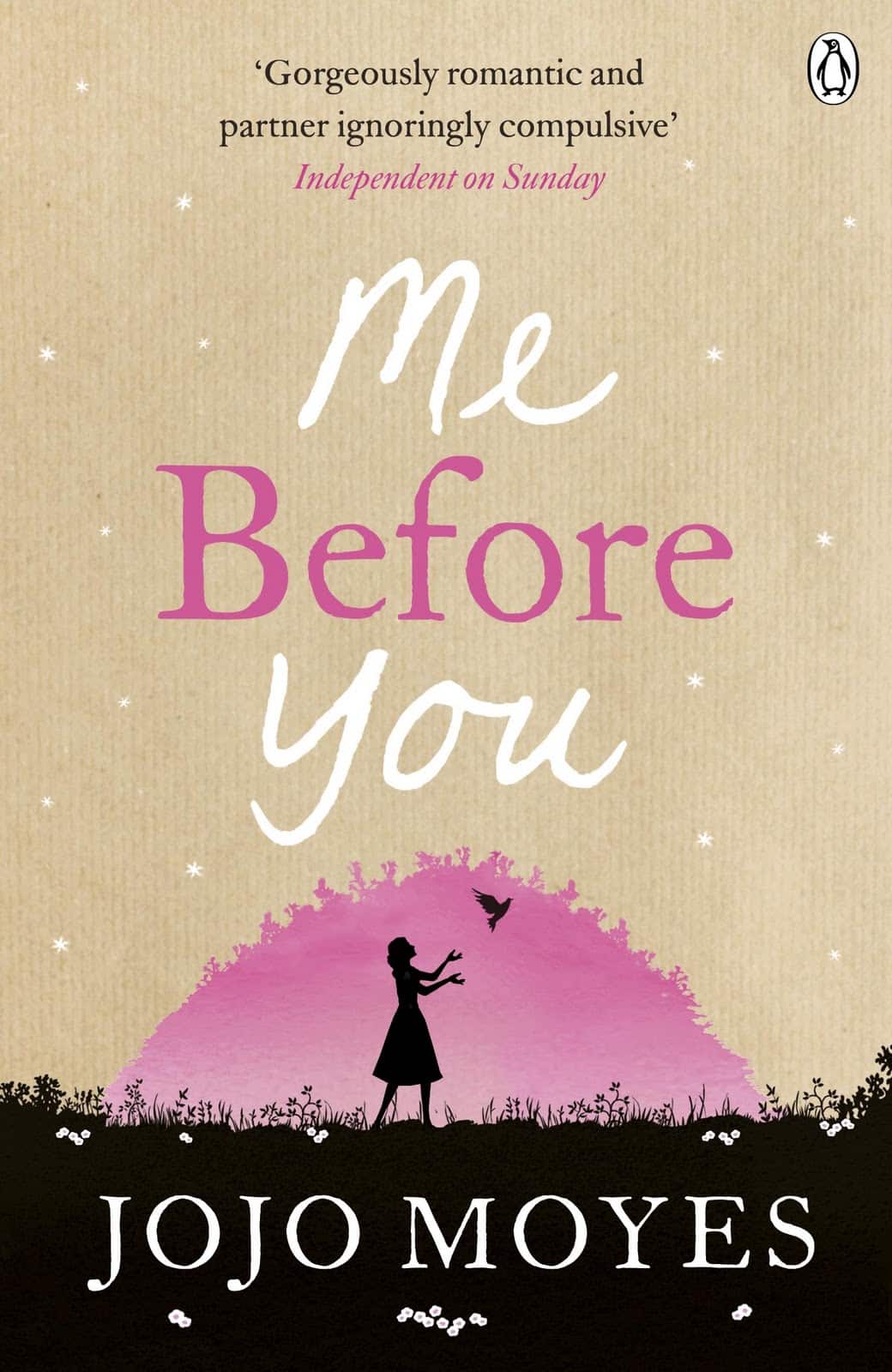
My own feeling is that she forfeits the benefit of the doubt. Choosing the ending that she does – for which I was basically prepared from the start by the cover of the paperback edition I read, which makes some problematic assumptions of its own – she acquiesces to the prevailing cultural narrative that it’s better to be dead than disabled. She never really interrogates that, not in any meaningful way, and the net result is that Will gets no character development whatsoever.

Of course there’s an argument to be made about autonomy, and personal choice, and what that looks like when physical capability is restricted, but, contrary to the protestations of the film director, the direction that Me Before You chooses doesn’t feel like the ‘brave’ one to me. In fact, it felt far less progressive than Arthur Hailey’s Overload, which, though it was written thirty-three years earlier, I’d read only a couple months before.

Overload is magnificently tacky, and occasionally plain bizarre. It has ecoterrorism, irresponsible parenting (don’t let your children fly kites near overhead lines, people), a man who loses his penis and is promised a prosthetic one, some frankly appalling health and safety failings, and an equally appalling protagonist who spends the book shagging his way around the female half of the cast list. And mostly this makes my skin crawl, but

One of said cast list is Karen Sloan, who is a far less miserable and more interesting fictional quadriplegic than Will Trainor. She’s portrayed as a sociable, attractive woman who desires and enjoys sex, who desires and enjoys life. She has a fulfilling social life. A neighbour’s child regards it as a privilege to perform small acts of care for her.  Her eventual death, when the overload of the title leads to her respirator running out of battery, is presented as a tragic accident, not a ‘merciful release’.

I’ve been taking notes on how not to fail on my own account. After all, Wheels or Bonk or whatever we’re calling it these days has a disabled main character and a non-disabled narrator who starts out as a clueless jerk. Some things I’m going to try:

  • undermining my unreliable narrator from page one
  • reading around the subject more. A lot more.
  • extrapolating from my own experience
  • having a happy ending for everyone
  • getting a friend who has a similar condition to my disabled character to read the damn thing and tell me where I’ve messed up
  • offering her copious amounts of gin for her trouble

It really doesn’t feel like rocket science. Perhaps ‘fail less than Me Before You‘ is just a very low bar.

Déjà vu

Massive progress
Massive progress

Major existential crisis vs minor annoyance

A friend asked me the other day how things were going with the current book. This was my reply:

I’ve dragged it kicking and screaming to 16K and have hit the stage where I think it’s all terrible and the characters are cardboard and I haven’t done enough research and it shows and I’ve got everything wrong and should just dump the entire project.

Interestingly, this state of affairs didn’t particularly bother me. Because, as I went on to say, I remember this happening last time round. In fact, I officially gave up on Speak Its Name at least twice because I thought it was all terrible and the characters were cardboard and I hadn’t done enough research and it showed and I’d got everything wrong. So I just dumped the entire project.

Except I didn’t, obviously, because twice – or more – I came back to it, dug in again, and sorted out what was wrong.

This time round, I see exactly what’s going on. I recognise the stuckness as a minor annoyance rather than a major existential crisis. I also see why it’s feeling stuck.

Massive mess vs massive progress

The picture at the top of the page shows the sitting room of the flat we rented in Woking, during the process of packing up almost everything to move it to Cambridge. For tedious work-related reasons, I did most of the packing while my partner started his job out east (he did all of the driving, so it worked out more or less even).

I hate moving house. It’s commonly said to be one of the most stressful experiences of modern life, and I’ve done it far more times than I ever wanted to. What that means is, I’m getting better at it.

Here, an extract from our chatlogs:

K: the packing is getting me down
I think it gets worse before it gets better

T: yeah

K: I am hoping that you will come back and see Massive Progress
I am just seeing Massive Mess

T: That is what progress usually looks like

K: heh
ALL OF THE THINGS

T: One hundred percent of them

K: yes
and they all need to be in boxes
or somewhere else that is not in the flat

The more often it comes, the easier it is to recognise it

The first time I got depression, I didn’t know what it was. I didn’t know there was an ‘it’ to know: it works by erasing all your previous frame of reference, so you start believing that this grey expanse of meh is all there ever was and all there ever will be.

The first time it went away was because of a change of scenery and Bruckner’s fourth symphony. It was as if someone had switched the lights on; and that was when I learned not to mistake a low mood for a loss of faith. I can forgive myself for having been mistaken, though: it was a very, very ongoing low mood.

The next time was when several awful things (two bereavements, a bedsit with leaks and mice, a temp job in a cellar) all showed up in a bandwagon and depression jumped on.

The time after that I went to see the doctor about it and he said, yes, depression. My brain lying to me about the way things are, not the way things actually are.

A while after that, I started recognising the feeling that I should break up with my partner for his own good as not just a very bad idea, but a symptom of the returning visitor.

These days, it comes and goes, and I get better and better at recognising it. I’ve got to know its little ways so well that I could almost mark it on the calendar, and when it turns up say, ‘oh, yes, August’.

Twenty-four per cent

The current wordcount for Wheels (I thought briefly about changing the title to Bonk this morning, but I fear I’d disappoint a lot of Jilly Cooper fans) is 19,354. Assuming I’m aiming for eighty thousand words, that puts me just under a quarter of the way there.

Actually, it puts me nowhere near a quarter of the way there. I’m not expert enough yet to guess how much editing and reading and re-editing and re-reading I’m going to need to do once I’ve got the first draft down, but I know it’s going to be a lot. I can tell that from looking at what there is of the first draft.

That’s why I’m thinking it’s all terrible and the characters are cardboard and I haven’t done enough research and it shows and I’ve got everything wrong.

You don’t realise how much stuff you have until you try to put it all into boxes, and then you have boxes everywhere and also stuff everywhere. Moving is always horrible. Depression is always horrible. The more often you have to deal with either, the better tools you pick up and the quicker you are to recognise what’s wrong, but at no stage does this make them fun.

At twenty-four per cent, the book is terrible and the characters are a bit thin, and I do need to do more research, and I probably have got some stuff wrong. And, yes it does show.

The vital information that I was missing at this point in the last book is that this is all true, but nothing is wrong. This is just the way that things look at sixteen thousand or nineteen thousand words into the first draft. Massive progress looks like massive mess. It can’t possibly look like anything else, not until I get a long way further in.

I’ve been here before, and it’s much less scary this time around.


Talk of the Town


The worst writing advice I’ve ever received

It’s a bit specific, so I’m going to have to give you some context.

Back in the days when I was hung up on getting external validation for my writing, I submitted various short stories to various places. Some of them were good; some of them weren’t. One of them got published. They gave me a chance to play around in different genres and styles, and also to find out that the short story isn’t my favourite form. All useful information.

Among other things, I discovered that I enjoy writing slightly unreliable narrators – narrators who are so caught up in their own world-view that they don’t realise that they are unreliable. The narrator of the story in question was one of them: a creepy man on a train eyeing up a fellow commuter who’s quietly minding her own business.

The publisher to whom I sent this has a pool of readers who comment on a story. Half the ones who looked at mine seemed to have issues with the concept of ‘unreliable narrator’. One line ‘inadvertently makes him seem like a stalker’, said one of them. Nothing inadvertent about it, mate, and I didn’t think I’d been overly subtle.

The worst writing advice I’ve ever received, however, came from somebody who objected to a line in the first paragraph:

She gets the same train. Every morning, 0752, there she is. Crimson coat, straight blonde hair, gorgeous legs. I don’t know her name or where she works. I only know that she gets on one stop after me, gets off at London Waterloo, and heads straight down to the Tube, where it’s impossible to follow her. Not that I’d do something like that, I mean. Obviously. What I’m saying is, I get fifty-four minutes every morning to sit opposite her, or beside her, or behind her, and to look at her, and to wonder…

This particular reader didn’t like the elliptical ‘Crimson coat, straight blonde hair, gorgeous legs’. Fair enough. They suggested I replace it with

Her tight leggings outline her gorgeous legs.

At which point I drew a horrified breath, laughed a bit, and decided that it was not worth submitting anything further to this publisher, because their idea of what made for a good story was a very long way away from mine.

The problem is, of course, that this reader had clearly received some pretty appalling advice of their own: that the passive voice must never, ever, ever be used. (See what I did there?) And if the result is horrifically clumsy, if it assigns nonsensical agency to an inanimate object, well, who cares? We’re following the rules, and that’s the important thing. I suppose Nicky Morgan would approve.

Anyway, this was more or less where I stopped giving a damn what other people thought about my writing, and started trusting my own judgement. Learning to trust one’s own judgement was, it turns out, a prerequisite for publishing my own writing under my own name. So perhaps it wasn’t such bad advice after all.

Deleted scene: a day at the beach

In a spirit of ‘all’s well that ends well’, I present this alternative view of the beginning of the Summer section.


Peter opened his eyes. Sunlight, creeping down the hall and through his open door. He reached out a hand for the clock on his bedside table, and connected instead with something soft. It was a crumpled polo shirt. Ah, yes. He had not undressed neatly. What had he slept in? Pants. Logical enough.

He drew the polo shirt towards him, sending a glass of water tumbling to the floor. Peter cursed. It spilt but did not break. Leaving it to soak into the carpet for the moment, he shook the shirt experimentally; the clock rolled out. He squinted at it. Eight fifteen. Ridiculous. By rights, he should sleep for another three hours and wake with one hell of a hangover. Not that he was complaining about that last one. Fine. He would go back to sleep. He rolled over and hugged the pillow to him.

But he was feeling remarkably alert, and the awareness of that spilt water tugged at him until he got up and put a towel down over the puddle. Then, of course, the glass had to go back to the kitchen. He shrugged his dressing gown on and went upstairs.

Colette was in the kitchen, drinking her horrible weak tea. She raised her mug to him in salute. ‘How was the Theology binge?’

‘Good, thanks, yes,’ Peter said. ‘How are you?’

She twisted her mouth into a nervous grimace. ‘It’s results day.’

‘For you, maybe.’ He smiled, thinking of his solid 2:1. ‘Are you going up to campus soon, then?’

‘When I’ve had some breakfast.’

‘Do you mind if I come up with you?’ he asked on impulse. ‘I could do with a walk and a look at the Grand Union Stores, before I leave this place forever.’

She regarded him for a fraction of a second too long. He stopped a sigh. Would she ever trust him? But she said, ‘Of course; why not?’

Why not indeed? Peter said: ‘OK, I’ll go and get dressed.’

They went to the Chemistry floor of the Science block first. Peter had never been further inside than the foyer in all his three years at Stancester; today the great glazed atrium was like a greenhouse. Colette led him across the hall, up a flight of stairs, over a bridge and along a corridor. At last she came to a halt opposite a small gaggle of excited first-years. ‘Here.’

She slid past the group and scanned a list headed ‘SECOND YEAR’. Peter also looked, but could make nothing of it: the marks were listed next to the students’ identity numbers, with no names mentioned.

‘Ah,’ Colette said grimly.

Peter followed her finger with his eyes. ‘Fifty-one. That’s OK; it’s a 2:2.’ He knew his voice lacked conviction.

‘Could do better,’ Colette said.

It was true; they both knew it. Peter said, ‘You’ve had a hell of a year.’

She nodded. She was on the verge of tears. The first years moved off, chattering happily; presumably they had all attained the forty per cent mark necessary to progress. In second year marks counted.

She was looking at the board more closely. ‘I didn’t actually fail,’ she said. ‘I’m not sure that it was possible to fail the whole year on one set of exams. I just didn’t do as well as I should have done.’

He had hoped never to see her look so bleak again. Her head was tipped forward; her shoulders drooped. She was wilting in the heat and disappointment. He risked putting a hand on her shoulder. She sagged under the weight of it.

‘Do you want to go home?’ he asked. ‘Or to the pub, or something?’

She shook her head. ‘Even the Venue won’t be open yet. And I can’t go home.’

‘Why on earth not?’

‘It’s kicking-out day for halls. Which means it’s moving-in day for Lydia. Her parents are coming down to drive all the stuff over to our place from Wycombe, and then take her home. I can’t be there when they arrive. We agreed on that last -‘ She sniffed and let the sentence trail off.

‘They surely won’t be here this early?’

‘I suppose not.’

‘Would it be worth giving her a ring, to see if they are? And, if not, you could go over to Wycombe now and say goodbye before they get here.’ Inspiration struck. ‘And then -‘

‘What?’

‘We could go to the beach.’

Colette’s mood lifted as the train drew out of Stancester and pelted south and west into Devon. She felt happier still when they left the express at Exeter. A soft breeze floated through the station as they waited for the branch line train that would take them down along the Exe estuary to the coast. Perhaps, Colette thought as she wandered up and down the platform, she had just needed to get out of Stancester, away from the expectations and the pressure and the dead heat.

The Exmouth train was short, only two carriages, and warm and lazy. She leaned her head against the window and closed her eyes for a moment or two, trying to fix Lydia’s image in her mind, those dark eyes concerned and loving and anxious; that tawny hair dishevelled in the bustle of last-minute packing, with a cobweb caught in it from goodness knew where. She tried not to think about how Lydia had jumped at every footstep in the corridor, every little whistle or chirrup from her mobile phone, tried to remember instead the exact sensation of having her in her arms. She sighed, noiselessly. Eight weeks!

Sitting up and opening her eyes, she looked sideways at Peter, who was frowning at the Church Times crossword. He looked up at her and smiled. ‘How are you doing?’

‘Better, thanks. I don’t deal with heat so well.’

He nodded. ‘Sea breezes, that’s the answer. We’ll have a nice day at the beach.’

They did. They ate ice creams; they bought buckets and spades and built sandcastles. Wandering down to the water line, Colette picked up her skirt and paddled, the water swirling cool around her ankles. She gazed out to sea for some time, then glanced back up the beach to see where Peter was. He had stretched out on the sand and was dozing.

‘Peter,’ she said, when she had trudged back up the beach and sat down beside him.

He removed the newspaper from his face and blinked up at her. ‘Yes?’

‘Are we friends?’

‘Of course we are. Didn’t I let you stand me an ice cream?’

‘So you did. Clotted cream and all.’

‘Clotted cream and a little plastic spoon to eat it with. That’s proof enough of my devotion, I should say.’

Colette laughed. ‘It wasn’t your devotion I was questioning. It was whether you still liked me the way I like you, even though I don’t like you the way you like me in the other way.’

‘Mrmph,’ Peter agreed. ‘Well, obviously. If it was just the other way, I wouldn’t have let you get the ice creams. I’d have insisted on buying them myself.’

‘I suppose.’

‘Actually I think I might be over you. I did throw the spoon away, after all.’

‘Really?’ This was encouraging.

He sighed. ‘Not really, I’m afraid. At least, I did chuck the spoon, but I’m not over you. I’m sorry. I know it’s awkward.’

‘I’m sorry, too.’

‘That’s all right. You can’t help it. Nor can I. We just live with it, don’t we?’

‘We do.’ She wiggled her feet in the sand, enjoying the dry powdery warmth between her toes.

‘In fact, we only live with each other for another week, so I wouldn’t worry. It’s much easier these days, anyway, now you’ve got Lydia.’

‘Oh. Good,’ she said, feeling warmth spread through her at the sound of Lydia’s name.

‘Well, obviously it’s a lot easier for you. I just keep going as I was before, but you’re happy, and that’s a bonus.’

She shook her head. ‘You’re such a gentleman.’

‘I know.’ He smiled and shut his eyes again.

‘Once upon a time,’ she said, idly, ‘there was a knight who wished to marry a beautiful princess. Her father told him, fine, you can marry her, but first you have to complete seven impossible tasks. No problem, he said. Bring it on. OK, said the king. The first impossible task is this: go away and never come back.’

‘Exactly,’ Peter said. ‘At least, that was the way you were playing it.’

‘Well, yes.’ She picked up a discarded lolly stick and doodled in the sand with it. ‘I didn’t expect the princess to take matters into her own hands and come after me. And in the mirror version you play it straight. Metaphorically speaking.’

‘Quite. I’m here. In body, at least. Not so much in mind.’ He yawned.

Tentative: ‘Like I was, back in March?’

‘I didn’t want to bring that up,’ he said.

‘Nor did I, particularly. But I want to apologise.’

‘Fair enough.’ He sat up and extended a hand to her. ‘Shake?’

She took it. ‘Of course. Friends?’

‘Friends.’

‘Good.’ She smiled. ‘Sorry – well, sorry it’s been so awful.’

He glowered. ‘Stop apologising.’

‘OK, then. Thank you for today – this was a really good idea.’

‘Wasn’t it?’ he agreed happily.

‘Took my mind off things. Except for how I’m talking about them to you now, of course.’

Peter stretched his arms high, bracing his back against the seawall. ‘Ah, yes, that’s the other thing, isn’t it? The princess actually does have a real father.’

‘Yup. And I’m not even asking him for her hand. I’m a wuss.’

Peter looked at her severely. ‘I thought you were doing this voluntary exile thing for her? So that her family wouldn’t catch on and give her hell this summer?’

‘Yes, that was the idea. But I still feel like a wuss.’

‘You’ll just have to swallow your pride and be a wuss, in that case. You can be chivalrous and sneaky at the same time. It’s practically the definition of courtly love.’

She laughed. ‘I suppose so.’

They bought fish and chips and ate them on the station platform, waiting for the train back to Exeter. Colette fell asleep on the express, only waking when Peter shook her shoulder, gently, as it drew into Stancester.

‘Ouch,’ she said.

‘Sorry. Sunburn?’

‘Yup.’ She craned her neck, trying to see how pink her back had gone. ‘Oh, well. I’ve got some after-sun stuff, at home.’

‘Safe to go back now, you think?’

‘Should be. She’ll be half-way back to Hastings, by now.’

‘OK,’ Peter said, thoughtfully. ‘OK.’

A neat stack of boxes and bags in the corner of the sitting room betrayed Lydia’s recent presence in the house. There was no rational reason to go into the sitting room, so Colette, feeling Peter’s sad, understanding, eyes on her, proceeded straight up the stairs. He followed her as far as the kitchen; she went on up to her room.

She chucked her sandals under the bed and her bag on the desk. It left a little trail of sand behind. She winced as she stretched her arms, and felt the sunburn on her shoulders. There was still sand between her toes; she sat down on the edge of the bed and wriggled them to try to dislodge it.

‘Colette!’ Peter called from downstairs. ‘Tea? Cake?’

‘Tea, yes please; cake, no thanks,’ she called back. How Peter could even think about eating after such vast quantities of fish and chips… She sighed. Odd how the minor discomforts combined to make contentment. Her results seemed less disastrous now. Summer retakes; that wouldn’t be so bad. And Lydia… Lydia had left Stancester, and was probably back in Sussex; they wouldn’t see each other for nearly two months now, but after that… She thought of Lydia’s things, boxes piled up in the sitting room, to be moved into Olly’s room in September. Not Olly’s room, at least, not for much longer. Lydia’s room, soon: the room next door. Would it be weird to go downstairs to look at the boxes, count them, perhaps, to let herself think that Lydia had been standing there only a couple of hours ago?

Just as she was reluctantly deciding that it would, Peter appeared. ‘Tea oop, love,’ he announced, in a woeful parody of Becky’s accent. ‘Hey, hey, what’s up?’

‘Something in my eye… sand, maybe,’ she lied. ‘Sorry.’ She grabbed her pyjama top and wiped her eyes on it. A folded piece of paper fluttered to the floor.

Peter handed it to her. ‘Something of yours?’

Lydia’s cramped, tangled writing. Colette pounced on it. ‘Oh! She’s left me a letter.’

Peter turned around and tactfully began to eat his cake while Colette read the note.

Dearest Colette,

Writing this very quickly – Mum and Dad think I’ve gone back to get something from my book box. Just wanted to say 3 things:

1. I love you.
2. Thank you for going out today. I feel awful for kicking you out of your own house, but you were right: they’d have known straight away if they’d seen the 2 of us together.
2a. I love you.
3. I’ve nicked your pink cardigan. I hope you don’t mind – I had to have something to prove you still existed. Let me know if you need it and I’ll post it back.

Goodbye, my darling. I’ll phone you whenever I can. September seems so far off!

All my love – Lydia xxxx

Reaching the end of the note, Colette threw herself face down on the bed and howled. Peter patted her ineffectually on the shoulder. ‘Is it – all right?’ he asked. ‘Either way, there’s tea here.’

‘Oh, yes,’ she gulped. ‘It’s as all right as it can be.’ She sat up, blew her nose, and reached for the mug. Far too strong, of course but none the less welcome.

‘Are you working this summer?’ he asked.

Colette knew a deliberate attempt to change the subject when she saw one, but she humoured him. ‘I haven’t sorted anything out yet, but I probably will. Why?’

‘I was just thinking: you could come and stay with me if you happened to have a free week. Tonbridge is only about an hour from Hastings, you know.’

Deleted scene: Colette goes off the rails II

By dint of not speaking much, they got through the next few days without allowing the atmosphere to contaminate the rest of the household. Peter was counting down the days to the end of term – so, no doubt, was Colette: Sunday (he went to chapel; she went to Wardle Street), Monday (that was all right; that was her heaviest day of lectures); Tuesday (although at some point they were going to have to meet to hand over the vice-presidential duties, damn it); Wednesday (there was no escaping AngthMURC, though he was very late, telling himself that the chapel needed a thorough sort-out after the last Evensong of term); Thursday (and then he had lots of reading to catch up with for his dissertation).

Thursday. Almost Friday: it was getting on for one in the morning. Peter had long since given up on Thomas Aquinas, and was alternating between an aimless wander through Wikipedia links in one browser window, and a ten-page argument about the role of women in the Church on the Stancesternet forums in another. He should, he supposed, go to bed, but he could not quite be bothered. The thought of traipsing upstairs to clean his teeth, and finding a clean pair of pyjamas – any pyjamas, come to that – was exhausting in itself; so he sat there, and clicked, and clicked.

He jumped when he heard a sound – small, scraping, metallic. A key, fumbling for, and turning in, the front door lock. Becky and Colette, back from clubbing. Becky’s attempt to take Colette’s mind off – whatever it was. Peter stood up and stretched the cramp out of his right arm. Better go out and make sure everything was all right.

In the corridor, Colette was leaning heavily on Becky. ‘’m gonna throw – up –’

‘No, you’re not. Not until I can get you upstairs.’

A bitter giggle. ‘Oo-er, missus.’

‘You didn’t throw up in the taxi. I’m very proud of you.’ Becky hoisted Colette’s arm around her shoulder, and they lurched up the stairs together. He could hear her saying, ‘Not on the landing, either.’

Ought he go and help? Becky seemed to have things well in hand; and he did not deal well with people throwing up. He compromised by calling, softly, up the stairs, ‘Need any help, Becky?’

‘If you wouldn’t mind finding a bucket…’ she replied.

A bucket. That was easy enough. He shoved his feet into slippers and went out into the back garden. There was a builder’s bucket out there, last used for dousing the sparklers on Bonfire Night. It would be far easier to clean than the mop bucket, should the worst come to the worst.

By the time he had tipped the slime out, rinsed it under the outside tap, dried it off, and hauled it upstairs, Becky had managed to tidy Colette up and put her into bed. She was standing over her, now, making her drink a pint of water before going to sleep. ‘You’ll thank me in the morning,’ she said.

Colette groaned faintly. Peter handed the bucket to Becky and retired discreetly downstairs. ‘Good night,’ he said, as if everything were perfectly normal.

He sat down on his own bed. He needed to think. This was not normal, not normal at all. Other students went out and got hammered and threw up, but not Colette. She knew when to stop. Other students dyed their hair outrageous colours, but not Colette. Her hair was a perfectly nice colour as it was. Other students – well, no, they didn’t, unless you counted Ali, last year – but nor was it at all like Colette to have thrown herself at him.

He had, he noted in passing, got it bad. A disinterested observer would have said that Colette was looking terrible – no, to be fair, she had looked passable enough when she went out, but she had come home with black circles under her eyes, smudged lipstick, the badly dyed hair falling lank around her face, and miserably unhappy – but he would have asked her out in a heartbeat, had he thought she was remotely interested. (Well, he supposed, she had been, in a way, but he had known then, and knew now, that it was false. He was too proud for that. He knew very well that her interest in him was merely a sign of her unhappiness. That just went to show that there was nothing to hope for there.) He rubbed his eyes. Thinking about her, a furious, longing, tightness spread across his chest, something that was not entirely sexual, but that was more than a friend’s vicarious anger.

‘I love Colette,’ he said to the empty room. It was the first time he had admitted it out loud; which did not make it any the less true, or serious. He loved her grey eyes and her deceptive vagueness; he loved her cynical smile and the way she would pounce on a flaw in an argument and maul it until only the bare bones of the truth were left. She would never love him back; he would never stop loving her. One day, he supposed, he would be grateful to have her simply as his friend – assuming they could be friends, now. One day he would have the grace to pray for that to be the case.

Somebody tapped at his door. ‘You still up?’

‘Becky. Come in.’

She sidled into his room, shivering in her skimpy top and miniskirt, and her hair looking greasy with the raindrops caught in it. ‘Well. That was a disastrous idea. I was trying to take her mind off it all, but I suppose you just take it with you, don’t you?’

Peter forbore to comment on the sense, or otherwise, of Becky’s plan. ‘She’s not herself,’ he said, jerking his head upwards.

‘No.’ Becky shut the door and leaned against it, arms crossed.

‘Do you -‘ he hesitated ‘- have any idea why?’

She nodded. ‘She’s trying,’ she said, with a pomposity that betrayed the fact that she, too, had been drinking a little too much, ‘to get back into the closet. And it’s too small for her. She’s a fucking butterfly. Of course she doesn’t fit back into the chrysalis. And it hurts so much that she’s drinking to stop it hurting.’

‘Why is she even trying?’

Becky gave him a look. ‘Oh, come on. You of all people should know. She’s head over fucking heels in love with fucking Christian Fellowship Lydia. Why you thought it would be a good idea to introduce them in the first place…’

Peter ignored the bait, and the sickening certainty that she was right. ‘Did she tell you that?’

‘No, but it’s obvious. It couldn’t be anyone else; there’s nobody else she’d pretend to be straight for. I’ll tell you something else, too: Lydia knows.’

‘Oh, no.’ Peter was fond of Lydia; he did not want to think that she might be capable of driving Colette to the edge, knowing that she was doing it.

Becky nodded. ‘I can’t make sense of it any other way. Think about it. If, in the ordinary way, you have a crush on someone you see a lot of -‘ her eyes flickered over Peter ‘- and you know it’s not going to go anywhere, for the perfectly reasonable reason that you’re pretty sure the other person isn’t interested, what do you do? You ignore it and hope it goes away. You don’t pretend to be someone completely different, someone who wouldn’t even think of fancying that person in the first place.’

‘That’s what you think she’s doing?’ Peter said, disregarding the too-accurate description of his own approach to things.

‘I’m sure of it. And who would she go that far for? Somebody who was bothered by her not being straight. For obvious reasons, she doesn’t hang around with too many people like that. I mean, even Lydia wasn’t bothered at the beginning, and I know Colette told her straight off, because she told me she had. So if she wasn’t bothered then, why is she bothered now? Because she knows that it’s not general any more, it’s specific, and Colette fancies her. Specifically.’

‘Right.’

‘Somehow Colette’s worked out that Lydia knows – she might even have told her, it’s the sort of bloody stupid thing she’d do in a misguided attempt at being noble – and has freaked out and is trying to undo it all. Of course it’s not working, because that’s the toothpaste you can’t put back in the tube, but you try telling her that.’

It sounded horribly plausible. ‘Shit,’ Peter said. ‘What do we do about it?’

‘Hope she gets over it during the Easter holidays. Otherwise, buggered if I know,’ Becky said. ‘Buggered.’ She nodded morosely a couple of times, and left the room.

Ask me anything

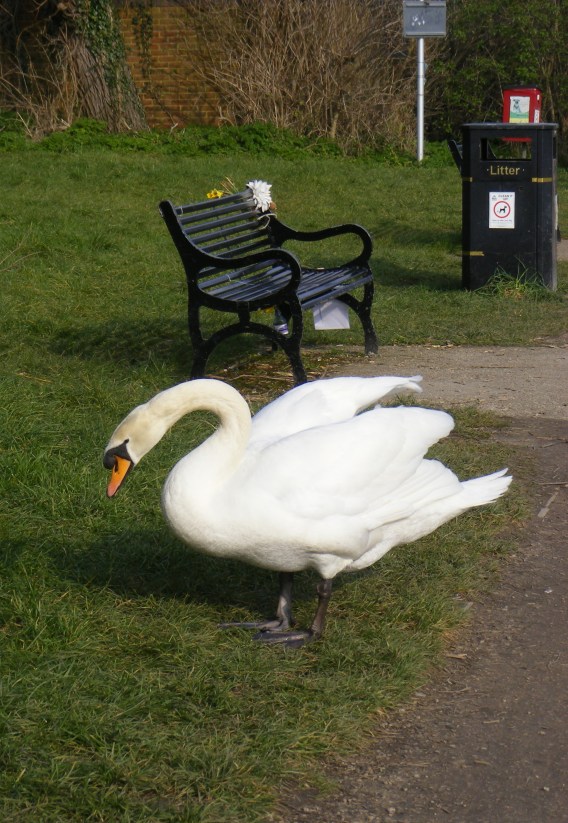
A threatening-looking swan, for no particular reason.

Well, anything within reason.

Well, anything within reason about Speak Its Name.

You can ask me about Wheels, too, though that’s almost certainly not going to be its name, and I might not answer due to a) being paranoid; b) not actually knowing the answer.

But seriously, if there are things you want to know about me and my writing, comment on this post, and I’ll do my best to give an interesting and coherent answer.

Deleted scene: Colette goes off the rails I

‘Are you frustrated, then?’ Becky asked, later, while Georgia was at the bar. There was nobody within earshot; the Lamb and Flag was reliably quiet, even on a shamrock-draped Saturday, and the jukebox was pumping out Britney Spears by way of cover.

Colette stood to feed it another pound. ‘Yes. No. It was a stupid comment. I didn’t mean it.’

Becky narrowed her eyes. ‘You’re not usually the one to suggest going to the pub. And you don’t usually have vodka in your room.’

She queued three songs at random, and did not turn back to face Becky while she spoke. ‘Birthday present. I keep forgetting to buy lemonade to go with it.’

‘Not saving it for a special occasion?’

Colette flopped back into her chair and sighed. ‘There will never be a special occasion. Today’s as good as it’s going to get.’

Becky raised her eyebrows; but Georgia came back just then, and started talking about AngthMURC committee elections, and the conversation moved on. They spoke afterwards of Peter’s prospects of being chosen for ordination, the Fellowship question, whether Liam had in fact been worth the fuss, and end of term deadlines; left when last orders was rung; and meandered home three abreast in the rain.

‘Well,’ Georgia said once they were safely inside, ‘I hope that’s going to do the trick and knock me out, so I’m going to make the most of it and go to bed now.’ Impulsively, she hugged first Becky, then Colette. ‘Thanks, guys. If I ever do anything that stupid again, I’m coming to you.’

‘No worries,’ Becky said; ‘any time. Night.’ Feeling that she had played nursemaid long enough, she turned to Colette. ‘I think I’ll turn in, too. What with three pints of Corbett’s Old Gutrot or whatever it was, I could do with some shut-eye.’

‘Night, then,’ Colette said.


Peter came in some time later, exhorting the world to shake it like a Polaroid picture, and found her half way through both the vodka and an obscure 1980s action film, curled on the sofa with all the cushions stacked under her left elbow.

‘Hey,’ he said, gently.

‘Hi.’ She moved a box of cranberry juice from the table to the floor.

‘How’s things?’

She nodded. ‘Yeah. Could be worse. Have a drink?’

He’d had a few, but still. ‘Thanks. What is this film?’

‘Dunno – I’m waiting for an ad break to find out.’ She poured surprisingly tidily. ‘Here you go.’

He sipped delicately at the vodka-and-cranberry – mostly vodka, it seemed. ‘You’re up late.’

She grimaced. ‘Don’t much want to go to bed.’

‘Why not?’ He sat down on the sofa next her.

She drew her knees up – more relaxed, but at the same time more defensive. ‘Turn the lights off: have to think.’

‘Not sleeping?’

‘Not soon enough.’ She leaned her head, experimentally, or so it seemed, on his shoulder.

He patted it awkwardly. ‘You’re not happy.’

She made no answer, but put her hand to his face and pulled his head down to hers in a contorted attempt at a kiss. It was not a particularly good kiss, but he could not help responding. Later, he wished he had paid more attention, but then he was conscious only of horrified enjoyment. ‘Be careful what you wish for,’ he murmured, as Colette abandoned the idea and slipped sideways into his lap.

‘Mm?’

He put his arms carefully around her. For a moment, all he could hear was her breathing, and his own. ‘Oh, Colette,’ he said. ‘Not like this.’

‘It’s the only way it’ll ever happen,’ she said, looking up at him, flushed, bright-eyed.

‘I know. But still.’

He held her, very still, for perhaps ten seconds, then laid a chaste kiss on her forehead. ‘Not like this,’ he said again.

‘Right,’ she said. ‘Yes. I see.’ She sat up, unfolded her legs, and yawned pointedly. ‘In which case I think I’ll go to bed.’


She was up before him the next morning. He found her sitting in exactly the same spot and the same attitude as last night, but with clothes replaced by pyjamas, and a cup of tea in her hand. The two sticky glasses still stood on the coffee table.

‘Hello,’ she said bleakly. ‘You were quite right.’

Peter smiled. ‘Damn. I was kind of hoping you wouldn’t have thought better of it.’

‘I would if I could,’ she said. ‘Or I wouldn’t if I could. You know what I mean. You’re so nice; you deserve it.’

‘Let me know if you ever do.’ He bent to pick up the glasses; she reached out impulsively and squeezed his hand.

‘I will. Thank you.’

‘It was nothing.’

‘Precisely,’ Colette responded, with a trace of her usual edge, and Peter knew that it was never going to be quite the same again.

5-star review from Inked Rainbow Reads

There’s an excellent review of Speak Its Name by Amy at Inked Rainbow Reads, who says:

This is an ideal read for anyone trying to make sense of Christian faith and being LGBTQ or being friends and family of LGBTQ people. The characters and setting feel real, and it’s so well-written with rich detail. It could be difficult for some readers to revisit a painful past, but others will find a kinship with Lydia and her group of friends.


On letting characters be human

When humans act like humans, and rabbits act like rabbits...
When humans act like humans, and rabbits act like rabbits…

Characters are human. (Well, unless they’re rabbits, or purple aliens from the planet Zog.) That being so, they need to act like humans. (Or rabbits, or purple aliens from the planet Zog – but if you want the reader to relate to them, they’d better act at least a little bit like humans too.)

The most difficult thing I found, writing Speak Its Name, was letting characters act in ways that are damaging, malicious, or just plain stupid. I am, myself, pretty conflict-averse, and would like nothing better than for everybody to sort out their differences over a cup of tea. But not all my characters are, nor should they be if I want my book to be at all interesting, and sometimes I have to just let them have a row. As a reader, I often find myself muttering ‘No! Don’t! Run away now!’, knowing all the while that yes, they’re going to stay right there and do it. Because that’s who they are, that’s how they’re written, and if I were them and I were in that situation I’d probably do exactly the same thing. As a reader, I have a certain detachment. As a writer, I have to step back and let them ruin their own lives.

The only story I have come across where nobody acts out of either incompetence or malice is The Martian, and the only reason that gets away with it is because the inhospitable expanse of space and the implacable nature of physics provides enough challenge to drive the plot. Elsewhere, we rely on human frailty and incompatibility to do it, and there’s plenty of that around.

People are not perfect. People say the wrong thing, people act selfishly, stupidly, irrationally. They do the right thing for the wrong reasons. They do the wrong thing for the right reasons. Why should fictional people be any better than the rest of us?

Then there’s ‘use your words’. It’s excellent advice for the real world, but until the real world actually starts acting like that, it’s not much help for fiction. Yes, the plot where the heroine never tells the hero that the man she was hugging was her brother is a cliché, but has anybody actually written it since about 1895? It’s irritating because it’s not believable, but unbelievable competence is just as irritating.

‘I feel that if a person can’t communicate, the very least he can do is to shut up,’ said Tom Lehrer, and in real life that’s what most people do. Expecting all of your characters to communicate all of the time is implausible, even if – no, particularly if – it’s about something very personal and important. Doubly so if they’re from a background that expects them to – what’s that revolting phrase? – keep calm and carry on. Let’s just say that I was not at all surprised when the marriage of Amy Pond and Rory Williams broke up.

What I really want is consistency. I can just about believe that the entire cast of The Martian would maintain the peak of competence for the duration of the action, but only because they’re very highly trained astronauts and scientists, and only just about. You can give me a character who uses their words if you like, but you’d better make me believe that they were brought up to it, or that they’ve done a lot of work on their communication skills.

Theoretically, it ought to be possible  to write a convincing story where the heroine has a very good reason for not revealing her brother’s identity, and the hero is just the suspicious, possessive type to jump to conclusions. In Speak Its Name I have one character who withholds vital information from everybody – almost including herself – for a good third of the book because she honestly believes that this is the kindest and best thing to do. Humans don’t always act for the best, and nor should characters.

Having said all that, I was very relieved indeed to have an excuse to take out the next two weeks’ worth of deleted scenes, because I actually didn’t enjoy letting one of my favourite characters act like an idiot.