Eights and tens

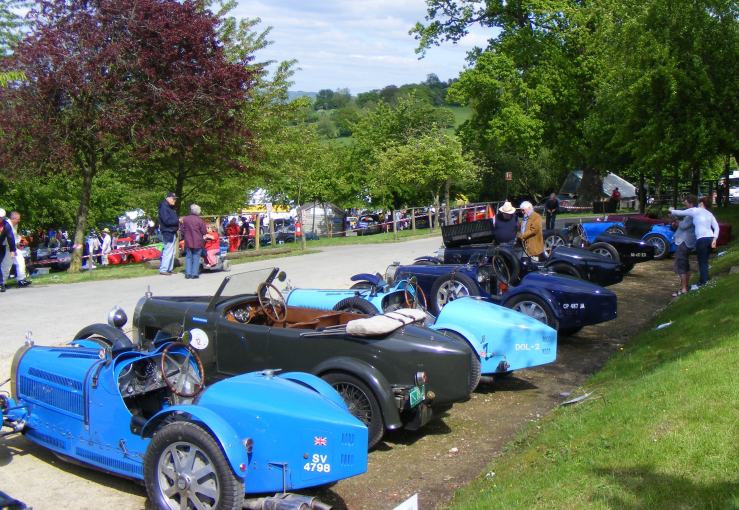
Eight cars
If each car signifies one thousand words… we’ll need a bigger car park

A pedant’s definition of ‘decimate’ is to dispose of one tenth of whatever one’s seeking to dispose of. I don’t know whether there’s an equivalent expression, to produce one tenth of whatever one’s seeking to produce. It would be quite useful at the moment.

On Thursday night I typed up several pages of longhand, and was immoderately pleased to find out that it tipped the word count of the new novel over the eight thousand mark. Eight thousand and seven, to be precise. This is particularly satisfying because Speak Its Name ended up at ‘about eighty thousand words’. And some basic maths will tell you that 8,000:80,000 translates neatly to 1:10.

This does not, of course,  mean that the new book is one tenth finished. Speak Its Name went up to 115,000, after all – though I hope that I’ve got more of an idea of what I’m doing this time round. The current eight thousand and seven words don’t feel like a tenth of a book.

What I’ve got so far feels too nebulous, too insubstantial to be the backbone that ‘a tenth’ implies. That’s partly because I’m writing, as I always do, a scene here and a line there, a page from the beginning and a conversation from the end. I get one little snippet down on paper and it spawns three or four in completely different places in the plot.

At this stage I don’t think too much about structure; I just hang on as best I can and catch as much of it as possible. I’m not reading these words yet, because I don’t think they’d stand up to it. I’d either destroy them or get depressed. It doesn’t matter. There’s time. There’s plenty of time.

All the same: eight thousand words are down. Eight thousand out of eighty thousand – ish.

First sight of the next book (don’t get excited)

?I’m five thousand words into the next book. Well, two thousand from the beginning, two thousand from the end, and an odd thousand somewhere in the middle.
I’m very secretive about my first drafts. Nobody gets to see them. Nobody apart from my online writing group (and whoever happens to be sitting next to me on the 0745 to King’s Cross, but they’re usually asleep, and probably can’t read my handwriting anyway). Last time round I pretended to all my friends that I wasn’t writing a book. Since it wouldn’t have occurred to any of them that I was writing a book (why should it?), this was fairly easy. I’m not sure how this is going to work, second time round, but we’ll find out. Don’t expect extensive previews, that’s all I’m saying.

Having said that, the following (completely accidental) Tom Swifty was far too good not to share, so here you go:

‘I think I’d probably wake up before I drowned in my bed,’ she said drily.

As to whether it’ll actually make it into the next book – who knows? Maybe I’ll make it a bit more subtle and change the adverb to ‘wryly’. Maybe I’ll leave it out altogether. I’m very good at murdering my darlings, but I’m also very good at disinterring the bodies, stitching them to other parts and sending a bolt of lightning through them, or, if all else fails, displaying the corpses for the edification of the public. I haven’t yet run out of deleted scenes from Speak Its Name.

People sorting their heads out

Not this pub.
Not this pub, but I don’t have a photo of the one we were in. It was dark.

A couple of weeks ago I was in the pub with some people from the internet. They have not yet turned out to be axe murderers. Many of them, in fact, were extremely helpful in the matter of getting my book out into the world. And one of them asked me about the next book.

So I explained the basic concept of the next book. I’m not quite ready to put this on the internet, but suffice it to say that it does not involve church politics, university, the South West, or angst related to sexual orientation. What I’m trying to say is, it’s quite a long way from Speak Its Name. Except…

‘So it’s still about people sorting their heads out, then,’ she said.

‘I don’t think I know how to write about anything else,’ I said.

I’m trying to write an About The Author blurb for Amazon and elsewhere. ‘Kathleen Jowitt writes books about people sorting their heads out’ doesn’t seem like a bad way to start.


Interview with me at Quite Irregular

I’m talking about Speak Its Name with Jem Bloomfield over at his blog today. If you want to know more about my writing process, my decision to self-publish, and where Lydia, Colette and Peter might be going next, go and have a look over there.

Then, if you are at all interested in feminism, Golden Age detective fiction or Shakespeare (not to mention the Church, Taylor Swift or Movember), wander around the rest of Quite Irregular. It’s one of my favourite blogs and I’m delighted to appear there.

Deleted scene: Peter’s thoughts on Bristol VRs

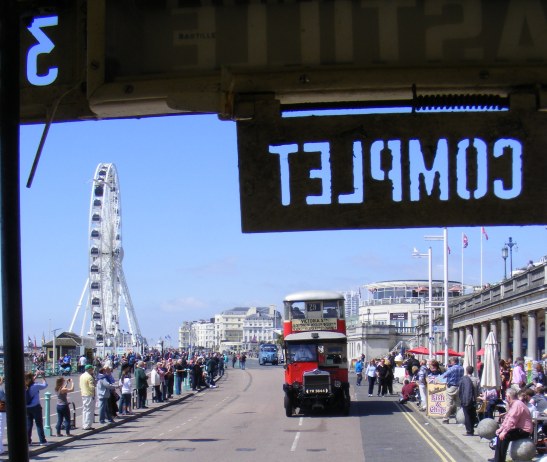
This is not a Bristol VR. This is a photo of two interesting buses taken from the back of another interesting bus - but then I would say that...
This is not a Bristol VR. This is a photo of two interesting buses taken from the back of another interesting bus – but then I would say that…

I feel slightly guilty about Peter. In the blurb he’s described as a ‘bells-and-smells bus-spotter’, but because I lost a lot of his point of view in the great Lydia take-over, he hasn’t ended up with very much bus-spotting.

So here he is, with Georgia and Olly, preparing to graduate and leave Stancester for ever, and getting distracted by what’s coming round the corner…


‘I can’t believe,’ Georgia said, ‘that this is the last time we’re going to the Black Swan. Together, I mean. I’ll probably go to it quite a lot next year, but it won’t be with you guys.’

‘Yes, well, to all times there is a season and -‘ Peter broke off abruptly. ‘… Oh, for God’s sake, will you look at that?’

Georgia and Olly followed the direction of his glare, and saw nothing out of the ordinary.

‘Look at what?’ Georgia asked.

‘Over there – just coming round the corner of Dorchester Road.’

Olly ventured, ‘It’s a bus?’

‘Yup,’ Peter said.

Olly raised his sunglasses to see better. ‘And? It’s just a bus.’

‘My point entirely. It is a thoroughly boring bus. It is a Bristol VR; it was probably in service up until five years ago; and some idiot is taking it to a historic vehicle rally. What is the bloody point of that?’

‘I don’t wish to encourage you,’ Olly said, ‘but how on earth can you tell?’

‘Well, you can tell by the name on the side that it comes from the other side of the country. Also, it has what I think is its life history blu-tacked to the window. Also, there is something much more interesting following it through the traffic lights there.’

‘That’s another bus,’ Georgia told him.

‘Yes, but it’s about forty years older.’

Georgia and Olly looked at each other. ‘How,’ Georgia asked, ‘have we been harbouring a bus-spotter in our midst for three long years, and not known about it?’

Olly shrugged. ‘I believe it’s an occupational requirement for a vicar to have a morbid obsession with some form of public transport. He’s probably been mugging up on it so he can get through the bishop assessment thing. Did you never see The Titfield Thunderbolt?’

Georgia laughed. ‘Oh – yes. Yes, it all makes sense now. I bet there’s a test. But buses?’

‘Trains are more usual, I will grant you. When I was at school the Dean – the current Dean, not the one who left in disgrace – no, I’ll stop there, or we’ll never get off the topic. But I think buses are allowed.’

‘Actually,’ Peter said, with sorely wounded dignity, ‘my granddad was a bus conductor. On the Routemasters.’

‘Not the granddad who was a vicar?’ Georgia said, suspiciously.

‘No. The other one.’

‘Did the one who was a vicar like trains?’

‘I don’t know,’ Peter said. ‘Bit of a pity if he did, because I think his parish got Beechinged in the sixties.’

‘Oh, well,’ Georgia said, ‘Routemasters are cool, I guess.’

‘Thank you,’ Peter said graciously.

‘Can we get some lunch now?’ Olly asked.

‘I was waiting for you,’ Peter said. ‘And there doesn’t appear to be anything else interesting coming, so I’m perfectly happy with the idea.’

“So how long did it take you?”

It didn't exactly start with a bishop...
It didn’t exactly start with a bishop…

If I had a page of Frequently Asked Questions (I might some day – who knows?) this one would be at the top of it. And I always umm and ahh a bit when I answer it.

There are two answers, really.

In the autumn of 2007 I was writing about six people whose lives are affected by a political complication in which they are passively and tangentially involved. The point of view was passed around the six of them. They had their own views. They expounded upon their own views at great length.

That was about as interesting as it sounds, and I picked it up and put it down several times over the next few years. I restarted it completely in 2011. It got to about 95,000 words of scenes that worked reasonably well on their own, but lacked any coherency or interest when stitched together. Several times I decided that it was boring and gave up with it. I wrote down scenes when they occurred to me, and after a while they stopped occurring to me. By 2012 I had abandoned it.

Then Synod happened. Synod happened, and I learned how it felt to be comprehensively screwed over by a Church that I loved, that I had no intention of leaving, but which had made it very plain that it didn’t want me. It hurt. It hurt a lot.

I wrote a blog post but, like the Very Hungry Caterpillar, I was still hungry. No, not hungry. The other one. Angry. And I had a character sitting around in my head. She was the love interest of one of the original six. I didn’t have anything written from her point of view. But she was a character who’d been comprehensively screwed over by the Church she loved. So, having written what I felt like, I wrote what she felt like.

I was still angry into the new year. I ranted about it to anyone who would listen. I even used the story of Synod in a training exercise at work, where we were asked to give a brief verbal presentation on something we felt strongly about, because, my God, I felt strongly about that. And I kept writing.

Ninety-five per cent of what is now Speak Its Name was written after that Synod vote. (The remaining five per cent is mostly chapter headings and background infodumps, with the odd scene in which it was easy to flip the point of view.)

Now that I’d started writing Lydia from her own point of view, it became obvious that this was her story. I remembered a truism from somewhere: the hero of a story is the person who changes the most over the course of it. That was definitely Lydia.

Over the next two years, she took over the book. The six original viewpoints became three, and Lydia was one of them. From Georgia, Peter, Olly, Colette, Will and Becky, the focus shrank to Colette, Peter and Lydia.

Eventually I realised that Lydia had to be the sole voice, that the whole book had to be written from her point of view. This was not a welcome realisation. In early versions, her sexuality was the big reveal at the half-way point. It was meant to be a huge surprise to the reader and to all the rest of the cast. I had no idea how to write a character who wouldn’t even come out to herself until half-way through the plot.

I had another problem. The political plot was tedious. Too many committee meetings; too much talking; too many petty differences that took too much explaining.

Fortunately, moving everything that wasn’t from Lydia’s point of view into a separate document clarified things considerably. It cut out most of the committee meetings, not to mention a sub-plot about a pregnancy scare and a rant about Bristol VRs (buses, if you’re wondering). I read through what was left and worked out what was missing. I found that I could rework existing scenes to fill some of the gaps. Some of them had to be written from scratch.

After that, all I had to do was sort out the first half of the book. Go back to act 1 and place the gun on the mantelpiece so that when we get to act 3 nobody’s surprised when it gets fired. Scatter a few bullets around the place. Rewrite pretty much everything, because I hadn’t been letting anybody see inside Lydia’s head, and so there were huge chunks missing. After all, I’d had to take huge chunks out.

Over the next few weeks I’ll be posting some of the deleted scenes on here. If you’re wondering how Will came to live in such a dangerously liberal household as 27 Alma Road, what Becky told the Equalities Officer, or what Peter actually thinks about Bristol VRs, well, you’ll find out…

Books! A giveaway! My youth!

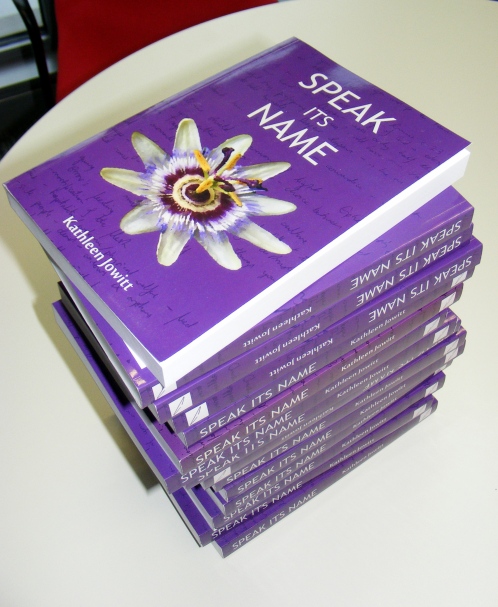
I am giving away one of these books. Scroll to the bottom of the post for details!
I am giving away one of these books. Scroll to the bottom of the post for details of how to enter.

A novel about being queer and Christian at university – about faith, love, doubt and integrity. Read more here, or scroll to the bottom of the post for the giveaway.

Self-publishing in the nineties was grim. I know because both my parents did it. ‘Nobody’ wants to read about queer Christians now, and ‘nobody’ wanted to read about the physiological aspect of childbirth, or look at pictures of buses with passers-by getting in the way of the fleet number then. Doing It Yourself runs in the family. The kitchen table was perpetually shrouded in pencilled layouts for the next coffee table bus book, or hand-drawn diagrams of the hormone process in childbirth.

There was a corridor you couldn’t get through because of the huge bale of bubble wrap. There was a stack of corrugated cardboard that was taller than I was.

And there were books. There were books in the shed; there were books under the stairs. I’m pretty sure there were books in my brother’s bedroom.

There are still books. My parents have moved house four times between them since the last self-published book came out, and I have tripped over cardboard boxes of The Girl In The Street or shrink-wrapped bales of Childbirth Unmasked in every one of those houses.

The lovely thing about Lulu is not having to bother with all that. So far as I’m concerned, everything involved in the publishing process has happened within a square metre footprint. There’s me, and there’s my computer. If someone wants a book, they order it from Lulu (or, as of this lunchtime, Amazon) and someone who isn’t me gets it printed and posts it. It doesn’t go anywhere near me, and I have no boxes to deal with.

(The writing is a different matter, happening as it quite often does at seventy miles an hour, or in a park, or, for one blissful week, in a huge dormitory that I had all to myself. But the exercise books and the archaic Asus Eee on which I actually do the writing take up a lot less space.)

Having said all that, I discovered today that possessing a modest stack of books with my name on is a very good feeling. A lot of the books in the picture have been posted to the people named on the acknowledgements page, and the British Library, and other worthies. But not all of them. For a start, one of them is destined for one of you blog readers.

Leave a comment on this post to enter the giveaway. On 19 February I will use a random number generator to select one of the comments, and I will send a paperback copy of Speak Its Name to the person who left it. No matter where they are in the world.

And the winner is… madhat2014! Congratulations!

A slow journey along the Amazon

This is not the Amazon. This is the Cam.

Speak Its Name is now on Amazon. At least, the paperback version is. The Kindle edition has yet to materialise.

Note how I didn’t say ‘is now available on Amazon’; that’s because it’s listed as ‘currently unavailable’. When that changes I shall let you know.

Possibly more excitingly, it is actually available on the iBookstore (categorised as plain ‘Gay’, but I don’t have the energy to get into a fight with Apple over erasure…)

It wasn’t on Kobo when I looked a couple of hours ago, and it’s not in the Nook store. Again, I’ll let you know when it does show. In the mean time, if you’ve read the book, and if you liked it, and if you feel like reviewing it on Amazon, do go ahead. Or anywhere else, for that matter.

F5

Durham choir tour Aug09 223

Things I’m refreshing a lot:

  • Lulu’s ‘My Revenue’ page, to see if people are buying the book (they are – thank you, people, whoever you are, and I hope you enjoy it)
  • Lulu’s ‘My Orders’ page, to see if the copies I promised to my long-suffering editors are ever going to turn up (they might, and if they don’t soon I shall be grumpy)
  • a Google search on the ISBN of the paperback, to see if it’s found its way to Amazon yet (it hasn’t, and probably won’t for a few weeks yet)
  • a Google search on the ISBN of the ebook, to see if it’s found its way to Kobo, Kindle, iBookstore et al (it hasn’t, but might within the next week or so)

I’ve also been reading Jem Bloomfield‘s fabulous review of Speak Its Name and grinning pretty much constantly.