A tiny bit of book news

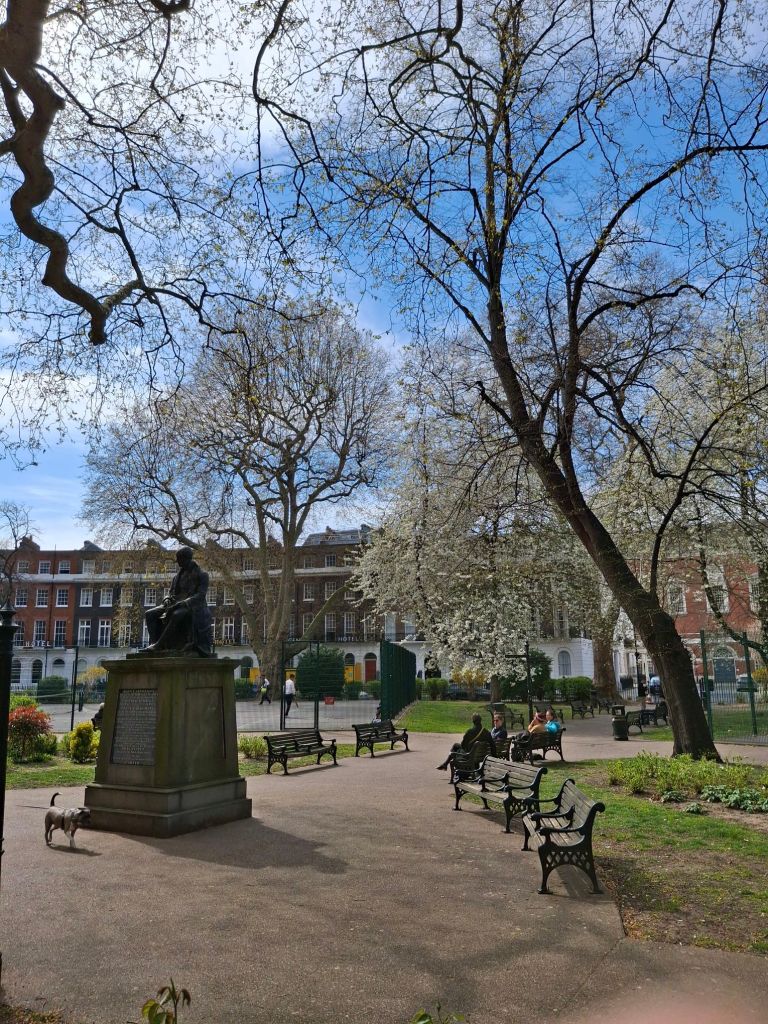
A London public garden on a sunny spring day, with trees and tennis courts and a statue of a seated luminary

You probably won’t be surprised to hear that I have been doing pretty much nothing in the way of book promotion lately. However, since I got my act together and sorted out my Draft2Digital account, I have been getting the occasional notification of the occasional sale. It’s always a pleasant surprise, a reminder that I had something to say (a decade ago in one case, my goodness) that is still saying something, and a reassurance that I still do have something to say, that it’ll bubble up to the surface in its own good time, and that someone out there will want to read it when it does.

Jae’s Sapphic Book Bingo is back for 2026, and this week’s featured square is sapphic books set in a school or academia*. Which I can very much help with. You can have Speak Its Name for undergrad, and The Real World for postgrad. You could also use The Real World for ‘Established couple’ further down the card, and, at a stretch, Speak Its Name for ‘Sapphic character involved in politics’, though I should stress it’s student politics and the involvement is not exactly voluntary. In my ‘Free Reads’ section, The Mermaid would count for the ‘Free book or free choice’ square. (It’s a short story, but Jae says explicitly that a few of those are allowed.)

Readers in the US, both Stancester books are now available through the Queer Liberation Library, along with all sorts of other good stuff. Worth a look if, very understandably, you need a distraction.

Meanwhile, I am deeply amused by Smart Bitches Trashy Books’ (not sure where the apostrophe should go, there) Unhinged Romance Bingo. I am, I think, relieved to report that none of my books fit into any of these squares, except perhaps the cycling and silversmithing in A Spoke In The Wheel for “niche business or hobby”. That said, I don’t really write romance-the-genre (ASitW is definitely the closest), so maybe it’s not really surprising. You never know, though. Maybe one day I’ll write an aggressively twee small town. In the meantime I’ll be cackling at First Name Last Name Does A Thing and Title: A Noun of Stuff and Things.

*Hence the picture. This is Cartwright Gardens, opposite the University of London’s Garden Halls.

Excavating writing fossils

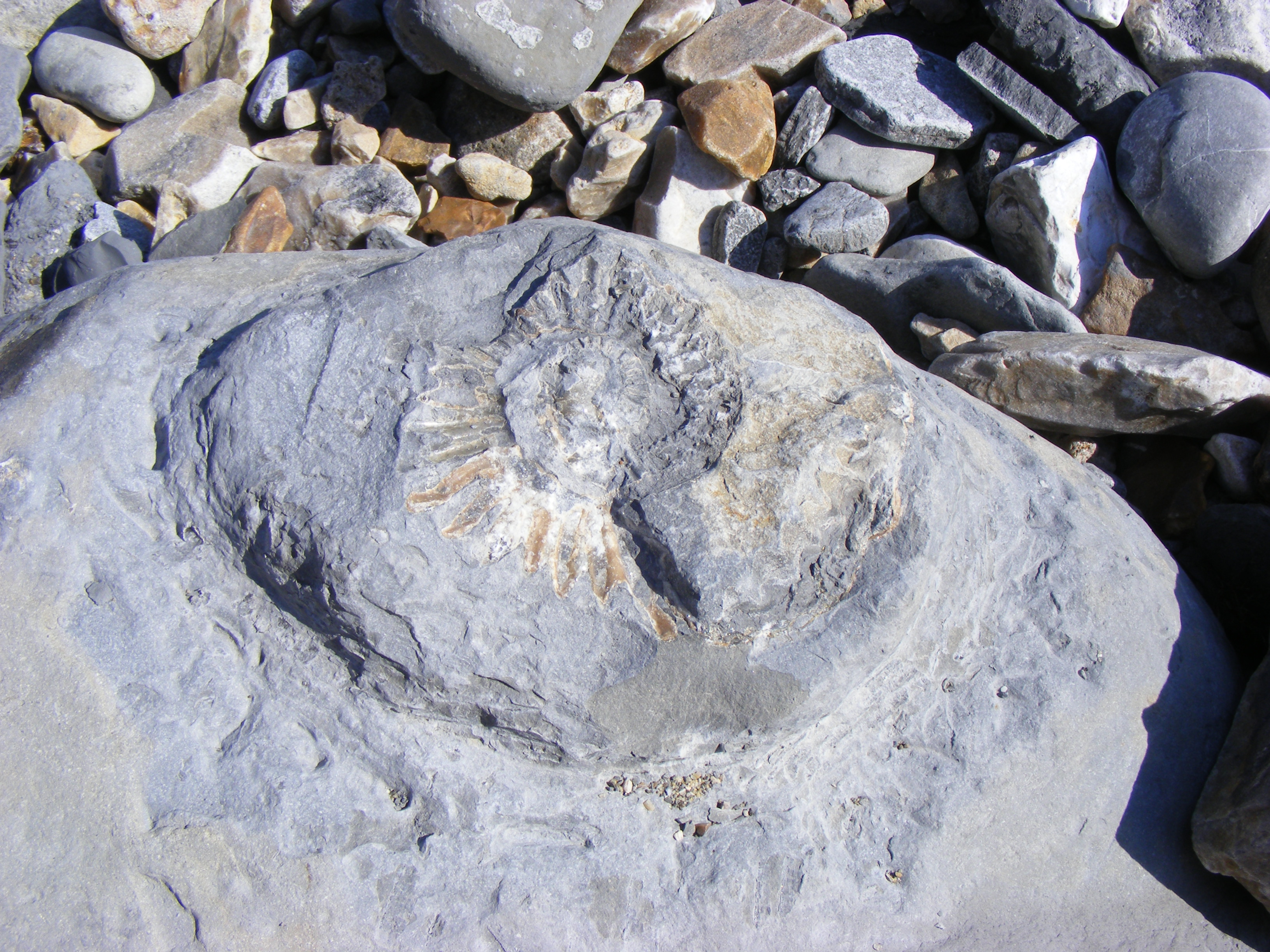
A large rock on a stony beach contains a battered ammonite fossil

I’ve been clearing out my desk. Well, both my desks, actually: we’re all moving around at work so I’ve taken the opportunity to chuck quite a lot of stuff. But I meant my desk at home, the bottom drawer of which is full of exercise books containing longhand drafts of my three novels and quite a lot else besides.

It isn’t quite so full now. Having decided that the literary critics of the future are unlikely to care enough to compare my early drafts with the finished products, and that I need the space, I’ve started ripping out and recycling pages. I’ve been glancing through them as I go, though. I’ve noticed a few things: the mild shock when I come across a character with what is now the wrong name; the surprise when I find snippets from projects which I’d have said shared nothing with each other butted up on facing pages; the odd work-related note. I didn’t think I’d started A Spoke In The Wheel before I’d got Speak Its Name done and dusted, but there are Polly and Vicki just across the page from Peter and… who’s Gina? Oh, right, yes.

Then there’s this. It’s a sort of warm-up exercise, trying to get myself into the right frame of mind – that is, the character’s frame of mind – to write one of the trickier scenes in Speak Its Name. I can’t remember now whether I felt particularly stuck and needed to write something that wasn’t the scene to get myself going, or whether I just knew that it had to be good, but I knew immediately what this was all about.

Lydia is fed up with Colette because:

  • she doesn’t appreciate how easy she has it
  • she never washes up
  • she is pressurising [sic] her to come out
  • it was her idea to get Becky involved
  • it would never have happend if Will hadn’t found out, this whole house…
  • so scared of confrontation, so conflict averse, never talk about anything
  • unilateral decisions about the two of them
  • always cooks late
  • bigoted about science
  • thinks Lydia’s friends are stupid and lets it show
  • this house is not as much fun as she thought it was going to be
  • and she hates being beholden to people
  • in a way she’s responsible for Lydia having to think about any of it
  • Lydia still doesn’t quite believe a F/F relationship can be godly, blames Colette for getting her into it
  • she is just so noble and self-sacrificial it’s not true
  • why both, when they can’t be married?

That’s Colette who’s just so noble and self-sacrificial, as if you couldn’t guess. I do like the way that this is a mixture of the little day-to-day annoyances and the big existential incompatibilities. And I’m pleased that almost all these themes are still in play in The Real World, even though things have moved on. At least my characterisation’s consistent.

Then down the bottom of the page I’ve written:

give them something to laugh about

“coming out party”

The coming out party comes quite a bit later, in the finished work; apparently it was very much connected to this scene in my mind – but I’d forgotten: that’s what this row is about. I’m not sure about ‘give them something to laugh about’; it might be what turned into ‘He shall have his resignation’. Which really does come quite a bit later – and is very much connected to the ‘coming out party’.

Interestingly, the next thing I wrote wasn’t the row. It was the making up. Over the page:

Lydia stayed in bed until past ten eleven, until she could be sure that Colette would have left the house. She had been awake for hours, had watched the narrow line of pale December light creep across the ceiling, listened to the rain spitting pettily against the window…

Which isn’t all that different from what ended up in the finished book. Page 214 of the paperback, if you’re playing along at home:

Dawn broke and dulled to drizzle. Lydia stayed in bed until past eleven, until she could be sure that Colette would have left the house; she lay there watching the narrow line of light creep across the ceiling, listening to the rain spitting listlessly against the window…

Now I catch myself thinking about why I made those changes; if they were successful; whether I’d do the same thing again. Which wasn’t going to be the point of this blog post. Apologies, hypothetical literary critics of the future; that’s all you’re going to get. Most of this volume’s already gone for recycling, and that presumably included the actual row (now page 210-214).

Which was going to be my point: that little exercise worked, even if it wasn’t quite the way I was expecting, or indeed, remembered. I’ll try to remember, next time I’m stuck on or intimidated by a scene: write it down, write down everything that’s going on in the point of view character’s head, wind it up and wind it up, and then – let it go. Stand back and let the scene write itself. Even if it wasn’t the one you were expecting.

Hard to get (unless you know where to look)

A narrow curlicued Art Nouveau building sandwiched in between two angular brick and plate glass edifices.

A friend messaged me a couple of weeks ago to say that she wanted to buy a copy of Speak Its Name as a present for somebody, and it was out of print on Amazon: was it still available?

It is; it just isn’t on Amazon. The same goes for The Real World. A Spoke In The Wheel is there at the moment, but may not always be there. As for my short stories, well, their availability is entirely dependent on the whim of whichever publisher controls the anthology they happen to be in.

(If anyone didn’t get Stronger Than Death in the Rainbow Bouquet anthology before Manifold Press shut up shop, keep an eye on I Read Indies over Hallowe’en, by the way. And you can get Prima Donna in Upstaged from Smashwords for free at the moment. Meanwhile, if you want my Victorian bicycling witch midwife story Layings Out and Lyings In, your best bet is to back the Bicycles and Broomsticks Kickstarter, which has just under three days left to run.)

I didn’t exactly mean to become an eccentric literary recluse, but it seems to have happened anyway. I took most of my books off Amazon to make them cheaper, but of course it’s had the unfortunate side-effect of making them harder to find.

Then there’s the undeniable fact that the project that’s currently firing my imagination the most is the one that’s designed specifically to be sold in one single bookshop that only exists for a week every year. For Book Bus Stories, exclusivity is going to be a selling point. It’s a limited edition, except it’s limited by space and time instead of by numbers.

And it’s true, there is something about being hard to get that’s rather glamorous and intriguing. You have to know where to look. You won’t find me sliced, diced and discounted in The Works. (I do occasionally leave a copy on a café table or a railway book swap shelf, though. I like letting chance play its part.)

What I suspect is actually happening, though, is that people who genuinely do want to buy my books are googling, hitting the Amazon link, seeing that it’s unavailable, and assuming that it’s unavailable everywhere. Which is not ideal, seeing as it’s not true.

Unfortunately I’m not sure that’s going to change any time soon. Every time I think that I really should look at putting my books back on Amazon through Kindle Direct Publishing, I hear another story about what a pain it is. Somebody I know has quoted some inoffensive passage by good friend Anonymous that’s been in the public domain for centuries and been kicked off for assumed plagiarism. Just this week, one of the Zoe Chant authors got unjustly banned, apparently by AI, and with nobody to appeal to but other AIs. They’re back now, but really. Every time I decide that it all sounds like far too much hassle.

I’m very busy and very tired, my day job’s paying the bills, my admin bandwidth is mostly being taken up by Cursillo, and selling books just isn’t a priority at the moment. My limited book time is going on creating new ones. (And writing blog posts explaining myself, obviously; but this is a half hour’s job, compared to something that could easily eat up a morning or more.) So I’m just going to keep limiting my editions. And people who really want to buy my books can do so using the links below:

Speak Its Name – paperback on Lulu

Speak Its Name – ebook on Smashwords

The Real World – paperback on Lulu

The Real World – ebook on Smashwords

A Spoke In The Wheel – paperback on Lulu

A Spoke In The Wheel – ebook on Lulu

A Spoke In The Wheel – on Amazon

Sapphic Book Bingo 2022

Join the Sapphic Book Bingo
[Bingo card with boxes arranged in 5x5 grid, each with a heading summarising a particular trope or aspect often found in sapphic books]

I’m about six weeks late with this, but there’s plenty of 2022 still to come, which means that there’s plenty of time still to read books. Plenty of time to take a look at Jae’s Sapphic Book Bingo and mark out a line you might like to fill. There’s still time to fill the whole card, if you’re feeling ambitious.

As ever with Jae’s challenges, there’s a refreshingly wide choice of themes, and my stories fit into quite a few of them. Such as:

  • Speak Its Name is, above all, Lydia’s coming-out story. (It takes her a while to come out even to herself, which was a bit of a challenge when I realised that the whole thing needed to be rewritten and put into her point of view.)
  • It’s also an award-winning book. In fact, it was the first self-published book ever shortlisted for the Betty Trask Prize. Getting shortlisted for the Betty Trask Prize means you automatically win a Betty Trask Award. Will I be forever thrilled to have been shortlisted for the same award as Sarah Waters? Oh yes.
  • I have a few short stories available for free. Find The Mermaid at The Lesbian Historic Motif podcast or Prima Donna at A Story Most Queer (both historical fiction, both podcasts). Or sign up for my newsletter to download Yay or Nay (historical fiction again) or In Little Space (a Christmassy short set between Speak Its Name and The Real World).
  • And you can find Daisy’s Yarn in the new IReadIndies anthology Anything But Romance, free until the end of the month. As you might guess, it’s Not a romance as well as being a free book.
  • Are student politics (Speak Its Name) or the intersection between sexual identity and faith (both Speak Its Name and The Real World) out of your comfort zone? There’s another square for you.
  • As for different sexual orientation or gender identity, Lydia is a lesbian (Speak Its Name is her book) and Colette is bisexual (The Real World is hers, and it’s very, very bi). They’re both cis.
  • They’re an established couple by the time we get to The Real World.
  • I think The Real World is probably my author’s pick. I was flicking through it this morning and thinking that it was worth all the anguish after all.

And if you’re going for the trickier Book Unicorn card, either Speak Its Name or The Real World will of course count for Faith. (You might find some other possibilities on my LGBTQ Christian fiction recommendations post, too.)

There are some that I can’t help you with. I’m too young to have written a sapphic classic, though I’ve read plenty (most recently enjoyed Katherine V. Forrest’s Murder At The Nightwood Bar). I am not a POC author (try Sara Collins, The Confessions of Frannie Langton). Nor am I a newbie (going to have to do some research there). And so forth.

And there are some that are a bit borderline. I’m not sure that I’d count ‘both being rostered to cook baked potatoes’ as a meet-cute, but you might feel differently. (Sadly, my cutest sapphic meet-cute happens in A Spoke in the Wheel, which is not a sapphic book, what with it being narrated by a man and all. But I’ll always have a soft spot for Vicki and Gianna and their background cycling app rivalry meet-cute. Gianna, the silversmith, would be my best shot at an unusual job, too. Oh well.)

If you think one of my books might help you fill a square on your card, you’ll find them, among other places, on Smashwords, where I’m giving a 50% discount to readers playing Sapphic Bingo. Use voucher code TF79U to get the discount.

So that’s it. Have fun. Eyes down.

We interrupt this blog series to bring you a small Christmassy treat

Christmas tree decoration representing a shooting star

There’s a little Stancester snippet in the IReadIndies A Very Sapphic Christmas anthology. If you were wondering how things went between Speak Its Name and The Real World, this fills in a little bit of the gap. It also addresses the perennial question: why do we do Christingles, anyway? It’s one of nineteen stories and excerpts by authors from the IReadIndies collective, and you can download the whole thing here.

I’ll also be making it available to newsletter subscribers as a standalone in the new year (read: when I’ve had a chance to find a nice photo to make a cover). If you’re not already subscribing to my newsletter, you can sign up here.

Meanwhile, the books themselves are both in the Smashwords End of Year sale. Speak Its Name is free and The Real World is half price. Find them here.

I’ll be back later with today’s decoration, whatever that ends up being. In the meantime – enjoy!

The third dimension: when a book comes to life

A cardboard cut-out character from a toy theatre in front of a backdrop from same

I love the moment when it turns out that the book I’m working on is, in fact, going to turn out to be a book.

The first time this happened to me was with Speak Its Name. That was my first book and I didn’t really know what I was doing. I had the backdrop (student politics) and I had the characters (students) moving in front of it, occasionally affected by it, but never affecting it. It was flat. Boring.

Then I realised that what I needed to do was to get my most political character involved in the politics.

It sounds so simple. Perhaps it was. All I can say is, it took me a very long time to realise, and it changed the whole book for the better. It turned it from two dimensions into three, like inflating a bouncy castle, or sewing a pair of trousers together. It wasn’t just that my characters were now joined to the background at the point where one of them decided to involve the Students’ Union. It joined all sorts of other bits together, and it made the whole thing neater, more coherent. More interesting. It made the whole book work.

A Spoke in the Wheel and The Real World were, so far as I can remember, better behaved. Oh, getting The Real World nailed down was rather like wrestling an octopus that was also Tam Lin, but it always felt like something, well, real, if I could only get a handle on it. And with A Spoke In The Wheel both characters and plot landed more or less fully formed, bar a giant hole in the middle that I had to work out how to fill.

This time it happened at about the 50,000 word mark. No, I’m not doing NaNoWriMo, but I decided to take advantage of the general #AmWriting mood to make some progress on the Ruritanian thing. This is the project that I’ve been working on, off and on, for the last three years if not more. It seems to prefer being a side project. It modestly shuffled out of the way to let me concentrate on The Real World. It refused to be written at all earlier this year, and only started cooperating when I got swept off my feet by the historical thing. Nine months further on – nine months in which I’ve been trying to add a sentence to each project each day – it’s suddenly taking itself seriously.

Now this, being a Ruritanian thing, requires plot. It requires plot on a level that I’ve never contemplated before. There are double-crosses and Chekhov’s guns and timetables. The action of the last book happens over the course of a year. The action of this book takes place over the course of five days. I discovered the other day that I had my main character drinking five coffees between midnight on Saturday and Sunday lunchtime. I’m counting the espresso martini here, but still.

Of course, that’s easily fixable. I’ve already turned one of those coffees into a slice of cake. The real challenge has been getting the characters to do the things that are needed for the plot to happen in ways that make sense for them. Because if the characters don’t work, then the plot doesn’t work.

When I’m stuck on a book, one thing that helps me is writing down why I’m stuck. Sometimes I like to make an occasion of this. This time, I was just on the train. (Not that taking the train isn’t an exciting novelty these days.) I wrote down the things I needed to invent or research. Then I wrote down the thing that was bothering me, the thing I knew I’d have to fix sooner or later:

George shouldn’t be involving his untrained relations and he knows that.

Or, as paraphrased for Twitter,

Bringing Milly back makes George looks like a callous dimwit.

And yet Milly has to come back (she’s the narrator!) and George has to be both decent and competent. That’s the whole point of his being in this book at all.

So I kept writing.

He doesn’t have a choice with Amelia. But he needs a damn good reason for Milly to come back… There’s got to be more to it than ‘it might come in useful’.

I went down a couple of dead ends. Something that Amelia tells George that Milly doesn’t know about? Something that brings in a couple of other characters? My brain was working faster than I could write, so it wasn’t coming out as great prose.

Milly is the only person who has seen several key players by sight, so it makes sense to keep her on the spot. But that’s what’s putting her in danger. Sending her home is for her own safety.

I kept writing. Half a page later, it hit me.

Hang on. What if they do get Milly to share – and then don’t act on that? Yes. Milly spills the beans and thinks it’s all cleared up. George arrives, wants to find out more. Milly is the obvious candidate to find out more.

Bingo.

That adjusts the stakes just enough to make everyone’s actions plausible. It makes sense for Milly to come back. It makes sense for George to let her.

A (really encouraging) bonus: I now have a much better idea of at least one of the villains. And the [plot goes here] bit in the antepenultimate (there’s a good word) chapter.

Of course it’s going to demand a whole lot more changes – because most of the 54,000 words I had down were written on the assumption that Milly didn’t share – but I don’t care about that. It makes the whole thing work.

I love that moment.

Lint rollers: or why you can’t find my paperbacks on Amazon any more

A model of planet Earth hangs in the nave of a cathedral

I went to my local homes and gardens shop the other day, looking for a lint roller. The man on the till explained that they did not stock them, as the peel-off sticky bits can’t be recycled. He offered me a clothes brush instead. I said that so long as it would get cat hair off the sofa that was fine with me.

I publish my paperbacks through Lulu. It can be a massively frustrating process, but I have yet to hear of any other print-on-demand service being noticeably better. There are two ways to get your books out there. Or one and a half, really, I suppose. You can sell them through the Lulu bookstore. You can also choose ‘global distribution’, which makes it available through all the big retailers.

The snag – and this has become much more of a snag in the five years since I started doing this – is that the big retailers also wish to take their cut along the way. Which is fair enough. But printing costs have gone up, and so, I think, has the cut, and the gap is getting wider and wider.

Take The Real World. The minimum I can sell it for on Lulu is £6.90. If, however, I want to put it in for global distribution I have to whack the price all the way up to £13.72. Which is a silly price, so I put it as £13.99.

So I was in the slightly ridiculous situation of having to charge four pounds more than I considered reasonable for a paperback in order to sell the item on a platform that made me feel skeevy (because it was almost always Amazon) to make a few pennies on the sale.

And then nobody was buying them. Quite reasonably. I wouldn’t spend fourteen quid on a paperback. (OK, I do spend thirteen quid on the Girls Gone By reprints of the Marlows series: but have you seen how much they go for second-hand?)

One solution would have been to dump Lulu and go with KindleDirect Publishing. Or go with both. I couldn’t face wrangling a third platform, so ‘both’ was out. And going exclusively with Amazon would have made me feel very skeevy indeed, and probably also have lost me a few sales.

(I don’t avoid Amazon entirely, but if I can get a book somewhere else, I will. For various reasons. And it does make a difference as to whether I get it in the first place. There are a couple of authors who’d be instabuy for me if only they weren’t Amazon exclusive. As it is, I only buy the books that really, really, really appeal to me.)

Anyway, I was fretting about this for months. Then Lulu emailed to say they were putting their prices up. And I realised: I could pull my books from everything except Lulu.

I know, I know. It doesn’t seem fair to react to ‘Lulu putting their prices up’ by ‘removing my books from everything except Lulu’. But see above. Lulu drive me up the wall, but they don’t make me feel skeevy. And actually, a company being honest about the true costs of something was surprisingly refreshing. Stuff does cost money, and if we’re not paying for it, chances are someone else is.

So. The best place to get paperback copies of my books is now Lulu. It’s worth waiting until they run a 10% or 15% sale, which they do quite frequently; this ought to go some way towards covering the cost of postage. (Alternatively, my mother has six copies of The Real World which I got sent to her address and then forgot to sell when I was there, and then forgot to take away with me. Sorry, Ma. Do you want to post them?)

The ebooks of the two Stancester novels are on Smashwords, from which you can download them in every format I’ve heard of and some I hadn’t. I have made my peace with their not being on Kindle: when these ones sell, it’s usually because someone’s enthused about them on Weird Anglican Twitter, and the denizens of WAT tend to be sufficiently net-savvy to track them down. A Spoke In The Wheel is still on Kindle. I have no idea why the others broke and this one didn’t, but for the moment I’m going to let well alone.

But what of my principled local homes and gardens shop? Well, I didn’t buy a lint roller. I didn’t buy a clothes brush, either, but only because I phoned home and discovered there was one on order. I did buy a garlic press, a potato brush, and an ash bucket in which to keep the dried cat food. The cat meanwhile, has decided that she prefers sitting on the windowsill, which is much easier to sweep.

Fluffy black and white cat curled up on a cushion

Read An Ebook Week

Ebook reader showing the first page of 'The Real World'

Apparently it is Read An Ebook Week. I would not have known this had Smashwords not sent me an email to say so, and to invite me to put my books in their sale. I thought I was doing impressively well to remember that both Mothering Sunday and my father’s birthday were approaching; I can’t keep up with anything invented more recently than that.

Anyway, if reading an ebook is a thing you might wish to do this week, you can find both of my Stancester books in the sale. The Real World is at 25% off; Speak Its Name is free. Get them here.

An uninvited journey: active and inactive protagonists

A child's plastic sled cable-locked to a bike rack on a snow-free pavement

Lurking on Twitter (when I said I wouldn’t be) I came across this thread about inactive protagonists, and this other thread pointing out that it was an extremely Western-centric take. I think that both threads make good points, but the first one offers an extremely limited solution to a genuine problem. (When you have a hammer, etc, etc…) I rather like the way that they’ve both linked to each other, so the conversation rolls round and round forever. And this post isn’t really meant to be an answer to either of them, but more an excursion on my own train of thought.

There are many, many books that aren’t particularly engaging, and that could really do with a good editor, but shoehorning them all into the hero’s journey format isn’t necessarily going to help. In fact, I think a flat novel can be made more engaging by deepening the characterisation as much as by sharpening the plot.

And then in the replies to the second thread, someone linked this list of alternative structures, and that ate some more of my day. There are plenty to choose from, even if one is writing an action hero. I’ve been reading a lot of James Bond novels lately, and it’s really striking how adventurous Ian Fleming is in terms of structure. OK, The Spy Who Loved Me is a complete dog’s breakfast in terms of pacing, and you might argue that From Russia With Love starts a bit slow and ends a bit abruptly, but he isn’t afraid to experiment.

Back to inactive protagonists. In at least two of my novels so far I’ve spent most of the book getting my protagonist out of their own head in order for them to appreciate the world around them and make decisions based on what’s really going on rather than what they think is going on. Is that ‘active’? The author of the second thread talks about ‘radical acceptance’, which I think is an important theme in all my books: being who you are, not who you or anyone else thinks you should be. All of my protagonists could be described, to a greater or lesser extent, as inactive. The closet, depression, disillusionment, prejudice and petty politics provide quite enough of a challenge to be going on with. Sometimes they need to become active. Sometimes they need to make their peace with inaction.

And yes, sometimes during the writing process those books felt sloooooowwww. Sometimes I’ve dealt with that by growling at the entity they call the Inner Critic: what do you want, a car chase? Other times I’ve chopped out scenes, characters, chapters. I’ve added bits elsewhere. I’ve rewritten an entire book to come from a different character’s point of view. I’ve taken literal scissors to a manuscript. And the book has been better for it. An inactive protagonist might very well be a valid choice for the story that needs to be told, but that choice doesn’t exempt anyone from editing. (In fairness, I don’t think I saw anyone suggest that it did!)

I’m fascinated by the way that the individual interacts with the system, but writing about that, for me at least, has meant that those individuals have a limited amount of control. As the author, I can pull a certain number of strings, but I can’t reform student Evangelical Christianity/professional cycling/the Church of England/academia through the actions of one character. I can have them make small changes to improve matters locally. (I’ve pulled an ‘And then everybody on the bus clapped!’ precisely once. If I were writing that book now I’m not sure I’d put it in.) Or I can let them step away on their own terms.

Now I’m trying to write a Ruritanian thriller (well, not at the moment, but you know what I mean) and, while I have a good idea of how the thriller beats ought to fall, I’ve been uncomfortably aware that it’s inevitably a bit… condescending? (And I’ve felt like that since before I read Inventing Ruritania.) I want to keep writing it, because it’s fun, and because I love the genre for all its faults. What keeps tripping me up is that the ‘plucky British youngster single-handedly saves the nation of Ruritania’ narrative does not feel truthful. Even throwing in a second plucky British youngster and her Ruritanian partner hasn’t helped a lot. It may be that I’ve worked for a trade union/been a member of the Church of England/followed sports for too long, but I’m very aware of just how many people it keeps to keep even a moderate-sized organisation going, let alone a nation state. Same with stopping it. Very, very rarely does it hinge on the efforts of just one person.

And that, I think, has given me a way in, a way to save this. I’ve ended up with a structure that’s something like a zoetrope: the thriller narrative is broken up by snapshots of the ordinary people going about their ordinary business. Spin the cylinder fast enough, and you get a moving picture. The horse gallops. The country keeps on running.

Well, it might work. I’ll keep you posted. When I get back into it.

Incidentally, the consequence of lurking on Twitter (when I said I wouldn’t be) was coming across a thread in which someone was asking for recommendations for Christian fiction, and in which nobody had mentioned me. So I sulked, obviously. But then somebody recced me on another thread, so it all worked out. The moral of the story? It doesn’t really make much difference to the rest of the world whether I’m on Twitter or not, but it’s probably better for my state of mind if I’m not.

Sapphic Reading Challenge 2021

Stack of books with rainbow-coloured covers and text 'Sapphic Reading Challenge 2021'

This year Jae is running a Sapphic Reading Challenge: 50 categories, from which you can choose to read 10, 20, 50, or 100 books. There’ll be a big giveaway at the end of the year, although, as Jae says, “real prize, of course, is discovering a lot of awesome books and new favorite authors”.

My Stancester books, Speak Its Name and The Real World, fit a few of the categories:

  • Character with a disability or mental illness (7) – depression ended up being a major element of The Real World, though I don’t think I ever actually mentioned the word. I wrote a bit about that here.
  • Character is a book lover (8) – Lydia is doing an English Literature in Speak Its Name. By The Real World she’s mostly reading school stories.
  • Genre you don’t usually read (15) – well, I don’t know what you usually read, but if you don’t usually read literary fiction with overtly religious characters then these might fit.
  • Shy or socially awkward character (27) – Colette. It’s probably more obvious in The Real World, which is told from her point of view.
  • Bisexual or pansexual character (37) – Colette, again.
  • Part of a series (43) – either one would work, obviously! The Real World makes sense without having read Speak Its Name, but you do learn a couple of major plot points that you can’t then unknow.
  • Character works in STEM (48) – Colette’s studying chemistry at undergraduate level in Speak Its Name and working on her PhD in The Real World.

My short story Prima Donna appears in Supposed Crimes’ anthology Upstaged: an anthology of queer women and the performing arts, which would fit Anthology, short story collection, or novella (50).

And of course I might be a new-to-you author (45).

Jae also has a giveaway running now, so if you fancy winning a special journal in which to track your challenge progress, see this post.

Enjoy!