The God Painter (Jessica Pegis)

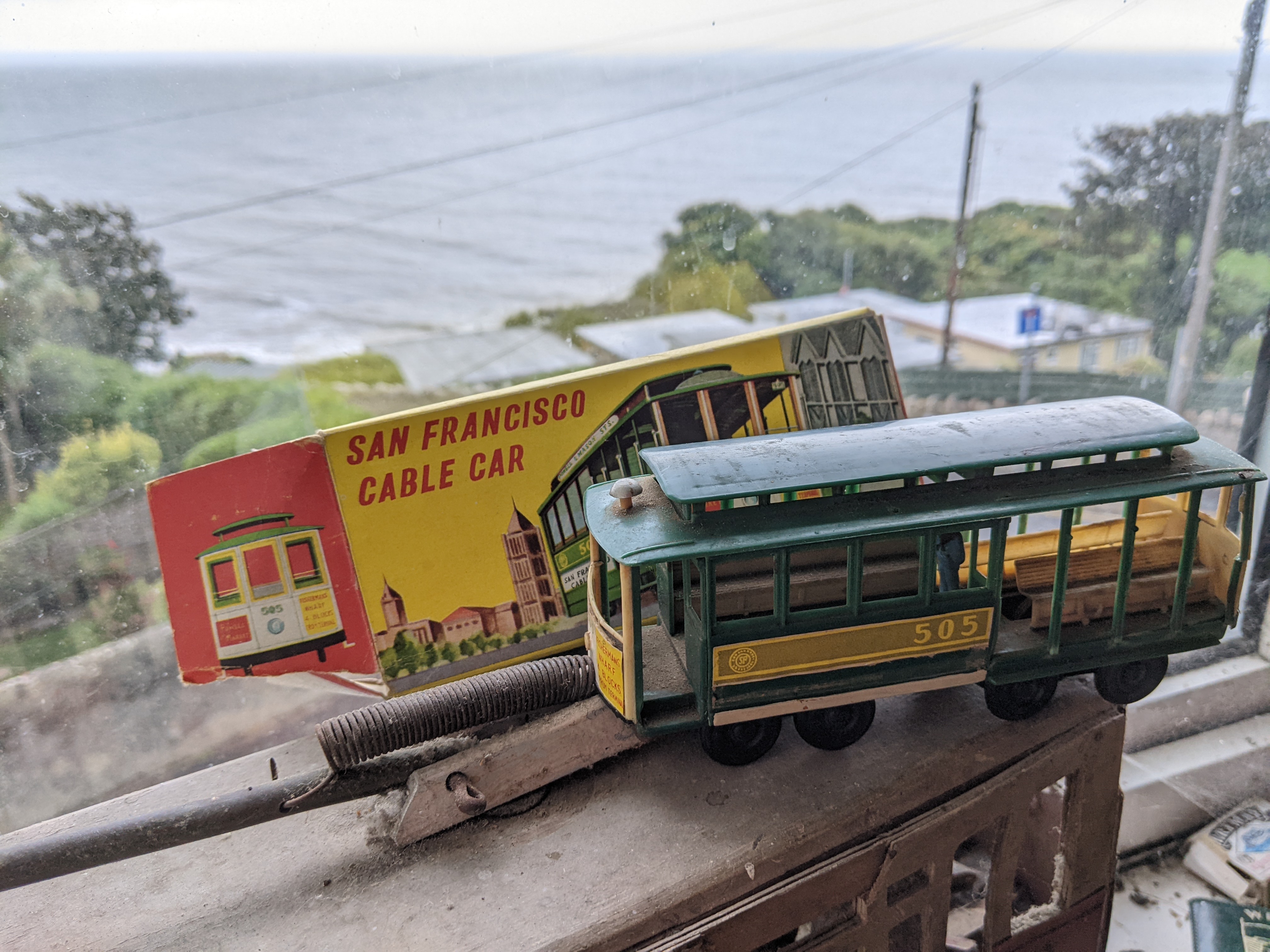
Paperback copy of 'The God Painter' by Jessica Pegis

I’m not sure that I’ve ever read anything quite like this before. Yet it felt very familiar, as if, even if I hadn’t read something like it in the past, I ought to have done.

The God Painter opens with an unexpected but remarkably ordered evacuation of the inhabitants of Earth – all the people, all the pets – and their arrival on a new planet where they are welcomed by seven strange beings. The two principal characters are something of an odd couple: a lesbian painter who immediately recreates the Torre dei Lamberti to make her new house, and a grieving widower with mixed feelings about his role as Vatican consultant.

And yes, the Vatican still exists. Maslow’s hierarchy of needs is taken care of, which leaves the population to carry on with whatever it was doing before: for example, engaging in theological debate about the human body and what it ought and ought not to do. Which is a debate that has got slightly more complicated with the encounter with their new hosts, whose bodies are not very much like human bodies. And the different ways that the various participants engage with the new evidence felt all too plausible. The backdrop might have changed, but human nature hasn’t.

I wasn’t entirely convinced by the worldbuilding, or by the necessity for a whole new planet in which to conduct the experiment, but that’s a nitpick. The lush otherworldliness of it might be its own excuse. As a whole, the book worked. I didn’t see the last twist coming at all, though now I know it seems obvious.

I wasn’t quite sure how neatly it was going to fit into my LGBTQ Christian fiction recommendations, and now that I’ve finished it I can’t quite explain how it does, but you’ll just have to trust me.

The God Painter is a strange and lovely book, with a bittersweet ending. Recommended for those who enjoy a fantastical element in their religious politics and a metaphysical edge to their sci-fi.

Week-end: from Discworld with cats

Name badge for Kathleen Jowitt on lanyard with text 'Discworld Convention 2022' and a red pompom

The good

I’m at the Discworld Convention! This hasn’t happened in four years, and it’s a joyous thing to have it back again. I often say that I married into Discworld fandom; this is the family reunion. My approach to conventions is going to every panel I can squeeze into my weekend; my husband’s is sitting in the bar catching up with old friends. This is probably the best way round (see Difficult and Perplexing, below). I’m having a lot of fun admiring people’s costumes and listening to, and occasionally engaging in, erudite literary discussions. Plus fowl jokes about chicken polishing.

Also, rain. I woke yesterday morning and heard the lovely sound of water pattering on the conservatory roof. (I don’t sleep in the conservatory, you understand: the sound comes in through the bathroom window.)

Edited to add: also, less than a week ago is a foreign country and the portal effect is strong. I had a lovely Sunday afternoon with friends and Tuesday evening with extended family. Was that really this week?

The mixed

Well, the con is great, but it is an awful lot of people in the same place, and…

The difficult and perplexing

… there is something about the acoustic of this hotel that captures and intensifies sound, and there is something about my brain that is really not coping with this. Certain areas – the lobby, the bar, the breakfast room – just get so loud that my head short-circuits. It got particularly bad at breakfast this morning and I had to walk out and cry outside. The staff were incredibly kind and sorted me out with a plate of beans on toast in the bar area (not crowded at half past eight in the morning, obviously).

And, continuing the tedious chasing of symptoms around my legs, my left knee is very achey and so are both calves. I often wake up with aching calves, but it’s going on most of the day at the moment.

What’s working

The three-three-three rule of eating. Three meals, three snacks, no more than three hours apart. I think I got this from the Fat Nutritionist. Either way, it’s worked at work (when I breakfast – reluctantly – at six in the morning, it then makes perfect sense to have an apple at my desk at nine) and at the con (mealtimes are a somewhat nebulous concept, but events tend to happen on the hour, so it’s reasonably easy to keep track of whether or not I’m due some food). Early days, but this does seem to be keeping me happier and saner. Making sure that I do eat, rather than trying to power through to whenever the next meal might happen to be, is a definite shift in practice, but one that I think might be worth sticking with.

Reading

I reread Lords and Ladies ahead of the con. I’m sure I heard somewhere that it’s the one that got Terry Pratchett the most hate mail, more even than Small Gods. Apparently some fantasy fans can’t cope with the idea that elves might not be nice.

Also picked up CATS: Cycling Across Time and Space, which I started reading when I got my author copies last year and then never got round to finishing.

And the new Jill Mansell was 99p on Kobo this week, so I picked that up too.

Writing

Three thousand words of space opera. I’m as surprised as you are. A bit on Households’ Rancour too. (I’m playing around with using the working title in casual conversation, like this, to see whether it sticks.)

Making

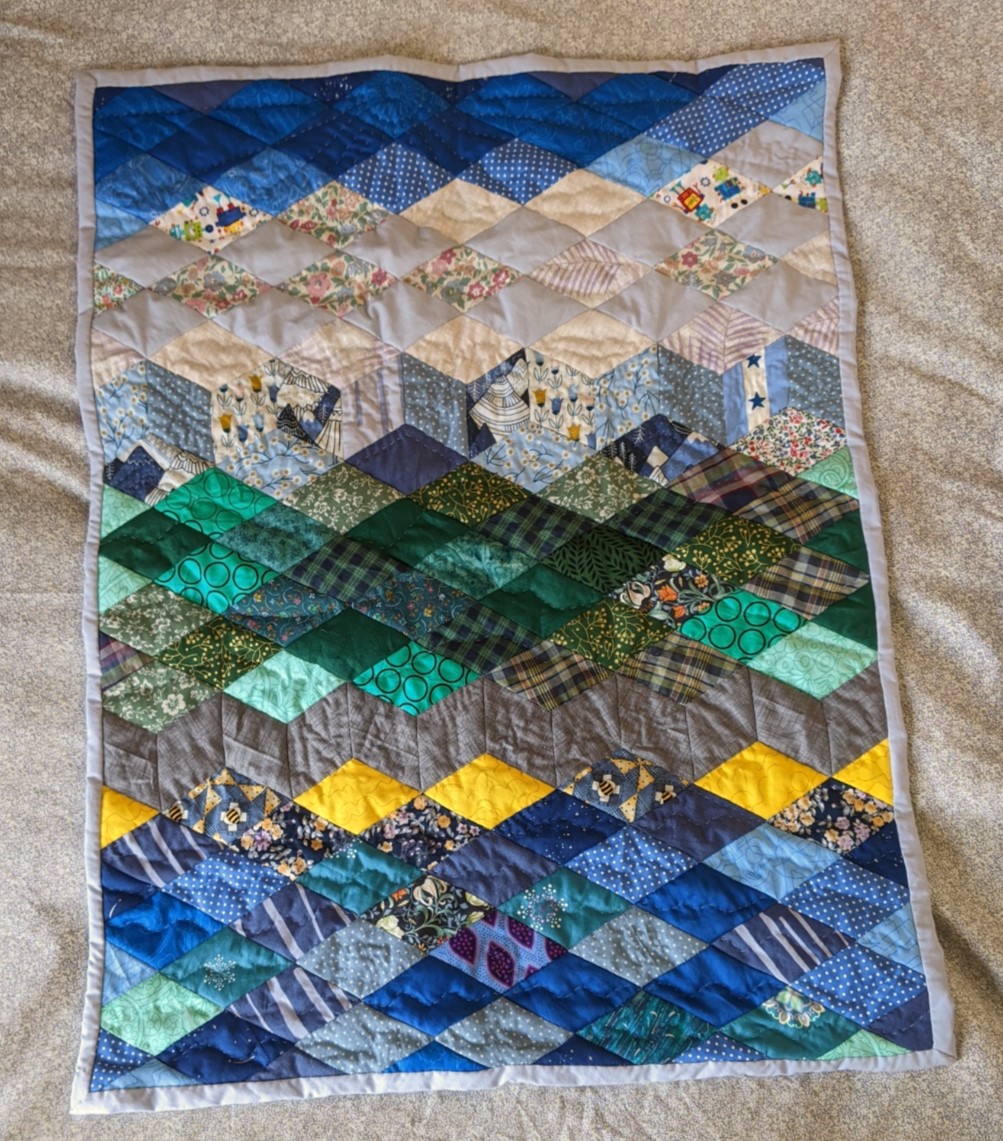
Still working on the mystery patchwork. I had hoped to get the top finished in time to take the whole thing to the con and do the quilting there, but it hasn’t happened. I probably wouldn’t have got around to it anyway.

Watching and listening to

All sorts of diverting performances and interesting panels. Highlights so far: Queering the Discworld (I am an English graduate; I will queer anything you like); Bedtime Stories (this turned out to be the unofficial and the official biographers of Terry Pratchett swapping notes, and went on until getting on for midnight); Staging Discworld: the challenges of dramatising Terry; and A Night at the Discworld Opera. (Disclaimer: my husband was in that one. It was genuinely very good, though. There was a lot of appropriately modified Gilbert and Sullivan, and Rossini’s Duetto Buffo di Due Gatti, aka the Cats’ Duet, which I haven’t heard in a long time. We sang that at our wedding. I’m not kidding. It’s probably still on YouTube somewhere.)

Cooking

Greengage chutney. This is probably a bit of a waste of greengages, which are good raw, but I wanted to deal with them before we went away.

Eating

On Wednesday I had a falafel wrap from my favourite falafel stand (the one in the garden at St Pancras new church). The queue was so long that I then didn’t have time to do the other things I’d meant to do that lunchtime, but it was worth it.

Watching

Sunday afternoon included the first two episodes of Heartstopper (me: ‘Is that the one about vampires, or is it something about doctors? No! I do know! It’s the queer teen rugby players, isn’t it?). Now I’m invested! But I don’t have Netflix! Options: buy the comics (but I haven’t yet read any of the books I bought the last time I went to Gay’s The Word); obtain Netflix (but we are already subscribed to a different streaming service); go and see my friends again (clearly the best option).

Moving

Swimming, again! This hotel has a pool.

Noticing

On my train journeys, I’ve seen quite a few deer sloping across harvested fields.

In the garden

Greengages, as noted above, and a handful of tomatoes and french beans. The pears are looking good; the apples seem to be more of a mixed bag. The drought has killed a lot of the weeds and, I think, the ornamental ginger I bought a couple of months back.

Appreciating

Wonderful kind hotel staff. Impressive intricate costumes. Rain.

Line of the week

Has to be Lords and Ladies, really. The way that Pterry stacks allusions three high and then pulls the tablecloth away to show that it’s just chipboard underneath when you realise who he’s talking about

But that was a long time ago, in the past1. And besides, the bitch is…

… older.

1 Which is another country.

This coming week

Three days off! One to travel home and two to recover, do laundry, and prep for a planning meeting on Saturday. I’d like to have a safe and stress-free journey, for all to be well at home, and to be able to devote some of those two ‘free’ days to making some real progress on Households’ Rancour.

How was your week? What are you hoping for from the next one?

Week-end: pale green, tastes faintly of liquorice

Glass jug of water containing springs of mint and round and long seeds

The good

I had some news about a short story that’s coming up for publication next year. (More news on that in September or October.) That was a welcome interruption to the you never do ANYTHING, you are a failure as a writer chorus. And I learned the theme for the next-but-one anthology, and over the next couple of hours an entire plot and some basic worldbuilding unspooled itself in my head. In the words of Billy Joel, that hasn’t happened in the longest time.

My premium bonds came up. Well, one of them did. Twenty-five quid; thank you, ERNIE.

The mixed

The trains have been all over the place this week. There have been delays and cancellations because of overhead wire failures and points failures and speed restrictions and warm weather, and every day I’ve travelled by train this week there has been some kind of disruption.

However, every train I’ve ended up on has had a seat for me and working air conditioning. This is peak ‘mustn’t grumble’, but still, mustn’t grumble.

The difficult and perplexing

I really don’t like the heat. And seeing everything shrivelled up and yellow is depressing. Ugh. Please could governments and industry take some action on climate change, rather than leaving it all to overworked and guilt-ridden individuals?

My feet continue to discover new and frustrating ways to be painful. Most of this week it’s been the ball of my right foot, as if I’d stood on a drawing pin (I’m sure I haven’t); that’s now eased, but I think I’ve been compensating elsewhere, because now my left knee is very grumbly, particularly when I go up and down stairs.

Reading

If you’re going to be stuck on a train you will do well to have a book with you. For me, Monday’s shenanigans (sitting outside Stevenage for a good hour) provided an opportunity to return to Neither Present Time (Caren J. Werlinger), which I’d started a while ago but abandoned when it turned out I wasn’t in the mood for being shown not told an emotionally abusive relationship. It was actually very readable once I got past the stuck point, and was much better structured than the only other book I’ve read by this author.

I also read European Stories, a freebie from that time I went to the London Book Fair. It’s a collection of five short stories by previous winners of the European Union Prize for Literature, published with an English translation alongside the original text. I had a brief go at reading the original of the one in German, but I wasn’t up to that. I wouldn’t quite say that it filled me with Remourner sadness, because a lot of it was dealing with themes like racism and xenophobia that we know are a problem inside the EU just as much as they are out of it, but there’s definitely a sense of regret about being on the outside of a creative, collaborative project.

And I revisited some stories I wrote about a decade ago. I can in fact write fascinating amoral villains and witty narrators and plot. If I recall correctly, the secret there was not giving a damn what anybody else thought.

Writing

A thousand words yesterday on the new story mentioned at the top of this post, and today a thousand words on the Romeo and Juliet thing. (Current working title: Your Households’ Rancour.)

Making

Still working on the secret patchwork project…

Watching

… the Commonwealth Games (yes, I know they’re over. BBC iPlayer is working hard).

Eating

A very few tiny wild strawberries, straight off the plant.

Looking at

The Breaking the News exhibition at the British Library. This was arranged by theme rather than chronologically, so footage of the aftermath of the Grenfell fire appeared next to a newspaper report on the Tay Bridge disaster, which in turn was next to a report on the Great Fire of London. And so on across Scandal, Celebrity, War, Fake News, etc.

Over the last few years I’ve become increasingly aware that we live in history (and not at the very end of it, either), that today’s news is tomorrow’s history just as today’s history is yesterday’s news. Even so, there seemed to be a lot of history in this exhibition that I remember happening at the time, that time being the last five years or so. I suppose it’s compensation for not remembering the fall of the Berlin Wall. And there has been a lot of history going on.

Drinking

A recommendation from a colleague: water chilled with mint (or cucumber, but we have mint), coriander seeds, fennel seeds, and cumin seeds. It’s pale green, tastes faintly of liquorice, and really does have a cooling effect. More so than plain water? I don’t know. It’s certainly more interesting. I recommend pouring it through a tea strainer.

Other ways of staying cool, incidentally: shutting doors and windows and curtains before the inside gets as hot as the outside; taping silver foil over the window that doesn’t have a curtain; putting feet in a basin of cold water; a wet towel around the back of the neck.

Moving

I went swimming today for the first time… since the pandemic? It might well be. It was certainly my first time at our local swimming pool. It’s not the same as a rainy Tuesday morning at Jesus Green Lido, but it was extremely pleasant on a day such as today.

Acquisitions

A different colleague has been clearing out some Body Shop stock, and I have relieved her of some perfumes: White Musk L’Eau, White Musk Flora, and Indian Jasmine. The latter is pretty powerful and indeed very jasminey. I haven’t tried the others yet.

Line of the week

From Out of the Woods by Luke Turner, which I’ve been reading a chapter per week except for when I haven’t been at home on Sundays, and which is therefore taking a while:

The forest and newspaper archives tell of riots, unlicensed preaching, political agitation, robbery, drunkenness, illegal gherkin sellers, poaching, blinding songbirds to use as decoys to attract and then cage more, gambling, prog-rock concerts, female boxing, children trampled by a donkey derby gone out of control, dogging, wiccan rituals, biker meets, an unnatural act with a sheep near Debden, poaching, crazed Aunt Sallies, perverts on bicycles, teenage catapulters of swans, the first motocross race.

This coming week

People! Lots of people! And some fandom, which is made of people.

I’d like it to be less hot, please. Maybe we could have some rain.

I want to keep riding this story wave. And I also want to get the patchwork to a state where I can start quilting it this weekend (in among the fandom and the people, yes).

Week-end: Pride and preliminaries

Bouquet of flowers in shades of pink, blue, mauve, and pale green, against a red wall

I’ve been wanting to post more on this blog, and also wanting to record more of what I’ve been up to and what I’ve enjoyed. So this is the first of what I hope will be an ongoing series of weekly… check-ins? reports? I like neither of those terms. But I know what I want to do, even if I can’t describe it. So I’m just going to start doing it. Expect varying length, disparate headings (stolen from various people across the internet), and weeks where nothing happens at all.

The good

Ely Pride. This started last night with a talk at the cathedral from Rev Dr Charlie Bell. I am not sure that I can convey how very good it is to have one’s church say in so many words that LGBT+ people are welcome, so you’ll just have to take it on trust. The main event was today, and it was joyous.

Gorgeous flowers from my in-laws, extending my birthday a little further.

The mixed

Sad to see a great colleague go, but her leaving do was brilliant. A couple of ex-colleagues turned up, too: good to see them again.

The difficult and perplexing

A load of internalised biphobia (this has been going on for a while, and nearly stopped me going to Pride today; I’m glad it didn’t succeed). And a stubbed toe. And an hour of (unfounded) family panic.

Noticing

Dragonflies whizzing around the green spaces. Sunflowers in the allotments (you can see the Royston ones from the train). Starlings.

Reading

Wanderlust: a history of walking, Rebecca Solnit. This was one of the two books I got from the Book Bus. (I am, this year, a model of restraint.) I’m enjoying this: Solnit talks about walking as a political act as much as anything else, and she talks about all sorts of walking. Some things I did know already and a lot that I didn’t.

Rough Music, Patrick Gale. My mother’s been recommending this author to me for ages, largely on account of the Isle of Wight connection, but I finally got around to reading him in this book from the sale at Ely library, and it’s mostly set in Cornwall. Very readable; one of those dual timeline narratives. A potential entry for The Reader’s Gazetteer – B for Barrowcester. Reading the notes at the end, it’s based on Winchester. I didn’t pick that up at all despite having been born in Winchester, but then I’m usually there to look at buses.

Husband Material, Alexis Hall. Well, this was where my Tuesday evening went. I lounged on the sofa, chuckling away. Delightful. It felt a little strange, because it felt very, very familiar. Hardly surprising: when I was writing The Real World I spent quite a lot of time wondering if after all Richard Curtis hadn’t said it all better in Four Weddings and a Funeral, and Husband Material is very much riffing on that seminal romcom. Anyway, it is refreshing to see something else that really digs into the question of marriage. Even if it did get me thinking that it is as well that Issues in Human Sexuality has nothing to say about lemon sorbet. (There’s one other person in the world who’ll find that funny. Oh well.)

Making

Patchwork. Secret project.

Cooking

Pickled plums. And an improvised sort of pie made of plums and very old filo pastry from the freezer. The rest of the plums got frozen, though I should probably go and see what else I can harvest before the wasps get it.

Writing

A post for the Ely Cursillo site.

Looking at

Summer Open Exhibition at Babylon Arts. This was fascinating for the sheer range of artists and styles on show, and my reactions to them. I like bright textiles but not bright acrylics. I like moody pastels of Fenland skies. I dislike the self-consciously quirky except where it was made of steel. I am fascinated by the intricate. I am predisposed to like linocuts. It takes a lot to impress me with a photograph. I did know that @smolrobots is based somewhere in the vicinity, but I’d forgotten. And so on. Eavesdropping on other people’s reactions was also fun.

Listening to

I’ve been to Evensong three times this week (another of those things that I could do far more often than in fact I ever do). There’s been a visiting choir, and they really got into their stride today. Jackson in G (used to sing it at Guildford, but haven’t done it for years) and then something called Song to bring us home by Tamsin Jones.

Drinking

Sidecars. Or, as they somehow ended up getting called, Sidehorses. Don’t ask, or, at least, don’t ask me. I also had a strawberry slushie today, the first in a very, very long time.

Line of the week

This is from the Rebecca Solnit:

Imagine it doing seventy on the interstate, passing mesas and crumbling adobes and cattle and maybe some billboards for fake Indian trading posts, Dairy Queens and cheap motels, an eight-cylinder Sistine Chapel turned inside out and speeding toward a stark horizon under changing skies.

This coming week

More patchwork more patchwork more patchwork.

Art month

Four glass beads on a page of pencil drawings of stones and seashells, on a collage of flyers and stickers

I like July. It’s my birthday month. There’s plenty of daylight. Granted, I am not particularly keen on the heat, but I much prefer it in July, when there’s the imminent prospect of a retreat to the coast and a difference of five degrees or so.

And even now, long after I left full-time education, there’s a glorious sense of end-of-termness about it. Holiday. I can do as I like.

Sometimes that takes more work than you’d think. Sometimes inertia and life in general and notions of extravagance combine to stop me doing as I like. Sometimes I have to make quite an effort, buy myself tickets so that I have to use them rather than talking myself out of going to whatever it was. Prompted by Julia Cameron’s concept of “artist dates” (not a term that comes naturally to me; I have renamed them “rendez-vous”, which strikes the right balance of glamour and self-mocking pretentiousness for me) I try to take myself out once a week for something entertaining or thought-provoking or indulgent.

It’s not as if there’s nothing out there. I work in London, where if it turns out the Somerstown People’s History Museum is closed (it always has been when I’ve tried to go to it, and it’s always open when I dash past on the way to catch my train home) I can look at an exhibition about cancer treatments at the Crick, or if I daren’t go to Gay’s The Word for fear of accidentally spending forty quid I can go to the British Library and stay away from the shop. I live in Ely, which has plenty going on in its own right and is only a quarter of an hour away from Cambridge to boot. I ought to be able to manage something every Thursday (or maybe Friday), even if it’s only an ice cream flavour I haven’t tried before (Ruby Violet in London; Hadi’s Gelato or Ely Fudge Company or Cherry Hill Chocolates in Ely). And when I do, I’m glad I did. I’ve learned something, or seen something differently, or tasted something new. If it hasn’t been fun (and it very often is) or moving, it will at least have been interesting.

July feels like a whole month of that. Somehow, it’s all much easier in July.

In the last few years – let’s say, six – I’ve been visiting some of the artists who take part in Cambridge Open Studios. The definition of ‘Cambridge’ turns out to be rather loose, and there are a dozen or so in Ely too. (One of them, Andrée Bowmer, made the lovely glass beads in the picture at the top of this post.) July 2022 was busier than either of the last two years, but I got around about half the artists in between my other weekend commitments.

Last week I was down on the Isle of Wight for Ventnor Fringe. I spend all year looking forward to Fringe and it always passes in a gorgeous haze of seeing things (art, shows) I might otherwise pass by and also lounging around at the Book Bus doing nothing. (This year I sold two books despite doing nothing.) It’s like people put on an entire arts festival just to celebrate my birthday. It’s brilliant. This year I went to two circuses, a drag show, an improvised Importance of Being Earnest, two small solo gigs (one in a barber shop, but not barbershop), no, hang on, I forgot about the vicar singing Dylan (very well), and a concert featuring a Scottish harp and a Finnish kantele.

But now Fringe is over and it’s August. I’m feeling a bit flat, I have to admit. Mind you, I was expecting to. But I’m also feeling the urge to read more, read more of the books that make me stop reading and look out of the window and think, go to the theatre more, and listen to more live music. I could do that. I could do all of that. The house is full of books, some of which I brought home from the Book Bus last week, or last year. There are free organ recitals at the cathedral every Sunday all summer… Last year I managed to get to all six Cambridge Shakespeare Festival shows. Well, this year I’ve missed all the July ones, but August’s still there, and I seem to have a lot more evenings free this month. And it’s still ice cream weather.

Notes to self

Green apples growing on a tree

I think I’ve mentioned before that the project I’ve been calling ‘the Romeo and Juliet thing’ is my first attempt at a full-length historical novel. I’m rather enjoying it. Apart from digging around to find out things like how many staff a typical upper-middle class household would have and how many of them would be addressed by their surnames, and what all the relevant railway companies were called, there’s the deeper task of getting into the mindset of a different age. It’s fascinating. (It’s also an excuse to reread a whole load of Agatha Christie and Dorothy L. Sayers mysteries.)

I am well used to writing characters who are simultaneously stuck in their own heads and detached from their own emotions, whether by shame, depression, or the closet, but this is another level: a whole population that just isn’t talking about anything. My hero is slightly more articulate than the type described by George Mikes in How To Be An Alien:

If he wants to marry a girl, he says:

“I say… would you?…”

If he wants to make an indecent proposal:

“I say… what about…”

But not very much more so. It is 1919, after all.

All this sort of thing is surprisingly fun to write, but it leaves a lot to be done by the narration. If the characters aren’t talking, I have to talk for them. If they can’t talk about feelings, I have to show that those feelings exist – because they do, they’re powerful, maybe even dangerous, and perhaps even more so because they’re not fully expressed. I’m using third person omniscient, though it’s pretending to be third person limited most of the time. (That is, I know everything, but I don’t tell it all, and most of the time I restrict myself to what’s going on inside a particular person’s head.)

Anyway, the proposal does happen in actual words. But in a moment of writing cowardice I chickened out of writing the first kiss – which prompts the proposal – and instead left myself a note in square brackets:

[this has to be really hot]

Helpful, no? As the old Nicorette adverts used to say, don’t tell me, tell me how. Of course I rolled my eyes at myself on every subsequent readthrough until eventually I wrote the damn thing and, yes, made it really hot. The current readthrough, however, has prompted the uncomfortable reflection that it hasn’t really been earned. Not yet. If the kiss needs to be really hot, so does everything leading up to it, otherwise it doesn’t work any more than the proposal, and then the decision to accept doesn’t make any sense either. And then the remainder of the book – about four fifths of it, I’d guess – don’t work at all.

And I think I also need to bring in my second point of view earlier, and do more from her perspective. It’s feeling a bit one-sided at the moment, and it’s vital that both parties are seen to be invested.

Time to write myself some more notes.

[this bit also needs to be really hot]

and

[this bit too]

I’m sure I’ll thank myself for it later.

Regrouping, rethinking, reprioritising

a full-blown red rose peeping out from between concrete fence posts

I’ve been writing. I’ve filled eight and a half pages of my current exercise book since Thursday morning. Granted, one of those is taken up with an extremely sketchy sketch map, but the rest are all writing.

And on Thursday, or it might have been Friday, I had one of those lovely moments where a whole chunk of book suddenly makes sense. It’s not finding a missing jigsaw piece, because I am a long way away from knowing how many pieces this puzzle has, let alone that there’s one specific one lurking under the sofa. It’s more like finding that the grey-beige piece you thought was part of a building is actually the sunlit bit of tree and now you can join this bit you’ve already done to that bit and suddenly you understand what’s going on with that weird clump of maroon.

I thought I was writing about sending my heroine away to school. I was writing about sending my heroine away to school. But it turned out that I was also writing about her relationship with her parents, and their relationship with the gap which used to be her brother, and how family solidarity means that she can’t talk about any of that with her new husband.

This accounts for one and a third of those eight pages. Not much, in the grand scheme of things. Maybe about 300 words. But it’s made all four of them (I’m not counting the brother; he gets his moments elsewhere, but the really important thing in this part is that he isn’t there) jump out from the page; it’s made the connections between them make sense.

It was a relief, I can tell you. Nothing like that had happened this year and, while I’ve been grimly plugging away, it was all feeling more and more hopeless. Back at the beginning of April, when I was still having to take a nap after a few hours of doing anything remotely interesting, I wrote:

And as it goes on I feel like less and less of a writer. It’s as if I’m no longer the person who has written and self-published three novels, that was someone else, I don’t know how to do it any more, and really what is the point anyway, only five people are going to like it and I will have to find five different people from last time because yet again I am doing something weird and it won’t sell. Possibly Speak Its Name set my expectations unreasonably high.

By the end of April, I was getting away with fewer naps, but I still had no enthusiasm. There were days when I really did think this was it. I thought I’d had my time as a writer. I’d done my three novels, I’d got on a couple of shortlists, the last one was a bit of a flop anyway, and there wasn’t anything more coming.

I didn’t say so. Not over here. For a start, that would have involved writing. I didn’t have the energy for a big flounce, nor yet to explain myself decently. So I just slipped quietly off the radar for a while. And look, it turns out that I was wrong.

Several things have been going on here. In no particular order…

A grim first third of the year

They usually talk about quarters, don’t they? But between bereavement and lingering Covid, things were horrible all the way through to the end of April. I managed to slog on with a sentence per day on everything through the first three months of it, but Covid did for my physical capacity. And, while it was useful to know there was a good reason for my complete and utter lack of energy and motivation, that didn’t go very far to replace it.

Too many projects on the go

At once point I was working actively on:

  • the Ruritanian thing
  • the Romeo and Juliet thing
  • a non-fiction, how-to, workbook sort of thing about writing a book while doing a job
  • Book Bus Stories
  • a collection of historical sapphic short stories (my mind keeps trying to call this historical sapphical, a genre that Hamlet’s players didn’t quite get around to…)

Not to mention things for work and other occupations, things that might have come out without my name on, but which none the less took up mental energy.

It made sense for a long time. The Ruritanian thing was terribly coy and rarely wanted to be the main act. The how-to thing quite often wrote large chunks of itself without my really noticing. And I’ve always found that the best way to stay invested in a project is to keep working on it. After all, it wasn’t much more difficult to add one sentence each to five projects than it was to add five sentences to one, and some days it was easier.

I’m not sure when it stopped making sense. Probably with Covid. I’d realised I needed to focus more by the beginning of April, which tracks. And really, before then I was too ill for it to be of any benefit anyway.

Your regularly scheduled mid-book slump

This happens every time. Every single time.

It was particularly derailing with Speak Its Name because, this being my first time, I didn’t know that this was a thing that happened. Moreover I hadn’t yet proved to myself that I could finish a book.

This time, though, it really threw me. I’d had two significant life events, one of which knocked me emotionally, and the other physically. Intellectually, too. I had the brain fog, and it is not an asset in writing anything at all. Once again I was in unknown territory, and I had no way of knowing whether I’d be able to find my way back from either of them.

This time I actually have given up on a book

Temporarily, at least. I’ve put the Ruritanian thing on the back burner, and maybe I’ll turn off the gas altogether. We’ll see.

The thing with several of these projects was that they weren’t serving their original purpose. The Ruritanian thing, for example, was meant to be light-hearted fun which I would, eventually, be able to share with my father. Well. And then another person I’d have loved to read it, A. J. Hall, died last month. I’m one of many people who can’t quite believe she’s gone, and, though I didn’t know her nearly so well as some of my friends, there’s a big hole in my reading and writing life. If I ever do finish this wretched book it won’t be as good as A. J. Hall would have made it – nobody had quite the same knack for seeing what I needed to cut and telling me so – and it’ll be dedicated to two people. I don’t know. Maybe it’ll be something that I’ll need to finish one day. But it’s certainly stopped being light-hearted fun.

The sapphical historical anthology, meanwhile, was meant to be an easy way to get a book out this year, as the idea was that the greater part of it was already written. Which is true; the only problem is that the rest of it turned out to be ridiculously hard and I can’t be bothered. I have two concepts for additional stories, but I don’t have the plots to go with them. I could make them happen with pure elbow grease, but not at the same time as everything else. It has not turned out to be easy and I’m not going to get a book out this year.

The non-fiction work about how to write your book alongside doing your day job… Well, I was having significant difficulty doing my day job at all, let alone anything else. At some point I’ll add a chapter with the message that sometimes life sucks and you just can’t write; don’t beat yourself up. That can wait, though.

So this time I really have ditched everything except the Romeo and Juliet thing, which, as described at the top of this post, is coming up roses (by that or any other name. Note to self: anything doing with Roses of Picardy?) and made that the main event. And it’s repaying me generously for my undivided attention.

As for Book Bus Stories, well, it’s probably about three quarters done. And I suspect that when I return to the Book Bus it’ll start writing itself again. It usually does. It seems to be perfectly happy looking after itself.

Sixteen years (without driving)

A vintage Delage car with the number 116 painted on the side
A car I have not driven. Lovely, though, isn’t it?

Today it is sixteen years since I last drove a car on the road.

That wasn’t deliberate. I only remember the date because it was the day before my graduation, and how could I forget that such an occasion happened on quatorze juillet? I failed my second driving test the day before I graduated, therefore I must have driven for the last time on the thirteenth of July. (In actual fact, I drove a Routemaster around a field a couple of months later, but that’s another story.)

I hadn’t meant that to be the last time I took my driving test. But I was moving out of the city where I’d learned to drive, and that meant that for the next test I’d have to learn a whole new set of test routes. And I’d just graduated and I didn’t have a job, and I never got round to sorting out lessons. My grand plan that year was to walk to Santiago de Compostela, and I didn’t need a car to do that. Then I spent two months in Germany and was thoroughly spoiled by the public transport system.

At the end of all that, seventeen months after failing my second driving test, I moved to Guildford. This is a notoriously expensive place to live and, even though I was living in a horrible bedsit, and even though I signed up with a temp agency fairly promptly, I didn’t have the money to spare for driving lessons.

I moved in with my fiancé. He had a car. I never drove it, though. I think I probably assumed that I would, sooner or later, but money was still tight. He was a PhD student and I was a temp, and we were living in Guildford.

I inherited a car from my godmother, but I swapped it for a piano. (The piano was left to my mother, but she already had one. The car ended up with my father, I think.) I couldn’t drive and I couldn’t play the piano, either.

We moved to Woking, which was marginally cheaper than Guildford, where I was still working. We managed to move everything except the piano in (or, in the case of the double bed, on) the car. Not long after that move, Tony started a different PhD. In London.

Nobody drives into London. Not without a very good reason – disability, say, or actually living there. We did not have a very good reason to drive into London. In fact, we had no good reason to drive at all. I could take the train to Guildford. Tony could take the train to London. We could go pretty much anywhere else we fancied by train, because Woking, while not terribly interesting in itself (unless you’re a Martian invader), is very well-connected. And the car was sitting on the road costing us £600 a year before we’d even put fuel in.

The car went to a couple of affable blokes from somewhere in Wales. Looking back, that was probably the moment that confirmed my non-driving path. Up until then, driving occupied a slot in the ‘get around to it some day’ filing cabinet in my head. If I ever needed to, I’d told myself before, I’d learn to drive. Now I had to ask myself: but what? Tony could, and did, hire a car if he wanted to go somewhere off the public transport network. That wouldn’t have worked for me, because I didn’t have the familiarity with driving that would let me leap into a strange car and go somewhere safely, and now we didn’t have a car I wasn’t going to get it.

We adjusted very smoothly to life without a car. We walked to the shops. We commuted to work by train. We visited family by train. We started getting a veg box delivered. I bought a trike and started cycling. Tony had been cycling for years. We didn’t need a car. Not in Woking, anyway. It would have been a different story in the place where I grew up (a mile to the nearest village).

Not being able to drive might have been career limiting, but I was never terribly interested in the career track that would have required it. (A decade older and a billion times more confident, I think now that I wouldn’t have made a bad stab at it, but I don’t think it would ever have been my ideal future.) That problem disappeared when I moved to my employer’s head office and a job where nobody expected me to drive.

If we didn’t need a car in Woking, we certainly didn’t need one in Cambridge. (That move involved six months in separate temporary addresses, and Tony moved all the furniture except the piano in a hired van.) It is only slightly more advisable to drive into Cambridge than it is to drive into London. And I told myself that if I didn’t start riding a standard, two-wheeled, bike in Cambridge, I’d never do it at all. I did. Suddenly I could get to everything I needed to.

Life works perfectly well for me without driving. Of course, that’s because I’ve managed – first by luck, and later by design – to set it up that way. If I were still in a tiny hamlet in the Marches, I think I’d probably have to drive, or else get used to a very limited existence. As things are, we choose places to live based on walking and cycling distance from the amenities, and we are fortunate enough for that to be financially and logistically feasible.

More recently, I’ve developed intermittent vision loss (very occasional, but inconvenient in its very unpredictability) which makes me wonder whether I’d actually be safe behind a steering wheel. I don’t much like the thought of being suddenly unable to see out of my right eye while bowling down a motorway. Though I’ve heard of someone with the same thing who just pulls over when he notices it coming on.

Not driving does make it harder to visit other people. I have friends whose house I can see from my morning train, yes, but I have family in villages where the bus comes twice a week, or never. There is no point in our getting a National Trust membership, because the great and the good tended to build their stately piles a long way from anything so plebeian as public transport. And I might have been on a retreat in the last decade if so many retreat houses were not buried deep in the countryside with no bus service. (To be fair, the last retreat I went on was a five minute taxi ride from Godalming station, so it may also be that I just haven’t got around to it.)

I fret a lot about Putting People Out. Usually they are lovely and think nothing of going five miles out of their way to get me home. It turns out that five miles isn’t all that far, in a car. Or, in the case of my husband, hiring a car. Of course it does get awkward sometimes, if I’m very tired and would rather be by myself on a nice quiet train. More often, though, I get to know them a lot better, and, as someone to whom socialising doesn’t come naturally, that’s very valuable.

Of course, the longer my not driving goes on, the more it becomes about the environment. I came across The Jump a few months ago, and found it a lot more encouraging and less annoying than a lot of climate rhetoric. It identifies six broad ‘jumps’ (lifestyle changes, I suppose you could call them), one of which is ‘get rid of your personal vehicle’, but is very reassuring about not expecting perfection. Well, the cars we hire these days are electric, and if we ever do buy one (and my eye stops playing up and I learn to drive) it’ll be electric, but there’ll still be cobalt in the battery and rubber particulate to fret about. I fret less these days – or, rather, I have a more realistic sense of my own ability to effect large-scale change and consequently a more realistic sense of my own responsibility – but, having accidentally forged a lifestyle in which I don’t drive and don’t have to, it seems a bit silly not to keep it going.

And it’s gone on a long time. Next year my existence as a non driver will be old enough to drive.

The broccoli problem (an update to yesterday’s post)

close-up of a romanesco cauliflower
This is not broccoli. I do not have a photograph of broccoli. Although apparently in the 1950s ‘broccoli’ was the name used for cauliflower.

My library fine was 25p.

And my friend Lesley found broccoli in Maria Rundell’s New System of Domestic Cookery, 1819. According to the delightfully cranky food writer Jane Grigson, it was introduced by a seed merchant in the 18th century, with sales bolstered with leaflets on how best to prepare this exotic and delicious vegetable. It would probably show up at show-offy dinner parties, not (as in the book I was reading) as a dull duty vegetable for the children to force down.

So no, it would not be impossible for the characters in the book to eat broccoli. It would, however, be highly unlikely for them to be wasting it on nursery tea, particularly if the ungrateful little brat doesn’t even like it.

And this is why the Tiffany problem is still a problem. The author might very well be correct, but that’s small consolation if the reader has already been hurled out of the book (and sent their friends off down research rabbit holes). Don’t get me wrong: I still think it can be made to work. I just think it takes work. You’d better start off having your Tiffany addressed as Theophania a couple of times before you use the diminutive. Have her born at Epiphany. Then work out how to explain the connection without bringing your whole plot to a stop for a tedious infodump. It ought to be possible. I can’t say that I’m inclined to try.

Which is to say that I’d have been charmed by the appearance of broccoli at a Regency dinner party, particularly if it had been accompanied by some one-upping commentary on how very talented and superior one’s gardeners were, might I help you to a little macaroni, my dear? I just can’t swallow it (ha!) as a way for the cute moppets to get their greens. Other brassicas are available.

But that’s me. What I’ve really learned here is that this author’s historical stories don’t work for me: they’re not interested in the same things as me. A pity, because I’ve enjoyed their contemporaries, but there we go. I shall have to write snobby broccoli stories myself. Or just cook some.

In fact, says Lesley,

Eliza Acton says that it is boiled, if the heads are large served like cauliflower; the stems of branching broccoli peeled and the vegetable tied in bunches, dressed & served like asparagus on toast. Hardly nursery food!

That sounds rather good.

The library routine, comfort reading, and what I read for: six months of books

A brightly coloured striped deckchair with a book in the seat, on a grassy lawn

When I’ve finished writing this post, I’ll be off to the library to return A Place of Greater Safety and, very likely, pay a small fine. I have had it on loan for ages and run out of renewals on it. Granted, it’s a very thick book. I started reading it on the fourth of June. Then I put it down. Then I picked it up again when I got the email to say that my books were due. I lost the game of chicken, but only just.

My usual practice when I visit the library is to choose something light, something heavy, and some non-fiction. The first two categories are pretty subjective, it has to be said. The current something light is Val McDermid’s Broken Ground, which I’m expecting to get quite dark, actually. Something heavy is, of course, A Place of Greater Safety.

I don’t think I was entirely over Covid when I got it out, and as best I recall my thought process went something like: oh yes, a big fat Hilary Mantel book. I’m not sure that I remembered that it was actually about the French Revolution until I got it home and started reading it.

(If you’re wondering about the non-fiction, it’s usually pop history, often about some bit of Europe I’m vaguely meaning to visit. Or travel writing about some bit of Europe I’m vaguely meaning to visit. At the moment it’s Lotharingia: a personal history of Europe’s lost country.)

The last couple of months have been incredibly busy. I got over Covid, I went on holiday, and since then I’ve been up to my eyes. Some of that’s been work stuff, but I’ve also become a lot more involved in the Cursillo movement this year and that’s meant that a load of my Saturdays have disappeared. And of course there have been the ongoing emotional and practical after-effects of bereavement, though Covid did a number on my capacity to cart boxes full of family papers/beer mats/model railway track and, in the early days, to travel at all.

But I have been reading. I’ve spent a lot of time on trains, and I’ve spent a lot of time on the sofa, and both of those are good environments for reading. In the early part of the year it was K. J. Charles: I got through most of the Sins of the Cities series on the way to and from the Isle of Wight, thinking I don’t know how she’s going to get them out of this, but I am confident that she will find a way and I can’t wait to see what it is. Which was pretty much what I needed at the time.

I’ve read loads of Agatha Christie. I’m counting some of this as research as well, since getting into the head of over-privileged 1920s rich kids is very much on point for the current book.

I’ve read my grandmother’s memoirs, also for research, but found them fascinating in their own right.

I was greatly reassure to discover that my brain hadn’t melted away entirely when I tried Light Perpetual and found that, not only could I read it, I could also see how it worked as a book.

I’ve read two Persuasion retellings in which Frederick Wentworth is an ice hockey player (very different, but both good).

I’ve read The God Painter, which will get its own post sooner or later.

I have followed along with The Company of Heaven.

I’ve started Hamnet and got stuck on Magrat Garlick’s ideal self, sorry, I mean Anne Hathaway. I might go back to it, but then again I might not.

I’ve done that thing where you pick up a book because the premise looks really intriguing but the execution isn’t quite there but you keep reading because it’s not quite bad enough to stop and you want to know how it’s going to work out and there’s only a little bit more to go and then it’s one in the morning and you hate yourself because, as it turns out, it wasn’t even a good book.

I’ve also been thrown out of a historical novel by the mention of broccoli in about 1830. Personally, I would consider broccoli daring and exotic in 1930. Maybe it isn’t, maybe it’s the Tiffany problem in action, but anyway, I was thrown out.

And I’ve been thinking a lot about comfort reading, because my goodness, has this been the year for it. Mind you, I’ve been thinking about it on and off since 2020 at least, when I read A Prince on Paper and came away with a profound feeling of gloom. If only the monarchy really were like that, I thought. But it isn’t. And the disconnect between fiction and reality became, for me, painful in itself. I note that I followed it up with Fair Play, which was a better fit for my mood. Crotchety lesbians in Helsinki or a cabin on an island, working around each other’s artistic temperaments. It hit the spot. For me, anyway.

Of course, books hit you differently at different times. I reread We Didn’t Mean To Go To Sea last October and surprised myself greatly by crying all through the second half. Because… because my head always does weird things in autumn, and there’s something about knowing that it’s all going to turn out OK? I don’t know. We’ll see what happens next time. Maybe this wasn’t the moment for A Place of Greater Safety, as much as my library card whispers, if not now, when?

Rachel Manija Brown says, of horror:

Sometimes we want to hear that everything will be fine. But sometimes the only way anything can ever be fine is if we admit that everything isn’t fine right now. Horror tells us that everything isn’t fine, and we should start listening to the people who’ve been saying so all along. And if we are those people, it tells us what we most need to hear: “I believe you.”

On Horror

Horror fiction doesn’t do much for me, but I recognise that mindset. The message I need/want to hear is, I think, something like:

No, everything is not fine at the moment, and it is dishonest to pretend otherwise. And you are human, and so you too will contribute to its not being fine. Nevertheless, it is worth hoping and striving for a world in which things are better. And you can begin now – not, perhaps, in huge, heroic acts, not by single-handedly bringing about revolution, but by doing the best you can in the life that you have.

Is that what I read? I think so, though it doesn’t always look the same. Sometimes I want genre fic that follows the rules all the way to the happy ending. Sometimes I want litfic that breaks them in interesting ways. Either way, I want it to acknowledge the fact that actually things aren’t easy, not at all. And it’s certainly what I write.

Maybe it’s time I reread Middlemarch. It usually is.

And as it turned out, A Place of Greater Safety was a very appropriate read for the last few days. And the contrast between the current clown-car succession of resignations (and the clown-in-chief’s inability even to resign properly) and the Terror’s queue for the guillotine is one that I can live with quite happily.