“Quality”

Back in the days when I was trying to sell Speak Its Name to any number of overworked and bewildered publishers and agents, I was a bit wary of self-publishing, because I assumed that it was going to be a huge amount of work to ensure that you were left with a decent product. (This was, in fact, true. I did the work.)

And I’d read some advice from another author that suggested that traditional publishing was the best route to ensure quality. Once you had a publisher, they would set you up with an editor, and a cover designer, and you wouldn’t have to worry about any of that peripheral stuff.

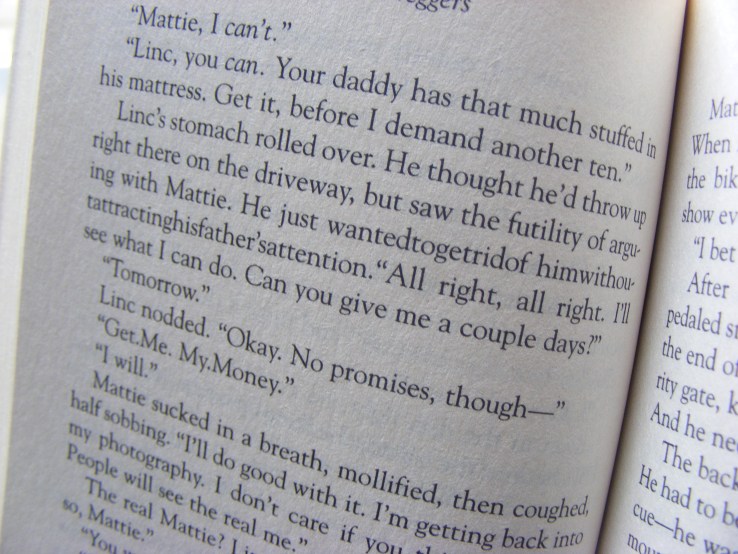
I’ve since learned that this, as the old song says, ain’t necessarily so. For example, take a look at this:

DSCF2374

I’m not going to name the title or the author, because I suspect they have better things to do than basic quality checking on foreign editions of their books. The publisher should be paying someone to, you know, check there are spaces in between words. The publisher is Mira Books of Chatswood, Australia, and they do deserve naming and shaming. However or whoever you’re publishing, there’s no excuse for letting a book out looking like that.

100 untimed books: lighting

63. lighting
63. lighting

The nights are drawing in. I’ve been using my daylight lamp every day since the beginning of August, and I have to say it’s helped. I’ve been very tired, but on the whole I haven’t been experiencing the low moods that I usually get in these early autumn months.

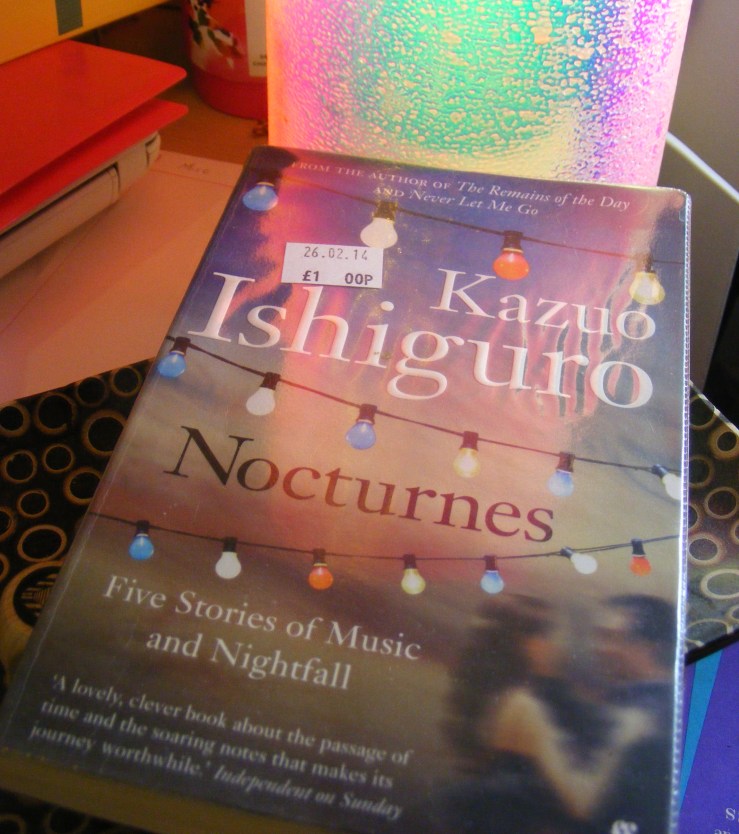
So here we go. Five stories of music and nightfall.

100 untimed books

E-books versus tree books: a false dichotomy

Books

Tree books are dead. No, wait, e-books are dead. E-books are e-books and tree books are tree books and never the twain shall meet. Loyal paper book readers will never read an e-book. Converts to e-readers will never pick up a physical book again. People fight to the death over this. TO THE DEATH!

Really, if you believe the press, it all sounds like an even pettier version of the Montagues and Capulets biting their thumbs at each other. But, while I know several diehards who wouldn’t know how to turn the page on a Kindle, and I’m sure there are a few e-book zealots who have pulped all the paper books they’ve ever owned, most of the serious readers of my acquaintance flick between paper books and e-books without a second thought. Why argue about formats when you could be, you know, reading?

As a reader

For me, it comes down to practicalities. On the most obvious level, if a book was printed in 1995 and nobody’s thought of releasing it in e-book format, then of course I’m going to read the hard copy. Or if it only exists in electronic format, then it goes on the e-reader.

In fact, the format in which I choose to read a book often depends on where I am when I decide I want to read it. At work? I’ll probably pick up a paperback in one of the station bookshops on my way home. At home? I’ll download it to my Kobo. If I’m standing in a charity shop, slightly bored and wondering what to read next? I’ll get the most interesting looking thing on the shelf.

Still on the theme of convenience: these days, most of my reading time is on the train, so the question of size becomes important. If I can’t fit it in my handbag, it’s probably not going to get read. And yet… I read War and Peace this year. I’d attempted it a couple of times before, but the physical copy is so big and so bulky, and it’s so easy to lose track one’s track among the various plot themes, that I never managed it. Having it on the Kobo (free from Project Gutenberg, I might add) I was able to just keep plugging away, a couple of chapters every day, until I got to the end.

On the other hand, if I’m going somewhere damp (the bath, for example, or northern Spain), I have no desire to risk an expensive piece of electronic equipment. As it happened, all the books I took to Spain with me came back in the state in which they left, and I’ve never dropped a book in the bath, but there’s always a first time.

In short, I tend to read books in whatever format I have them, and to obtain them in whatever format suits me at the time. Whatever makes it easiest for me to read, in fact.

When you dig into the debate, it often comes down to nebulous feelings about what the experience of reading should be like, and an aesthetic appreciation of the book as an object. Which affects my choices some of the time, but not always.

I’ve finished 45 books so far this year. 11 were e-books. 7 were hardbacks. Of those hardbacks, two were the family copies of Alice’s Adventures in Wonderland and Through the Looking Glass, and three were John Buchan thrillers in the Nelson edition, which I’ve been collecting. I had no particular connection to any of the other hardbacks, or to any of the paperbacks, as objects. Indeed, some of them I read specifically to see if I really wanted them taking up space on my shelves, and now they aren’t on my shelves any more.

People talk about the smell of books. I’ve never quite got this. In my experience, old books smell of dust and possibly damp, and new books smell of solvent or nothing. But then I don’t have a very good sense of smell, so this argument doesn’t do much for me.

Books can be lovely things. They can also be hideous. (My photo above doesn’t do justice to quite how hideous the cover of Mulligan is.) To be honest, so long as the loveliness or the hideousness doesn’t get in the way of my reading the story, I don’t care.

As a writer

Similarly, I really don’t mind which format somebody chooses to read my book.

In pure financial terms, e-books make me more money. I can charge half the price for an e-book and still make twice as much as I would from the sale of a paperback. (Which is why the high price of a lot of mainstream publishers’ e-books is annoying, because I know what the mark-up is. I’m unlikely to spend more than about a fiver on an e-book, unless I’m really desperate.)

On the other hand, I miss out on the phenomenon where one of my readers says to one of their friends, ‘You might like this one,’ and lends them their copy. And the one where the friend of one of my readers, having a sneaky nose along their bookshelves, sees my book, thinks, ‘oh, that looks interesting,’ picks it up and starts reading.

Why should I care about that? you might well ask. Or, indeed, why am I not up in arms about it? I don’t make any money off that.

No, not immediately – but it means that another person has heard of me, has had the opportunity to see if they like my writing. My book doesn’t get into libraries or bookshops, so I’m reliant on this sort of interaction to spread the word. And anyway, since that’s the main way that I’ve discovered authors whose work I love, it feels a bit off to whinge about it. I very rarely buy a book by an unknown author at full price, and I don’t believe that many other readers do.

Anyway, maybe they then buy their own copy. Or maybe they nick the copy from their original owner, who buys a replacement.

You never know.

Save

100 untimed books: how loud your heart

84. how loud your heart

I’m reading this very slowly indeed: one poem or extract every Sunday. I had to skip ahead some way to find this, from a paraphrase of Psalm 57 by Mary Herbert, Countess of Pembroke:

My heart prepar’d, prepared is my heart
To spread thy praise
With tuned lays:
Wake my tongue, my lute awake,
Thou my harp the consort make,
My self will bear a part.

But really the whole book seems to speak to this prompt.

100 untimed books

Looking forward to Kingsblood

2013 August Wells 076Ankaret Wells, whose books are great and who I credit with showing me that self-publishing could be far more fun and far less trouble than I had always feared, has teamed up with Irene Headley, whose writing is always insightful and often hilarious, to write a new fantasy series, Kingsblood. And it looks like it’s going to be fantastic:

The bitter years of the Cousins War are over… for now.
The grandsons of Kharis Sidonia are dukes and kings, and the last kinsmen of the deposed King Gilbert the Bloodless are hunted exiles… for now.
Winter holds armies at a standstill, and in Briege, the suitors of the new Duchess of Bergomance protest that they are at her feet… for now.
Before the thaw breaks, Ambrosia of Bergomance must choose a husband, and place her people in the hands of another, greater, power, By her side are two men – her uncle Thomas of Wharram, loyal to his family above all else, and Nicolas ás Ithel, who has spent most of his life as a hostage.
Thomas and Nicolas become lovers and allies…
For now.

There are extracts at Ankaret’s blog and at Irene’s. The first work is coming out in December.

I’m really looking forward to this one.

100 untimed books: the rent’s not paid

82: the rent's not paid
82: the rent’s not paid

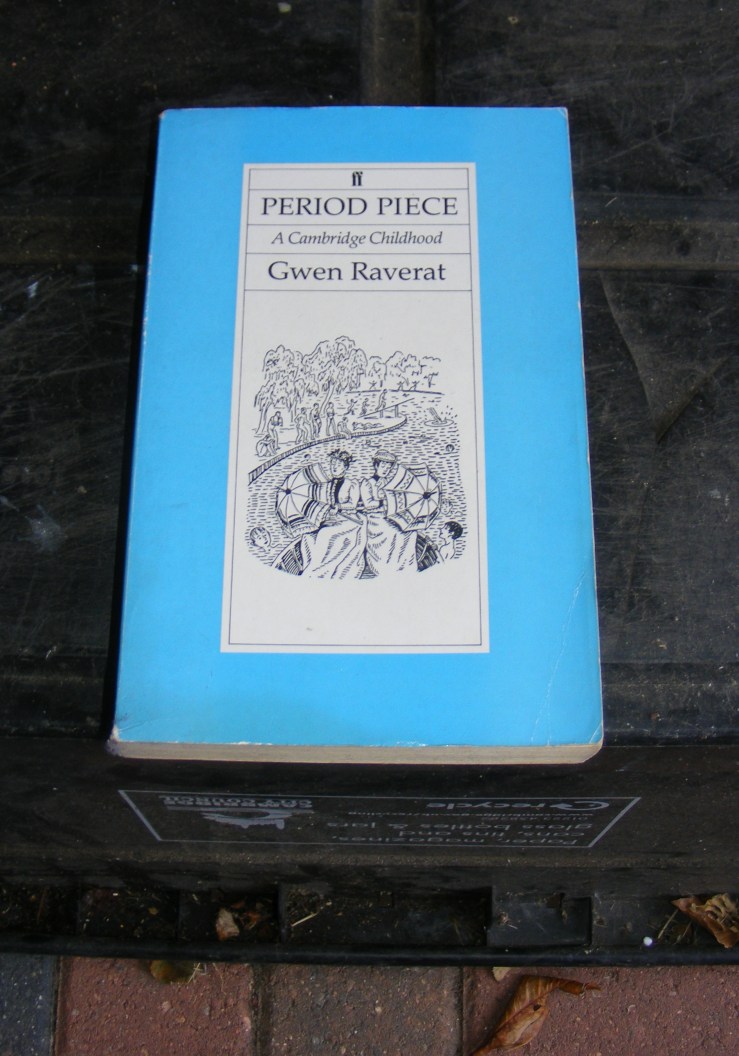
I am pleased to say that we are in fact up to date with the rent. But it is rather dispiriting to consider that, Cambridge property prices being what they are, we will probably be renting for some time yet. I believe that this was not – for a variety of reasons – something that Gwen Raverat had to deal with.

100 untimed books

100 untimed books: thinking of

91: thinking of
91: thinking of

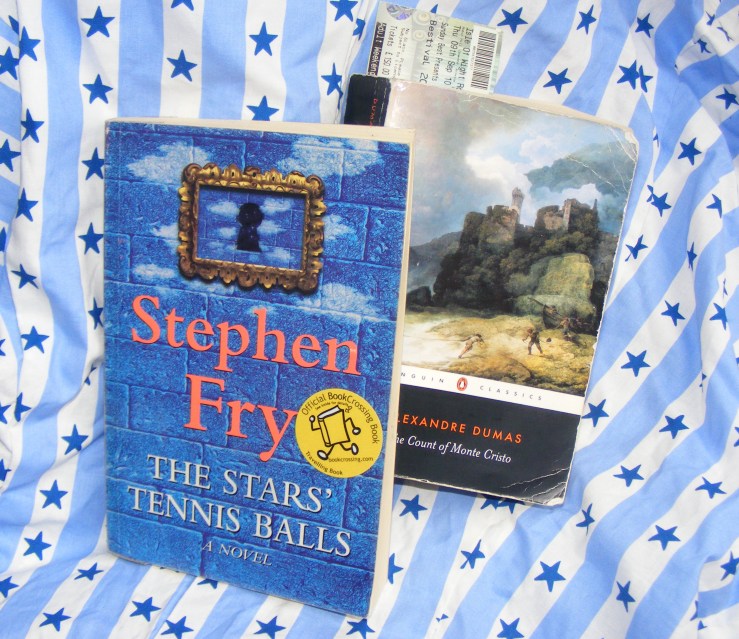
If I’m put on the spot about my favourite book (for example, here), I almost always go for The Count of Monte Cristo. It’s very long, it simultaneously plays to and undercuts Gothic tropes, it has a ton of moral ambiguity, and there is a lot of early nineteenth century opera and a lesbian elopement.

Stephen Fry, regrettably, omits the operatic lesbians, but I really can’t complain about such an affectionate, funny, adaptation as The Stars’ Tennis Balls. He isn’t just thinking of The Count of Monte Cristo, he’s thinking of it with real fondness.

I’ve got a rather long (and probably you-had-to-be-there) anecdote in which I tried to explain one of the jokes to my brother in the driving rain on the Camino Inglés. You might see it in a month or so, when I’ve got round to writing up the journey.

100 untimed books

Sometimes writers don’t write, and that’s fine

Trust me: I'm a card-carrying author
Trust me: I’m a card-carrying author

This week I was enraged, yet again, by a reappearance of the ‘writers write, and nothing stops them writing’ meme. I won’t link to the specific instance, because it was posted under lock, but here’s a (comparatively inoffensive) case of the genus in the wild. (It was the first one that came up on Google. I do not endorse the contents of the rest of the blog, either.)

Articles like this begin with ‘writers write’, which is true, if inane. I said myself, the other week, that the best way to get good at something is to do it and do it and keep doing it.

They then extrapolate.

Some of them add, implicitly or explicitly, ‘every day’. Some of them add, implicitly or explicitly, ‘and don’t make excuses’. Some of them end up implying that any week – any day – that you’re not writing, you’re not a writer.

Which is bullshit.

This is the longest thing I’ve written in days. I’ve written no fiction at all since last Wednesday, and I could quite see this state of affairs continuing all summer. Have I suddenly stopped being a writer? Of course not.

Here is a selection of reasons why I haven’t been writing:

  • I wanted to read Alistair MacLean instead.
  • I have had a lot going on in my day job.
  • I spent last Saturday at Norwich Pride.
  • I’d never seen Die Hard and we had to spend an evening remedying that state of affairs.
  • It was my birthday.
  • A fanfic I’ve been following was updated, so I read that instead.
  • I was off sick for two days and good for nothing other than sleeping and watching Star Trek.
  • I’m not a morning person.

I could point out the ways that all those things that don’t look like writing could contribute to making me a better writer. I could tell you that reading and watching other creators’ work gives me tools to use in my own. I could tell you that time in the ‘real world’ expands the material I have to write about. And that would all be true, but that’s not my point.

Because really, it all comes down to this:

I’ve been really tired and haven’t felt like writing.

That ‘excuse’, yes.

Here are some other reasons, which don’t apply to me, but which do apply to plenty of other writers who may not be in the physical act of writing at this moment:

  • childcare responsibilities;
  • other care responsibilities;
  • having to work two or more jobs to make ends meet;
  • chronic illness or disability;
  • wanting to enjoy that holiday of a lifetime and not spend it on things they ‘should’ be doing.

I’m sure there are many, many more. Feel free to mention them in comments.

These days it’s increasingly difficult to make a living by writing alone, and most of us therefore don’t have the luxury of time devoted to writing. We have to fit it in around the edges, and sometimes the edges themselves are filled up with things like other responsibilities, or sleep, or even fun.

Here’s the thing: I know, because I’ve been here before, and I’ve come through it and written again, that it’s not the end of me as a writer. I very much doubt that anyone would try to tell me that it was, now that I’ve finished and published a book and won an award with it.

I put the first word of Speak Its Name on the page in November 2007. I approved the finished work in January 2016. Did I write every day of those eight-and-a-bit years? Of course I didn’t. And it’s the better for it.

But I also know people who have been discouraged by this ludicrous gatekeeping, who have believed the pernicious myth that because they couldn’t or didn’t devote every spare minute to writing they weren’t ‘really’ a writer, and stopped altogether.

Bullshit, I say again. Stop telling people this. It’s untrue and it’s harmful. It’s not encouraging people to write; it’s doing the opposite.

You don’t get anywhere as a self-published author by caring what other people think about you, but it’s taken me a long time to get past caring what other people think about me. I didn’t tell very many people that I was writing, and it was largely due to the fear of coming up against this idea that I wasn’t.

I am not excusing – or asking you to put up with – the tedious people who bang on and on about how much they’d like to write, or expect you to listen to their detailed exposition of what they would write if only they had the time. You could consider sending them an invoice for your skills as a writing consultant. Certainly if one more person tells me that everyone has a novel in them, I shall find it difficult to restrain myself from attempting to extract theirs by violent means.

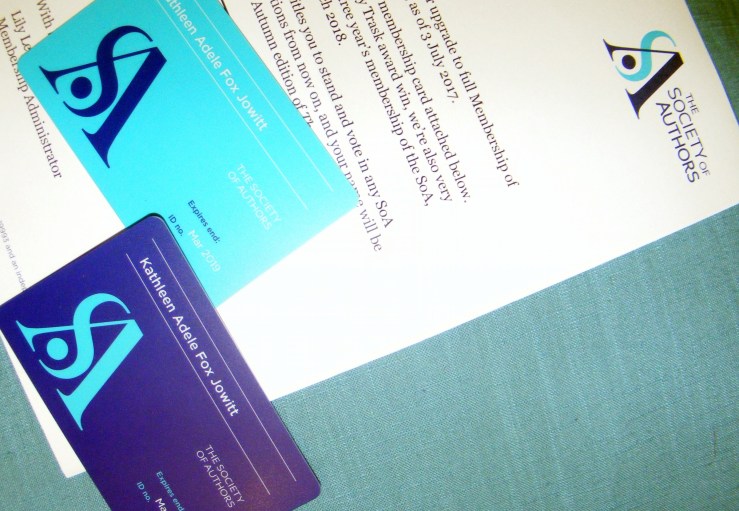
But you don’t get to tell people that they’re not a writer. I don’t, either. (That picture at the top of the page? Means basically nothing in terms of my right to assess other people’s writer status.) Nobody does.

100 untimed books: joyful

37. joyful
37. joyful

This book seems to have attracted a lot of adjectives. Beyond KARSAVINA’s ‘enchanting’ on the front cover, the flaps have ‘fascinating’ (three times), ‘exciting and vivid’, ‘enchanting’ again (once the full Karsavina quotation, and once from the News Chronicle), ‘delightfully impetuous’ and ‘irresistibly impetuous’ (the Observer and the Daily Mail respectively, agreeing on something for once), ‘beautiful’, ‘valuable’, ‘charming’, ‘enthralling’, ‘almost a great book’ (The Times, damning with faint praise, there; see also ‘in spite of its horrible title’ from The Spectator), ‘brilliant’, ‘remarkable’, ‘splendid’, and ‘unique’.

And, if that wasn’t enough, I am going to add ‘joyful’.

100 untimed books