100 untimed books: borders

72. borders
72. borders

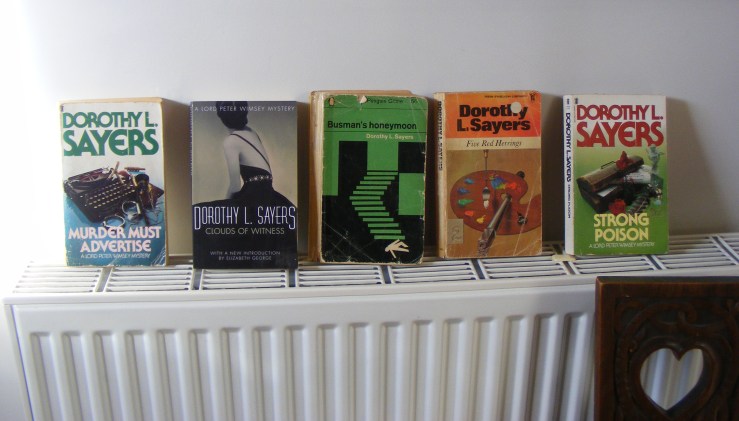
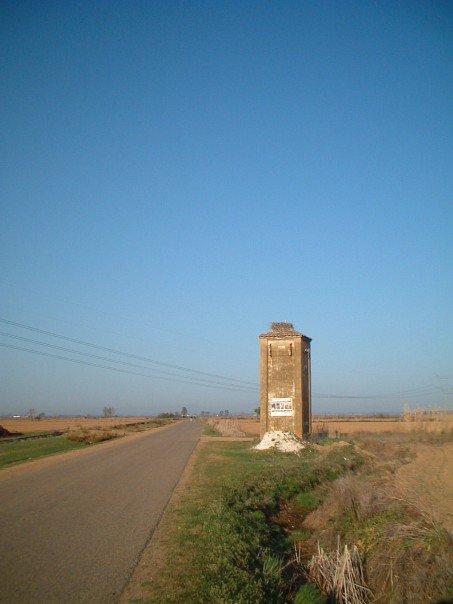
Imaginary countries have borders, just like any others. If you’re interested in where the Ruritanian border might be, here‘s a good post on the question.

I really ought to move the Bronte juvenilia up here, but that would mean moving the other Brontes there, too, and anyway the Buchans are only on this shelf until I complete the set of the red Nelson edition on the shelf above (not shown), and, and…

I don’t have enough bookcases.

100 untimed books

LGBTQ Christian fiction book recs

20161008_153542

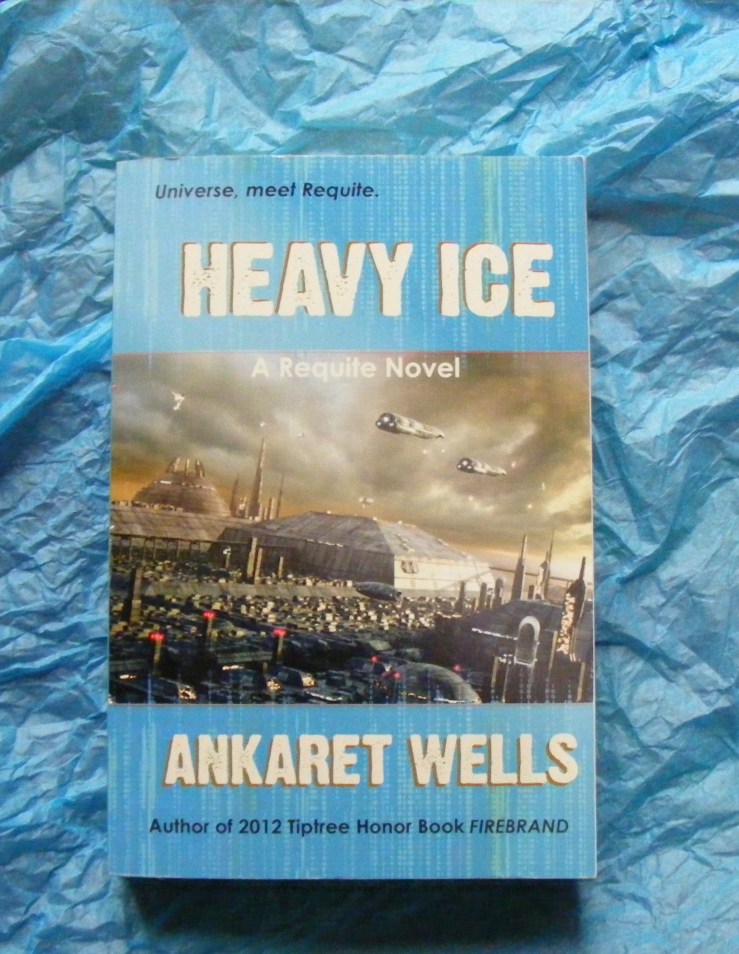
Note: this began as a spontaneous blog post in 2016 and has metamorphosed into an ongoing rec list over the years. I add relevant books to it as I read them, and am always on the lookout for more. The fact that a book appears on this list doesn’t necessarily imply that I thought that it was particularly good, just that it matches the criteria in the third paragraph below.

I got chatting on Twitter with the user of the Diverse Church account about books with LGBTQ Christian characters, and how few of these there actually are.

Now, at least part of the reason I wrote one (now two) of my own was that I was frustrated with the lack of representation. However, I’ve found a few over the years, and it only seems fair to share the intel. In this post, I’m only listing books I’ve actually read, but in some cases it was a while ago. I’m adding warnings, but there’s always a possibility that I’ll not have remembered something horrible. Proceed at your own risk!

While not all of these end with hugs and puppies, they do start from, or at least eventually arrive at, the assumption that being Christian and being LGBTQ are not incompatible states, and call, in one way or another, for affirmation.

As for things I haven’t read (yet)… I’ve found Jesus in Love to be a very interesting source of recommendations. There’s also the reliqueer tag on LGBTQ Reads. Do add your own – either for individual books or authors, or for rec sites or round-ups – in comments!

On to the books…

Michael Arditti, The Celibate. The AIDS crisis and the narrator’s own personal crisis meet head-on. Warning for some gory Ripperology and [see spoilers in footnotes]*

Michael Arditti, Easter. Set in a London parish over the course of one Holy Week, with multiple storylines playing out across the congregation, seen from multiple perspectives.

Jaye Robin Brown, Georgia Peaches and Other Forbidden Fruit. US young adult. The narrator is the daughter of a radio minister, is herself a committed Christian, and is an out lesbian. None of which is a problem in Atlanta, but when her father remarries and the reconfigured family moves to a more conservative part of Georgia, she agrees to go back in the closet, just for the time being. Things only get more complicated when she falls for one of the girls at her new church.

Paula Boock: Dare, Truth or Promise. New Zealand teen fiction of the ‘challenges of high school’ type. One of the main characters is Roman Catholic, and there’s a lovely scene with her priest, which meant a lot to me back in the day.

Carol Anne Douglas: Sister Matthew and Sister Rose: Novices in Love. Does what it says on the tin, really, with a side of magical realism. Both novices express a good deal of frustration with the rules of the convent and the Roman Catholic Church, but at least one of them appears to maintain a strong faith in spite of this.

Catherine Fox: Lindchester chronicles (Acts and Omissions, Unseen Things Above, Realms of Glory). Barchester for the modern day, with outright representation of gay and lesbian characters and engagement with the politics.

Elena Graf: This Is My Body. A romance between an Episcopalian priest and former opera singer and a professor of philosophy, set in a seaside town in Maine. It’s very refreshing to read a romance between two women (two older women, at that) which deals seriously and respectfully with questions of faith.

Aster Glenn Gray: Briarley. M/M Beauty and the Beast retelling, in which one of the main characters is a parson in wartime rural England. I loved this. Full review here.

Radclyffe Hall: The Well of Loneliness. Definitely short in the hugs and puppies department, but I couldn’t leave it off the list, for much the same reasons as those that Kittredge Cherry explains over at Jesus in Love.

Heather Rose Jones: Alpennia series. (Daughter of Mystery, The Mystic Marriage, Mother of Souls). Low fantasy, early nineteenth century, Ruritanian. I ate these books up with a spoon, but I append a health warning as the fantasy element crosses over with the religious element in a way that might not work for everybody. Nevertheless, they do include at least one character who speaks positively and explicitly about the intersection between her faith and her sexual identity, and absolutely deserve their place on this list.

Kathleen Jowitt: Stancester series. (Speak Its Name, The Real World). I wrote these, on the basis that if you can’t find what you’re looking for you might as well create it yourself. Faith, identity, and student politics on a West Country university campus. 

A. M. Leibowitz, Anthem. A worship leader’s confessional song becomes an accidental Christian hit. Particularly entertaining for anyone who’s ever had to stifle a snigger at the unintentional suggestiveness of some worship music.

A. M. Leibowitz, Passing on Faith. The gay son of one homophobic pastor (and brother of another) falls for his affirming Christian neighbour. This is the first in a series; I haven’t read the rest of it yet.

Rachel Mann, The Gospel of Eve. Many fucked up things happen in this book, and it’s hardly a spoiler to say that there isn’t a happy ending, but the relationship between two women ordinands is by far the least fucked up. Or, at least, only in the way that relationships generally are.

J. B. Marsden, Bobbi and Soul. Romance between an Episcopalian priest and a doctor, with nice background details of rural Colorado and both main characters’ workplaces.

ed. Gabriela Martins, Keep Faith. This anthology of short stories includes two featuring queer Christian girls: “Godzilla” (Kate Brauning), a perceptive examination of what it’s like to be the token same-sex couple in a well-meaning affirming church youth group, and “Whatever She Wants” (Kess Costales), whose time-lapse structure works well to show how its narrator comes to understand who she is and how her faith fits with that. (I reviewed the anthology as a whole here.)

Jessica Pegis: The God Painter. Sci-fi novel in which the entire population of Earth is evacuated to another planet, and finds that all the old divisions still exist despite surprising new evidence. Reviewed here.

Alex Sanchez: The God Box. American teen fiction, also of the ‘challenges of high school’ type; engages the question head on throughout the book.

Caren J. Werlinger: In This Small Spot. A bereaved doctor enters an abbey, only to find herself falling for one of the nuns. I loved most of this and had some reservations about the rest of it. Reviewed here (spoilers, but there’s a warning before you get there).

Sarah L. Young, Plus One. Another American YA book. One of the narrators is bisexual and (presumably) Roman Catholic; there’s quite a lot of discussion about how her faith affects her reaction to an unplanned pregnancy, but she doesn’t seem to experience any conflict between her faith and her sexual orientation. Reviewed here. (Edit: unfortunately the publisher has folded, but you may be able to pick up a second-hand copy.)


* child sexual assault, connected with gay identity in a way that I found quite distasteful. But ultimately affirms the holiness of queer sexuality.

Morning people, morning pages (I’m not one and I don’t do them)

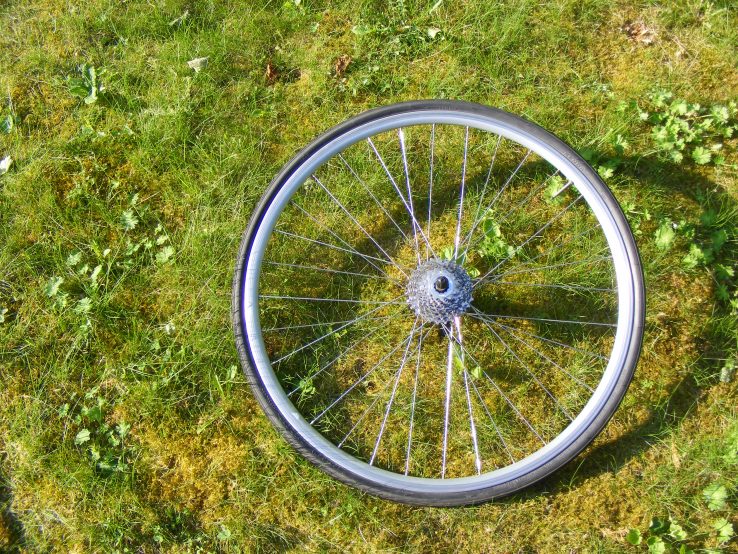
Season of bike lights

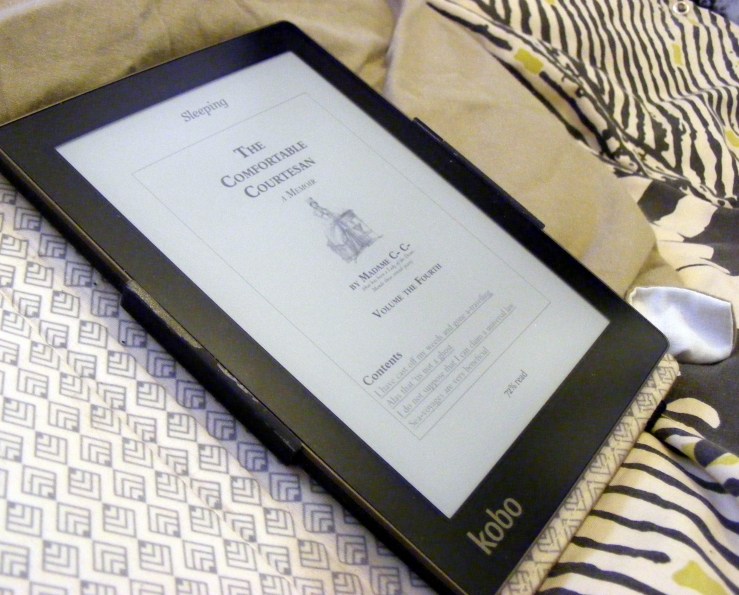
Last week I bought two things – well, I bought several things, but among them were:

I’d flicked through the book in the shop, as you do, but it was only when I’d brought it home and started at the beginning that the irony struck me.

I remembered the problem – my problem, I should say – with Julia Cameron.

Morning pages. Or, rather, her insistence that morning pages are essential, that, before you do anything else, you should dump the contents of your head into a notebook, and that if you have to get up early to do it, then that’s what you should do.

I understand the theory, and I am perfectly willing to admit that dumping the contents of my head into a notebook has been very useful to me on more than one occasion. I just can’t do it every day, and I definitely can’t do it first thing in the morning.

I am not a morning person. I am particularly not a morning person when it’s dark when I have to get up. And I have to get up at six thirty as it is. September hits me like a steamroller, every year, when the morning retreats that little bit further and whatever it is in my head that gets me out of bed stops working. If I were to set the alarm for 6.10am, I would spend the twenty minutes between it going off and my having to start getting ready for work lying in bed hating myself. I’ve tried it.

In fact, I was very happy to realise this morning that it’s now October and therefore not too depressing to look forward to the clocks going back.

And so morning pages are not an option for me. I am not even tempted. At this time of year, any sort of ritual that asks me to get up earlier than strictly necessary is not an option for me. So I’m not doing them.

I will, however, read the rest of the book with interest and an open mind.

It is not exactly news to me that some techniques work for some people and don’t work for others. What’s changed is my reaction to discovering that this is one that didn’t work for me. In past years I’d have given up on the whole thing in disgust. Now I’m prepared to pick and mix.

What I am working on at the moment is retaining the baby – in this case, Julia Cameron’s otherwise humane, compassionate and patient approach to the artistic process – while ditching the bathwater. She runs the bath too hot for me.


100 untimed books: steps

92. steps
92. steps

I’m going to walk the Camino Inglés to Santiago de Compostela next year. The journey of a thousand miles starts with a single step, so they say. The Camino Inglés isn’t anywhere near that long – it’s less than a hundred miles, in fact. Last time round I walked five hundred miles of the Camino Francés, but these days I have a full-time job.

Anyway, I reckon the journey starts with a decent guidebook.

100 untimed books

Unknown unknowns

... things go whooshing past
… things go whooshing past (the peloton sweeps round the Woking one-way system during the Tour Series 2013)

Wheels (that’s still its working title, and it’s still not going to be its real title) is rolling along quite nicely, sitting just under fifty thousand words. Much of what’s there at the moment is dialogue, stick figures having witty conversations in a thick fog. I’ll have to go back and put in the descriptions later.

So far, so familiar. What is a new experience for me is writing a first person narrator who’s… not unreliable, exactly, but not at all objective. True, I ended up with something similar in Speak Its Name, written in claustrophobically tight third person with a point of view character who wouldn’t come out even to herself. The difference is, Speak Its Name didn’t start out that way. It started out with multiple points of view, with multiple foibles and inconsistencies, but where I always knew what was ‘really’ going on.

Cutting everything down to fit into Lydia’s point of view was interesting. There are things that I knew and she didn’t. The most significant one is that Becky isn’t a trinitarian. If Lydia had known that – well, she’d have to deal with that, and it would add a huge chunk of drama onto a part of the book that really didn’t need any more drama. So I know that, and so do some of the other characters, whose thoughts on the matter we don’t hear, but Lydia never finds out.

Writing first person from scratch, I’m having to spend all my time in one character’s head, and I keep discovering things that he doesn’t know, and can’t know. He’s self-centred and often oblivious to subtext and body language. A friend read through the first couple of chapters few days ago, and made a throwaway comment about another character’s ‘flirtatious wink’.

‘Hang on,’ I said – to myself, ‘that wasn’t flirtatious!’ I wondered if I ought to clarify that it wasn’t flirtatious, and, if so, how.

Except the more I thought about it, the more I realised that… yes, it does make an awful lot more sense if she is flirting with him. Which puts a whole new complexion on the first half of the book, and leaves me with the problem of how to have her get over him, but it also makes the end a lot more convincing.

So now my challenge is to incorporate this new knowledge into the draft. My narrator can stay oblivious, but I can’t.

J. K. Rowling, symbolism, and context

I thought that I really ought to write something about the recent kerfuffle around J. K. Rowling’s revelation that Remus Lupin’s lycanthropy is a metaphor for HIV, which I thought we all knew already, but apparently not.

More specifically, I thought that I really ought to write something about the claim, which took me right back to the Dumbledore-is-gay revelation, that if she wanted to write a gay character she should just write a gay character and stop fannying around with all this symbolism.

Then I thought that I really couldn’t face writing something about it.

Then I remembered that I already had.

Section 28 was in force when I was at school. This is what it said:

a local authority “shall not intentionally promote homosexuality or publish material with the intention of promoting homosexuality” or “promote the teaching in any maintained school of the acceptability of homosexuality as a pretended family relationship”

Local authorities are responsible for, among other things, public libraries and state schools, and one of the effects of this was the complete absence of LGBT characters in children’s and teen literature that was written or published in the UK. We didn’t have the British equivalents of David Levithan, Alex Sanchez, or Nancy Garden. Nobody would publish them. The one book with any queer characters in my school library that I remember was Dare, Truth or Promise – written and published in New Zealand. Mentioning Nancy Garden above reminds me that the school library did have The Year They Burned The Books. Oh, the irony.

(Somebody asked me which book that was in. It’s kind of a spoiler, but if you click on the tweet it should take you to the question and my answer.)

And it took a good few years for the UK teen publishing world to catch up, and yes, I do have a horse in this race:

Which is not to say that I think that it was a good idea to come out now (pun not exactly intended, but I’m not deleting it now I’ve noticed it) and say what the symbolism actually, like, means. If the reader didn’t pick it up the first time round then bashing them over the head with it isn’t going to help, and it’s just going to annoy the ones who got it, didn’t like it, and were doing their best to ignore it.

100 untimed books: best years

38. best years
38. best years

I picked this book up because of the title; I’ve been thinking a lot about spirals and labyrinths, and the recursive nature of experience, of late, and this does have some things to say about that.

Molluscs only ever make a single shell, but it’s one they’ll never grow out of… They are among the few animals on the planet that wander around carrying with them the same body armour they had as babies; the pointy tip or inmost whorl is the mollusc’s juvenile shell. Day by day, the mollusc shell slowly expands, making room for the soft animal growing inside.

A mollusc carries its best years around with it. It carries all its years around with it.

100 untimed books

All roads lead to Santiago

Buen camino!
Buen camino! (ignore Falconer’s Lure; it just happened to come in the same batch of post)

Over the next few months I’ll be writing about my preparation for walking the Camino Inglés, from the north coast of Spain to the city of Santiago de Compostela. I’m planning to do the walk in May next year, fitting it in between my stepsister-in-law’s wedding and my father’s seventy-fifth birthday party. We’ll see how that works.

I walked the Camino Frances in 2007, between university and the real world, and have been wanting to do it again ever since. However, taking eight weeks to walk it isn’t really compatible with having a full-time job, and so I’d assumed that I’d have to wait until retirement – which is a way off, and maybe even getting further away. It only occurred to me fairly recently that I could fit the Camino Inglés into a fortnight.

As always, the things I most need to work on are physical fitness and the language. Living in Cambridge, I don’t get much practice with anything steeper than the bridge over the Cam, so I’m thinking about nipping down south to stay with my parents and walk the Isle of Wight Coast Path. As for the language, I suspect that the (Castilian) Spanish that I learned last time around will come back to me, but I’d also like to learn some Galician as well, since my pilgrimage will be entirely within Galicia.

I’ll write more about this as my plans crystallise. In the meantime, my friend Jo is cycling the Camino Frances, along with her husband and another friend, as I write, and so I’m going to send you over to her blog, Wheels Along the Camino, for some stunning photos and thoughtful reflection.