I was delighted to receive my print copy of Purple Prose: Bisexuality in Britain a couple of weeks ago. It’s a great book about what being bisexual is really like, as told by people who are, and who aren’t apologising for it.
It tackles some of the most biphobic myths head-on and equips the reader to reject them. It talks about being bisexual and disabled, being bisexual at work, being bisexual as a person of faith, being bisexual as a person of colour, about different configurations of relationships… the list goes on. There’s a real sense of community about it. I wish I’d read it years ago; it would have saved me unutterable quantities of angst.
My (admittedly still somewhat angsty) poem on bisexuality, marriage and vocation concludes the chapter on bisexuality and religion, and I’m proud to have been part of this project.
I’ve been thinking more about Me Before You and ableism, and I think I’ve finally managed to pin down what disturbs me about the book. Spoilers, as before, for that book, and also for Wide Sargasso Sea by Jean Rhys and Jane Eyre by Charlotte Brontë, and for my Speak Its Name. As ever, there’s a picture first so that you have a chance to click away.
always another way of looking at the world
Another story from another book club
My current book club has a practice of actually discussing the book, which was a bit of a culture shock, but, you know, I’m getting used to it. There was an interesting discussion last time around about Wide Sargasso Sea, Jean Rhys’ reply to Jane Eyre. One member of the group had found the book dissatisfying. The bookseller had described it to them as a ‘feminist work’, and they were disappointed that the main character, Antoinette, retained very little agency and ended up thoroughly subjugated – in fact, in the same attic in which Brontë’s Rochester had incarcerated her over a century before.
I felt, and argued, strongly that Wide Sargasso Sea is indeed a feminist work. I don’t think that the fact that Jane Eyre still happens, that Rochester’s wife still ends up in the attic, stops it being feminist. I don’t believe that a book has to end ‘and they smashed the patriarchy and lived happily ever after’ for it to be feminist. I believe that feminist literature has as much of a responsibility to present the problems inherent in the world in which we’re currently living, and the consequent detriment to women, as it does to offer a glimpse of a world beyond that. If not, Virago’s output for most of the seventies, eighties and nineties was a huge waste of time. There has to be a place for books that portray the unpleasant aspects of the world we live in.
I put some things into Speak Its Name that I don’t agree with. Religiously-motivated abuse, homophobia, one-true-wayism. In fact, I put them in because I don’t agree with them. I think they’re absolutely awful. But they happen. I don’t think they should happen. I don’t think they have to happen. If my writing Speak Its Name (and generally being loudly queer and Christian) can contribute in even a minuscule fashion to a world where they stop happening, then I’ll be delighted. Besides, a novel where nothing controversial ever happens and all the characters agree with the author’s worldview is not going to be a very good book*.
So why am I still so suspicious of Me Before You?
After all, I’ve just said that it’s not anti-feminist to point out that it wasn’t much fun being a woman in a westernised culture in the early nineteenth century.
It’s not homophobic to point out that it’s not much fun being a lesbian in a socially/religiously conservative milieu.
It doesn’t have to be ableist to point out that it’s not much fun being disabled in early twenty-first century Britain.
The problem for Moyes is, I think, that she hasn’t quite picked up how much of the unpleasantness is contextual.There are moments where she almost gets it – the scene at the racecourse, with its accessibility nightmare topped off by the revelation that Will doesn’t like horseracing anyway, which would probably have emerged earlier had Lou not gone into ‘able saviour’ mode, is a lovely satirical demonstration of the social model of disability at work. But Moyes and her hero Will both seem to have bought into the idea that this is how things are always going to be. Disabled parking spaces will never be in an appropriate place, ramps will always be too steep, well-meaning non-disabled people will never stop to ask what a disabled person actually wants or needs… This is always going to be a world, says Me Before You, that a disabled person literally would not want to live in. And it never stops to ask whether that might be something to do with the world as opposed to the person.
I don’t believe that. I don’t believe that’s the way that the world has to be. Sadly, I don’t believe that Me BeforeYou‘s lazy assumptions about what being disabled is actually like have contributed to changing it.
*There were originally three speeches in Speak Its Name that express my pure opinions, which I would have happily claimed for myself regardless of who was saying them or what the context was. Two of them I gave to Peter. One of those was the rant about bus preservation, which isn’t particularly relevant to this post and got deleted anyway. The other comes a couple of paragraphs before the end of the Summer chapter, where he tells Lydia that God always welcomes her, and that anyone in the Church who doesn’t has got it’s wrong. That’s all me. Well, my High Church reader pointed out that Peter would say ‘the Church here on earth’, but apart from that it’s me.
And the third was Abby’s point, very near the end, about the hidden bisexuals. At the time I wrote it, that was my own experience. Not any more – but that’s another story.
In this post I talk about unreliable narrators in works by various authors, some of whom are or were very prolific, and some of whom are famous for only one or two works. I don’t name any of the books, but in some cases it won’t be difficult to work out. I also discuss the career choices of characters in Little Women, The Princess Diaries, and the Chalet School series. I’d advise you not to read on if spoilers particularly bother you.
I am also more opinionated than usual, and don’t apologise for it, though I respect your right to enjoy books that I don’t, or not enjoy books that I do. This is, as ever, implied.
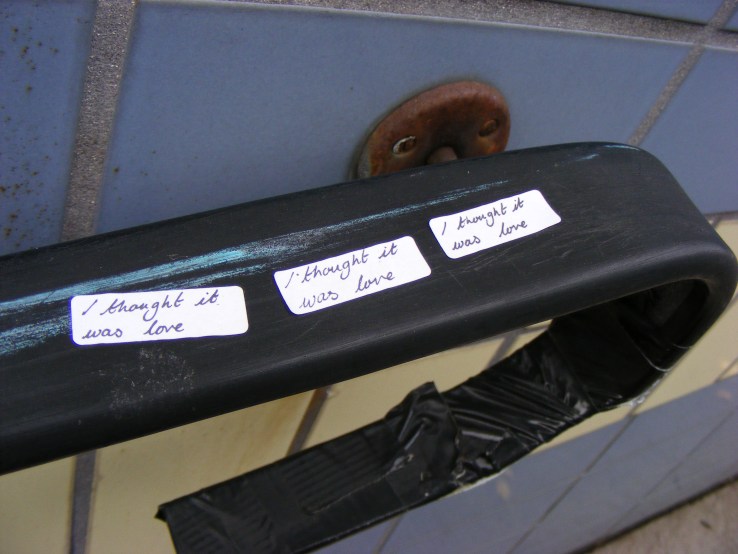
Here follows a picture of some street art to give you a chance to escape.
“I thought it was love”
I mentioned a couple of weeks ago that I enjoy writing unreliable narrators. I enjoy reading them, too. I like to see convincing human beings with their own little biases and weaknesses, who think they’re being ever so objective but are in fact revealing their assumptions and prejudices on every page.
What I am not so keen on is the recent trend for malicious, self-consciously unreliable narrators, the ones who turn on you when you get to the end of the book and say, ‘oh, sorry, did you believe me? MORE FOOL YOU! I’m WRITING A BOOK, you know, and I can write LIES if you like!’
There are two reasons why it annoys me.
Firstly, it breaks the fourth wall and, with it, the implied understanding between author and reader.
I’ve never been particularly interested in reading about writers. I remember getting annoyed by the number of heroines of children’s books who wanted to be, or indeed became, writers. There are an awful lot of them, starting with Jo March in Little Women and stretching all the way to Mia Thermopolis in The Princess Diaries. Almost certainly further, in fact. Joey Maynard in the Chalet School was particularly irritating: she was in a school story, writing school stories. How far down did it go? There are good reasons for this, of course, like the dearth of respectable careers for women in the nineteenth century, but I always felt it betokened a certain lack of imagination.
Something of this irritation has carried over into my reaction to unreliable narrators. I don’t want to be reminded all the time that I’m reading something that’s been written. If good prose is like glass, allowing you to see through it to the story, then reading about writers writing is like a frosted bathroom screen – and getting to the end of a story that turns out to have an unreliable narrator is like walking through a plate glass window. Dramatic, but not actually something you want to do all that often.
Which brings me to my second objection. It’s a bit overdone, and I think it could do with a rest. It’s not just the thriller writers who are at it: big litfic names like Ian McEwan and Lionel Shriver have produced knowing, irritating, unreliable narrators in the last decade or so, and there are only so many times that I can enjoy reaching the end of a book to find that everything that came before is basically meaningless. Apart from anything else, a character who’ll pull that on you is probably not a character with whom you want to share too much headspace.
So far as I’m concerned, you get one free pass on that trick. Not one free pass per author, either. One free pass per reader. And Agatha Christie took mine, years ago.
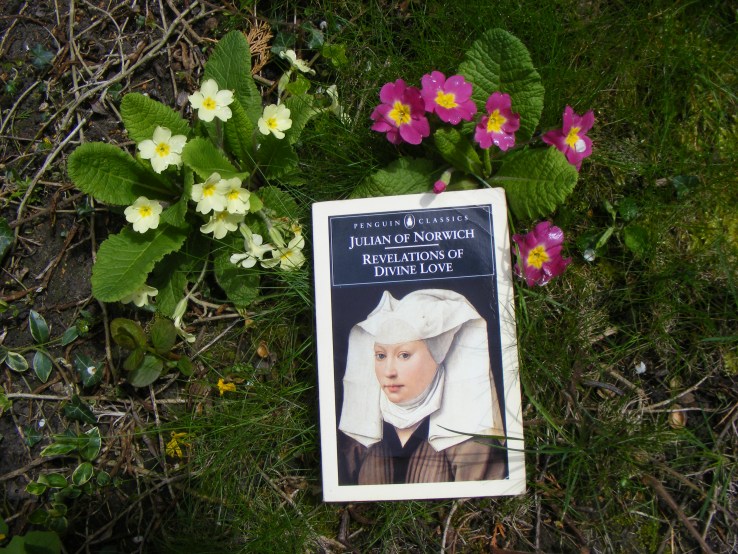
I’m delighted to appear in the first of a series of interviews over at the Christian Feminist Network. Have a look over there if you’re interested in my grounding in faith and feminism, my favourite medieval mystic, or my unfashionable thoughts on marriage.
Everything I know about black and white photography, and about putting people in front of vehicles to liven up a composition, I learned from my father.
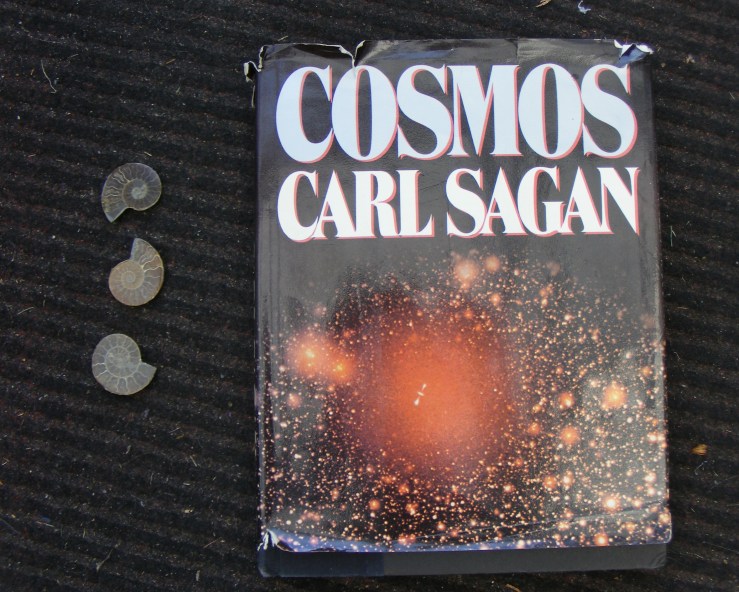
In our house Carl Sagan is a great favourite. We particularly enjoy his demolition of the ‘life on Venus’ theory, and the appearance of any logical fallacy is greeted with ‘Conclusion: dinosaurs!’
Never mind Venus, we don’t seem to have any dinosaurs in the house, but we did have some ammonites.
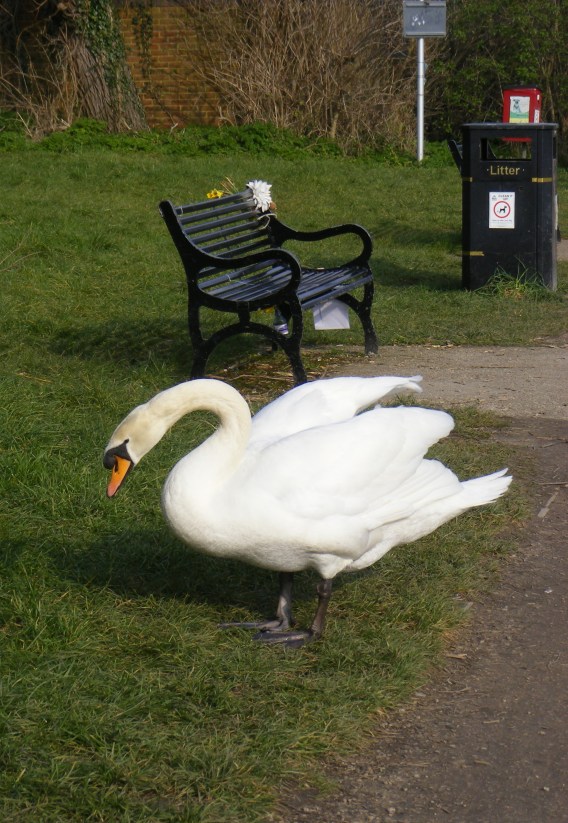
A threatening-looking swan, for no particular reason.
Well, anything within reason.
Well, anything within reason about Speak Its Name.
You can ask me about Wheels, too, though that’s almost certainly not going to be its name, and I might not answer due to a) being paranoid; b) not actually knowing the answer.
But seriously, if there are things you want to know about me and my writing, comment on this post, and I’ll do my best to give an interesting and coherent answer.
Considering how common illness is, how tremendous the spiritual change it brings, how astonishing, when the lights of health go down, the undiscovered countries that are then disclosed…what ancient and obdurate oaks are uprooted in us by the act of sickness…it becomes strange indeed that illness has not taken its place with love and battle and jealousy among the prime themes of literature. – Virginia Woolf
This has a certain relevance to the next book, yes…



 Kathleen Jowitt