LGBTQ Christian fiction book recs

20161008_153542

Note: this began as a spontaneous blog post in 2016 and has metamorphosed into an ongoing rec list over the years. I add relevant books to it as I read them, and am always on the lookout for more. The fact that a book appears on this list doesn’t necessarily imply that I thought that it was particularly good, just that it matches the criteria in the third paragraph below.

I got chatting on Twitter with the user of the Diverse Church account about books with LGBTQ Christian characters, and how few of these there actually are.

Now, at least part of the reason I wrote one (now two) of my own was that I was frustrated with the lack of representation. However, I’ve found a few over the years, and it only seems fair to share the intel. In this post, I’m only listing books I’ve actually read, but in some cases it was a while ago. I’m adding warnings, but there’s always a possibility that I’ll not have remembered something horrible. Proceed at your own risk!

While not all of these end with hugs and puppies, they do start from, or at least eventually arrive at, the assumption that being Christian and being LGBTQ are not incompatible states, and call, in one way or another, for affirmation.

As for things I haven’t read (yet)… I’ve found Jesus in Love to be a very interesting source of recommendations. There’s also the reliqueer tag on LGBTQ Reads. Do add your own – either for individual books or authors, or for rec sites or round-ups – in comments!

On to the books…

Michael Arditti, The Celibate. The AIDS crisis and the narrator’s own personal crisis meet head-on. Warning for some gory Ripperology and [see spoilers in footnotes]*

Michael Arditti, Easter. Set in a London parish over the course of one Holy Week, with multiple storylines playing out across the congregation, seen from multiple perspectives.

Jaye Robin Brown, Georgia Peaches and Other Forbidden Fruit. US young adult. The narrator is the daughter of a radio minister, is herself a committed Christian, and is an out lesbian. None of which is a problem in Atlanta, but when her father remarries and the reconfigured family moves to a more conservative part of Georgia, she agrees to go back in the closet, just for the time being. Things only get more complicated when she falls for one of the girls at her new church.

Paula Boock: Dare, Truth or Promise. New Zealand teen fiction of the ‘challenges of high school’ type. One of the main characters is Roman Catholic, and there’s a lovely scene with her priest, which meant a lot to me back in the day.

Carol Anne Douglas: Sister Matthew and Sister Rose: Novices in Love. Does what it says on the tin, really, with a side of magical realism. Both novices express a good deal of frustration with the rules of the convent and the Roman Catholic Church, but at least one of them appears to maintain a strong faith in spite of this.

Catherine Fox: Lindchester chronicles (Acts and Omissions, Unseen Things Above, Realms of Glory). Barchester for the modern day, with outright representation of gay and lesbian characters and engagement with the politics.

Elena Graf: This Is My Body. A romance between an Episcopalian priest and former opera singer and a professor of philosophy, set in a seaside town in Maine. It’s very refreshing to read a romance between two women (two older women, at that) which deals seriously and respectfully with questions of faith.

Aster Glenn Gray: Briarley. M/M Beauty and the Beast retelling, in which one of the main characters is a parson in wartime rural England. I loved this. Full review here.

Radclyffe Hall: The Well of Loneliness. Definitely short in the hugs and puppies department, but I couldn’t leave it off the list, for much the same reasons as those that Kittredge Cherry explains over at Jesus in Love.

Heather Rose Jones: Alpennia series. (Daughter of Mystery, The Mystic Marriage, Mother of Souls). Low fantasy, early nineteenth century, Ruritanian. I ate these books up with a spoon, but I append a health warning as the fantasy element crosses over with the religious element in a way that might not work for everybody. Nevertheless, they do include at least one character who speaks positively and explicitly about the intersection between her faith and her sexual identity, and absolutely deserve their place on this list.

Kathleen Jowitt: Stancester series. (Speak Its Name, The Real World). I wrote these, on the basis that if you can’t find what you’re looking for you might as well create it yourself. Faith, identity, and student politics on a West Country university campus. 

A. M. Leibowitz, Anthem. A worship leader’s confessional song becomes an accidental Christian hit. Particularly entertaining for anyone who’s ever had to stifle a snigger at the unintentional suggestiveness of some worship music.

A. M. Leibowitz, Passing on Faith. The gay son of one homophobic pastor (and brother of another) falls for his affirming Christian neighbour. This is the first in a series; I haven’t read the rest of it yet.

Rachel Mann, The Gospel of Eve. Many fucked up things happen in this book, and it’s hardly a spoiler to say that there isn’t a happy ending, but the relationship between two women ordinands is by far the least fucked up. Or, at least, only in the way that relationships generally are.

J. B. Marsden, Bobbi and Soul. Romance between an Episcopalian priest and a doctor, with nice background details of rural Colorado and both main characters’ workplaces.

ed. Gabriela Martins, Keep Faith. This anthology of short stories includes two featuring queer Christian girls: “Godzilla” (Kate Brauning), a perceptive examination of what it’s like to be the token same-sex couple in a well-meaning affirming church youth group, and “Whatever She Wants” (Kess Costales), whose time-lapse structure works well to show how its narrator comes to understand who she is and how her faith fits with that. (I reviewed the anthology as a whole here.)

Jessica Pegis: The God Painter. Sci-fi novel in which the entire population of Earth is evacuated to another planet, and finds that all the old divisions still exist despite surprising new evidence. Reviewed here.

Alex Sanchez: The God Box. American teen fiction, also of the ‘challenges of high school’ type; engages the question head on throughout the book.

Caren J. Werlinger: In This Small Spot. A bereaved doctor enters an abbey, only to find herself falling for one of the nuns. I loved most of this and had some reservations about the rest of it. Reviewed here (spoilers, but there’s a warning before you get there).

Sarah L. Young, Plus One. Another American YA book. One of the narrators is bisexual and (presumably) Roman Catholic; there’s quite a lot of discussion about how her faith affects her reaction to an unplanned pregnancy, but she doesn’t seem to experience any conflict between her faith and her sexual orientation. Reviewed here. (Edit: unfortunately the publisher has folded, but you may be able to pick up a second-hand copy.)


* child sexual assault, connected with gay identity in a way that I found quite distasteful. But ultimately affirms the holiness of queer sexuality.

Antoinette before Bertha

I’ve been thinking more about Me Before You and ableism, and I think I’ve finally managed to pin down what disturbs me about the book. Spoilers, as before, for that book, and also for Wide Sargasso Sea by Jean Rhys and Jane Eyre by Charlotte Brontë, and for my Speak Its Name. As ever, there’s a picture first so that you have a chance to click away.

always another way of looking at the world

Another story from another book club

My current book club has a practice of actually discussing the book, which was a bit of a culture shock, but, you know, I’m getting used to it. There was an interesting discussion last time around about Wide Sargasso Sea, Jean Rhys’ reply to Jane Eyre. One member of the group had found the book dissatisfying. The bookseller had described it to them as a ‘feminist work’, and they were disappointed that the main character, Antoinette, retained very little agency and ended up thoroughly subjugated – in fact, in the same attic in which Brontë’s Rochester had incarcerated her over a century before.

I felt, and argued, strongly that Wide Sargasso Sea is indeed a feminist work. I don’t think that the fact that Jane Eyre still happens, that Rochester’s wife still ends up in the attic, stops it being feminist. I don’t believe that a book has to end ‘and they smashed the patriarchy and lived happily ever after’ for it to be feminist. I believe that feminist literature has as much of a responsibility to present the problems inherent in the world in which we’re currently living, and the consequent detriment to women, as it does to offer a glimpse of a world beyond that. If not, Virago’s output for most of the seventies, eighties and nineties was a huge waste of time. There has to be a place for books that portray the unpleasant aspects of the world we live in.

I put some things into Speak Its Name that I don’t agree with. Religiously-motivated abuse, homophobia, one-true-wayism. In fact, I put them in because I don’t agree with them. I think they’re absolutely awful. But they happen. I don’t think they should happen. I don’t think they have to happen. If my writing Speak Its Name (and generally being loudly queer and Christian) can contribute in even a minuscule fashion to a world where they stop happening, then I’ll be delighted. Besides, a novel where nothing controversial ever happens and all the characters agree with the author’s worldview is not going to be a very good book*.

So why am I still so suspicious of Me Before You?

After all, I’ve just said that it’s not anti-feminist to point out that it wasn’t much fun being a woman in a westernised culture in the early nineteenth century.

It’s not homophobic to point out that it’s not much fun being a lesbian in a socially/religiously conservative milieu.

It doesn’t have to be ableist to point out that it’s not much fun being disabled in early twenty-first century Britain.

The problem for Moyes is, I think, that she hasn’t quite picked up how much of the unpleasantness is contextual.There are moments where she almost gets it – the scene at the racecourse, with its accessibility nightmare topped off by the revelation that Will doesn’t like horseracing anyway, which would probably have emerged earlier had Lou not gone into ‘able saviour’ mode, is a lovely satirical demonstration of the social model of disability at work. But Moyes and her hero Will both seem to have bought into the idea that this is how things are always going to be. Disabled parking spaces will never be in an appropriate place, ramps will always be too steep, well-meaning non-disabled people will never stop to ask what a disabled person actually wants or needs… This is always going to be a world, says Me Before You, that a disabled person literally would not want to live in. And it never stops to ask whether that might be something to do with the world as opposed to the person.

I don’t believe that. I don’t believe that’s the way that the world has to be. Sadly, I don’t believe that Me Before You‘s lazy assumptions about what being disabled is actually like have contributed to changing it.


*There were originally three speeches in Speak Its Name that express my pure opinions, which I would have happily claimed for myself regardless of who was saying them or what the context was. Two of them I gave to Peter. One of those was the rant about bus preservation, which isn’t particularly relevant to this post and got deleted anyway. The other comes a couple of paragraphs before the end of the Summer chapter, where he tells Lydia that God always welcomes her, and that anyone in the Church who doesn’t has got it’s wrong. That’s all me. Well, my High Church reader pointed out that Peter would say ‘the Church here on earth’, but apart from that it’s me.

And the third was Abby’s point, very near the end, about the hidden bisexuals. At the time I wrote it, that was my own experience. Not any more – but that’s another story.

Unreliable narrators: a pet peeve

In this post I talk about unreliable narrators in works by various authors, some of whom are or were very prolific, and some of whom are famous for only one or two works. I don’t name any of the books, but in some cases it won’t be difficult to work out. I also discuss the career choices of characters in Little WomenThe Princess Diaries, and the Chalet School series. I’d advise you not to read on if spoilers particularly bother you.

I am also more opinionated than usual, and don’t apologise for it, though I respect your right to enjoy books that I don’t, or not enjoy books that I do. This is, as ever, implied.

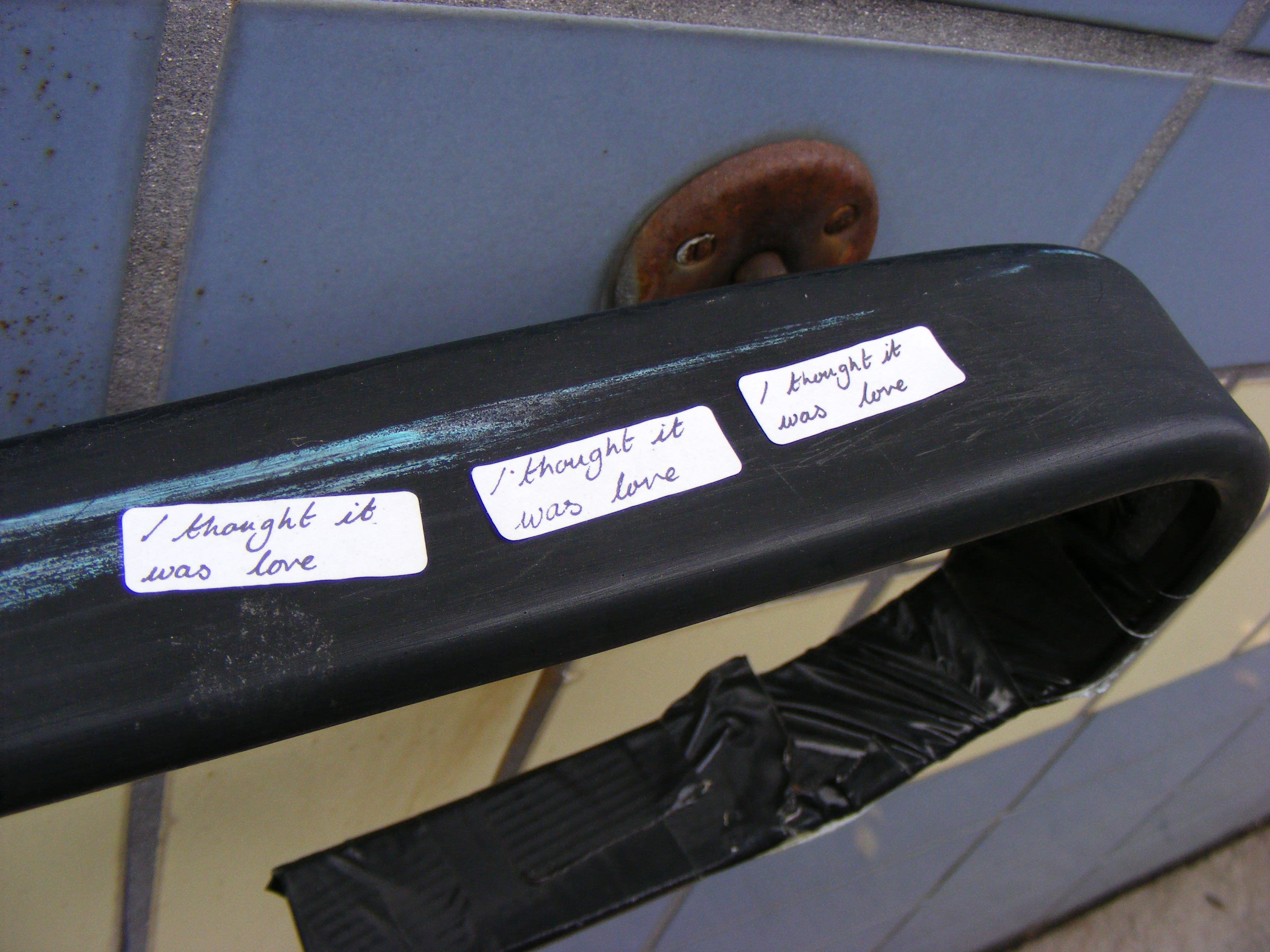
Here follows a picture of some street art to give you a chance to escape.

"I thought it was love"
“I thought it was love”

I mentioned a couple of weeks ago that I enjoy writing unreliable narrators. I enjoy reading them, too. I like to see convincing human beings with their own little biases and weaknesses, who think they’re being ever so objective but are in fact revealing their assumptions and prejudices on every page.

What I am not so keen on is the recent trend for malicious, self-consciously unreliable narrators, the ones who turn on you when you get to the end of the book and say, ‘oh, sorry, did you believe me? MORE FOOL YOU! I’m WRITING A BOOK, you know, and I can write LIES if you like!’

There are two reasons why it annoys me.

Firstly, it breaks the fourth wall and, with it, the implied understanding between author and reader.

I’ve never been particularly interested in reading about writers. I remember getting annoyed by the number of heroines of children’s books who wanted to be, or indeed became, writers. There are an awful lot of them, starting with Jo March in Little Women and stretching all the way to Mia Thermopolis in The Princess Diaries. Almost certainly further, in fact. Joey Maynard in the Chalet School was particularly irritating: she was in a school story, writing school stories. How far down did it go? There are good reasons for this, of course, like the dearth of respectable careers for women in the nineteenth century, but I always felt it betokened a certain lack of imagination.

Something of this irritation has carried over into my reaction to unreliable narrators. I don’t want to be reminded all the time that I’m reading something that’s been written. If good prose is like glass, allowing you to see through it to the story, then reading about writers writing is like a frosted bathroom screen – and getting to the end of a story that turns out to have an unreliable narrator is like walking through a plate glass window. Dramatic, but not actually something you want to do all that often.

Which brings me to my second objection. It’s a bit overdone, and I think it could do with a rest. It’s not just the thriller writers who are at it: big litfic names like Ian McEwan and Lionel Shriver have produced knowing, irritating, unreliable narrators in the last decade or so, and there are only so many times that I can enjoy reaching the end of a book to find that everything that came before is basically meaningless. Apart from anything else, a character who’ll pull that on you is probably not a character with whom you want to share too much headspace.

So far as I’m concerned, you get one free pass on that trick. Not one free pass per author, either. One free pass per reader. And Agatha Christie took mine, years ago.


Deleted scene: a committee meeting

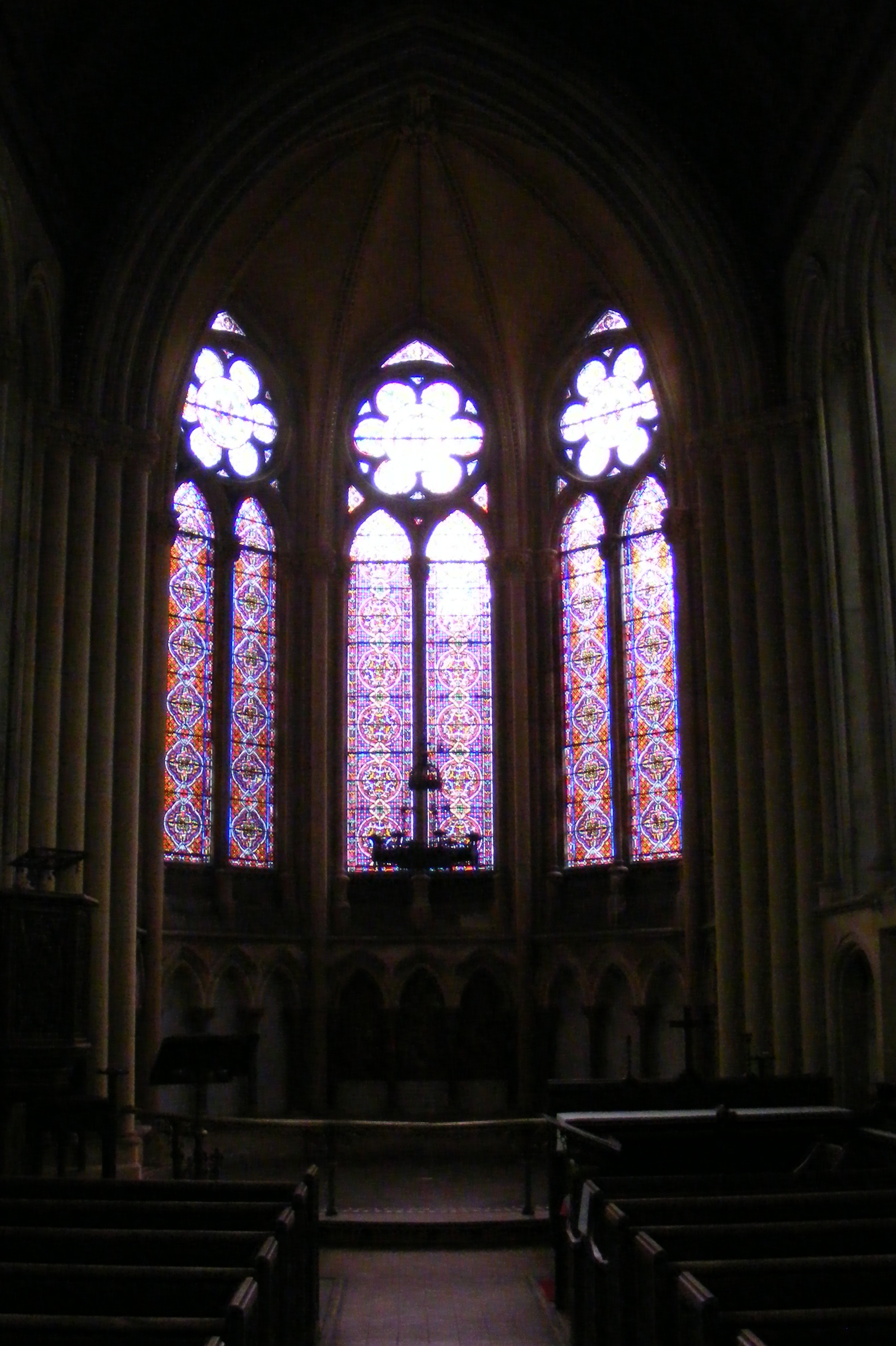
Not actually Sainte Chapelle; it's St Mary's, Itchen Stoke, which is about as good an illustration of the complicated nature of the history of Christianity as I've got on my hard drive
Not actually Sainte Chapelle; it’s St Mary’s, Itchen Stoke, which is about as good an illustration of the complicated nature of the history of Christianity as I’ve got on my hard drive

I got an ebook reader for Christmas, which is great, because it means I’ve been able to read heavy books on the train. One of them is Diarmaid McCulloch’s Christianity: the first three thousand years, which I am enjoying far more than I expected. It’s much more nuanced than the accompanying TV series, which had me muttering, ‘no, affirming the humanity of Christ is not actually heretical’, and is hilariously bitchy in places and very interesting throughout. At least, if you find deeply-felt squabbles over apparently trivial differences with appalling results interesting, which I do. I’ve given up apologising for Those Christians Over There and whatever they’ve done now, but I do feel that it’s worth knowing how they got there, and how I got here, and what we still have in common. And getting to very different places using the same map has been a feature of Christianity since, oh, the book of Acts.

In that spirit – here’s the AngthMURC/Cathsoc committee meeting that happens between chapters 2 and 3 of the first section of Speak Its Name. All the inter-denominational schism and bitchiness that the heart could desire.


‘Hmph!’ Sophie said, when Peter had finished reading out Jake’s email. ‘Well, it’s a pity, but I can’t say I’m surprised.’

There was just about space for the six of them around the kitchen table at 27 Alma Road. Georgia was in fact at the sink, frantically washing up mugs so that due hospitality could be offered. Sophie, Tim and Kasia, the operative half of the Cathsoc committee, were squashed onto the bench on one side; Becky, still in her pyjamas, crunched toast opposite them; Peter sat on the wobbly chair, at the end that wasn’t against the wall, and spread ancient AngthMURC paperwork across the vinyl tablecloth.

‘I don’t suppose we could compromise?’ Kasia said.

‘How do you mean?’ Georgia asked.

‘Well, of course we can’t sign their Statement – have you read the thing? – but could we perhaps suggest the Creed instead?’

‘No,’ Becky said, blinking over very strong coffee. ‘Sorry – that was a bit abrupt. I didn’t mean to be rude. What I mean is, of course you could, but I wouldn’t sign it. Wouldn’t sign anything. I’d still come, but I couldn’t be involved in the organising if that was the condition. Same with most of the Friends, I would think.’

Olly wandered into the kitchen in his dressing gown, said, ‘Oh, God. Christians. Shouldn’t you all be at church?’

‘Colette’s gone,’ Becky said.

‘Hmph. Vicarious holiness, eh?’ He wandered out again.

‘I doubt Fellowship would go for the Creed,’ Peter said, as the door shut. ‘They would say it’s too woolly. Anyway – which one? Half the Evangelicals I know don’t believe that Jesus descended into Hell, which excludes the Apostles’, and if we use the Nicene then we’ll start filioque all over again.’

‘Ah,’ Kasia sighed, ‘those were the days. Proper schism, none of your modern namby pamby stuff! Do we even have any Orthodox who’d want to be involved?’

‘You never know,’ Georgia said, peeling off the rubber gloves. ‘So are we going to write a tactful email to Jake Warner telling him to take a long walk off a short pier?’

‘Why are you all looking at me?’ Peter asked, with an injured air. ‘OK, OK, I’ll write it. And I’ll email the rest of Fellowship, too, letting them know it’s still happening. Together with an annotated copy of the Statement of Belief, explaining why it’s exclusive bullshit?’

No,’ Georgia said, apparently before she realised he was joking.

‘It’d be handy to have,’ Sophie mused. ‘We could make hundreds of copies and hand them out at the Freshers’ Squash. Poach a few members from Fellowship…’

‘Which reminds me,’ Tim said, ‘I still owe you lot my three pounds fifty for this year. I assume you’ve still got me listed as a member, since I’m still getting AngthMURC emails.’

‘You are. And I’m still getting Cathsoc ones,’ Georgia told him. ‘Fair exchange, no robbery.’

‘Remind me,’ Becky said, ‘why the Statement is exclusive bullshit? I always get stuck on the fact that they make you sign the bugger.’

‘Penal substitution, and sola scriptura.’ Kasia ticked them off on her fingers.

‘In English?’

‘Oh, Lord,’ Peter said. ‘OK. Penal substitution is the theory – which some Evos will try to make you believe is held by all Christians, but which really, really isn’t – that humanity is so fucked up that God (who in this version of events is omnipotent, omniscient and benevolent, but apparently really unimaginative) has to torture somebody horribly to make it all better.’

‘That somebody being Jesus,’ Tim put in, helpfully.

‘See me looking blank,’ Becky said. ‘Don’t take it personally. It may never make sense to me; Quakers aren’t really big on sin.’

‘I vaguely recall Father Steven explaining it all using There is a green hill far away,’ Peter said, ‘but I can’t remember how.’

‘That’s really helpful.’ Georgia was getting impatient.

‘And what was the other thing?’ Becky asked.

‘Oh, sola scriptura. The Bible alone – as a means to determine God’s will, I mean. They mean,’ Kasia corrected herself. ‘Leaving out of it tradition and reason.’

‘And experience,’ Georgia added.

‘Leaving the poor old Wesleyan quadrilateral wobbling on one leg, and causing alarm and despondency through the Church Rational,’ Peter said.

‘What about the Spirit?’ Becky asked, and laughed bitterly when nobody answered.

August Moon: check-in

It’s a beautiful moon. We are staying with my mother at the moment, and she has put us in the bedroom with a balcony looking south out over the English Channel. There’s very little sky-glow and the moon is a sharp silver sickle. Vega is very bright and the Milky Way stretches east-west. We’re very lucky.

I have come down with some vile bug and have spent most of today either in bed or sitting up in a chair feeling sorry for myself. I suspect it’s a case of not having had enough holidays, and having been doing too much gallivanting on the ones I have had.

This weekend – a long drive and a wedding and a family get-together – has been the hinge between a week of work and a week of (it seems) enforced idleness. (Although I am still holding on to the hope that I’ll be well enough tomorrow or Thursday to go to Amazon World and look at the poison arrow frogs.) In some ways it’s easier to get August Moon posts done during a work day; I have the prompts buzzing in the back of my mind all day and the words pour out pretty quickly. On holiday – particularly one like this, where there are friends and family all over the place, and the laptop’s at the bottom of the suitcase, and my brain’s running on only two cylinders – it’s more difficult. But I’m managing to carve out half-hours here and there to get on with it.

I’ve just finished reading White Feathers, Susan Lanigan’s first novel, and am feeling mighty privileged because I don’t think it’s officially released yet, and also I saw the thing come together before my eyes. (In the acknowledgements, Susan credits the Pico group. I don’t wish to blow our cover, but I’m part of it too and it’s a fantastic, supportive, encouraging group, the best incentive to write that I’ve ever come across.) I will content myself for the moment by saying, see? It can be done and I can do it too

Starting – late

I forgot all about reverb12 until yesterday, and then couldn’t find it. I should have begun on the 1st; it’s now the 9th. I will attempt to catch up by posting two a day until I’m back on schedule. We shall see how this works.

Day 1: How are you starting?

How are you starting this last month of 2012?

Take a moment, close your eyes, take a deep breath and ask yourself the question: how do you feel…

… in your body? in your mind? in your day job? in your creative life? in your heart?

This is rather retrospective, of course, but I’ve felt rather stuck in the first week of December, and only really woken up today, so let’s go with it.

When I went into December I was fed up with 2012 – so much so that I was talking, only half-jokingly, about switching to the liturgical calendar and calling it new year already. My depression was atrocious, made worse by the dark mornings (because they are getting dark, now). This led to my not wanting to get out of bed in time to cycle to work, which led to me feeling worse.

Work has been one long slog since July, dealing with staff absence all over the place, feeling that I was enjoying what I was doing, but there wasn’t enough of it, and I wasn’t actually supposed to be doing that, and anyway, what was the point? I’d not picked myself up properly from a mental crash in October, having finally got fed up with being dragged into other people’s causes, and feeling like a fraud for being paid to care about other people’s causes.

My creative life, on the other hand, had suddenly picked up, thanks in large part and the House of Laity. I got some blinding white-hot fury down in pixels, and this kick-started a project that had been stalled (even, I thought, abandoned) since – well, the last time I decided it wasn’t worth writing. This time it’s looking a lot sharper; it has much more shape to it. That’s a positive, then.

Day 9: Your favourite book?

What was the best book you read in 2012, and why? (And by “Why?” I mean: Why did you read it? And why was it your favourite? Although these answers could be one and the same…!)

To Kill A Mockingbird, without question. Why did I read it? Because it was the May choice for our works book club. Why was it my favourite? Because it was so utterly convincing. Because I was kicking myself for never having read it before. Because it made me so sad, and so angry. Because everything else I’ve read this year has disappointed me in one way or another, and To Kill A Mockingbird didn’t.