Grand Départ (we’re off!)

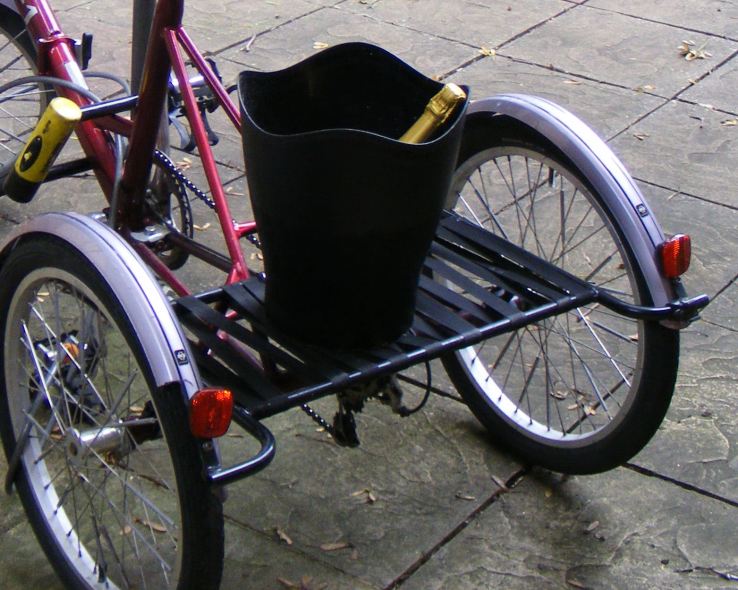
bubbly

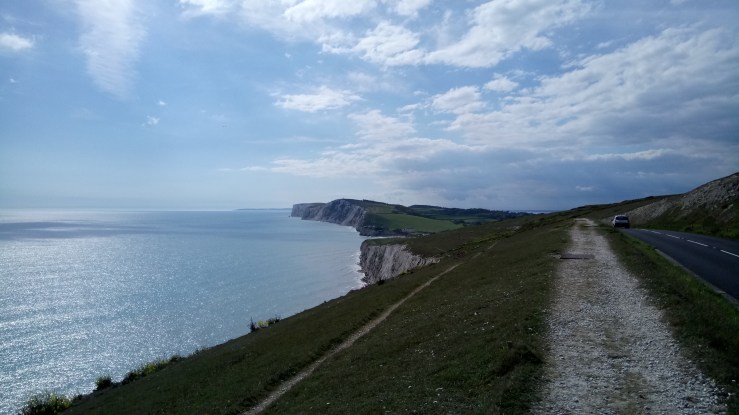
I’m back! I have been through eleven different countries, ridden on trains, trams, buses, and a ferry. I have been further north and further east than ever before in my life, and also higher up. I have had a fantastic time and I will write it up over the next couple of months.

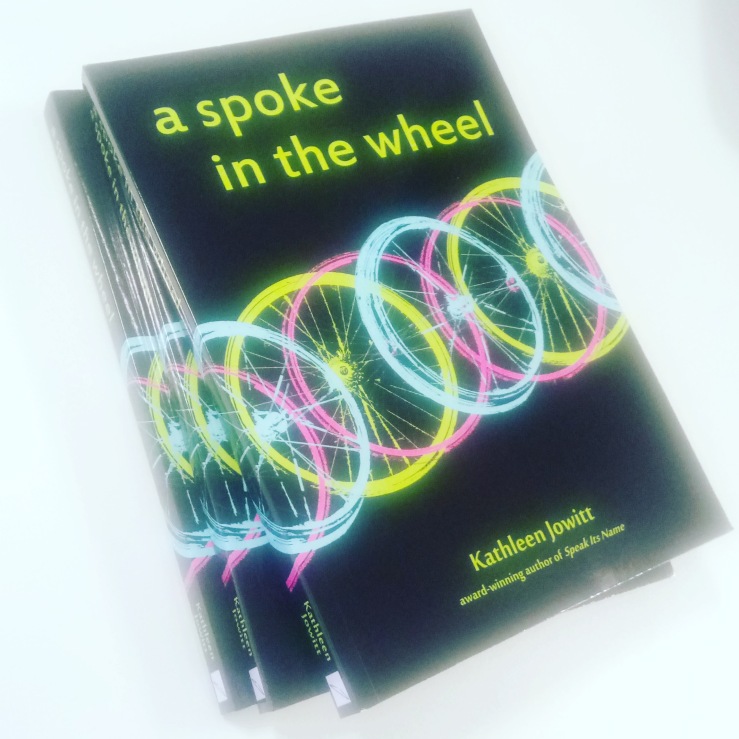
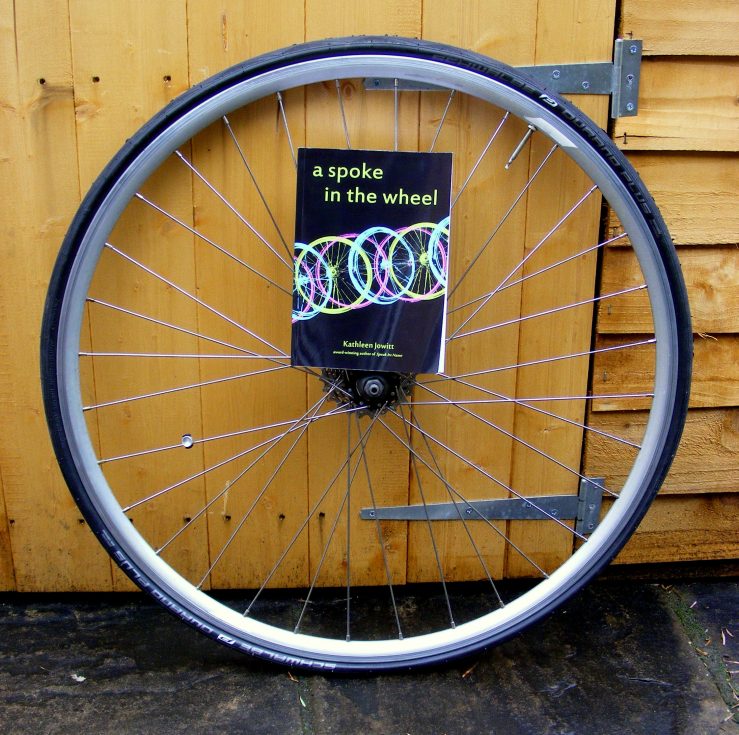
While I’ve been away, the wheels have been turning (see what I did there?), and I’m now very happy to announce that A Spoke in the Wheel is now live.

Available from some reputable booksellers, and some less reputable ones too. I’ll leave you to decide which are which, while I contemplate my laundry and catch up on the Giro d’Italia.

And I’ve got a tour of my own – over the next couple of weeks A Spoke in the Wheel and I will be visiting several friendly book bloggers for reviews, guest posts, and extracts. Here’s what’s coming up…

ASITW blog tour LARGE

A Grand Tour

IMG_20180412_165644_410

If we’re talking cycling (and we probably are, aren’t we?) a Grand Tour is one of the three big ones: the Giro d’Italia, the Vuelta a España, or, of course, the Tour de France. Ben, the – hero? anti-hero? narrator, anyway – of A Spoke in the Wheel, never got quite good enough to ride one of those.

If, however, we’re talking travel, a Grand Tour is a circuit of Europe undertaken by the privileged youth of the eighteenth and nineteenth centuries before they had to settle down and be grown up, sometimes taking several years.

I couldn’t swing more than three weeks off work, but I am spending my Betty Trask prize money going InterRailing. When you read this, I’ll be somewhere between Brussels and Hamburg, assuming no undue disruption from the SNCF strike, of course. I’ll tell you all about it when I get home. (I am aware that I said this about the Camino Inglés. I’m still going to tell you all about that.)

And three weeks from now I’ll have a book to share with you, too. We’ll have a blog tour. A grand one.

Listening to the stories: Our Witness

dsc_1218-e1523560356304.jpg

Some people have very specific ideas about what a Christian story ought to look like. You can tell by looking at the reviews of Catherine Fox’s books on Amazon. Too much swearing: one star. A story about Christians can never, ever, include the F-word. Other stories are to be ignored, overwritten, or, if the worst comes to the worst and one finds oneself reading one, given a one-star review.

Because Christians don’t swear. Except they do. We do. I do. And if you say you don’t – well, I’ll happily believe you, but it doesn’t stop the rest of us existing. Or swearing.

I really enjoyed the Lent course I attended this year. We started with something constructed by the Diocese of Ely, improvised icebreakers concerning the idiosyncrasies of our socks, ate snacks introduced with increasingly tenuous connections to the themes we were talking about (the Club biscuits – ‘set apart’ in their own wrappers, but yet together in the packet, and therefore an illustration of ‘holiness’, were my personal favourite) and tried to discern our own callings. For many of us, I think, that turned out to be something about being who we were, about not trying to force ourselves into what we thought a Christian ought to look like, about showing up, just as we were, and trusting that this was who we were meant to be.

For me, that was about being out as bisexual. It often is. From curling up in a ball the first week, muttering darkly that actually the Church isn’t necessarily a safe space to be yourself, to outing myself by telling a story of when I outed myself, to making and wearing symbolic jewellery (see picture at the top of this post) being myself as a Christian does tend to involve to ensuring that people know that I’m queer, and that I believe that that’s how God created me.

I’m always aware of a push-pull: the pull of the conviction that what other people think about me is none of my business; the push of knowing that, if I don’t say in so many words that I’m bisexual, people will assume that I’m straight. And – particularly in Christian circles – because I’m bisexual married to a man, if I don’t say that I understand a hypothetical relationship with someone who wasn’t a man to be as valid as the actual one that I have with someone who is, there’s the risk that people will assume that I chose to be with a man because he was a man. As opposed to falling for this person that I happened to live with.

In LGBT Christian jargon this is known as the ‘Side A/Side B’ question. (I have to look up which side is which every time.) Side A is LGB Christians who see no contradiction with same-sex sexual activity. Side B is LGB Christians who accept their identity but who would understand acting on same-sex sexual desires as sinful.

My problem is that I am very much Side A, but I know that in a heteronormative society I look very much Side B. And the only way to correct that assumption is to fill in the gaps, to tell the story. I am always telling stories, both fictional stories and true stories, and it’s almost always because the story that I’m hearing, or that I’m reading, isn’t the whole story. And when stories that don’t fit the dominant narrative – whether that’s Christians don’t say ‘fuck’ or A woman who’s married to a man must be straight or Christians don’t have sex with people of the same gender – are erased, it’s all the more important to keep telling them.

And so we come to Our Witness: the unheard story of LGBT Christians. The British edition came out last year; the US edition was released yesterday. Our Witness tells the stories – mine, The Amazing Invisible Bisexual Christian, and many, many more. The stories are all different, but they resonate with each other. If you’ve already bought the British edition and you only wanted to read my story, you don’t need to read it in the American edition. It’s the same, bar an ‘own goal’ metaphor which didn’t survive the voyage across the Atlantic. If, however, you’re looking for different stories, for a wider sample of all the different voices that make up this communion we call the Church, then read both. Every voice, every story, adds something to the symphony, and the more I listen, the richer the sound becomes.



The proof is a pudding

DSCF7036

‘Pudding’ is a lot more polite than what I actually said when I took my first look at the proof copy of A Spoke in the Wheel.

The front cover has come out beautifully; it looks rather better in real life than it does in that photo. The inside… not so much. The text on about half the pages had been misaligned, and came out an odd shade of purple.

The photo below shows (bottom right) one of the offending pages, (bottom left) one of the pages that was just about all right, and (top) a spread from Speak Its Name for comparison.

comparison

Since then, I’ve been engaged in correspondence with Lulu, who have been very apologetic and promise that this is very rare. I do hope so. There was an article in the latest edition of The Author by a man who prints his own books, but I feel that this is taking things a bit far even for a control freak like me.

Having said all that, I’m feeling a lot better about the whole thing than I was this time last week. The cover looks good, the ebook looks good, the interior of the paperback will look good when it’s printed properly, and we are on track.

#IndieAthon wrap-up

DSCF7028 crop

Well, considering I didn’t find out about #IndieAthon until two weeks in, I didn’t do too badly…

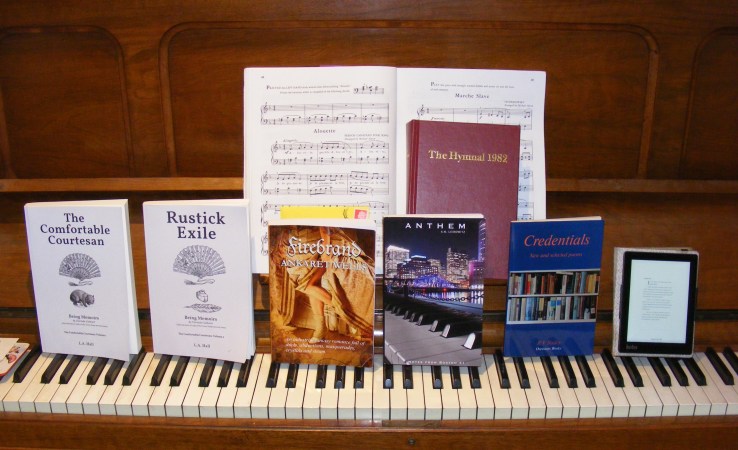
As it happened, I’d already got two down: I’d had to spend a day in bed with a horrible cold, and The Comfortable Courtesan and Rustick Exile made for excellent, well, comfort reading. The characters are old friends now, and it was lovely to go back to the beginning of everything and remind myself how it all started.

A. M. Leibowitz‘s Anthem, from independent publisher Supposed Crimes, was my next #IndieAthon read. Leibowitz is one of the few authors who’s interested in the intersections between religious and LGBTQ identities. This one is particularly entertaining for anyone who’s ever had to stifle a snigger at the unintentional suggestiveness of much worship music.

Firebrand by Ankaret Wells was a re-read – it’s a steampunk fantasy romance. In between the first time and this I’ve read some of Charlotte Brontë’s juvenilia, so was able to pick up a lot more of the allusions and appreciate the setting. Having said that, I didn’t feel that I was missing that last time around – this was more of an added bonus!

Another book that came from a small press, rather than being self-published, was R. V. Bailey’s Credentials. With some dating from before U. A. Fanthorpe’s death, and some afterwards, this collection of poetry spans all sorts of emotions and experiences. I think my favourite was Suddenly, but Hard Work has a poignant kick to it.

I finished the month with How I Broke Bath, and other stories, by The Hunter. The man behind that name died earlier in March. I met him a couple of times, not enough to say that I knew him well, but he was a good friend to people that I consider good friends. He had an ear for a pun and a knack for telling a story: both are evident in this collection of blog posts.

I’ve very much enjoyed #IndieAthon – reading, recommending, and generally hanging around on the hashtag. I hope it runs again!

I’ve been here before

DSC_0523

Still no proofs. Well, no, that’s not fair – they’ve almost certainly arrived by now, but I haven’t had the opportunity to go and pick them up. I’ve been away for the last week, so I haven’t been fretting too much, but I am very aware of how much I just want to be done already.

That’s normal for this stage in proceedings.

Other things which seem to be normal for this stage in proceedings:

  • wanting people to read it. The more people who read it and tell me that actually my portrayal of [whatever I’m worrying about this week] is OK, the better I feel about it.
  • not wanting people to read it. People tell me about how much they’re looking forward to reading it and I mutter and shuffle. What if it’s a horrible disappointment? I’m putting my soul on a plate here. At least, that’s what it feels like. To everyone else, of course, it’s just a book. I have to remind myself that, even if they are disappointed, they’re not disappointed in my soul, but only in a book.
  • relatedly, the conviction that I’ll have managed to offend all my dearest friends.
  • being able to see, albeit from some distance, the point where what other people think doesn’t seem relevant any more, the point where I say: It’s done. I did the best I could. It’s just going to have to do.

Waiting

dsc_0736-e1521145850585.jpg

I have this idea that I’m a very patient person.

One of the things that I’ve discovered over the last four years or so is that writing involves an awful lot of waiting. Waiting for agents and publishers to get back to me. Waiting for editors to finish reading the latest draft and tell me what they make of it. Waiting for myself, to get the perspective that I need in order to make any meaningful decision about what to do next.

Self-publishing cuts out some, but not all, of that waiting. I’ve talked before about the fact that I have to do absolutely everything myself. At least that means that I have something to be getting on with while I’m waiting.

Waiting for emails. Waiting – as I have been all this week – for the proof copy to be printed. Waiting – as I will be tomorrow – for the thing to arrive.

The thing about waiting for the proofs is that I can’t do anything else to the book. There’s no point reading through, because I might have to change something. And there’s no point in changing anything before the proofs come back, because then I’ll only have to order another set. And I can’t approve the book for distribution because something might need changing.

And actually it turns out that I am terrible at waiting. I’ve spent all week refreshing my orders page, waiting it to flip from ‘Fulfilling’ to ‘Shipped’. That happened today, and now I don’t have anything to refresh.

Maybe the book will turn up tomorrow. And if it doesn’t, well, there’s not much I can do. Except wait.

100 untimed books: right away

55. right away
55. right away

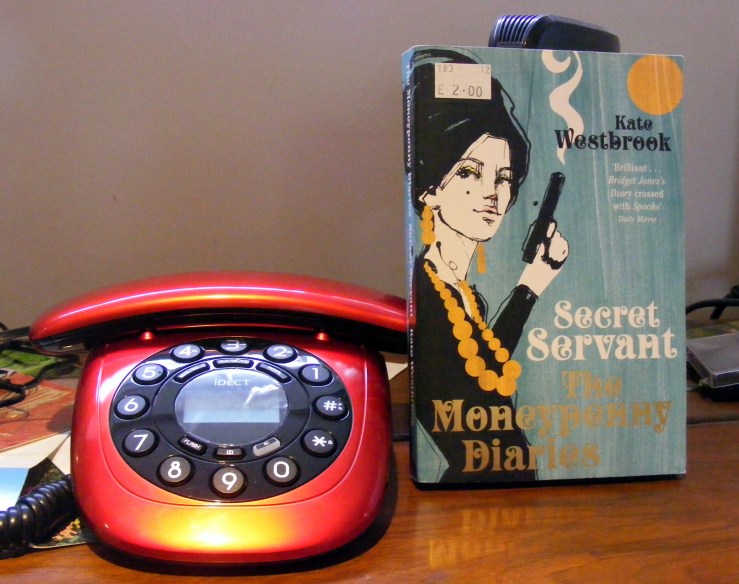
This prompt made me think of gentlemen’s gentlemen, of Jeeves and Bunter. But the only Wodehouse that I have in the house is Psmith in the City, and I’ve already used Sayers. So I thought I’d broaden the idea out to all the sidekicks, to the ones who exist as a sounding board for their main characters and the ones who are several steps ahead of them. The ones who exist because somebody in this book needs to be in touch with reality, and the ones who exist because the main character couldn’t cope without them.

So here’s to you, Bunter and Jeeves. Here’s to you, Passepartout. Here’s to you, Captain Hastings. Here’s to you, Doctor Watson and here’s to you, Miss Moneypenny. I’m glad somebody wrote you some books of your own.

100 untimed books

Late to the #IndieAthon party

indieathon-9

On Monday my mother texted me to say ‘Looks like ASITW is very timely’. I texted back to say, ‘Haha, it always is’, and felt slightly smug about being with it for once.

Yesterday I looked at Twitter and discovered that I’d missed a good thirty per cent of an initiative that’s very relevant to my interests, as they say, and now I feel less smug.

#IndieAthon is a month-long celebration of self-published authors and small presses. The organisers have this to say:

Throughout the month you can read however many books you want, not all of them have to be for the readathon of course, but the goal is to read as many indie-published or self-published books as you want! The only limitation to what you can read is that it has to be either self-published or published by a small or independent publisher to count for the readathon. The books can be old, new, popular, unpopular, fiction, non-fiction, anything!

We also would really like you to post reviews of the books you read on Goodreads, Amazon and wherever else you want to post it! Reviews are so important for authors, and especially for smaller authors it can make a huge difference!

There’s a bingo card and everything!

So, hello, #IndieAthon, here I am, sneaking in through the back door, hanging my coat over a chair, grabbing a drink from a tray, and pretending I’ve been here all along.

Um. Er. Yes. Hello. I’m Kathleen Jowitt, and my book Speak Its Name* was the first self-published book ever to be shortlisted for the Betty Trask Prize. I’m in the middle of preparing my second novel, A Spoke in the Wheel, for publication, and that’s my excuse for not having looked at Twitter properly all month.

I’m self-published and very glad of it. Why? One word. Freedom. Self-publishing gives me the freedom to do my own thing, and to do my own thing at my own pace. I’m only answerable to myself. I don’t have to worry about whether anybody actually wants to read a book about a Christian lesbian university student finding her way out of the closet, or, if they liked that, whether they’ll then be interested in a disgraced professional cyclist.

I don’t have to please other people to get my book into print. I just have to put the work in myself. I’m free to experiment, to tell the stories that nobody else tells.

And I’m free to do my own thing at my own pace. I’m the only person who gets to set me deadlines. If I decide that something needs an extra six months’ work to get it really good, I’m free to put those six months in. Conversely, if I have a spare couple of hours and I want to get going on the back cover copy or the front cover design, then I can do that. I don’t have to wait on decisions from anybody else.

Sometimes it’s a scary thing, this freedom. It means taking responsibility for every little thing. Every word that makes it into the finished book is there because I put it there, and it stays there because I didn’t take it out. I can – and I do – ask other people to read for inaccuracy and insensitivity, but the decision whether or not to respond with changes remains with me. The cover, typesetting and formatting, are exactly as good as I can get them.

Any errors or infelicities remaining, as it says on my acknowledgements page, are my own. But I wouldn’t have it any other way.