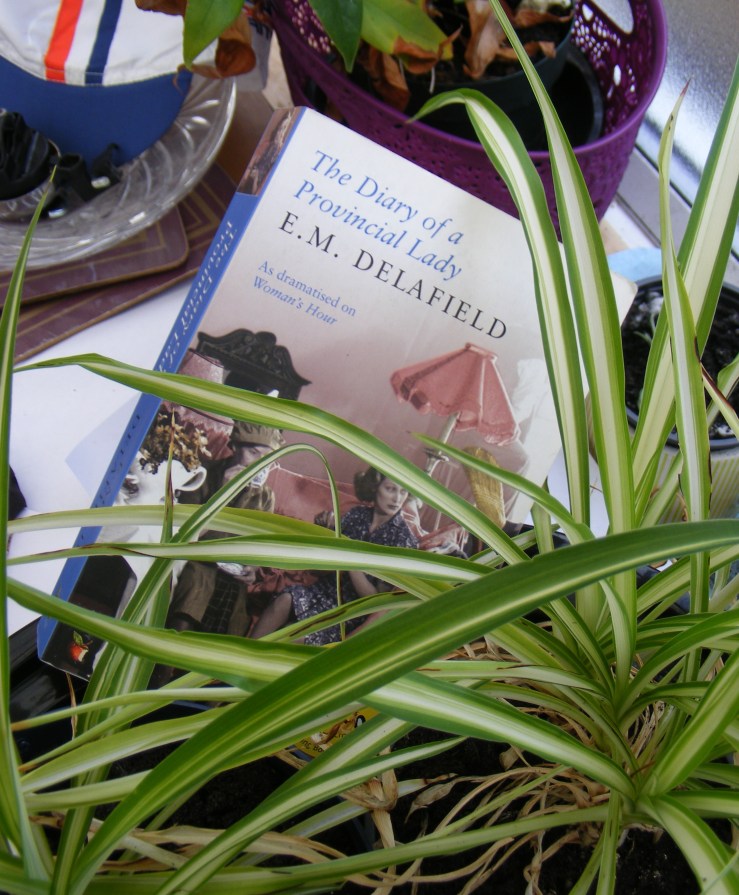
The Provincial Lady inhabits a very different world from the one that we live in, but her constant battle with domestic chaos is nevertheless familiar. And very funny.

Stories that make sense
The Provincial Lady inhabits a very different world from the one that we live in, but her constant battle with domestic chaos is nevertheless familiar. And very funny.
There are many further variations. Add your own in comments!

I’m looking forward to the release of Our Witness: the unheard stories of LGBT+ Christians later this month. As a contributor, I’ve had the chance to glance through the proofs of this collection of personal essays, and I’ve been impressed by the sheer breadth and depth, as well as the honesty, of the content.
Too often, the debate in the Church around gender and sexuality assumes that the question begins and ends with gay men. Lesbians are ignored. The rest of us might as well not exist. Even among allies, there’s a depressing tendency to write ‘LGBT’ in the first line and then revert to ‘gay’ for the remainder of the article/sermon/book, as if that covered everyone’s experience. Terms like ‘gay marriage’ are thrown around with, er, gay abandon. One gets the impression that the middle-aged cis white gay men are the only ones in the Church with any problems.
This book goes a long way to redress that balance. There are stories from gay Christians, yes – but there are stories from lesbian Christians, bisexual Christians, and trans Christians too. I’m in there as The Amazing Invisible Bisexual Christian – the woman who’s been married to a man for getting on for a decade and still stubbornly refuses to forget that she’s queer. There are stories from ordained ministers and from laypeople; from many denominations; there are stories of hurt, and stories of hope.
Some stories are not found in there: how could they be, when there are as many stories as there are LGBT+ Christians? Some will appear in the US version, which is coming next year. Others, of course, won’t. But there are more stories in here than I have ever seen before.
Our Witness: the unheard stories of LGBT+ Christians is published on 29 October by Darton Longman and Todd.

Is it possible to get earwormed with a fictional song? A song that exists only in a book? I think Ann Leckie may have managed this with:
My heart is a fish
Hiding in the water-grass
In the green, in the green
and particularly with:
It all goes around, the station goes around the moon, it all goes around…
… My mother said it all goes around, it all goes around, the ship goes around the station
Firstly, an interview with crime writer Don Massenzio. You can read my thoughts on ego (and why it’s necessary to have one), the pseudonym I’ll probably never use, and who I’d like to invite for dinner in the name of musicological research. It’s all here: Perfect Ten with Kathleen Jowitt
Secondly, the Society of Authors have put up a link to a recording of the Authors Awards ceremony from June. If you don’t want to listen to the whole thing, the presentation of the Betty Trask Prize and Awards can be heard beginning at 08:14, with specific reference to Speak Its Name at 13:20. But I’m really linking it for Ben Okri’s absolutely stonking speech, which begins at 25:35. Highly recommended for any author who occasionally (or often) finds themself wondering what the point of it all is…
Thirdly, I’ve now set up a Facebook page for me and my works. If you use Facebook for that sort of thing, wander over here and give me a like.

Not just sands: tides, gales, channels, fog. Geography and weather are as much players in this book as any of the characters.

The first thing I saw was the wheelchair.
The first thing she saw was the doper.
If you’re thinking that I’m the one who comes off looking like a dick, I couldn’t disagree with you.
Ben Goddard is an embarrassment – as a cyclist, as an athlete, as a human being. And he knows it.
Now that he’s been exposed by a positive drugs test, his race wins and his work with disabled children mean nothing. He quits professional cycling in a hurry, sticks a pin in a map, and sets out to build a new life in a town where nobody knows who he is or what he’s done.
But when the first person he meets turns out to be a cycling fan, he finds out that it’s not going to be quite as easy as that.
Besides, Polly’s not just a cycling fan, she’s a former medical student with a chronic illness and strong opinions. Particularly when it comes to Ben Goddard…
A Spoke In The Wheel will be released on 5th May 2018. Watch this space!

Some years ago, I read Planet Narnia: the seven heavens in the imagination of C. S. Lewis, which argues that the seven Chronicles of Narnia correspond to the seven classical heavenly bodies. It’s an attractive and plausible theory, and I think that’s as far as I’ll go.
Anyway, if we’re to believe the author, Michael Ward, The Voyage of the Dawn Treader is associated with the Sun, and that’s good enough for me to include this book for this prompt. Even if it weren’t, there’s the Sun front and centre on Caspian’s tunic.
It’s my favourite of the Narnia books, and has one of the best opening lines of all time.
There was a boy called Eustace Clarence Scrubb, and he almost deserved it.
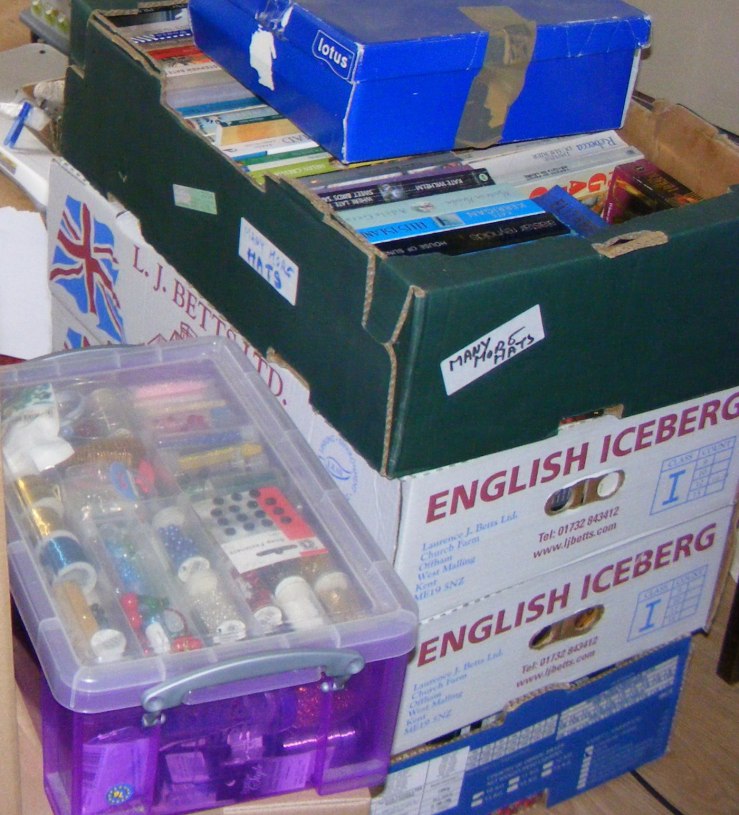
There are far more books in the world than anyone could possibly read in their lifetime. There are far more films than anyone could possibly watch, far more songs than anyone could possibly listen to.
I don’t know how old I was when I understood that. I feel that it might have been university, when all my horizons expanded in all directions at once, and I realised that:
Before that, the books I knew about were at home, or in the school library, or in the local library. And yes, that was a lot of books, but I always felt that if I really applied myself I could work my way through the whole lot in a logical fashion.
Maybe it was seeing the university library that did it. Who knows? I wish I had one neat moment of epiphany to trot out, but I don’t.
Anyway, once you’ve had that epiphany, what do you do with it?
There are a variety of approaches.
You can read/watch/listen to as many of the books/films/songs as you humanly can. Read every book that your hand touches. My godmother told me once that John Cage said that one should only ever listen to each piece of music once, because there simply isn’t time to do more.
But I know that if I only listen to a piece of music once, I can do little more than nod and smile. In order to really appreciate it, I need to listen to it over and over again, to get right into it. If possible, to perform it, even.
(Probably if I were a better musician, this would be a quicker process for me. A degree in English Literature and a decade plus of creative writing trial and error have enabled me to see how a text is put together without having to think much about it.)
So that suggests an opposite approach: consume very few pieces of art, but really get into them. Re-read, listen over and over, watch again and see what you didn’t pick up the first time, or the second time, or the third time.
The temptation then is to ensure that the art that one does examine is somehow worthy of all these hours that one’s putting into it – but, without putting the hours in, how does one know what’s worthy? One ends up deferring to others’ judgement. Let us watch the films that won the Oscars, or read the books that are on the list of 1001 Books You Must Read Before You Die, or whatever it might be.
(Personally, I find that any attempt to tell me that I must read anything results in instant resentment and a resolution not to read the thing if humanly possible. As it happens, I’ve read a decent number of those books, but not because they’re on that list, and I feel no compunction to read all of them.)
There are two main dangers that I can see to concentrating on the good stuff.
Firstly, you might miss things. But that’s inevitable, however you go about this. That’s the whole point of this post. You will miss things.
Secondly, you might never read anything because you actually want to read it. You might end up trapped in a book you hate, never finishing it, and never starting anything else, either.
In fact, that’s the main drawback to both of those approaches, and I’ve tried them both. ‘Read everything, no matter what it is’ – and you’ll end up slogging through a whole load of ill-written drivel, pompous litfic, formulaic genre and spectacularly biased unclassifiable screeds, and hating all of it. ‘Concentrate on what is known to be good’ – and it’ll be like having to get through plateful after plateful of worthy vegetables before you’re allowed pudding. Pudding might never come. You might never get round to reading anything fun.
And if reading isn’t fun, then why on earth are you doing it? (Well, actually… to be discussed in a subsequent post.) These days, you know, I mostly read what I feel like reading, and I stop if I’m not enjoying it. And that’s good enough for me.

I read a lot of school stories in my childhood and teens, but I only discovered Antonia Forest’s Marlows series a couple of years ago. They’re great: much more nuanced and cynical than the average example of the genre. Or genres, I should perhaps say, because Forest drags her characters through everything from spy thriller to roleplay game gone wrong.
The only problem is, they’re very difficult to find. Some Forests change hands for hundreds of pounds on Amazon. Happily, Girls Gone By Publishers are republishing a selection of titles at irregular intervals. I have End of Term on order, and it should be showing up any time now.
 Kathleen Jowitt