The colour of curtains

Here’s a meme that’s been annoying me:

The curtains
The curtains…

I have never written any blue curtains, so I can’t comment on those. In fact, I think I’ve only written two pairs of curtains, and specified the colour of one of those pairs. They were yellow.

This is what my English teacher told me:

Every word on that page is there because the author wanted it to be there.

The curtains are only in the book at all because the author wanted them to be there. If they described every item of furniture, every fixture and fitting, in a room, then the reader would die of boredom long before any action could begin. Instead, the author has to trust that the reader will fill in the background details subconsciously. This can cause problems for someone trying to convert a textual work into a visual one. In fact, it’s called the Jane Austen’s curtains problem.

Given that, why mention the curtains at all? Why make them blue, if not some other colour? There’s probably a reason, and it’s worth thinking about what it might be.

Colette’s room looked out over the back garden, down towards the railway and across the town. The terraces ran in neat russet lines down the hill; on the other side of the river, the beech trees in the park were vivid amber, and the yellow-grey stone of the old town glowed gold in the October light.

‘Wow,’ Lydia said, ‘you get a lovely view of the cathedral from here.’

‘I know; I’m very lucky. It’s my reward for having the smallest bedroom.’

The window was open, a cool breeze stirring the yellow curtains. Down in the garden they could hear Peter bellowing, ‘Fa-ac me-e te-e-cu-um plangere!’ as he put his laundry up on the clothesline.

When I gave Colette a pair of yellow curtains – and, almost more importantly, when I didn’t take them out again during editing – there were various things in my mind.

Real curtains

I don’t have a particularly visual imagination, and find that inventing objects doesn’t come naturally to me. Consequently, I do tend to appropriate real life objects. The horrible red leather sofa at Balton Street, for example, is real; it was an eyesore in a university friend’s flat. Colette’s curtains belonged to one of my own housemates. (No, that doesn’t mean that she’s the model for Colette. If it comes to that, the friend with the red leather sofa is nothing like anybody at Balton Street.)

Autumn

The yellow curtains call back to the first paragraph in that extract, where there’s already a lot of colour. Russet, amber, yellow-grey, gold: Stancester in autumn. Autumn is traditionally associated with decay, but this is the beginning of the academic year and the beginning of the story. I had to make it all glow very brightly. And yellow can be autumnal but it’s also strongly associated with spring: jasmine, daffodils, primroses, and so on. The beginning of the year. Things awakening.

Liturgy

In the Church (not Lydia’s church, but she doesn’t need to know this) yellow equals gold equals white: the colour of rejoicing, the colour for feasts, for Christmas and Easter, for weddings and baptisms. In most of the rest of the book the dominant colour is purple. Partly because I like purple, yes, but partly because it’s associated with waiting, penitence, mourning, fasting. Colette, the out bisexual character, could very well have purple curtains. But she doesn’t. She isn’t waiting or penitent or mourning or fasting at the moment, though she’ll do all of those things over the course of the book. She’s content in who and what she is in a way that Lydia can’t understand yet. And the curtains are yellow.

Did I do all that consciously, deliberately? I doubt it, at least in the first draft. As best I can remember, my thought process went something like:

looking out of the window – oh, better have some curtains, then – any particular curtains? – A’s curtains – yellow curtains

That’s not really the point. The point is that they remained yellow. This mention of yellow was a lot less deliberate than any mention of purple, but I kept it because it worked.

Later, when Lydia recalls the incident, the curtains are mentioned again, but their colour isn’t:

And the clear autumn breeze lifting the hem of the curtain, and Peter singing in the garden, and her soul standing on the threshold of its self-made prison, not yet ready to step out, but knowing for the first time that there was a world outside it.

Because their colour isn’t relevant here. The point now is that the window’s open.

It’s always worth thinking about the curtains.

And this approach goes for any detail. Why is Peter singing that particular line? Because it’s a lot of fun to sing, and I know that because I’ve sung tenor in the Dvorak Stabat Mater myself. Because it does sound a bit dirty if you don’t immediately realise that it’s not in English, and this scene needed to go a little way beyond Lydia’s comfort zone.

One could also say that the meaning of the Latin is relevant. Make me weep with you. The speaker is asking to enter more fully into the suffering of Mary, the Mother of God, and there is certainly a sense in which the book is about expanding one’s spiritual experience.

But that’s a bit of a stretch. I’m pretty sure that I wasn’t thinking of that when I put it in. So I don’t know, maybe the maker of that meme has a point after all.

Yes, the curtains were fucking yellow. But if there hadn’t been a reason for that then they wouldn’t have existed at all.
December Reflections 30: thank you for…

dscf2027

Much has happened in 2016 for which I am grateful.

That was not going to be the opening sentence. I have just deleted an apologetic introductory screed in which I explained that I knew it had been a dreadful year on the large scale. I am not going to apologise for having had some things that were not unilaterally appalling happen to me. Some good things did happen.

Thank you, 2016, for:

  • the positive reception for Speak Its Name
    • No, it hasn’t sold thousands, but the people who have bought it have liked it a lot.
  • my new job
    • It is a huge privilege to witness people growing in skill and confidence through adult education, and I’m also grateful that my involvement in this is compatible with my introverted personality.
  • vastly improved levels of confidence
    • This time last year I would not have been contacting bloggers out of the blue to see if they were interested in reviewing my book, I’ll tell you that much.
  • glimmerings of progress in some other personal matters
    • Operation Safe House II? Operation Mission to Mars? Well, maybe.
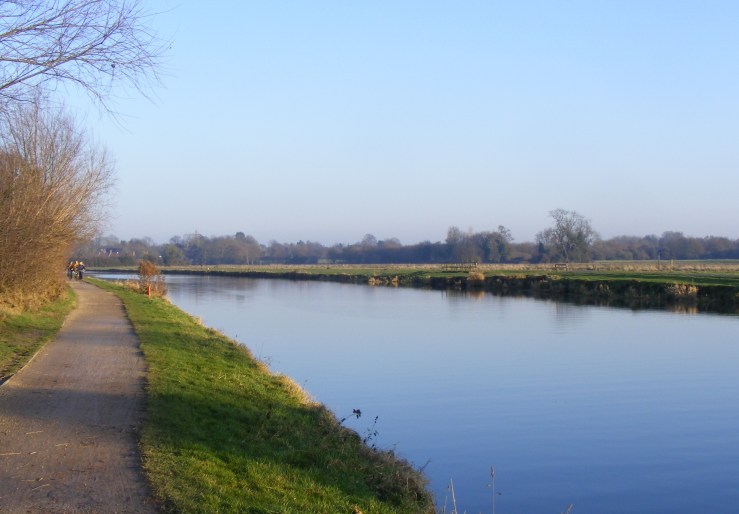
  • walks along the river
    • Getting off Twitter has helped every time. Getting out of the house has helped most times. A brisk four miles (up to the lock, and back again) makes things an awful lot better.
  • time by the sea
    • A long weekend in Lyme Regis in April; a week in Ventnor in July, and then another few days there just now.
  • the love and support of friends and family
    • I really do have some excellent people in my life.
  • perspective
    • Even when things inside my head have been dreadful, I have never forgotten that this is not reality. I think this might have been the first year that this happened.
  • the music.

December Reflections 10: I made this!

dscf1951

I’ve made lots of things this year. Here’s one from each end of it.

Speak Its Name appeared officially on 2 February, the culmination of eight years of thinking and dreaming and writing. It’s been well-received, and I’m immensely proud of having finally got it out into the world.

Making the necklace was sort of a meditation on being the Queen of Hearts. This is something I do quite a lot, when I’m exploring a new persona or project, or want to remind myself of some aspect of myself. I made some of the beads themselves – the black ones with hearts, the large red and white one, and the red, black, yellow and white ones are all polymer clay.

There has been other jewellery this year. Mostly for myself, though I made a necklace in rose quartz, moonstone and freshwater pearls for my stepmother-in-law. Sewing, I’ve only been doing patchwork: I got a couple of baby quilts finished this spring, before their recipients grew too large to fit under them.

And, of course, there are still works in progress. Those curtains. A Spoke In The Wheel. Another quilt. I’d like to get that one finished before I see the baby in question at the end of the month, but the rest of it is going to carry over into next year. And that’s fine. Making things takes time; and the things are the better for it.

This book and the last book: a tale of two timescales

No particular reason for this photo, except that I took it in July 2013

I’m a little awed by how fast this book has happened. Speak Its Name took me just over eight years. A Spoke In The Wheel is at eight months, and counting.

Speak Its Name went like this:

July-October 2007: planning. I fill a whole notebook with maps, family trees, and diagrams of what all my main characters – who, at the time, were the original six living at Alma Road – thought of each other.

November 2007: writing. 54,000 words. A very few of those are still extant: some of the chapter headings are extracts from a guide to running AngthMURC written by Peter, and most of those come from this first draft.

April 2008: writing again. Beginning a second draft. I didn’t get very far with this. It was in a much nicer typeface, but it was very self-consciously and archly Barchester, and I gave up after about 3500 words. Even less of this survives, though there are a few fossils in the chapter headings.

2011: another draft, incorporating sections of the previous two. The point of view is increasingly assigned to Peter and Colette.

November 2011: writing something completely different, I have a stoopid epiphany about how to plot.

I am at this moment bewildered and delighted by the way that two original characters have not only developed their own inevitable characters by means of nature and nurture, but have dragged their own plot in with them, because when A is the child of Y and Z, and B is the child of W and X, of course it follows that they will do F, G and H, because this is who they are, and this is the world they live in. And this is just as well for me, because goodness knows I can’t do plot.

November 2012: the House of Laity blocks women bishops. I am furious. I write a scene from Lydia’s point of view. I keep writing. I discover that Becky needs to be one of the movers and shakers in the political plot strand.

Two bits of plot joined themselves up in my mind, and suddenly the whole second half of the story has some actual structure and things are happening because of who the characters are. It’s like watching a bouncy castle get inflated, or making a pair of trousers, or something – all these shapeless pieces begin to fit together and make something that has three dimensions, and bits of which attach to other bits that you hadn’t expected.

July 2013: I discover that Lydia needs to be the hero of the story, and that more of it needs to come from her point of view. This is intimidating, because in the original concept she doesn’t come out until half way through, and now I have to spend the first half in her head? Thanks, story. However, it also becomes clear that if I do this it will be easier to incorporate the other side of the political story. I start writing more scenes from Lydia’s point of view. I blast through 40,000 words – and this is counting from November 2012, not any of the previous drafts. I make a timeline out of six sheets of A3 paper and of A4, and crawl around on the floor filling it in. I blast through 50,000 words. Then 60,000 words. I salvage some words from the 2011 draft.

August 2013: I spend a week on choir tour. When I’m not singing I’m writing. In the evenings, back in the dormitory, I’m cutting up the manuscript with a pair of scissors, rearranging the plot into a workable structure. I also take a trip to Ilchester, to get a feel for the geography of the place.

September 2013: I keep writing, though my pace has slowed a little. By the end of October I’ve hit 74,000 words.

November 2013: I start looking for holes – not necessarily plot holes, but bits where I’ve written [plot goes here] – and filling them. By the end of the month, it’s basically done. Or so I think.

December 2013: at an office Christmas party, somebody asks me, ‘But how did you get involved in all the church politics?’ I realise that the answer is too boring for words. Later, I realise that therefore I need to cut all the committee scenes. So why don’t I just take out everything that isn’t from Lydia’s point of view, and then see what’s missing?

May 2014: I come up with a title. I write a blurb.

June 2014: I edit.

July 2014: I start sending excerpts and synopses to agents.

This goes on for well over a year. Eventually –

September 2015: I decide to self-publish

November 2015: editors edit; nitpickers nitpick

December 2015: I set a publication date

January 2016: proofreaders proofread. I order ISBNs. I finalise the cover. I format the text.

February 2016: Speak Its Name goes live

dscf9518

And a picture from August 2015

By contrast, A Spoke in the Wheel has gone more like this:

August 2015: we are watching the Vuelta a España, and my husband makes a throwaway comment about how endurance athletes would be among the few people who would understand the spoon analogy of chronic illness.

After that, of course, I’m busy, until:

January 2016: I discover that that athleticism/chronic illness idea is developing a story around itself.

April 2016: I start writing and get to 8000 words.

June 2016: I hit 16,000 words and think it’s dreadful. I recognise that thinking it’s dreadful is probably a temporary state of affairs and keep on going.

July 2016: I devise and patch in a massive subplot

October 2016: I hit 50,000 words and think it’s dreadful. I recognise that thinking it’s dreadful is probably a temporary state of affairs and keep on going. I print out what I’ve got so far and attack it with a red pen.

November 2016: I think of a title

It has taken me ten months to get as far with A Spoke in the Wheel as I got with Speak Its Name in eight years. Of course, it’s arguable that I should start the clock in late November 2012, because very little of the final version of Speak Its Name was written before that. July 2013 was where the real action was. Then there’s the time I spent playing the waiting game with agents and publishers.

The other thing that strikes me, writing all this out, is how much of Speak Its Name happened in 2013, which was a difficult year in many other respects. My husband was finishing up his PhD, and I was supporting both of us. He was job-hunting, and I knew that, even if he was successful, the chances were that we’d have to move and I’d have to get another job myself (we did, and I did). And yet I wrote most of the book that year.

And it may yet be that A Spoke In The Wheel has some surprises for me, and I’ll have to do some serious redrafting before I’m done. All the same, I think the really serious lessons were the ones I learned last time round: how to plot; how to make the characters drive the plot; how to let characters make really terrible decisions even when I didn’t want them to.

I’m hoping to release A Spoke In The Wheel some time next summer, ideally during one of the Grand Tours, when the world has cycling on the brain. Looking at this, it feels as if this is perhaps going to be manageable.

Art, time and change

dscf0324

Tomorrow evening my church choir will be singing Maurice Duruflé’s Requiem. It’s an oddly appropriate choice for Remembrance Sunday, and it feels even more so given recent events: it was commissioned by the Vichy government in 1941, but Duruflé only finished it in 1947, after the war was over and the world was picking up the pieces.

Part of that, I suspect, is because Duruflé had a tendency to drag his feet on things he didn’t want to do. Only one of his works, the Notre Père, is not based on Gregorian chant, and that is because he only finished it after his wife had started writing it for him, having been requested repeatedly to set the Lord’s Prayer in the vernacular.

But part of it is the simple fact that art takes time. To create, to perform, to consume art, absorbs our attention for long enough to give us a new perspective. The six years that it took Duruflé to write the Requiem, the forty minutes that it takes to sing or to listen to it – that time makes space for things to change, for us to change.

For a couple of years I had a habit of picking up The Count of Monte Cristo in about October, when the days were getting shorter and my mood was getting lower. It’s about 1100 pages long; by the time I got to the end, something would have shifted.

One of the greatest gifts of art is the way that it takes us out of what we think is our own timeline; shows us – sometimes quite literally – the bigger picture; allows us to step back from the overwhelming emotion. Sometimes that feels like a betrayal: how can we possibly feel any less angry, any less hurt, any less scared, than we do at the moment? Surely this devastating news deserves nothing less than everything we have?

The last news story that made me cry was the murder of Jo Cox MP, just before the referendum in which the UK voted to leave the European Union. After that, nothing has really surprised me. Disappointed me, yes, but not surprised me.

The one before that was the General Synod decision in 2012, the one that voted against the appointment of women bishops. That was a November vote, too.

From where I am now, I am thinking, gosh, was that all I had to cry about in 2012? But it only seems trivial now because I know what happened next. When I’d cried about it, I wrote a blog post. Having written the blog post, I found that I was still hurt and angry, still feeling rejected because of a fundamental part of my own identity, and the only thing I could think of to do with that was write fiction.

Lydia choked, rolled onto her side, and sat up. ‘I never realised,’ she said wonderingly, ‘how much it was going to hurt. It goes right into the heart. They don’t want me. They were OK with the person they thought I was, so long as she stayed in her place, and was happy to teach the approved version of events and not rock the boat, but they don’t want the person I really am. I always knew, in theory, that I was only there on sufferance, that as soon as anyone worked out who I really was I’d be out on my ear, but it didn’t hit me until today how terrible it was, when you understand the reality that nobody wants you.’

That was where I began with the final draft. It went on from there: a year of writing; a year of editing; a year of becoming brave enough to put it out under my own name. I burned up the anger that had first fuelled it; I put it all into the text.

By the time I published Speak Its Name on 2 February 2016, six women had been consecrated as bishops in the Church of England. While I was writing, things had changed.

I’m not saying that things will magically become better if we can only wait it out. For some people it is, indeed, already too late. I am not saying that art can fix everything. There are some things that are just wrong. Nevertheless, it is the best tool that I have to make something good, something useful, perhaps even something beautiful, out of emotions that, left unchecked or harnessed for ill, will destroy the world.

Unknown unknowns

... things go whooshing past
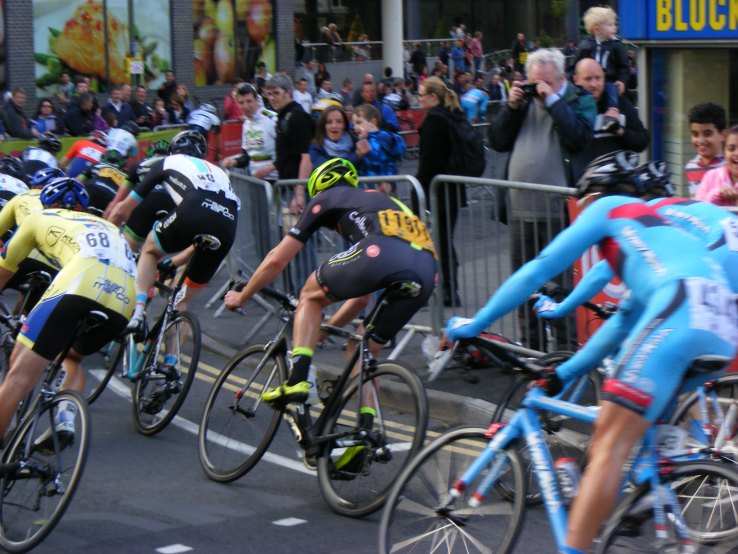
… things go whooshing past (the peloton sweeps round the Woking one-way system during the Tour Series 2013)

Wheels (that’s still its working title, and it’s still not going to be its real title) is rolling along quite nicely, sitting just under fifty thousand words. Much of what’s there at the moment is dialogue, stick figures having witty conversations in a thick fog. I’ll have to go back and put in the descriptions later.

So far, so familiar. What is a new experience for me is writing a first person narrator who’s… not unreliable, exactly, but not at all objective. True, I ended up with something similar in Speak Its Name, written in claustrophobically tight third person with a point of view character who wouldn’t come out even to herself. The difference is, Speak Its Name didn’t start out that way. It started out with multiple points of view, with multiple foibles and inconsistencies, but where I always knew what was ‘really’ going on.

Cutting everything down to fit into Lydia’s point of view was interesting. There are things that I knew and she didn’t. The most significant one is that Becky isn’t a trinitarian. If Lydia had known that – well, she’d have to deal with that, and it would add a huge chunk of drama onto a part of the book that really didn’t need any more drama. So I know that, and so do some of the other characters, whose thoughts on the matter we don’t hear, but Lydia never finds out.

Writing first person from scratch, I’m having to spend all my time in one character’s head, and I keep discovering things that he doesn’t know, and can’t know. He’s self-centred and often oblivious to subtext and body language. A friend read through the first couple of chapters few days ago, and made a throwaway comment about another character’s ‘flirtatious wink’.

‘Hang on,’ I said – to myself, ‘that wasn’t flirtatious!’ I wondered if I ought to clarify that it wasn’t flirtatious, and, if so, how.

Except the more I thought about it, the more I realised that… yes, it does make an awful lot more sense if she is flirting with him. Which puts a whole new complexion on the first half of the book, and leaves me with the problem of how to have her get over him, but it also makes the end a lot more convincing.

So now my challenge is to incorporate this new knowledge into the draft. My narrator can stay oblivious, but I can’t.