… that Stockholm is beautiful, but looks even better after a nap;
… that Bratislava is delightful, but not until you’ve had a shower;
… that carrying too heavy a bag detracts from one’s enjoyment of the great art in the Zwinger at Dresden;
… that nothing is fun if I’m hungry;
… to travel first class, check my suitcase into left luggage wherever possible, and wear comfortable knickers.
In short, to attend to my bodily needs in a timely fashion. And travelling alone meant that I had to take responsibility for all that myself. I had no companion to suggesting that we go to bed, or to decide which café we ate in or what sandwich I wanted. 2018 taught me to take care of myself.
The best meal of 2018 was undoubtedly breakfast in Bratislava. I quote from my diary:
… not overpriced at all, because there was a huge amount of it. If anything, the menu undersells it. Nicest breakfast I’ve had in ages. Orangey sausages – presumably with paprika – cherry tomatoes, red peppers, courgettes, squash, mangetout, French beans, various salad leaves; poached egg; toast.
In Slovak, assuming I copied it down correctly:
klobásky s. gril. zeleniou a pošírovaným vajcom
I ate an awful lot of bread and cheese when I was InterRailing, and by the half-way point a breakfast that consisted of bright colours and all the major food groups was very welcome. Dinner the previous night had been very good, and cheap (gnocchi with sheep’s cheese; white wine; Slovak whisky: just over €10), but even allowing for the stock of apples I’d been hauling round Europe I thought I was probably running a vitamin deficit. This was a delicious way to put that right. And the menu had some good advice, too.
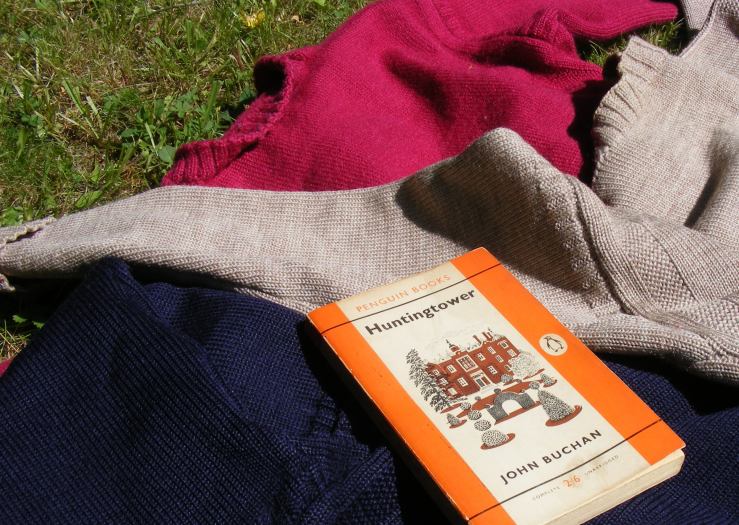
D and E will both feature books from John Buchan’s Dickson McCunn series. I’m not going to apologise for this: I can think of few authors who are so good at landscapes, either real or imaginary, and, if you don’t know the place yourself, it’s difficult to tell where the seam is between the two.
D is for Dalquharter, but it’s interesting to see how Dickson McCunn gets there. He starts in Glasgow – real enough – and takes a train.
A little after midday he descended from a grimy third-class station whose name I have forgotten. In the village near-by he purchased some new-baked buns and ginger biscuits…
We’re already in imaginary countryside. Dickson stays overnight in a village called Cloncae, which Google optimistically suggest might be an anagram of ‘Conceal’, and passes through Kilchrist, which also seems to be fictional. Then he reaches Kirkmichael, which might or might not be this village, and spends the night at the Black Bull before setting out again:
Westward there ran out a peninsula in the shape of an isosceles triangle, of which his present high-road was the base. At a distance of a mile or so a railway ran parallel to the road, and he could see the smoke of a goods train waiting at a tiny station islanded in acres of bog. Thence the moor swept down to meadows and scattered copses, above which hung a thin haze of smoke which betokened a village. Beyond it were further woodlands, not firs but old shady trees, and as they narrowed to a point the gleam of two tiny estuaries appeared on either side. He could not see the final cape, but he saw the sea beyond it, flawed with catspaws, gold in the afternoon sun, and on it a small herring smack flapping listless sails.
And then he gets the map out:
The peninsula was called the Cruives – an old name apparently, for it was in antique lettering. He vaguely remembered that ‘cruives’ had something to do with fishing, doubtless in the two streams which flanked it. One he had already crossed, the Laver, a clear tumbling water springing from green hills; the other, the Garple, descended from the rougher mountains to the south. The hidden village bore the name of Dalquharter, and the uncouth syllables awoke some vague recollection in his mind.
By this point I’m very happily convinced. I’ve had my railway journey (and some extra trains), I have a reasonable idea how I’d get there from the real world, and I have been shown the map.
Dickson encounters a poet, John Heritage, who he’s been avoiding, and they speculate about Dalquharter and Dickson’s psyche before heading towards the village.
In front of groves of birch and rowan smoked the first houses of a tiny village. The road had become a green ‘loaning’, on the ample margin of which cattle grazed. The moorland still showed itself in spits of heather, and some distance off, where a rivulet ran in a hollow, there were signs of a fire and figures near it…
… There were not more than a dozen whitewashed houses, all set in little gardens of wallflower and daffodil and early fruit blossom. A triangle of green filled the intervening space, and in it stood an ancient wooden pump. There was no schoolhouse or kirk; not even a post-office – only a red box in a cottage side. Beyond rose the high wall and the dark trees of the demesne, and to the right up a by-road which clung to the park edge stood a two-storeyed building which bore the legend ‘The Cruives Inn’.
And we’re off. Up until now, Dickson was on holiday; from here on it, it’s an adventure. And this, I think, is why the McCunn stories are my favourites. I don’t have mysterious men getting murdered in my London flat, and I don’t get recruited for spying missions. But I do go on holiday. I haven’t had a holiday turn into an adventure as yet, though there was that time I found myself in Vienna, explaining to an opera singer how to go about organising a strike…
Come to think of it, that’s probably John Buchan’s fault, too. More on that next time.
(What happened to December Reflections 1? You can see the picture here. But I’m using this prompt series as part of my Advent practice, and Advent only started today.)
I left on my InterRail adventure in the middle of April, which this year followed up the snowpocalypse of March with two solid weeks of grey dreariness, and all the trees stayed bare. The first day took me from London to Hamburg, which is about as far as one can comfortably get in a day. I had to change in Brussels, then Welkenraedt, then Aachen, and then finally Düsseldorf on the way.
I’d got it all planned – and, as my plan came to pass, I became increasingly confident. I was not worried about the Eurostar. I felt a bit nervous about the Belgian trains, but after I’d boarded and alighted from two I was beginning to feel as if I could do this. There were young green leaves on the trees in Belgium, too.
And the timetable worked out in such a way that I had a choice of trains at Aachen. I’d originally envisaged myself pushing right on through to Hamburg as fast as possible, but then I thought it would be a pity not to see where Charlemagne was crowned, and so I decided that I could be brave. I could be spontaneous. I could change my plans.
I talked a bit of German. I worked out the left luggage locker. And I hot-footed it across Aachen to the cathedral.
And outside Aachen cathedral was this glorious magnolia tree, in full bloom. It was as if my long-delayed spring had come to me all at once – except that I’d gone to find it.
When I first started thinking about writing this series, I imagined that I’d be ignoring fantasy altogether. I wouldn’t be able to locate Narnia on a map of the world; at least, I couldn’t point to where it should be, so was it worth my while considering the genre at all?
But I realised pretty quickly that dismissing fantasy would rule out one fictional nation that definitely deserves its place in this gazetteer.
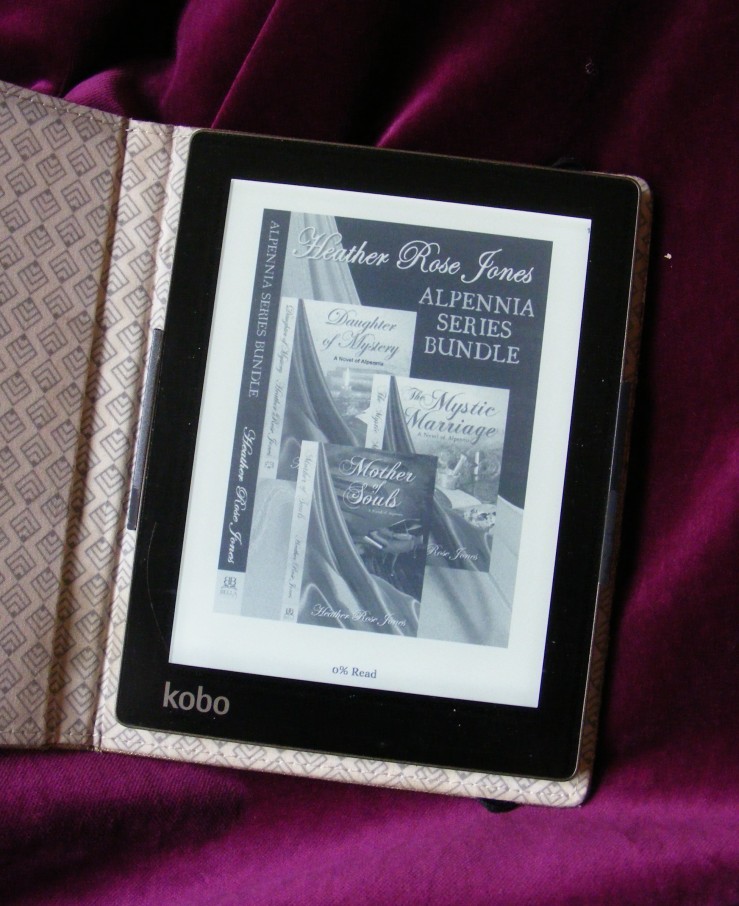
If I’d written a wishlist of all the tropes and themes that I most enjoy reading, and handed my specifications over to an author, I couldn’t have liked the result better than I like this. The series contains nights at the opera, women in breeches, swashbuckling, politics both national and ecclesiastical, relationships between women, and a sensitive portrayal of religious experience. And a fictional state somewhere in Europe. Which is why we’re here.
The worldbuilding is meticulous. Alpennia is made distinctive by physical geography, by history, by religious practice, and, perhaps most obviously, by language. Where some authors would have let matters carry on in assumed French or German, Jones gives Alpennia a language of its own, and it works remarkably well.
How do you get there? How do I get there? Because that’s my main criterion for including a place in this gazetteer. And if getting there had to involve magic, it wouldn’t make the cut.
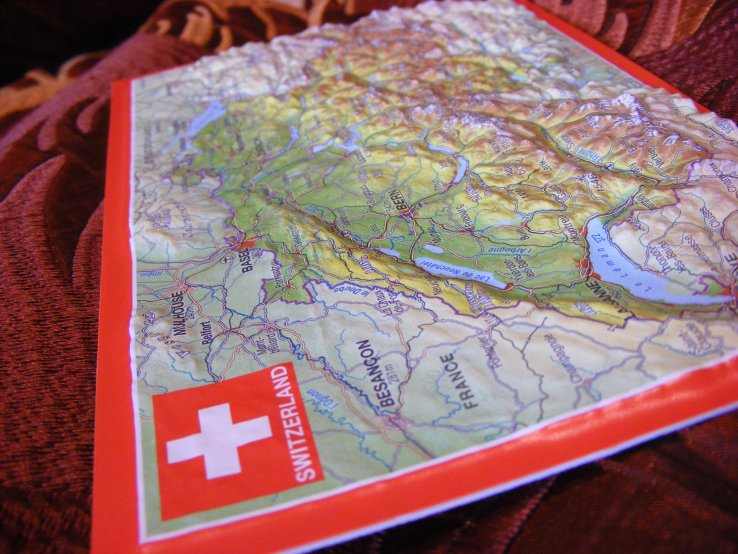
In Daughter of Mystery, Alpennia’s location is established in relation to Switzerland:
Chalanz was well out of sight around a curve of the hills behind her but in the other direction, to the south, she could see all the way to where the mountains rose, snowcapped, on the southeastern border of Alpennia, guarding the roads to Switzerland and places beyond.
In The Mystic Marriage we get a fix on it from the other direction. Antuniet travels from Heidelberg to Rotenek, the country’s capital, via Basel.
As it happens, magic in these books might impede travel, but it doesn’t seem to enable it in any meaningful sense. They’re set in the first half of the nineteenth century, and people travel on foot, or horseback, or coach. I imagine that there’s a railway line these days, and perhaps even an airport.
Leaving the realms of fantasy – or, since I’m now turning to Anne of Green Gables, perhaps not – and crossing the Atlantic brings me to Avonlea.
I suspect that I’ll be writing a lot over the course of this series about how characters enter and leave fictional places, about outsiders and insiders are identified, and about how the established community is set up.
Anne of Green Gables does all of those things within the first few chapters. A typical opening would see the orphan Anne arriving on a train, to be met by Matthew Cuthbert and escorted into Avonlea.
And in fact that’s what happens. But it doesn’t happen until Avonlea has been introduced to us. The novel opens with Mrs Rachel Lynde seeing Matthew leaving Avonlea, and wondering why. It’s a clever move to get the best of both worlds: Avonlea may never have seen anything like Anne, but we can’t understand the significance of that unless we understand a little bit about Avonlea.
In passing, we get a geographical clue:
Mrs Rachel found abundant time to sit for hours at her kitchen window… keeping a sharp eye on the main road that crossed the hollow and wound up the steep red hill beyond. Since Avonlea occupied a little triangular peninsula jutting out into the Gulf of St Lawrence, with water on two sides of it, anybody who went out of it or into it had to pass over that hill road and so run the unseen gauntlet of Mrs Rachel’s all-seeing eye.
Then we follow Matthew out of Avonlea. There’s a little hint of the lyrical descriptive note that the narrative voice shares with Anne, but it’s nothing to what hits the page when we meet Anne herself and she meets Avonlea:
They were on the crest of a hill. The sun had set some time since, but the landscape was still clear in the mellow afterlight. To the west a dark church spire rose up against a marigold sky. Below was a little valley, and beyond a long, gently-rising slope with snug farmsteads scattered along it. From one to another the child’s eyes darted, eager and wistful. At last they lingered on one away to the left, far back from the road, dimly white with blossoming trees in the twilight of the surrounding woods. Over it, in the stainless south-west sky, a great crystal-white star was shining like a lamp of guidance and promise.
This alternation continues throughout the book. Marilla Cuthbert takes over the more prosaic point of view, while Anne keeps the descriptions. (Matthew continues not to say very much.) It’s effective: in the reader’s mind, Avonlea becomes a very beautiful place, but one that’s the creation of a very human community.
How to get there? I refer you to this thoroughly evidenced page matching the locations in the books with real-world settlements. Find your way to Charlottetown, and off you go. Actually, I’m not sure whether, growing up, it ever occurred to me to doubt that Avonlea was real.
Books referred to in this post
Daughter of Mystery, Heather Rose Jones
The Mystic Marriage, Heather Rose Jones
Mother of Souls, Heather Rose Jones
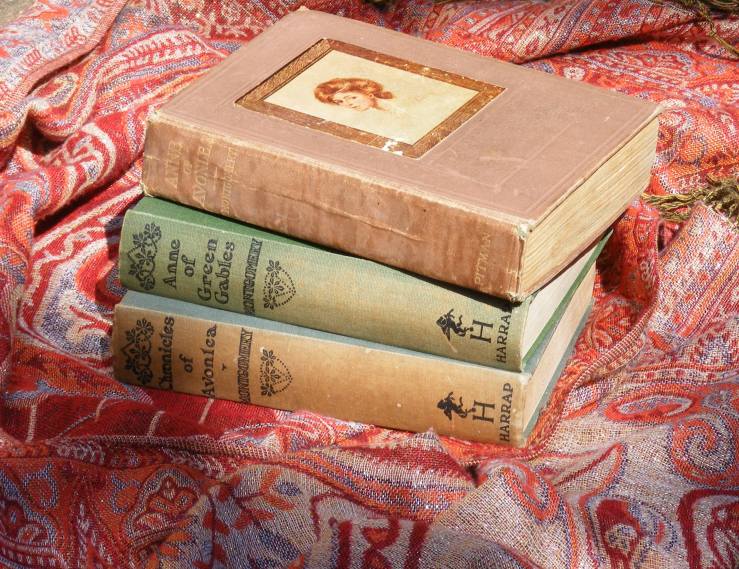
Anne of Green Gables (and, obliquely, much of the rest of the Anne series), L. M. Montgomery
Earlier this week I updated my ‘About’ page to add a little about what visitors can expect to find on this site. I wrote that the blog is largely about ‘other people’s books, travel, and the writing process’.
This blog series is going to deal with two of those things. I’m going to do an abedecedarium – an A to, I hope, Z of fictional places in other people’s books, and speculate as to how one might find them if they were real. Ever since my father read me The Prisoner of Zenda I’ve been fascinated by places that sound as if they might exist, but don’t, by books that convince me that I could take a train or just walk over the border into somewhere that’s only real in the author’s head, and now mine.
How am I going to choose these places? It’s going to come down to these two questions:
Do I believe in the place? Do geography and politics seem plausible?
Do I believe that I, a normal human being with no powers more sophisticated than being able to hold a map the right way up and knowing how to use the Deutsche Bahn app, could get to the place?
I am not going to be fussy about genre. This series will range across detective stories, fanfiction, teen books, thrillers, classics, possibly even the occasional school story. Sci-fi and fantasy are less likely to be included, for obvious reasons: if I need a spaceship to get there, it’s not going in. Portal fantasy is out, as well. With (at time of planning) one honourable exception.
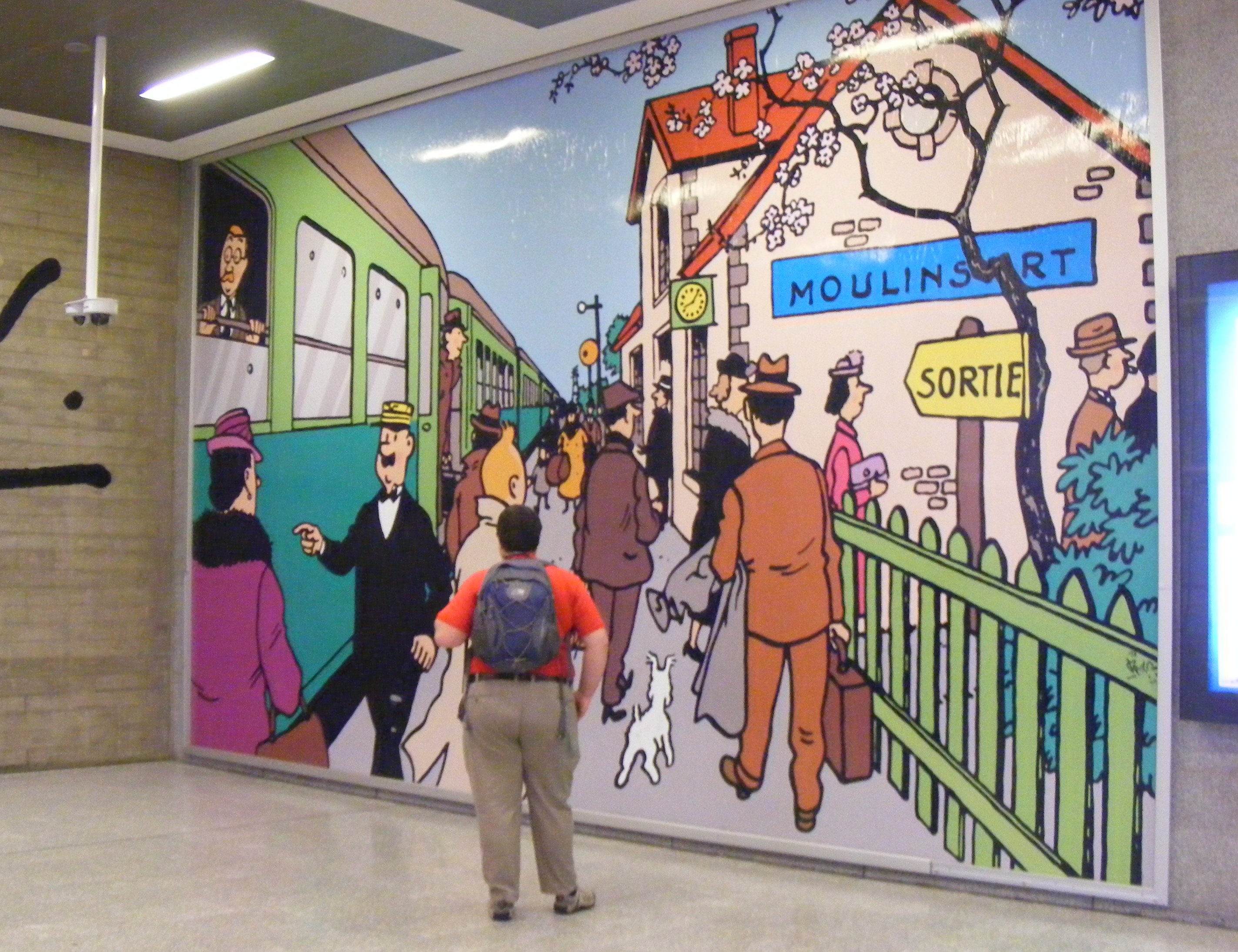
I am restricting myself to textual canons, though I’m throwing in Tintin for old times’ sake. Much as I adore The Merry Widow, you will not find Pontevedro here (or even Marsovia, as the first English translation had it). Nor am I including the deliberately silly. Barataria and Pfennig-Halbfennig would be out anyway under the ‘book canons’ rule, but you also won’t find Norman Hunter’s Kumdown Upwardz, Gadzooks, or Urgburg-under-Ug. (Which is a pity, because it’s a bit of a struggle to find fictional places beginning with U.)
Inevitably, I will miss some places, and it will probably be because I haven’t read their books. If it turns out that one of them is your favourite, I apologise. I’ll be inviting people to add their own recommendations in comments every week.
I’ll be sharing pictures of the books, and maps where they have them, and I’ll be talking about what makes me believe in the place. I’ll probably also wander onto byways involving my own travels in real places, and my own travails coming up with fictional ones.
Want to join me? You’d be very welcome. Grab a toothbrush and your passport, and I’ll see you back here next Saturday.
The posts
A – B – C – D – E – F – G – H – I – J – K – L – M – N – O – P – Q – R – S – T – U – V – W – X – Y – Z
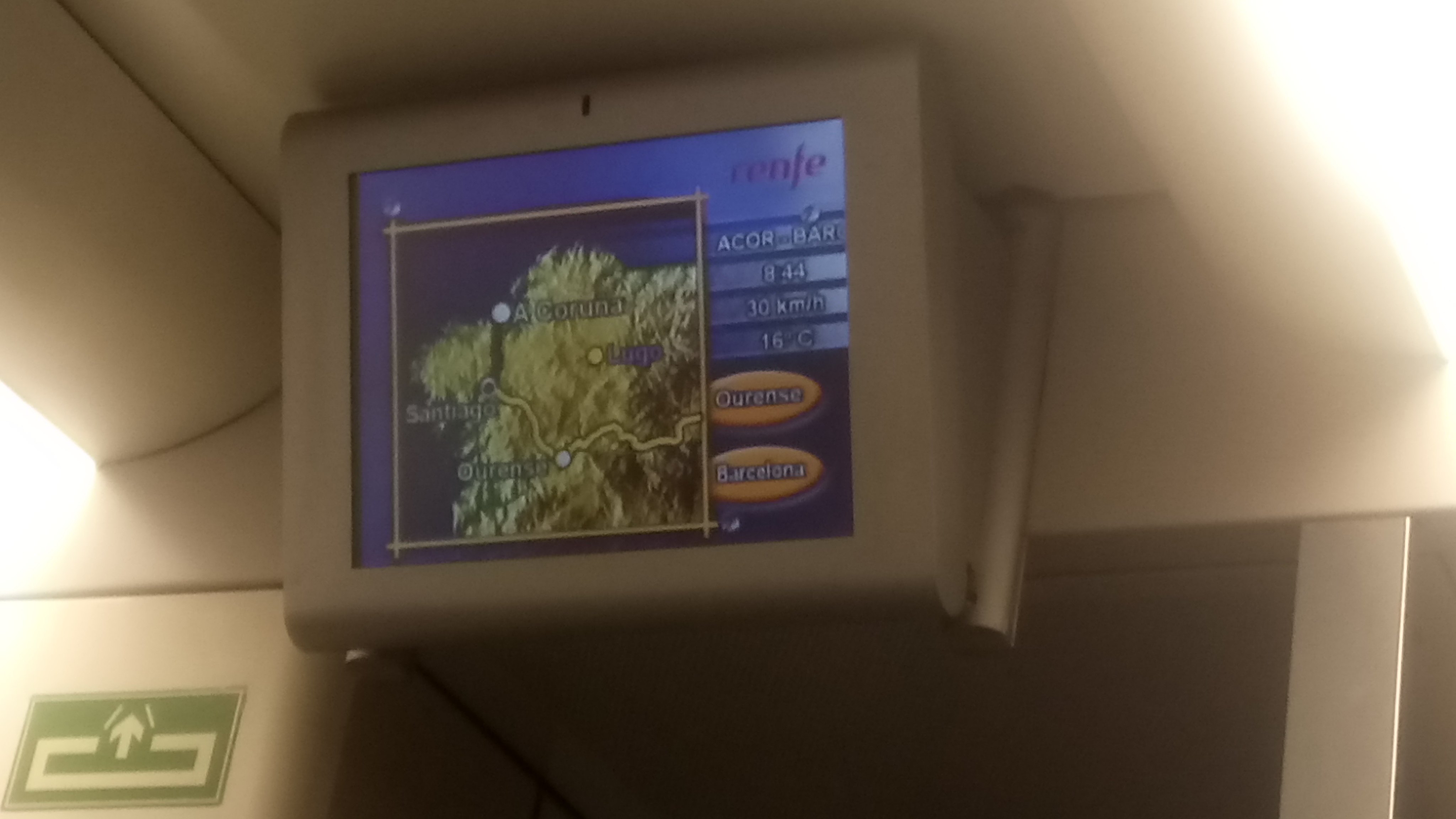
At the end of Monday I was still not famous. On Tuesday morning we had a train to catch, so didn’t check. We ate breakfast in the café in the station, and then boarded a train headed eastwards. It trundled along at 80km/h for the first couple of hours, then slowed and crept along the sides of steep wooded valleys, following a river. Then it went through Astorga and out onto the meseta, and I sat watching intently out of the window for landmarks I might have seen ten years before, walking the other way. I couldn’t swear to any particular landmark, but I saw some storks’ nests for certain, and was glad.
We came out into Palencia in the early afternoon, and found intense heat, and pale stone buildings, and a park with a retired steamroller mounted in it, and old men sitting on benches. ‘This is what Spain is meant to be like,’ John said, not entirely joking.
It was siesta hour. I’d been the one to resort to Booking.com this time, and had found us a room in a rather quiet, tired, hotel. We found it and checked in – and found the wi-fi.
Now, it turned out, I was famous. The Society of Authors had put out a press release, and I learned that I was the first ever self-published author to be shortlisted for the Betty Trask Prize. I had emails, Twitter notifications. I sent text messages to my parents, linked the story on Facebook and my blog, and watched the notifications roll in for a bit.
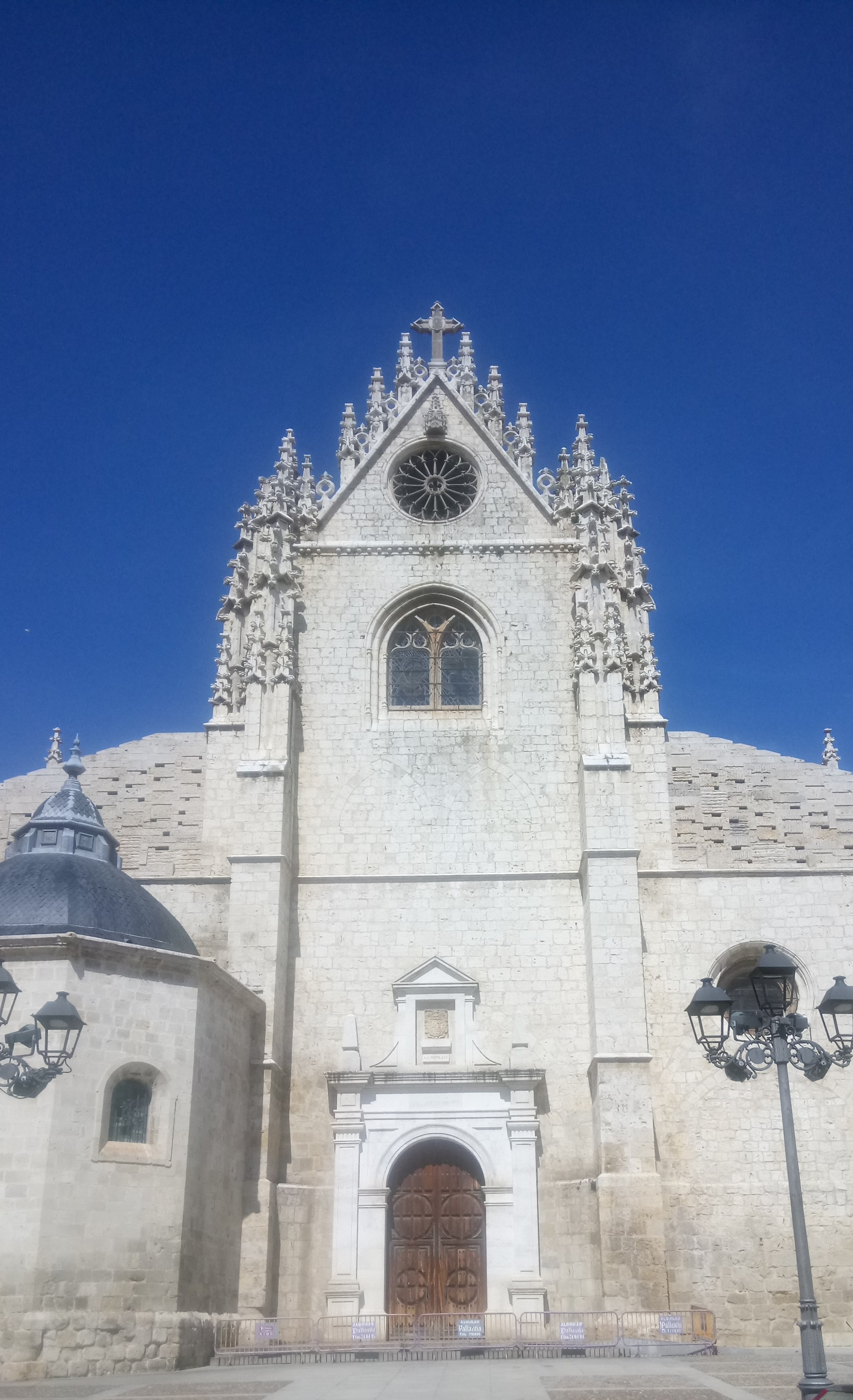
Then we went out to look at the cathedral.
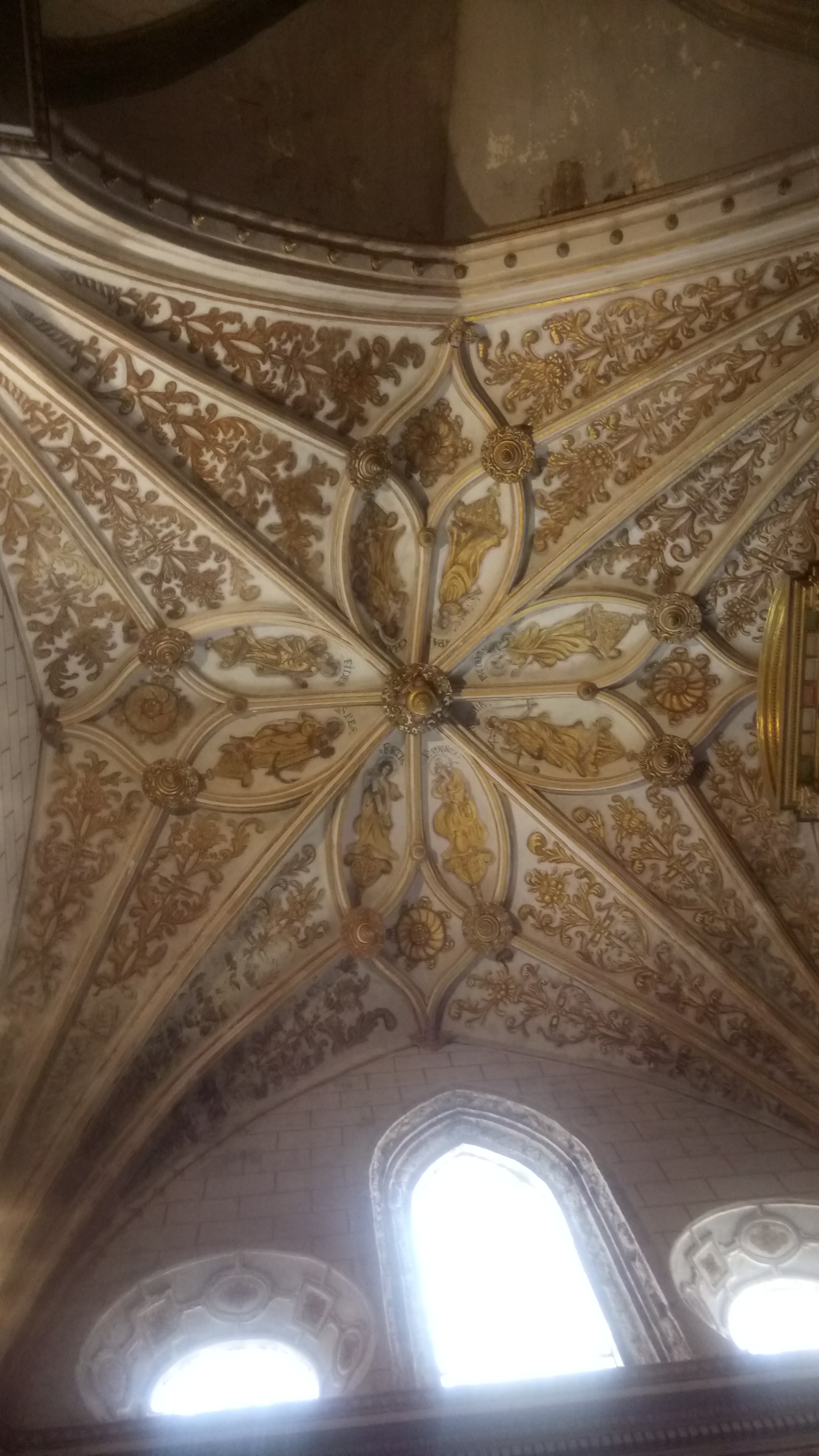
Palencia immediately went to the top of my ‘favourite Spanish cathedrals’ list, knocking Burgos down into second place. It was cool and quiet, with far more stained glass than any other I’d visited, beautiful ceilings, and an actual sensible system for keeping the frivolous out of the way of the devout (or vice versa) – separate doors, sending the latter to a chapel right in the middle of of the cathedral, rather than shoved in a (tiny) chapel opposite the main doors as an embarrassment, as at St Paul’s in London. We came in as tourists, and didn’t have to pay because it was a Tuesday. For us, too, there was huge, silent space, and brightness through high windows.
In the evening we ate at a table under a canopy in the square, with too-sweet white Rioja (which I suppose I should have expected, with a name like ‘Diamante’), and liqueurs on the house, and talked about how to spend my winnings. ‘If I win the whole thing,’ I said, ‘I’ll go to Brazil, and if I don’t, I’ll go InterRailing.’
17 May 2017
The next morning was cloudy and considerably cooler. We explored some more of the city, looking at an exhibition about the Spanish air force, walking by the river, going into normal shops (I came away with pyrite beads and owl-shaped ceramic beads; John, with a fidget spinner), drinking coffee and watching storks in their nests on the corners of church belfries.
Afterwards, we sat in the cafeteria in Palencia station watching the rain and waiting for our train. The incoming train from A Coruña and Santiago got later and later, and we became increasingly thankful that we hadn’t attempted to do the whole journey in one day. Eventually our train to Santander turned up and the Coruña train still hadn’t come, and we felt very thankful indeed.
The Santander train was much quicker, of course; it was a much shorter journey. A documentary about Coco Chanel was being shown on the screens overhead. I was quite interested, but the file had some glitch that kept sending it back to the beginning.
Once more in Santander, we returned to Café Royalty for a quick supper before boarding the Pont Aven and investigating all its questionable delights: the duty-free shop, the bars, and the cinemas. The choice of films was, of course, fairly limited: the choice that evening was between the live-action Beauty and the Beast and some action movie I now forget. John and I, possibly compensating for our television-deprived childhood, went for the Disney, and, at the appointed hour, we duly filed into our seats.
Then somebody said my name. ‘Kathleen?’
It turned out to be Father Paul, who had been the Catholic chaplain at my university, and who was walking the Camino del Norte in stages. I introduced John. We attempted to catch up on ten years worth of life and several hundred miles of walking in three minutes before the film started, which didn’t really work.
He was not interested in Beauty and the Beast, though, so he withdrew to the other cinema to watch the action movie. John and I quite enjoyed Beauty and the Beast, and then went to bed.
18 May 2017
I got up earlier than I needed to in order to see the tip of Brittany as the ship passed close in to the shore; but it was good to have the sea to myself for a couple of hours; well, me and the woman hoovering the carpet in the bar, and the rep from the whale charity, and a few other early risers. It was a big ship. John appeared somewhere between ten and eleven and was still in time to see France pass by.
I couldn’t get onto the internet, which was probably good for my peace of mind. I read Madensky Square (acquired from the duty free shop) instead, just sitting there with the sea outside the window and a book and a cup of coffee and no work that I could practicably do. There would be plenty of it when I got back to dry land.
When I packed Four Quartets, I’d expected ‘Little Gidding’ to be the one that had the most to say to me, to be thinking about roses and yew trees and the end of all our exploring. And yet, from the fog-choked eucalyptus of the FEVE, to here, taking the voyage of ten days ago in reverse, my identity as a writer rewritten, it had been ‘The Dry Salvages’ all the way:
You are not those who saw the harbour
Receding, or those who will disembark.
Here between the hither and the farther shore
While time is withdrawn, consider the future
And the past with an equal mind.
The last day of the Camino Inglés: Sigüeiro to Santiago. It was a pleasant enough day’s walk, especially in the early stages: a cuckoo in the woods above Sigüeiro; gentle slopes; gentle sunshine.
Fellow travellers
The view from the Camino
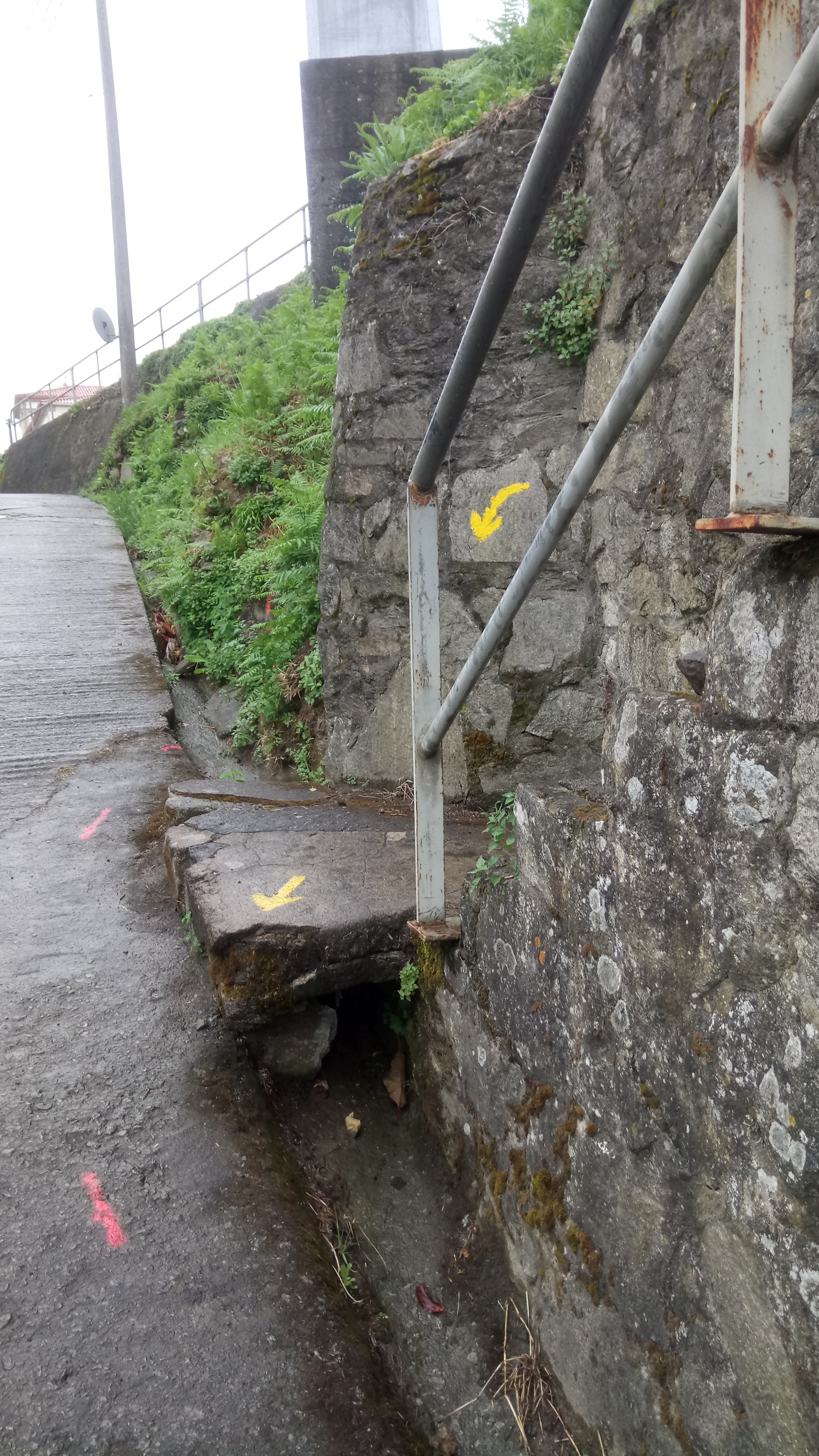
Sixteen kilometres according to the book, but the yellow arrows departed from the book at a left turn (book)/right turn (arrows).
We followed the arrows.
The diversion (if such it was) was tedious: it took us through a bus stop and along a very wet and muddy path, though fortunately not so wet that it got through my boots. The worst thing about it was the fact that there were no waymarkings, so I was constantly worrying that we’d got ourselves lost. The sign for Hotel Castro was a real relief, and the coffee was as welcome as the assurance that yes, we were indeed still on the Camino Inglés, but we then spent much time discussing whether it was a change to the route, a reversion to a previous route, or a scam by the Hotel Castro to drum up more trade. (They got €2 out of us for coffee. I suppose it adds up.) Hotel Castro had set up an ‘enchanted forest’: it was a silhouette of a witch on a white umbrella. It was a little bit underwhelming.
Hotel Castro sending us back on the right path. Possibly.
We worked our way gradually downhill into the suburbs of Santiago, getting hotter all the while. Actually it wasn’t so bad as it could have been: the arrows had rejoined the guidebook, so at least we were no longer worrying about being led astray.
On the Camino Inglés the cathedral creeps into view gradually: you see the tops of the spires peeping out above the rooftops, and only if you know what to look for. We knew.
Towards the cathedral
And we found the way there with no trouble at all, but there was no obvious way in: the front was covered in scaffolding.
We went to the pilgrim office instead, and found a massive queue. John recommends going in November. I recommend going ten years ago. Still, we got our compostelas and went to find lunch – after which I felt much happier.
Completed credencial: evidence of a Camino
John booked a hotel via Booking.com, and I felt happier still. We then wandered around most of the old town trying to find it, and eventually had to ask in a tat shop, by which time I was feeling thoroughly sick of Santiago and all the people in it.
View from the hotel window
A feeling which, I regret to say, persisted on and off all through that Sunday and Monday. There were moments, but really it was such a shock after the quiet of the Camino Inglés, and it has become such a tourist/pilgrim trap even compared to the last time I did it…
Which I knew. This is why we chose the Camino Inglés. It just hadn’t occurred to me that Santiago was bound to be packed, regardless of where we started.
Getting away from the old town helped quite a lot. We found another fairground, and ate chips from a booth and looked at second hand bookstalls.
I dragged John to the pilgrim mass on Sunday evening – in Spanish; if one has to feel that one’s a heretic, it’s less galling in a foreign language – though we had to stand through an interminable sermon (and they take the trouble to remind you in English that heretics can’t receive communion). After that we picked a pleasant bar and had a drink. Tapas appeared, in the form of an empanada. We shared it: I had the tuna, and John the bread.
Santiago, watching over the bar.
15 May 2017
We went back to the cathedral early on Monday morning and it was quite a lot better. I was brave enough to give Saint James a proper hug this time, as opposed to the gingerly pat on the shoulder I managed in 2007, and I found that there was a sense of holiness around the crypt, never mind the fact that I don’t believe that his earthly remains are there, no matter that I don’t believe his matter matters any more.
On Monday we went around the cathedral museum, and sprung for the tour of the roof as well. And this was worth doing, for the views over the city rooftops and for the nooks and crannies that one never normally sees. We were also charmed to find in the museum an altarpiece given to Santiago in the late fifteenth century by a man named John Goodyear from ‘Chal, Isla de Wight’ – or, as we know it, Chale, a couple of miles down the road from where our parents live.
We also returned to the café next to our hotel several times during the course of the day, so that I could get into wi-fi range and see whether I was famous yet. Because this was the day that the Society of Authors was meant to be announcing the Betty Trask shortlist, and this would mean that I was finally able to tell somebody other than John.
I was not famous yet. We walked down to the station to buy tickets to Palencia (€26 apiece, which wasn’t bad at all), and spent the rest of the day writing postcards, drinking coffee, returning to wi-fi range to check Twitter again, and going rather overboard in the souvenir shops. (A cycle jersey for John, an extravagant selection of sew-on patches for my camp blanket, and a model horreo for our father to put next his model railway. And more postcards.)
Then, on John’s suggestion, we went to a bar that the internet said would have live music, except instead it had stand-up comedy in Galician, possibly being rude about pilgrims. It was difficult to tell, for obvious reasons. Though stand-up comedy in Castilian would have been just as unintelligible to us. There was live music, in the form of a couple of cor anglais solos. Also a musical box, though that was part of a card trick.
When I went to bed I was still not famous.
Next time: we like Palencia a lot, and then go home. And I get my fifteen minutes of fame.
The Camino Inglés delights in taking you from sea level, up uncomfortably steep gradients, and back to sea level again. Sometimes this is repeated several times over the course of one day. The route from Pontedeume to Betanzos is a case in point. We started on the waterfront. The bar where we ate breakfast (coffee and cold churros) was on the next street along. (The Japanese pilgrims, incidentally, ate their breakfast in the albergue at ten past six.) After that, we joined the route and it went straight up.
Uphill through Pontedeume
And it’s not as if either of us is unfamiliar with the concept of ‘up’. Our parents live in Ventnor, which is about as close as Britain gets to those Mediterranean seaside towns where the streets are arranged in higgledy-piggledy lines up a cliff. This was something else. (It was also raining.) Within about fifteen minutes (give or take a diversion to look at the church of Santiago, which was shut, and several breaks for me to catch my breath) we’d climbed one hundred and fifty metres and were looking down on the town and the bay.
Looking back down across Pontedeume
Once we were out of the town, the gradient became less punishing. The rain, however, continued to fall, and I gave up on any hope of my boots drying out. I kept my waterproof trousers on all day – even after it stopped raining I couldn’t be bothered taking them off, and anyway, they were snug enough to compensate for my walking trousers being a size too big.
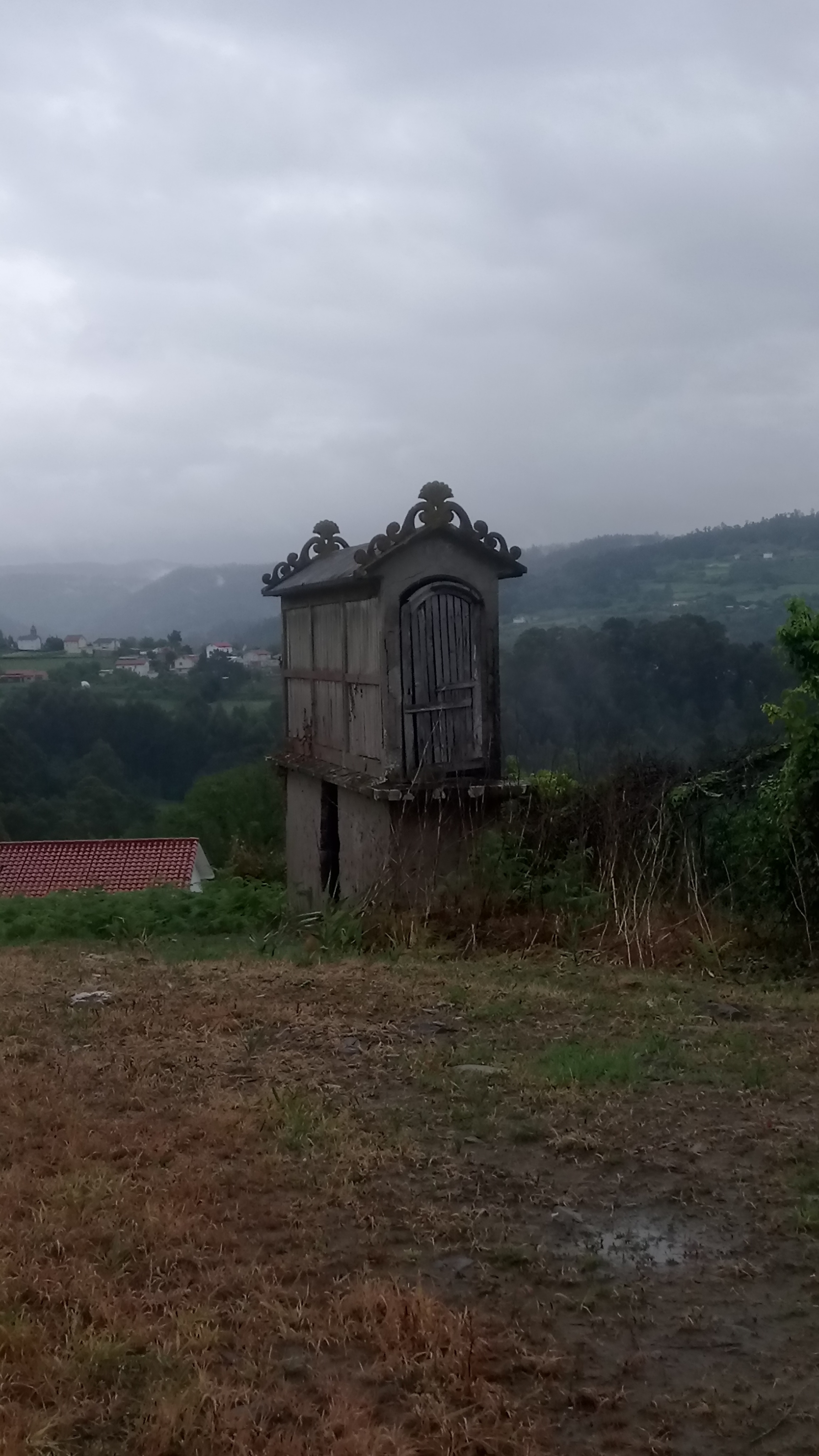
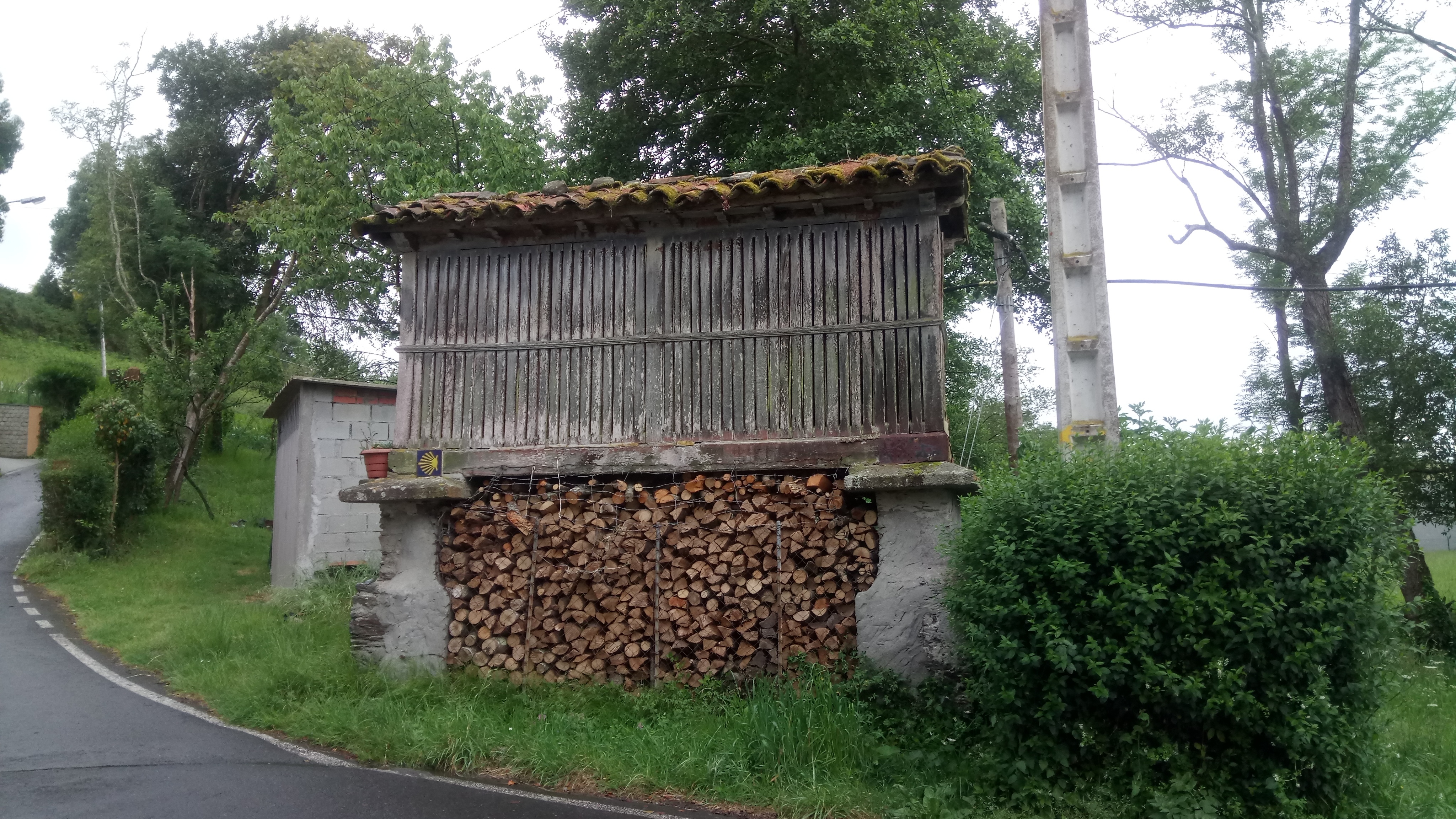
Horreo with entirely appropriate rooftop decoration
We were up and down all day. The first downwards gradient was a gentle one, taking us down through scrubby woodland (a nature reserve, I think) towards a golf course. That was deserted, of course, in this weather. The path led straight across, and then into a copse and across a little brook.
After that there were some fairly tedious bits over and then alongside a motorway, leading at last into Miño. This was a reasonably sizeable town, and had a choice of bars. Sitting outside one of them were three pilgrims we didn’t recognise. We stopped for a cup of coffee in the next one along, and then kept on going.
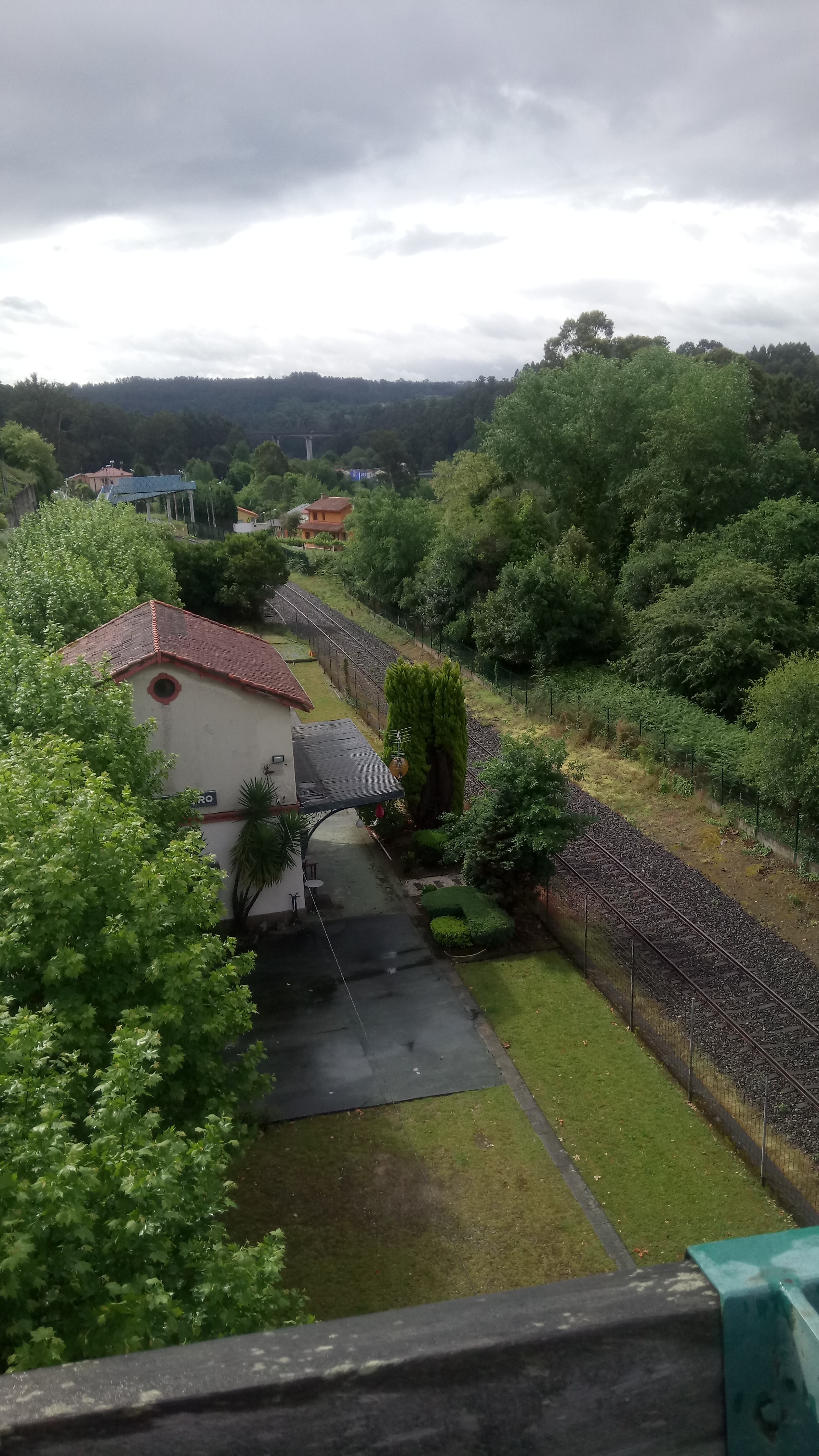
Looking down on the railway line at Miño
Downhill, again. Heading out of town, the path led gently down all the way down to sea level, and after that up, and up, and up, above the level of the motorway flyovers. 20%. One in five. At least the maths was easy.
We sat on a bench in a dilapidated children’s playground at the top to get our breath back and eat Naked bars. (Naked bars are very good if you’re hiking with a vegan, or hiking as a vegan. They don’t melt, and they don’t crumble too badly.) Then there were lots of single track lanes. We met two dogs (one a very friendly puppy) on one of them and, a little further down the hill, looked back to find that a dapple-grey horse was following us. We had no idea what to do about a loose horse; fortunately it got fed up with the idea after a hundred yards or so, and turned off into a field.
A rural bus shelter made a decent spot to stop for lunch. More of the same followed: narrow roads, little hamlets. I was surprised to find the road surface not too hard on my feet, but I was still very tired by the end of the day. Then, at last, a field of allotments (and a briefly interested cat), and we proceeded into the walled town of Betanzos.
The Betanzos albergue was big, and well-appointed. There were two floors of dormitories, laundry rooms (yes, plural), boot racks, sitting rooms, a kitchen and dining area, plenty of showers, and wi-fi. Also the heights of joy and depths of despair that come with hearing, and then believing that one has misinterpreted, the word ‘secadora‘. And the joy that returns when it does in fact turn out to mean ‘tumble dryer’.
Granted, there was a very odd mark on the ceiling above the shower that I used (mould, I thought) but generally speaking it was all that one would wish. We bagged bunks, unpacked, went off to take showers, and, as our father would say, ‘went and died for an hour or so’.
There were more pilgrims here than at Pontedeume. The trio we’d seen earlier had turned up here, and turned out to be Spanish; apart from them, there was an Italian man in his sixties, and, of course, the three Japanese men.
The churches and streets of Betanzos
I looked at my boots to see how far the line of damp had receded (not as far as I’d have liked) and dragged John out to see the churches of Betanzos and their fabulous Romanesque architecture. I liked the houses, too; as in Ferrol and Pontedeume, many of them were magnificent affairs of three or four storeys, with graceful glazed balconies on the upper floors.
After that we set off to look for O Pasotempo, and food.
The CSJ guidebook described O Pasotempo as –
‘a sort of rural Spanish Victorian theme park erected in 1893 by a couple of local men who made their fortune in South America and came home to share the wealth and cultural excitement with their home town’.
So of course we had to look at it.
It was a gloriously eccentric nineteenth century pleasure garden, dilapidated in a way that was just the right side of the boundary between ‘charming’ and ‘public health hazard’, and filled with all sorts of weird and wonderful sculptures. Shells set into the walls. A relief map of the Panama Canal. A panel of clocks – the usual London – New York – Paris set-up, except not, because it was made of plaster, and there were about 25 clock faces in total, and the central one said Buenos Aires. Half mermaids. A mandarin duck. A mallard duck with ducklings. (These were real.) Plaster figurines of intrepid explorers on camels. Caves! With fake stalactites! And dragons! We agreed that it was like Blackgang Chine, only considerably weirder. We loved it.
This slideshow requires JavaScript.
I had mismanaged my blood sugar to the point where there was no question of holding out for food until we got back to the albergue. But the supermarket that we had passed on the way to O Pasatempo had a café. The café provided sugary drinks and snacks. The supermarket provided longer term sustenance. We stocked up for the next couple of days, then walked back to the albergue to cook and eat some of our purchases. ‘Cook’ in this context meant ‘heat up in the microwave’. It made a change from bread and cheese.
Afterwards, we sat in the sitting room upstairs, reading, and talking to an American pilgrim who was doing a little mending. This was more in resignation than in expectation, as she had been waiting for so long to recover for an injury that her visa had run out, and she was going to have to fly home without completing her Camino. But she was still going to do her sewing.
For my part, I wondered morbidly if I was coming down with a cold. But I embraced the power of denial, and went to bed.
Next time: the most wonderful surprise of the whole Camino. And some eggs.
The first thing was to get around the ría de Ferrol; it took twenty-eight kilometres and all of the first day. We started at the naval museum – well, we started at the hotel, really; that was where we got our credenciales stamped – and then worked our way around three, or four, or perhaps five, sides of the bay. We were to see the big Navantia arch in the docks from several different angles over the course of the day.
Busman’s holiday
The waymarks didn’t have QR codes the last time I walked a Camino (to be fair, we didn’t see many others like this)
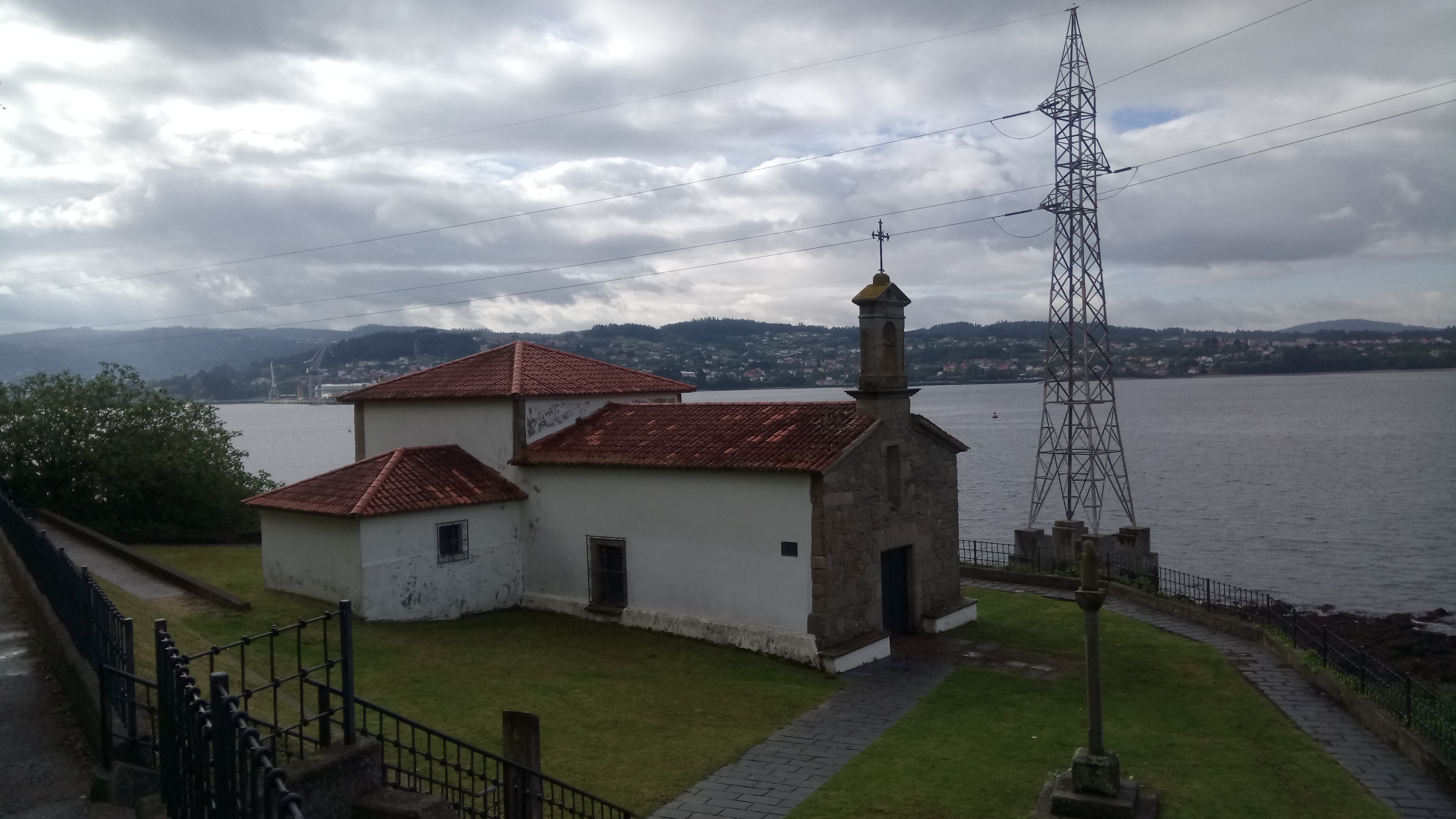
Which was not to say that the scenery was uninteresting, simply that it didn’t seem as if we were getting very far. For the first hour or so we were very close to the water, and walking past cranes and ships – and a lonely little red-roofed chapel. Then we started gaining height and walking a little way inland. An avenue took us to a path alongside a major road, and then we crossed around the edge of a roundabout into a trading estate.
Harbourside chapel
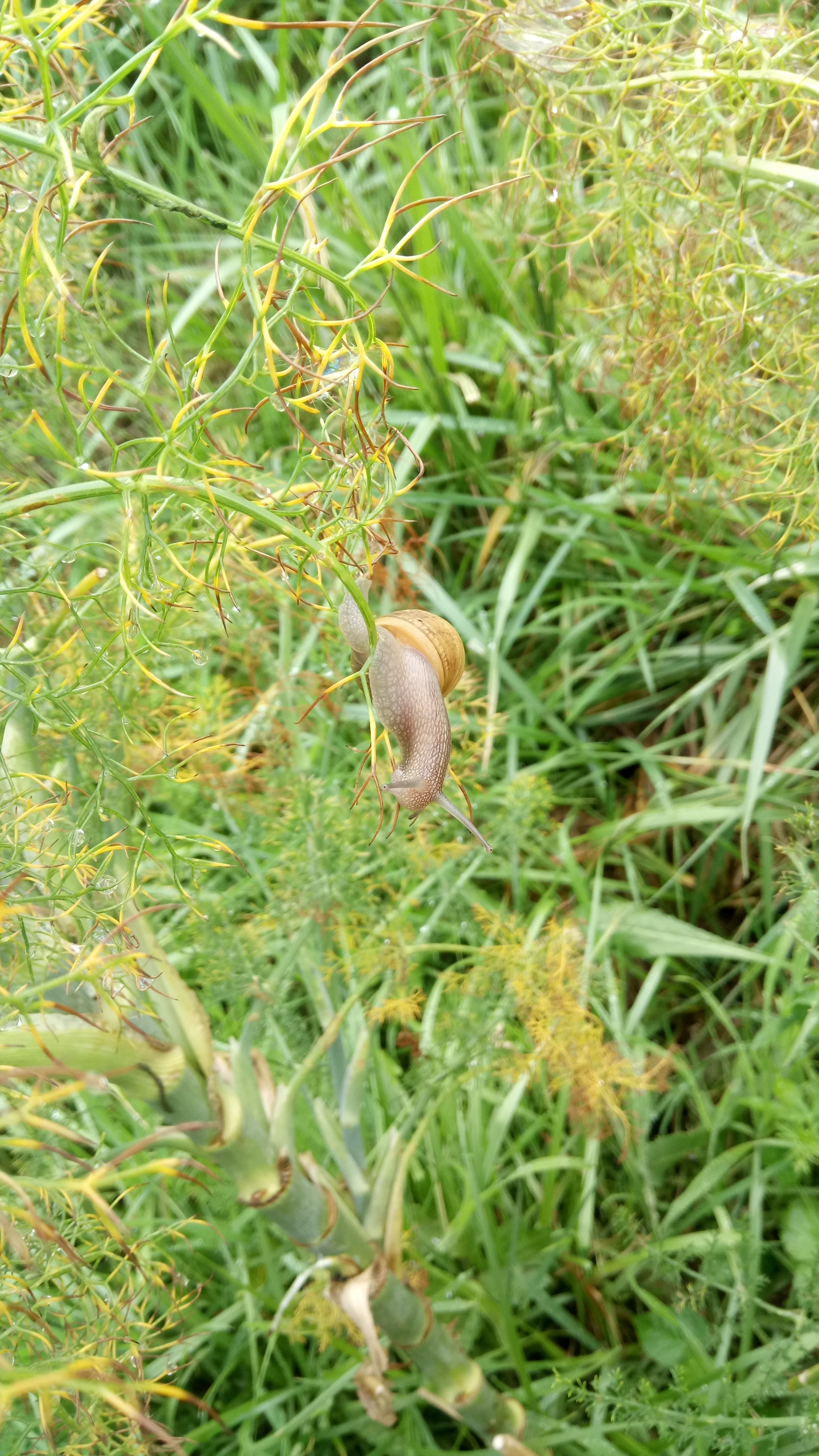
Snail tempted out by the weather
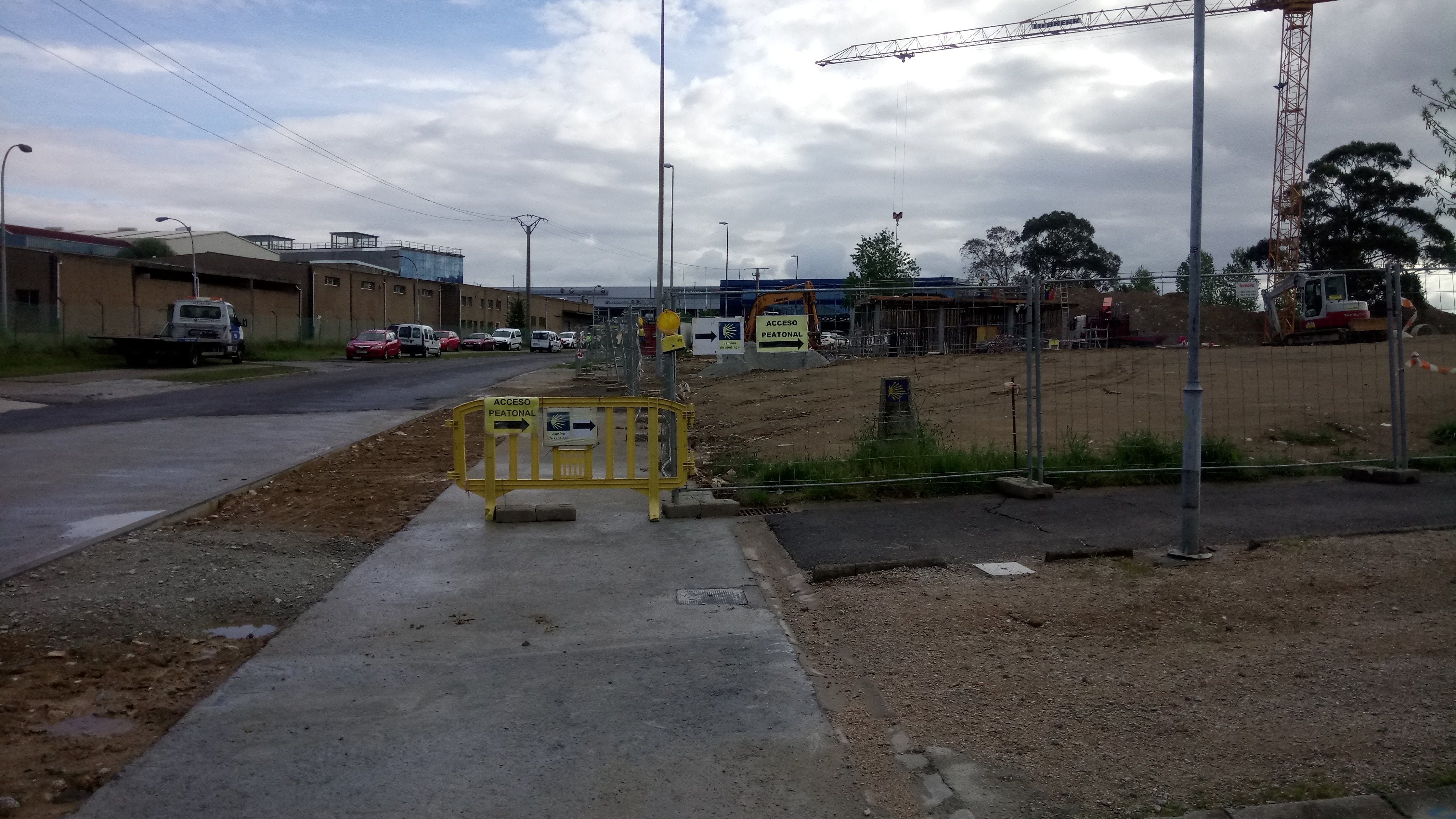
Diversion
Eucalyptus in the rain
A series of short showers brought out lots of scents. Eucalyptus, fennel, seaweed. Some more evasive action around some more major roads, a faintly surreal stretch down an ordinary residential street, and a medieval monastery… Then we went further uphill, finding a path through a eucalyptus forest and under a motorway. The Camino was already demonstrating its variety.
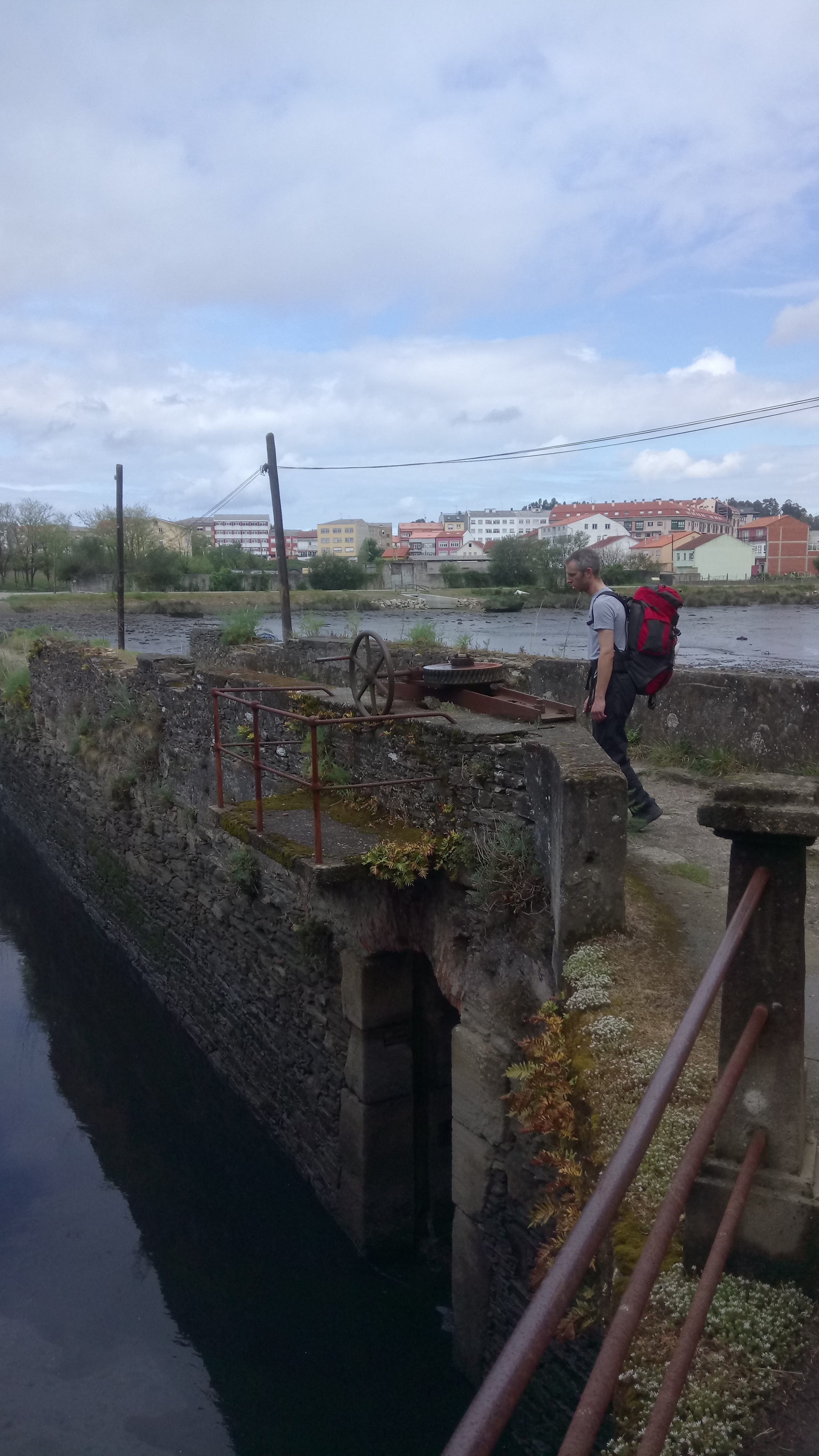
Inspecting the mill equipment
The path went along the top of a grassy dam, part of a disused tidal mill, and then led us into the town of Narón. We decided that here was as good a place to stop for lunch as any, though it wasn’t quite twelve. This seemed to puzzle the proprietor of the bar we happened across, as did John’s vegetarianism, but neither problem was insurmountable. Not for the last time on this camino, we went for the items on the menu that looked to be the least heavy on the meat, and then I picked out the unmentioned sausage chunks.
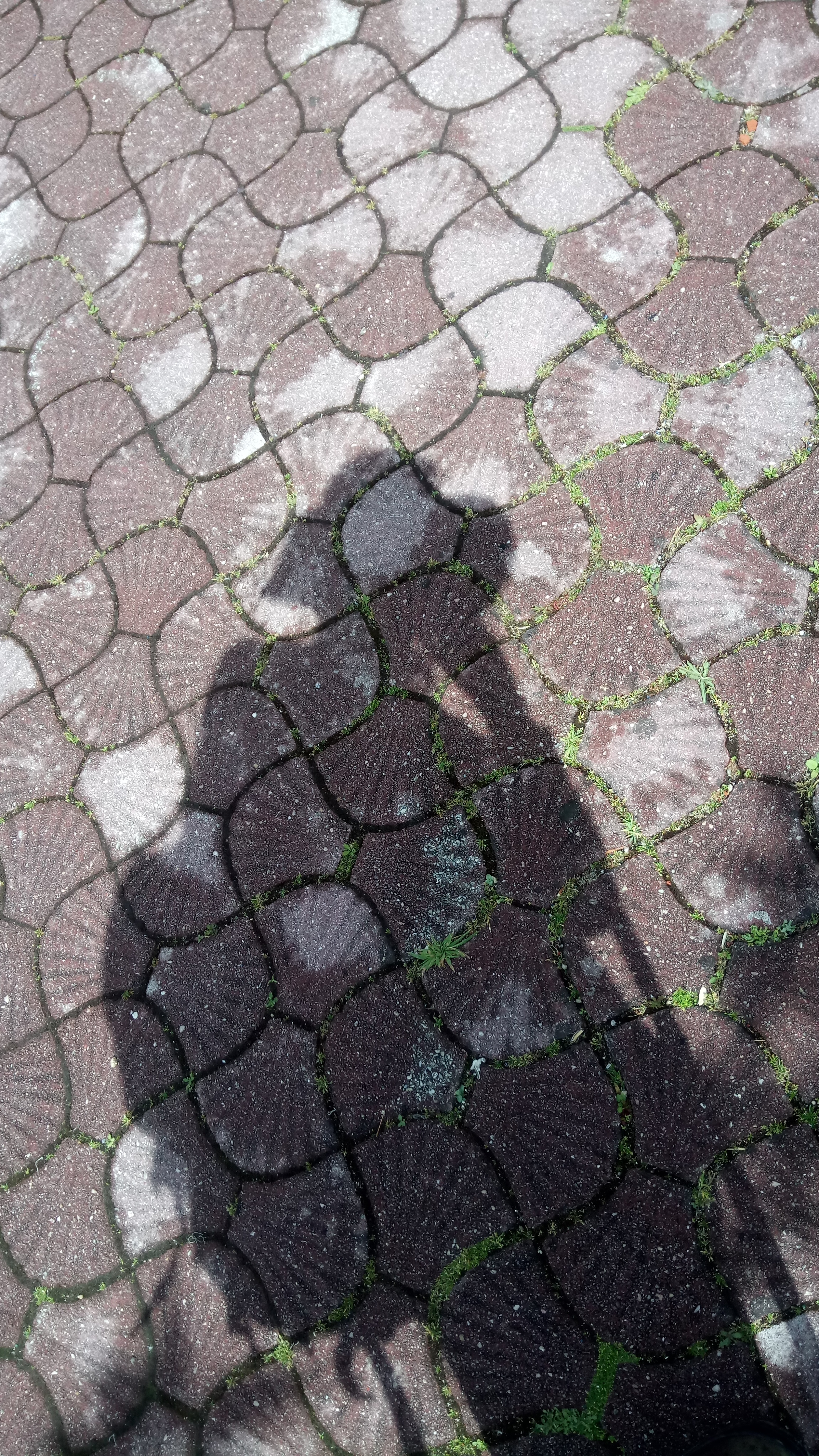
Arty shadow self-portrait against Narón’s shell-shaped pavement
Bridge across the Ría Xubia
The route crossed the Ría Xubia and almost felt as if it turned back on itself along a pleasant, riverbank path. But we were heading away from the water again, past a cemetery and then a church, and along what the guidebook calls ‘a street called Paraíso’ – which sounds as if it should be a film. Paraíso became the Rúa Real, and the whole thing was one of those streets that manages to be well-preserved yet still very much lived in.
Soon the buildings became less interesting and we crossed under another stretch of motorway. The route went steeply uphill; the sight of an emu in someone’s back garden went some way to compensate for the climb. We could have done without the sight of the Navantia arch. Nearly twenty kilometres and we could still see the wretched thing. We ambled on through this residential quarter.
Ría de Ferrol. I can’t see the Navantia arch in this; maybe I was so fed up with the thing by this point that I refused to take a photo of it.
The rain was sudden and intense. We had just enough warning to get our waterproofs on. We stopped in someone’s driveway to do it, much to the fury of their neighbour’s dogs. Within a few hundred metres it became clear that repeatedly putting the wet guidebook and taking it out again would reduce it to a pulp; so, too, would keeping it out. Fortunately John had brought a transparent plastic wallet to keep his credencial in: we put the credencial in with mine (in a waterproof bag deep in my rucksack) and repurposed the wallet for the guidebook.
We followed the path downhill and sorted ourselves out in a bar, spreading our waterproofs out over the backs of chairs, getting our credenciales stamped, ordering a coffee apiece, and waiting for the rain to stop. Waterproof jacket, waterproof trousers… It was already becoming apparent that my boots were no longer waterproof. It wasn’t entirely surprising, given their advanced age, but it was annoying.
A little way beyond the bar, the houses gave way to countryside again, and the path headed back uphill, straight up towards the motorway. Looking at the guidebook to refresh my memory, I find myself slightly surprised to discover that this all happened on one day. But then it was one long day. The route had been diverted around some roadworks, which meant that we bypassed the motorway service station that the guidebook had promised us. We ate some date bars instead, and grumbled about the habit of other pilgrims of cluttering up the waymarkings with ineffectual little cairns of stones. This was a particularly egregious example, with the stones in a plastic flowerpot.
A particularly annoying pilgrim cairn
Horreo with waymarking
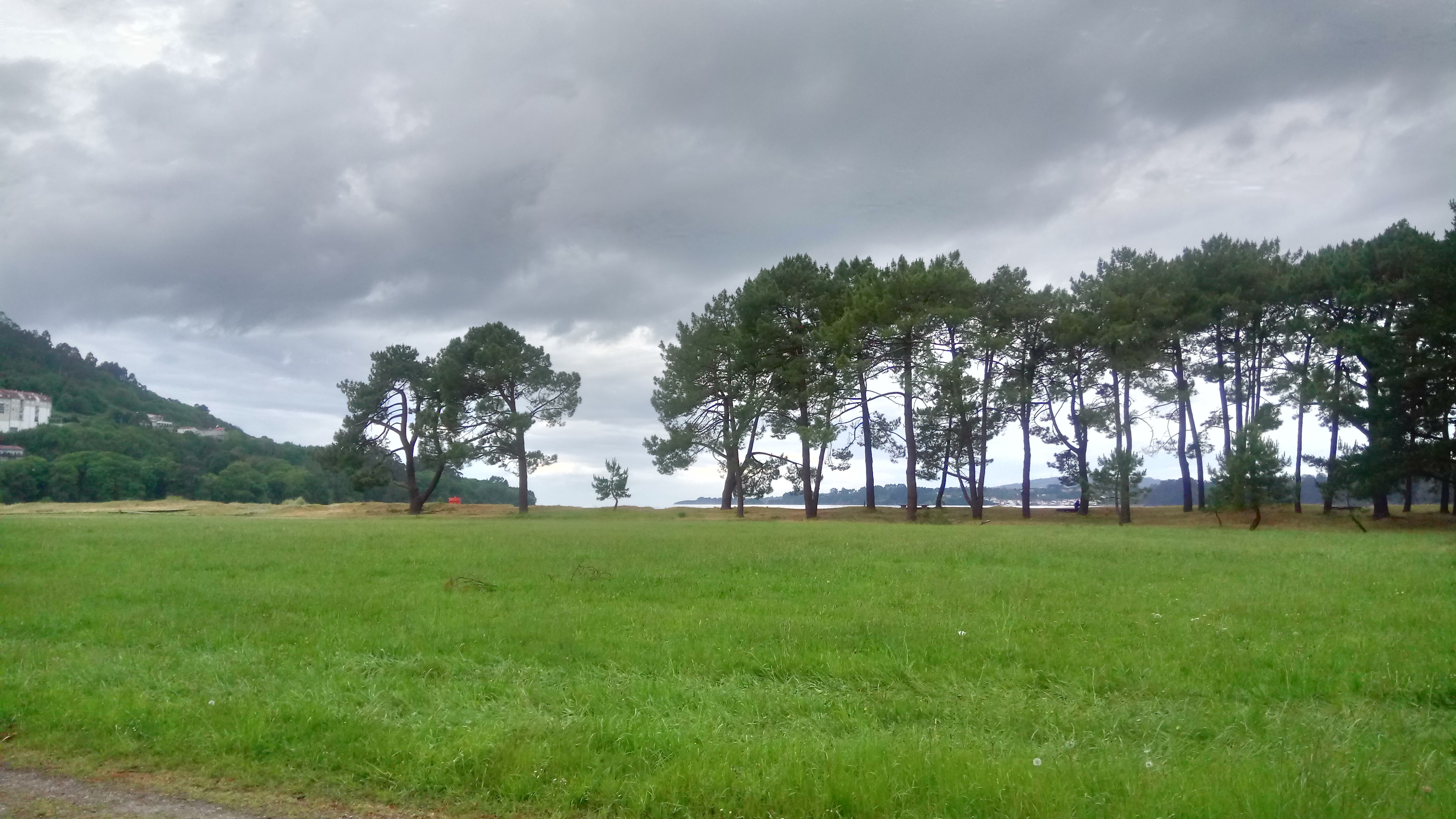
That was probably the most trying point of the day. Once clear of the motorway gubbins we were onto a track through trees and then narrow country roads, empty of traffic, winding downhill, leading us to a pleasant green path and at last down to sea level again. Now we were walking along what I could only call a promenade, with wide pavements and beach cafés and all the rest of it, alongside a band of sandy soil with the water visible between the pine trees. And at last we’d lost sight of that arch.
Downhill.
Flat path at Cabañas
The route took us over a long bridge that spanned the whole inlet, and into the town of Pontedeume.
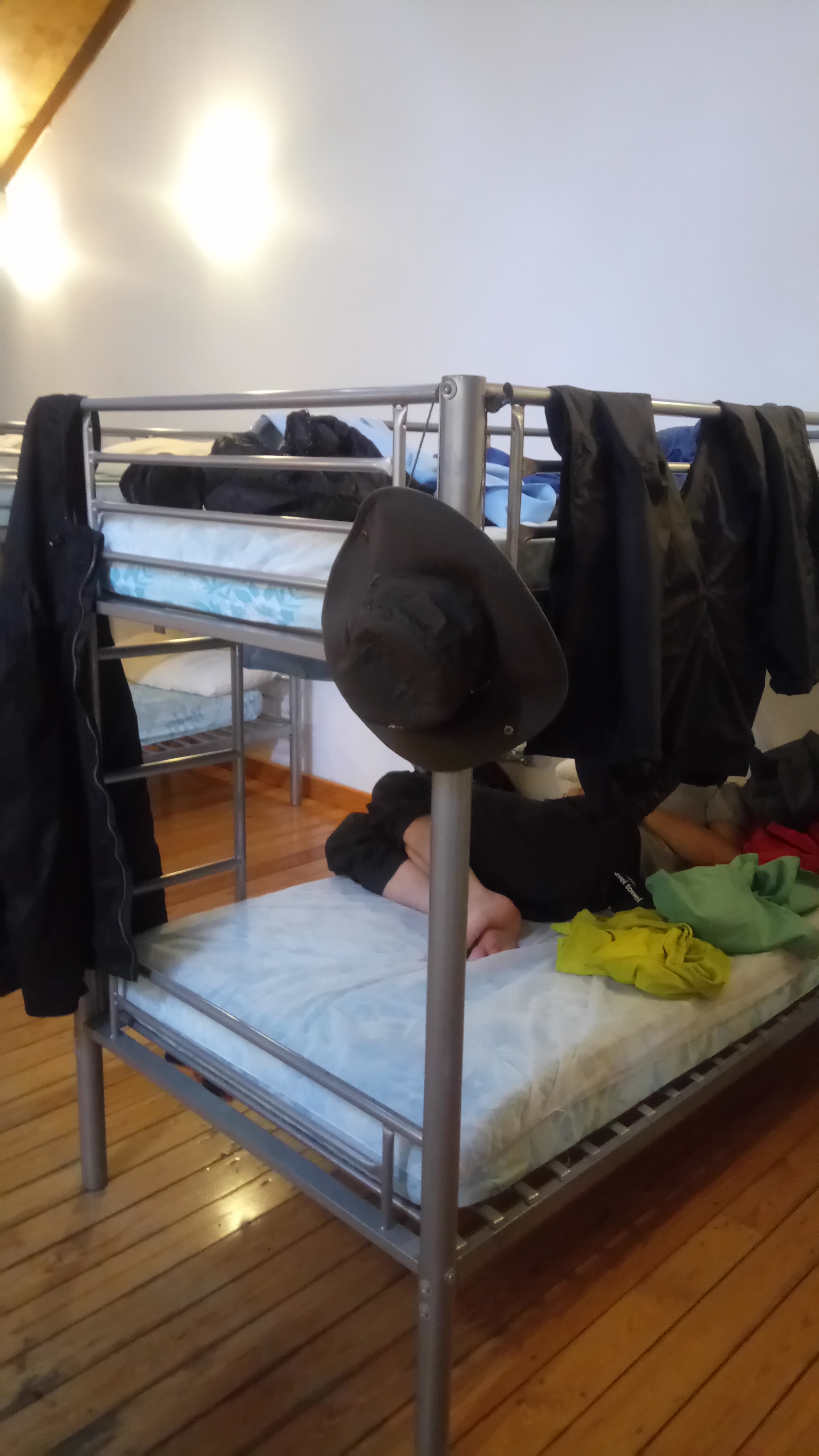
The albergue was on the waterfront, a few yards off the route. It was closed when we arrived, and had a notice on the door with instructions of who to call to get it opened up. Feeling rather daunted, I did. ‘Somos dos peregrinos. Queremos rester aqui esta noche...’ It wasn’t brilliant Spanish, but it did the job; after about ten minutes the hospitalera showed up, unlocked the door, and issued us with disposable sheets and pillowcases. This was a new development since my last camino. I knew from Confraternity newsletters that bedbugs were an increasing problem along the route: this was an attempt to deal with it. There were plenty of bunks to choose from, even allowing for the fact that some had been reserved for what (judging by the notices on the beds, which I didn’t read all that closely) seemed to be an organised group on some kind of sporting excursion.
In the Pontedeume albergue.
Safely booked into the albergue, we went off the explore Pontedeume. We sat at a tall table outside a bar and drank beer while I tried to write my biography and John found his way onto the wi-fi. At the end of the beer we moved on, and, seeing a shoe shop, thought we might as well see if they could supply a new pair of insoles for John’s ailing boots. My Spanish was nowhere near good enough to cope with this task; we eventually got the message across by dint of John’s taking his boots off – and to pieces – to demonstrate. The shopkeeper was of the opinion that really new boots were indicated, and we tended to agree. I hadn’t realised how inadequate the old ones were. It would be expensive, but it would be worth it.
Pontedeume in the twilight
Boots purchased, we moved on in search of some food. We picked a bar based on the versatility of its menu, and dined entirely adequately on chips and padrón peppers – though we had some little difficulty persuading the woman who took our order that no, John didn’t want any ham. We were the only customers in the place, which had a slightly incoherent décor of bare stone walls combined with rock’n’roll heroes. Previous patrons had amused themselves by balancing coppers on the protruding edges of the stones; we added a few British pennies to the euro cents.
Returning to the albergue, we found that the Japanese pilgrims had propped the door open, and, having obviously found a supermarket somewhere, were enjoying a makeshift supper. There was no sign of the group with the reservations when we turned in. I couldn’t see how to turn the lights off; besides, the others were still up.
I woke some hours later to find that the lights were still on, but that the sporting group had arrived. I didn’t fancy getting down from my bunk to turn the lights off (and I still didn’t know how to) and I drifted off to sleep again.
Next time: the only way is up. And then down. And then up again. And then down again… Also, a surreal theme park.


















 Kathleen Jowitt