#indiechallenge – Keep Faith (ed. Gabriela Martins)

DSC_0107

I apologise for the quality of the picture. I took it on the train. Erm, at least you can just about see my jolly reusable coffee cup in the background? It’s in iridescent bi pride colours, not that you can really tell that. The cover looks much prettier in full colour.

The blurb

Keep faith, in the broad sense of the word. It doesn’t have to be a religion, unless you want it to be. It doesn’t have to speak about the universe, unless you want it to. It doesn’t have to be about anyone but yourself. Keep faith, in other planets and other houses; be it in the face of danger, grief, or while you spread your arms and laugh. Keep faith the same way you keep hope, bright and shiny, ever present. Keep faith in all your queer, beautiful self. Because you deserve it.

This is an anthology of 14 short stories, by 14 queer authors, where faith and queerness intersect. Incidental, purposeful, we-exist-and-that’s-why queerness. And faith meaning whatever you want it to mean.

The contributors

This anthology is edited by Gabriela Martins, with cover art by Kess Costales, and short stories by Adiba Jaigirdar, Bogi Takács, C.T. Callahan, Elly Ha, Gabriela Martins, Julia Rios, Kate Brauning, Kess Costales, Mary Fan, Mayara Barros, Megan Manzano, Shenwei Chang, Sofia Soter, and Vanshika Prusty.

The bookshop

This book is available on a ‘pay what you think is appropriate’ basis from Gumroad.

The bingo card

This could count towards: ‘An author from another country’; ‘A new to you press’; ‘Marginalised people’; ‘An anthology’, or ‘LGBTQIA’. Also, arguably, ‘Rec’d by a friend’, since I only came across this book when I saw a friend irritably tweeting it at Tim Farron.

My thoughts

The premise of this anthology is of course right up my street: the intersection between queer identity and faith identity is one that fascinates me on my own behalf and more generally.

The stories approached this from all sorts of different angles. Some, inevitably, worked better for me than others did. My favourites included “And I Entreated” (Bogi Takács), in which the narrator is having to deal with being a houseplant while her child prepares for their bar mitzvah, and “On The Other Side” (Shenwei Chang), which was a really poignant exploration of loss and tradition. “How Not To Die (Again)” (Gabriela Martins) was a light-hearted piece of high school magical realism. And “Godzilla” (Kate Brauning) was a perceptive picture of a well-meaning church attempting to be inclusive.

I was less impressed by “Bigger Than Us” (Megan Manzano) and “Golden Hue” (Mayara Barros). These both featured the sloppy worldbuilding that’s been irritating me in YA literature recently, where a very familiar twenty-first century culture prevails despite the presence of major fantasy elements that ought to have made things develop in very different ways.

Overall, though, this anthology was a good deal of fun, and I’d recommend it to anybody who enjoys exploring the nuances of identity.

The Reader’s Gazetteer: M

DSCF8522

M is another of those built-up letters. Hardy gives us Marygreen, Melchester and Mellstock. Wikipedia tells me that there was a Maltovia in one of the Biggles books, but if I read it (and I read a lot of Biggles, back in the day) then I don’t remember it. Helena Fairfax gives us Montverrier, and a dedicated exploration of the Ruritania series takes us to Mittenheim. (Well, it doesn’t really; a Grand Duke comes from there, but we never really learn much about it.)

Then there’s Maycomb. Google supplies a wealth of maps (extrapolating them from To Kill A Mockingbird seems to be a popular school activity) but I’m going to quote this lovely train journey from Go Set A Watchman:

The countryside and the train had subsided to a gentle roll, and she could see nothing but pastureland and black cows from window to horizon. She wondered why she had never thought her country beautiful.

The station at Montgomery nestled in an elbow of the Alabama, and when she got off the train to stretch her legs, the returning familiar with its drabness, lights, and curious odors rose to meet her…

For no reason an ancient fear gnawed her. She had not been in this station for twenty years, but when she was a child and went to the capital with Atticus, she was terrified lest the swaying train plunge down the riverbank and drown them all. But when she boarded again for home, she forgot.

The train clacketed through pine forests and honked derisively at a gaily painted bell-funneled museum piece sidetracked in a clearing. It bore the sign of a lumber concern, and the Crescent Limited could have swallowed it whole with room to spare. Greenville, Evergreen, Maycomb Junction.

Although even this train doesn’t quite get us there, and the journey is completed by car:

No trains went there – Maycomb Junction, a courtesy title, was located in Abbott County, twenty miles away. Bus service was erratic and seemed to go nowhere, but the Federal Government had forced a highway or two through the swamps, thus giving the citizens an opportunity for free egress.

To reach Middlemarch these days you’d take a train out of London Euston and you’d be there in about an hour. But at the time that the action is set, the railway has not quite made it. In fact, we see it being built.

It’s not connections or landscape that make Middlemarch a place we can believe in. It’s the people. It’s the systems. It’s the systems in which the people live and move, and the people who make up the systems. There’s the class system, the minute gradations of commerce, the churches and the hospitals, the vain attempt to move up a rung, or at least keep oneself from moving down one, to escape it entirely, and the pettiness of the whole thing…

I know how to get to Middlemarch because I believe the introduction when it tells me it’s basically Coventry with the serial numbers filed off. (Which makes me wonder whether anyone’s written anything set in post-war Middlemarch. Or anything about the Middlemarch bicycle industry…) But I believe in Middlemarch because I believe in the people who live in it and around it.

Books mentioned in this post

Middlemarch, George Eliot

In the Mouth of the Wolf, Helena Fairfax

Jude the Obscure, Thomas Hardy

The Heart of Princess Osra, Anthony Hope

Biggles Goes To War, Capt. W. E. Johns

To Kill a Mockingbird, Harper Lee

Go Set a Watchman, Harper Lee

ABCDEFGHIJKLMNOPQRSTUV

#indiechallenge – The Sleep Quilt (Tracy Chevalier and Fine Cell Work)

DSCF8551

The blurb

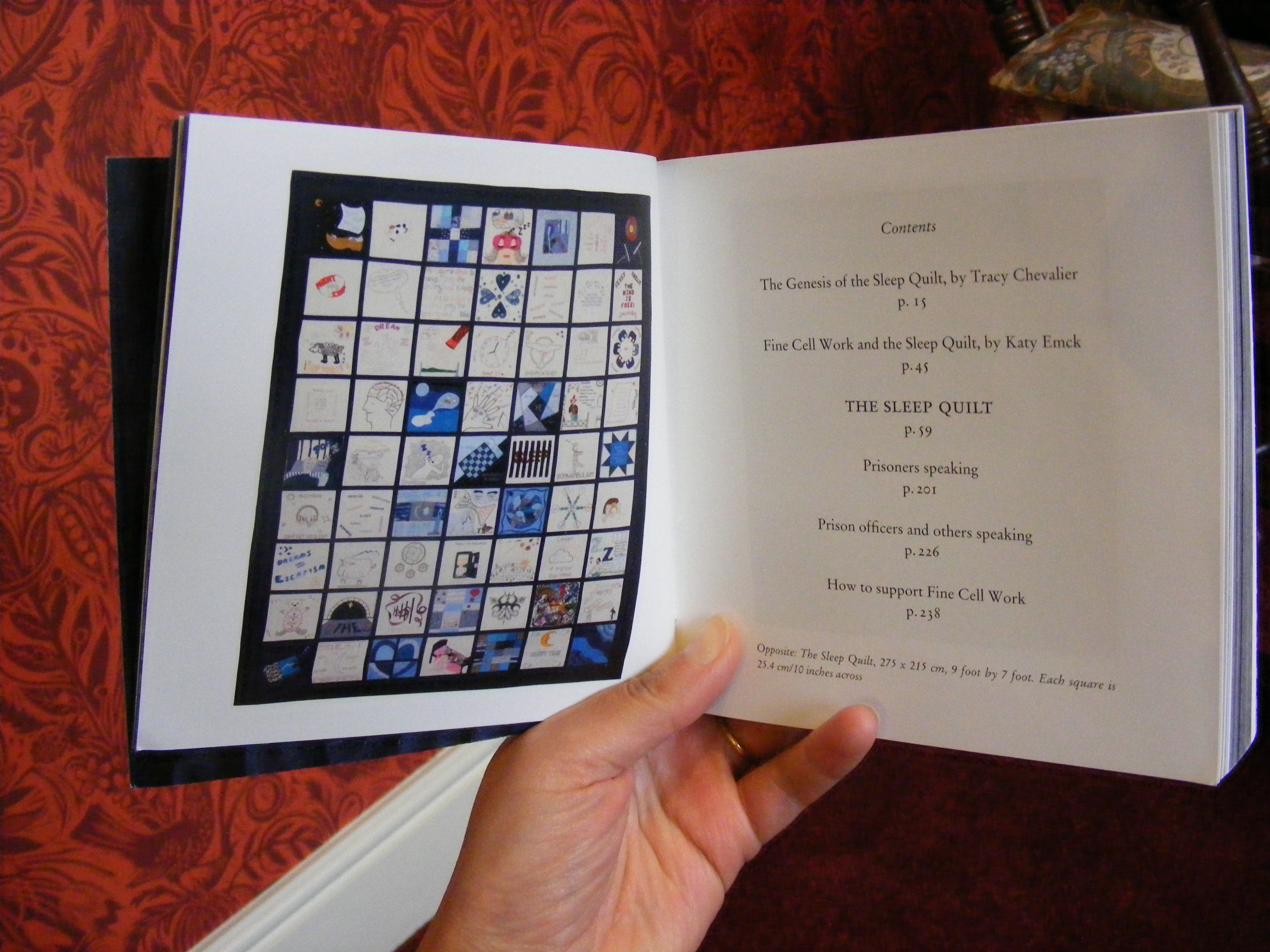
The Sleep Quilt is unlike any other quilt you will have seen. Commissioned by Tracy Chevalier, it is entirely stitched and quilted by prisoners in some of Britain’s toughest jails. Each of the 63 squares explores what sleep means in prison. A moment of escape for some, for others a dark return to all they most regret in life, sleep has a great significance in jail that is only strengthened by the difficulty of finding it in the relentlessly noisy, hot and cramped environment. By turns poignant, witty, lighthearted and tragic, The Sleep Quilt shines a light on lives that few outside can guess at.

The contributors

Tracy Chevalier is an American-British historical novelist, the author of books including Girl With A Pearl Earring and The Lady And The Unicorn.

Fine Cell Work is a charity which makes handmade textile products in British prisons:

Fine Cell Work enables prisoners to build fulfilling and crime-free lives by training them to do high-quality, skilled, creative needlework undertaken in the long hours spent in their cells to foster hope, discipline and self esteem. They can also learn sewing machine and textile production skills in our prison based workshops. Our aim is to allow them to finish their sentences with work skills, money earned and saved, and the self-belief to not re-offend.

The publisher

Pallas Athene has been publishing books for 25 years, starting with travel guides and now mainly focussed on art. Rather endearingly, they say:

We also have some wine and food titles, and other books we publish simply because we like them and want to bring them to a wide audience. (Most recently, David Lack’s wonderful Life of the Robin). The aim is always to make books that are approachable and intelligent, and we are great believers in illustration.

Where I found this book

I’ve been staying with a friend and reading my way through as many of her books as I could in a week (while also managing to fit in a lot of standing at the side of the road cheering on cyclists, and playing Pandemic in between times). We’ve been comparing textile notes for years (she is a very good embroiderer; I am a slapdash quilter) and so she brought this one to my attention.

The bingo card

This could count towards: ‘Rec’d by a friend’; ‘A crowdfunded book’; ‘A new to you press’; ‘Marginalised people’; ‘A press over 20 years old’; ‘Non-fiction’, and, perhaps, ‘Anthology’.

My thoughts

This is a beautiful, moving, little book. It opens with an essay by Tracy Chevalier explaining how she came to commission the Sleep Quilt (for an exhibition of quilts entitled ‘Things We Do In Bed’) and one by Katy Emck describing the aims of Fine Cell Work. The majority of the pages, however, are devoted to pictures of blocks from the quilt accompanied by contributions from the prisoners who worked on it, explaining the thinking behind the designs or expanding on quotations included in them. It’s fascinating and thought-provoking: a small treasure.

DSCF8555

The Page 69 Test

Messing around on Twitter a while ago, I came across the Page 69 Test. Apparently this has been popularised by John Sutherland’s book How To Read A Novel, and originates in advice from Marshall McLuhan:

Turn to page 69 of any book and read it. If you like that page, buy the book. It works.

But why does it work? I suspect that it’s because by the time you get to page 69 you’re past all the introductions and scene-setting, but not far enough to encounter any meaningful spoilers.

Actually, it’s often that section of the book that I find most difficult to write. There’s something about managing the transition out of the set-up that causes me a whole lot of trouble, and I end up with an awful lot of square brackets saying: [link] [expand!] [something about the parents] [but why?]

I was therefore a little hesitant to look up my own page 69s (pages 69?), but actually I was quite pleased with what I found.

Here’s page 69 of A Spoke In The Wheel:

DSCF8513

To make it easier for him to remember who he was actually meant to be dealing with, I turned my back while Polly told him what she needed to do. After a little while she wheeled herself off after him and I was left standing in the middle of the floor. I found an armchair and picked up one of the complimentary newspapers – though it wasn’t particularly complimentary. THE FRAUDSTER NEXT DOOR was the headline. I expected it to be about a conman raiding some poor old couple’s pensions or something, but it turned out to be some self-righteous hysteria about people claiming benefits they weren’t entitled to. Personally, having seen the hassle that Polly had to go through to get the ones she was entitled to, I couldn’t see why anybody would bother. I turned to the back page in disgust and wished I hadn’t. It was mostly taken up with a picture of a tennis player with her head in her hands. NO HOPER? NEW DOPE BAN FOR HOPE.

After that I gave up on the paper and sat there twiddling my thumbs and composing cutting replies to the woman on the bus, in case we ever had that argument again, until Polly came out.

I got up. ‘Sorted?’

‘Eventually,’ she said. She lowered her voice. ‘Come on, let’s see if we can get out the same way.’

We performed the previous manoeuvre in reverse, which was a little bit scarier because neither of us could get our heads under the top tape without Polly’s front wheels first being well onto the downward slope. I had visions of her sailing off down to the street below, clotheslining herself as she went, but she was too skilful to let that happen.

‘Right,’ I said when we were safely back at street level. ‘What a palaver. Library?’

She looked up at me, backwards, and I saw with a sudden shock that she was slumping in her chair, and her face was tense with the effort of controlling her fatigue. ‘Yes,’ she said. ‘And that had probably better be it.’

This comes in the middle of a chapter in which Ben accompanies Polly on some errands, and begins to appreciate some of the practical difficulties of life with a chronic illness. I think it would work well as a representative sample. There are quite a lot of ableist microaggressions in this book, and if that wasn’t what somebody needed to be reading about (and I couldn’t blame them!) then page 69 would be a reasonable warning. It also gives an idea of Ben’s personality, a more sympathetic and probably more representative one than the first page (he’s had time to unstick himself a bit). He’s well-meaning but clueless, clueless but willing to listen.

And here’s page 69 of Speak Its Name:

DSCF8514

Tim Benton’s a Catholic, isn’t he, and nobody seriously tries to claim that Catholics are really Christian. I mean, they pray to Mary, that’s idolatry for a start…’

Lydia wanted to say that nobody was praying to Mary at the Vigil, but judged it best not to draw attention to her own attendance. Instead, she ventured, ‘I’m beginning to wonder, actually – whether any of us actually have the right to claim that somebody isn’t a Christian when they say they are…’

Ellie sent the surviving portion of the STANdard the same way as the Letters page. ‘Don’t be ridiculous. It’s perfectly obvious with some people, isn’t it? No, Lydia, the Devil is at work on campus. This isn’t the only sign of it. Jake told me last week that you hall officers won’t be allowed to live-in next year. It’s all very worrying. I think we should pray about this.’

‘We what?’ Lydia exclaimed in horror.

Ellie, intent on praying, did not answer. Instead, she shifted her chair so that she sat directly opposite Lydia and grabbed both her hands painfully tightly. ‘Father God,’ she intoned, ‘we see Your people under attack, we know that the Enemy is moving on this campus, we pray, Lord, we just pray for Your help and guidance today.’ Squeeze, squeeze. ‘We know that You are in control of all things and we ask that You would show Your power here today, Lord, we ask that You would reveal Your truth, that You would convince those who are doubting,’ squeeze, this time with nails digging in, ‘that You would complete Your great work at this university, so that every student here will know that You are Lord. Lord, we just ask this today. Lord, You said that whoever is not for You is against You. We ask You to protect us all against these attacks from Satan, by these people who claim to speak in Your name but who are working to undo the great things You have already done here. Amen, Lord, Amen!’

This one I’m not quite so comfortable with. It’s cringey, and it’s meant to be, and I suppose that it’s good for anyone with an active embarrassment squick to know that this passage exists. In fact, this is peak cringe. If the reader can cope with this, they can cope with the rest of the book. And it is a reasonably good picture of the dynamics in the wider book: Lydia advocating for a wider understanding of the word ‘Christian’, and experiencing a more violent pushback than perhaps she expects. Ellie doesn’t appear in The Real World: we’ve moved away from the (Evangelical) Christian Fellowship and on to the Church of England. I miss her. A bit.

One thing I can guarantee is that this will no longer be page 69 by the time The Real World comes out, but what the hell. This is Colette talking to postdoc James about his upcoming wedding, and, in its combination of marriage angst and science angst, it’s fairly representative. It’s missing the Church of England angst, though.

… they couldn’t get it in the right size for one of them, so the whole idea gets written off and we have to start all over again from square one.’

‘I suppose you couldn’t get away with having one of them in something different and calling it a contrast?’

‘I think that’s the point of the bride,’ he said drily.

Colette shrugged her shoulders. ‘Well, you’re the expert.’

‘Of course, the other problem is that they then have to get the flowers matched up with the dresses, and Giselle really wants irises, because it was her grandma’s name.’

‘That’s a really lovely idea,’ Colette said.

‘In theory, yes, it is. In practice, it’s yet another thing that we have to work around. Apparently it rules out a whole slice of the colour palette.’

‘Oh,’ said Colette, who had never thought about it.

The lab door opened with a gentle swish. Just in time, James closed the window on his computer with the Science Today story and maximised the one in which he was writing his own report.

‘Good morning,’ Barry said.

‘Morning, Barry,’ James said, in a remarkably natural way.

‘Morning,’ Colette mumbled.

He glanced at her. ‘You told me last week that you wanted to ask about something?’

‘Yes,’ Colette agreed, her mind blank. ‘I – I can’t remember what it was now.’

He looked distinctly unimpressed. ‘Hmm. Well, if you remember before about three o’clock, give me a shout.’ He disappeared into his office. James and Colette glanced at each other.

‘What did you want to ask him about?’ James asked. ‘Or can you really not remember?’

Colette wriggled uncomfortably. ‘I couldn’t put it into words in the moment. It was that weird [thing] that I asked you about…

As you see, I’m still in the [square brackets] phase. I’ll be back in a few months with the real page 69.

#indiechallenge – Meant To Be Me (Wendy Hudson)

DSC_0031

The blurb

Trying to find “The One” is never easy and engineer Darcy Harris is finding it tougher than most. It doesn’t help she’s also dealing with a shadowy stalker trying to make trouble for her. But Darcy’s determined not to let anyone ruin her life.

Her loyal best friend and boss, Anja Olsen, is stuck in a strange conundrum, forced to question who she has become and who she wants to be.

Meanwhile, stranger Eilidh Grey’s first instinct is to run fearlessly toward chaos and love. But this time she’s on a collision course with fate.

A chance meeting on a snowy bridge in Inverness, Scotland, binds all three women together, creating an unexpected, tangled, love triangle. What happens when it all unravels?

A compelling, slow-burning, romantic suspense that will keep you guessing right to the end.

The author

Wendy Hudson is an award winning author based in Scotland.

Her debut novel “Four Steps” won a 2017 GCLS Debut Author Award, was a Diva Literary Award Finalist 2017.

Her second novel “Mine to Keep” was a 2018 GCLS Finalist.

All her novels are set in Scotland among the inspirational landscapes that first inspired Wendy to write.

In her spare time, Wendy has a love for travel, as well as camping, skiing, football, festivals and reading.

The publisher

Ylva specialises in lesbian fiction by authors from all over the world and across a wide range of genres.

The bookshop

Another one from Kobo.

The bingo card

This could count towards: ‘Genre fiction’, ‘A Women’s Press’, ‘Marginalised people’, or ‘LGBTQIA’.

My thoughts

Wendy Hudson is a colleague, and about a year ago we spent an enjoyable evening in the bar at one of the University of Warwick’s conference centres, drinking beer and talking about writing. She was working on this book at the time, and she told me what the twist was going to be.

And it didn’t matter at all. It was as much fun knowing what was coming as it would have been to be guessing. That particular twist was revealed about a third of the way in, after which I was on a level playing field with everybody else – and there was still a lot of suspense to come. Knowing something that the characters don’t is all very well, but I didn’t know when or how they would find out. And I kept on reading until they did.

Beyond that: it was a romance between two women, each with a complicated past, which was always haunted by the claustrophobic, effective, suspense plot. I’d have liked to see a little more of how that eventually plays out, but that would have made for a very different book.

Titled.

DSCF8329

The sequel to Speak Its Name has been coming along very nicely in recent months. It’s now standing at 75,000 words, with only a few holes left to fill before I can move into the editing phase.

But I’ve been having to refer to it in just those terms, because I have had dreadful trouble coming up with a title for it.

At first I was thinking of it as Scandal and Folly, but I had to admit that this sounded too much like a bodice ripper. I thought of doing something with ‘don’t ask, don’t tell’, but no variation on that seemed to work. Later I came up with Truth and Power, but that sounded too much like a political thriller. In between times, I’ve just been calling it ‘the sequel’.

On Tuesday I had a rather varied evening. First I went to the pub with some people I used to work with, and a few people I still work with, and ended up spending most of the time I was there talking to the boyfriend of someone who’d only just started working with the people I used to work with. Then I dashed off to catch a train and then lead a session on the Holy Spirit with a small group from church.

And through the evening there was one phrase that kept coming up. The real world. Trade union employees tend to be pretty much resigned to the idea that people think they don’t live in the real world. One of the church group felt that it was very important to live in the real world. In actual fact, it’s a phrase that I’ve always been slightly uncomfortable with: unless this is the Matrix, all of us live in the real world.

Anyway, I was walking home at the end of the night and thinking how many times I’d heard the phrase the real world over the course of the previous few hours, and wondering whether it held any particular significance for me, or whether it was just coincidence.

And I realised: that’s my title.

The Real World

It works across several of the themes of the novel (we are picking up the action about three years after the end of Speak Its Name, with the characters in their early twenties and trying to work out what they’re doing next) and it has a good few layers of irony, too. Not least, of course, the fact that this isn’t the real world at all. It’s fiction.

But nobody in it knows that.

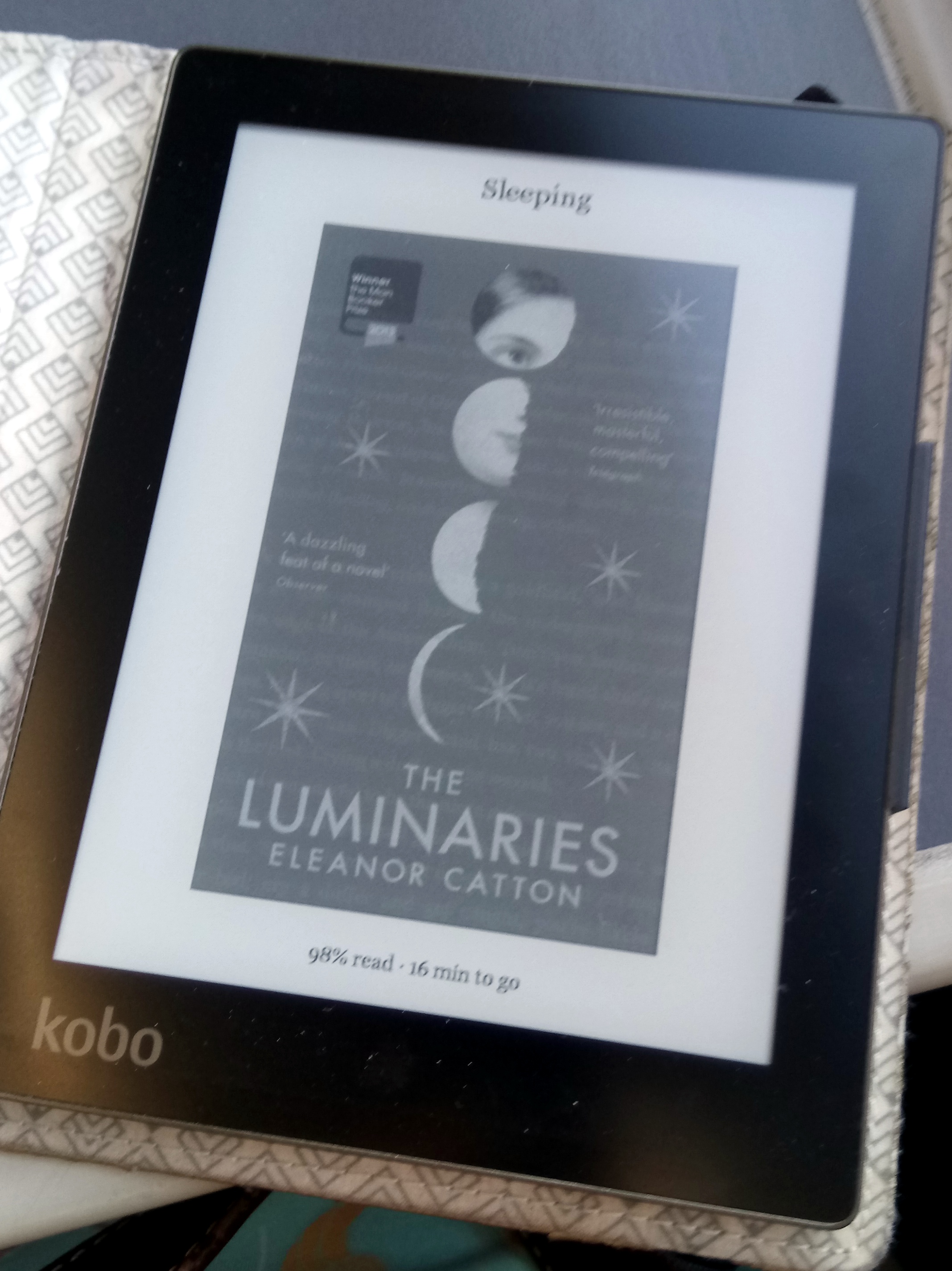
#indiechallenge – The Luminaries (Eleanor Catton)

DSC_0026

The blurb

It is 1866, and Walter Moody has come to make his fortune upon the New Zealand goldfields. On arrival, he stumbles across a tense gathering of twelve local men, who have met in secret to discuss a series of unsolved crimes. A wealthy man has vanished, a whore has tried to end her life, and an enormous fortune has been discovered in the home of a luckless drunk. Moody is soon drawn into the mystery: a network of fates and fortunes that is as complex and exquisitely patterned as the night sky. The Luminaries is an extraordinary piece of fiction.

The author

Eleanor Catton was born in 1985 in Canada and raised in Christchurch, New Zealand. She won the 2007 Sunday Star-Times short-story competition, the 2008 Glenn Schaeffer Fellowship to the Iowa Writers’ Workshop, the 2008 Louis Johnson New Writers’ Bursary and was named as one of Amazon’s Rising Stars in 2009. Her debut novel, The Rehearsal, won the Betty Trask Prize, the Amazon.ca First Novel Award, the NZSA Hubert Church Best First Book Award for Fiction and was shortlisted for the Guardian First Book Award, the Prix Femina literature award, the abroad category of the Prix Médicis, the University of Wales Dylan Thomas Prize 2010 and Stonewall’s Writer of the Year Award 2011, and longlisted for the Orange Prize 2010. In 2010 she was awarded the New Zealand Arts Foundation New Generation Award. The Luminaries was the winner of the 2013 Man Booker Prize and the 2013 Governor General’s Literary Award.

The publisher

Granta Books is an independent publisher based in Cambridge, with a very long About page.

The bookshop

Downloaded, boringly, from Kobo.

The bingo card

This could count towards: ‘An author from another country’; ‘A new to you press’ (I think); ‘A press over 20 years old’; ‘An award winner’; and ‘Book that defies genre’.

My thoughts

I’ve often seen this in bookshops and charity shops and thought what a lovely cover it has (neither my ebook reader nor my photograph do it justice), but I would probably never have got around to buying or reading it had my office book club, which has a penchant for award-winners, not picked it for the September meeting. Since we were reading this one over the summer, there was time to tackle the nine hundred or so pages of it.

And I absolutely loved it. I’ve a weakness for nineteenth century doorstops, and this included many of the things I like about them: a twisty, turny plot full of mystery, melodrama, and the supernatural (the latter almost but not quite explained away); treasure hunts and missing documents; vividly-drawn characters; an omniscient but selective narrator.

But it also subverted them. It brought twenty-first century nuance to questions of race and, to a lesser extent, gender; it did something very interesting with chapter headings, and it gave almost all of the characters at least a moment in which they were sympathetic. There was a humanity and a generosity to it that kept me reading. Quite apart, of course, from its being a whole lot of fun.

One in a million/a million to one

I felt guilty for years after 2003 because I did not join in the protest march against the Iraq War.

It took me a long time to appreciate the absurdity of my belief that had I gone it might not have happened.

It took me longer still, and a lot more marches, to understand what it is that a march actually does.

It was two years after the Iraq marches that I attended my first actual protest, and it was very small scale by comparison. The Vice-Chancellor of the University of Exeter planned to close the Music, Chemistry, and Italian departments. Much of the student body disapproved. We went for a desultory march around campus and rallied outside the Great Hall.

When I started working for a trade union, the protests started coming thick and fast. We marched: for the NHS; against austerity; for a fairer society; probably for some other things I can’t remember now. Some were on my doorstep; some meant a train to London; one meant a train to Manchester. I ended up with my picture in the Morning Star (deflating one of those giant balloons in Hyde Park) and the Guardian (one little figure in a Where’s Wally style crowd scene; you had to know which banner to look for).

As protests became just a part of my job, my feelings changed. I was no longer under the impression that I’d change the world by walking down the street, no matter how amusing my placard (and I saw some good ones). There was inevitably a load of hassle beforehand: phoning union branch secretaries, looking up coach operators, ordering stickers and vuvuzelas and other hideous tat. Usually, by the time the actual day rolled round, I just wanted it to be over. Some I probably shouldn’t have attended: in Manchester, I was going down with a cold, and ended up flat on my back in a park woozily watching the clouds. I did miss the 2018 one, having mashed my foot up falling off a narrow gauge train a few weeks earlier.

There was always a lot of standing around, a lot of stopping and starting, and then more standing around when we got to the other end. And yet I inevitably came away from them feeling energised, buoyed up, ready to go back to work on Monday and keep on going.

It was not that my presence, one person more or less in a million-strong crowd, would change the outcome of the issue. It was that it changed my perception of the fight.

I was not the only person who was angry. I was not the only person who cared. It was worth carrying on with this.

Did the Vice-Chancellor of the University of Exeter care what the students thought about his plans to close the Music, Chemistry and Italian departments? Probably not. Did he care after we protested, noisily, against them? Still probably not. Italian was saved by some revised plans by the department itself; Music and Chemistry went. Austerity continues to bite; the NHS wobbles; society seems rather less fair than it did even when I started protesting about things.

But I continue to care.

Protests change things not by sending a message to those in power, but by equipping the rest of us with hope. They say yes, I care, and yes, I’m angry, and then, yes, we care, and yes, we’re angry, and then we keep on going.

Anyway, I’m about to clean my teeth and put a hat on and go and protest against prorogation. If you’re about to do that too, then good luck and stay safe, and maybe I’ll see you there.

And if you want to be or you think you should be but you aren’t, if you can’t because you’re busy, or you can’t do crowds, or you’re looking after the children, or you’re working, or you’re ill, or it isn’t safe for you, or if (like me in 2003) you have no idea where to start, or if it’s just too much, or for any other reason that I haven’t thought of, then know that I understand, that I’ve been there (or, rather, not been there) myself, and I’m protesting for you, too.

Keep on going.

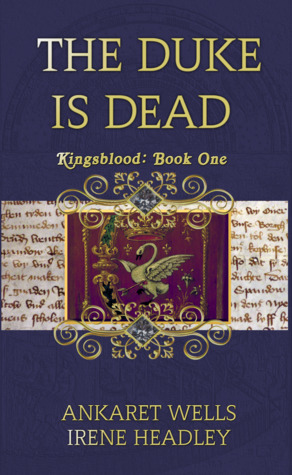
The Duke Is Dead: a conversation with Ankaret Wells and Irene Headley

the duke is dead cover

It is seven years since the Cousins’ War ended. King Roald has brought peace to the Three Kingdoms and driven the last heirs of the king he deposed into exile. His brother Thomas, Duke of Wharram, is a man for whom loyalty is the greatest virtue and family the highest cause. So when his sister Josiane, Duchess of Bergomance, finds herself widowed, her beloved stepdaughter Ambrosia beleaguered by suitors and her late husband’s coffers mysteriously empty, who better to send than Thomas?

But the ghosts of old wars are waiting in Bergomance, and new threats are rising. Some see heresy everywhere, and others look to an Empire in the east that has suddenly begun seeking allies.

And into it all, a ship driven off course by storms brings a young man fleeing King Roald’s mercenaries and throws him into Thomas’s path. Nicolas ás Ithel, a man with dark eyes and a love of numbers, and an inheritance in his veins that could reignite the Cousins’ War.

Kingsblood.

The Duke Is Dead, say its authors Ankaret Wells and Irene Headley, is a story of love, danger, intrigue, blood magic, vast amounts of sarcasm and a pygmy hippo.

I invited them over to this blog to ask how on earth any of that happened…

Irene Headley: Really, we can all blame this on the city of Bath.

Also, Bourgogne, Quelle Histoire!, which I picked up whilst on holiday in Burgundy in an attempt to improve my French. (See also that child’s book of Hapsburg Empresses in German in order to…you can guess.)

Ankaret Wells: It was 2013, the remains of Richard III had just been discovered under a car park, and Irene and I were sitting together in a café in Bath talking about it. I think IH might have had some copies of The Ricardian?

IH: I have a somewhat complex relationship with Richard III, best exemplified by the time when I was ten, I was at a castle day out decorating Wars of the Roses themed biscuits, and my mother leaned down and gently informed me that if I put the Red Rose of Lancaster on any of them, I was walking home. I’m still not entirely sure whether she was joking.

AW: I just read The Daughter Of Time at an impressionable age.

IH: Oh, I did that too. It’s the only Josephine Tey I’ve gotten through without screwing my face up because I was too young to recognise the weirdness.

AW: We were talking about the size of the Richard III Society compared to the plucky but outnumbered Henry VII Society, and somehow (I don’t think we were drunk at this point?)

IH: I think this was the trip to Bath where it was bucketing it down, not the one where I drank an inadvisable quantity of Pimms in the blazing sunshine, and then got very emotional about the memorial plaques in the Abbey*. We kept choosing cafés based on their proximity to the place we’d just left. This particular cafe was filled with plants.

AW: We somehow came up with the idea that the way to reconcile Henricians and Ricardians was to unite them in outrage against Richard III / Henry VII slash.

(Actually I’m sure the vast majority of both societies are sensible people whose attitude to m/m fiction is either ‘Not my thing, but why would I care what other people read?’, ‘Only #ownvoices, thanks’ or ‘Bring it on!’)

We spent a while composing letters between Henry trying to wrangle his uproarious uncles and being comprehensively outfoxed by Elizabeth Woodville and Richard being Sensible. And then IH suggested we set it after the death of Charles the Bold of Burgundy.

IH: I have always felt incredibly bad for Mary of Burgundy, Charles’s only child, and Richard III’s step-niece, who was married to the Archduke Maximilian of Austria just over six months after her father’s death, and died five years later in a riding accident. (This is where Bourgogne, Quelle Histoire!, comes in! It has a picture in which Mary appears to be declaring her love to her horse) We already knew that a world in which Henry and Richard loved each other wasn’t going to end in Henry killing Richard, and had somehow ended up shipping Elizabeth Woodville/Henry, while I was refusing to be parted from my OTP of Richard/Anne Neville. And then we thought: what if that’s when they fall in love? They’re not technically enemies yet, and we get to find Mary a different husband. Win-Win!

AW: So, we got them as far as meeting in Bruges – there was a joke about Henry saying his name was Richmond and Richard, in a hurry, saying ‘Oh, you’re Dick too?’ – and then I threw a spanner in the works and Irene, may any entities up there bless her, didn’t turn around and murder me.

I said ‘I think this ought to be fantasy’. We started renaming dynasties and kingdoms.  For me at least, that was when the characters started coming alive. In particular, the cardboard cutout of Jasper Tudor, boorishly considering courting the much younger Mary, turned into Morcant as Ithel, unshakeably poetic about all the wrong things but practical about most of the right ones, a man who would no more consider offering himself to a teenage duchess than he would change his religion for profit, but who fell in love like a ton of bricks with the most inconvenient person possible.

When we started out, some of the characters (mostly Yorkists) were Irene’s and some (mostly Lancastrians) were mine, but by the end we were both writing everybody.

IH: Making it a fantasy also meant that we got to do a lot with the Richard II and Henry IV figures. Richard II became Queen Sidonia and stayed that way, Henry IV went through a few changes before becoming irrevocably Queen Julia. We also got to create the Kosmotic Empire, which I may at one point have described as ‘basically matrilineal Byzantium’, which led to the existence of Melissa and Richza, my favourite diplomatic duo.

The only problem was that we had to cut out a lot of dynastic backstory and sidestory, at which point we brought in the chapter headings so that the reader got an idea of what got everyone to this point. (Admittedly, a number of the chapter headings are written by authors so biased as to be actively misleading…) This also led to Ankaret’s love affair with the town of Foswich.

AW: We have a lot more planned for this world, and we really hope you enjoy your visit.  Watch out for the pygmy hippos.


*In my defence, Irene adds, there is a plaque raised by a widowed mother who had lost her son in the Napoleonic Wars and her daughter to a fever which says something about how her only comfort is that God clearly needed them more than she did.


The Duke Is Dead is available now from Lulu and other retailers.

Quality, revisited

DSCF8027

Another day on Twitter (it’s just about bearable these days if you use Tweetdeck, I find), another free and frank exchange of views on the question of whether it’s fair to make a principle of not reading self-published books.

In one sense, it’s a pointless question. One can’t, and shouldn’t, force people to read books that they don’t want to read, and their reasons for not wanting to read them are surely their own business. But I do want to take issue with the underlying assumption that self-published books are necessarily terrible.

(Mandy Rice-Davies voice: Well, she would say that, wouldn’t she?)

I would not deny for one moment that there are many appalling self-published books in the world. Earlier this week I read this thread from a professional editor with fascinated, delighted, horror. But, as I said when I shared it, there are plenty of traditionally published books that I’ve judged ‘Not bad, but could have done with a thorough edit’, and a few ‘This was so bad I couldn’t finish it’, as well as a lot more ‘Couldn’t be bothered’. The worst book I’ve read recently came from a small press. It was dire. It didn’t know which genre it was trying to be, and the worldbuilding was cowboy builder work. Needed a very thorough edit. Nor are the production values necessarily any better in conventional publishing. I still remember this horror with a certain sense of disbelief.

Conversely, the professionalism of self-published authors like Jane Davis and Ankaret Wells results in absorbing, enjoyable books that I look forward to reading and re-reading. And I know from my own experience that the choice to self-publish grants the great gift of control. I don’t have to put up with a terrible cover or a phoned-in edit. The power to improve things is mine. I make a point of never putting a book out until it’s as good as I can possibly get it. Quality is a subjective thing, of course. But it is not my judgement alone that puts my first novel on a par with some of the best of my generation; it was that of three authors whose writing I admire and who are big names in literature. It wasn’t lack of quality that meant I couldn’t get it published conventionally; it was the fact that there wasn’t a significant market for it. Too gay for the Christian market; too Christian for anything else. (I suppose I could have tried Darton Longman Todd, but then I don’t know what they’d have done with a novel with basically no religious content the next time round.)

Extrapolate from that, and one surmises that there are plenty of very good books out there that aren’t being published traditionally, and likely never will be, because the subject or the style just isn’t ‘in’ at the moment, or because the current trend is for debuts and the author didn’t hit the big time on their first attempt. I’d rather have the option of reading them. And I’d rather not be the one who puts that restriction on my reading material.

We all have our petty preferences, our likes and dislikes, both justified and unjustified. (Personally I’ve developed a violent hatred for that brushstroke calligraphy font that’s everywhere at the moment. I dare say that either my hatred or the fad will die off sooner or later.)

There are millions upon millions of books out there, and no human lifetime is going to be long enough to read all of them. We all have to find our own ways of prioritising. No matter what that is, we will inevitably miss something that we would have loved if we’d just given it a chance. Avoid books with predominantly pink covers, on the grounds that you don’t like chick lit? Miss out on the grittiness of Dorothy Koomson and the psychological insight of Marian Keyes. (I’m serious. I don’t think I’ve ever read an unreliable narrator that worked better for me.)

No. I choose books to read based on whether the subject matter interests me, what my friends are reading, and, above all, whether I like the writing style. And, as another Twitter self-publisher pointed out, that’s very easy to find out with a look inside, or, indeed, the ‘Look Inside’ feature.

If someone else’s chosen method of prioritsation is to exclude self-published works, then that’s up to them. But I will maintain for as long as I’m reading that it’s by no means a reliable filter for quality.