The Reader’s Gazetteer: A

When I first started thinking about writing this series, I imagined that I’d be ignoring fantasy altogether. I wouldn’t be able to locate Narnia on a map of the world; at least, I couldn’t point to where it should be, so was it worth my while considering the genre at all?

But I realised pretty quickly that dismissing fantasy would rule out one fictional nation that definitely deserves its place in this gazetteer.

I’m talking about Alpennia, from the series by Heather Rose Jones.
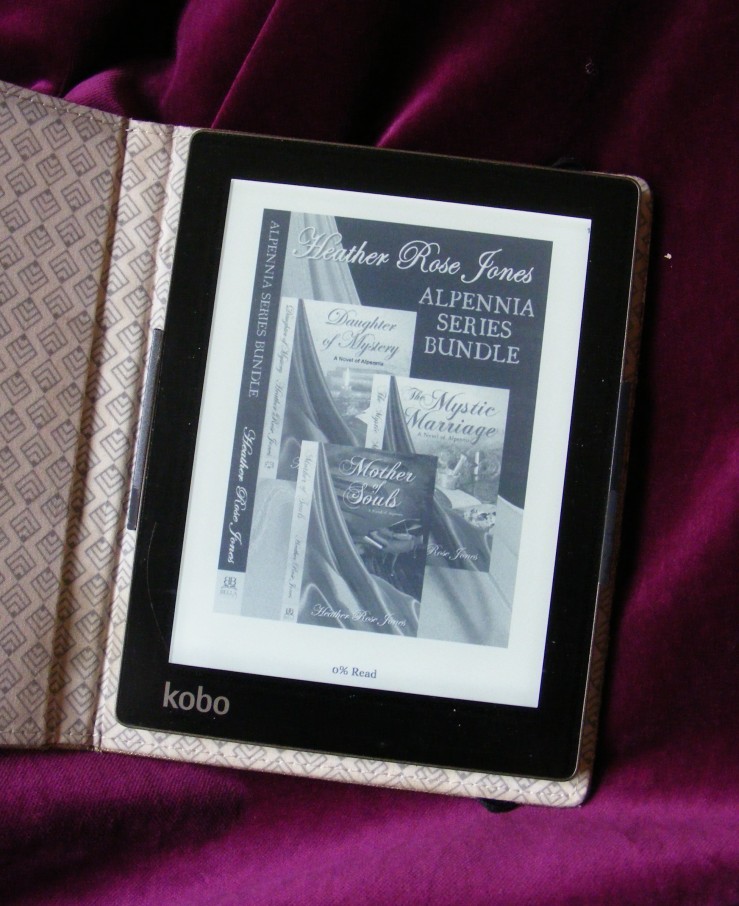
DSCF7888

If I’d written a wishlist of all the tropes and themes that I most enjoy reading, and handed my specifications over to an author, I couldn’t have liked the result better than I like this. The series contains nights at the opera, women in breeches, swashbuckling, politics both national and ecclesiastical, relationships between women, and a sensitive portrayal of religious experience. And a fictional state somewhere in Europe. Which is why we’re here.

The worldbuilding is meticulous. Alpennia is made distinctive by physical geography, by history, by religious practice, and, perhaps most obviously, by language. Where some authors would have let matters carry on in assumed French or German, Jones gives Alpennia a language of its own, and it works remarkably well.

How do you get there? How do I get there? Because that’s my main criterion for including a place in this gazetteer. And if getting there had to involve magic, it wouldn’t make the cut.

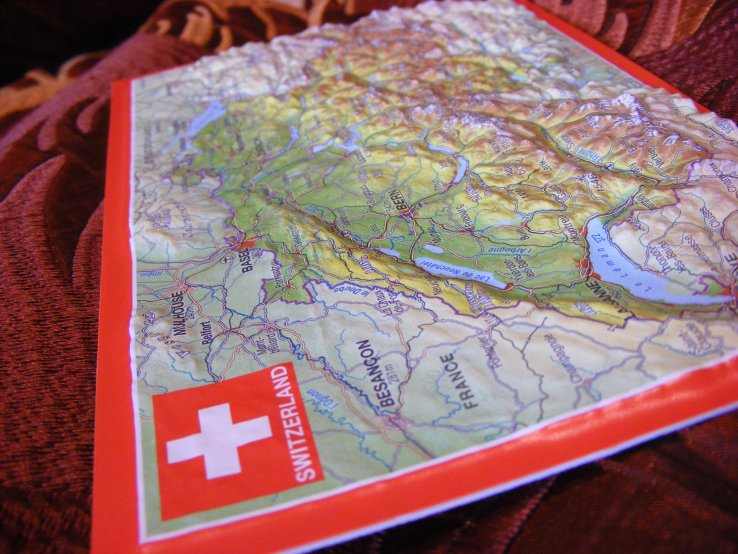
In Daughter of Mystery, Alpennia’s location is established in relation to Switzerland:

Chalanz was well out of sight around a curve of the hills behind her but in the other direction, to the south, she could see all the way to where the mountains rose, snowcapped, on the southeastern border of Alpennia, guarding the roads to Switzerland and places beyond.

In The Mystic Marriage we get a fix on it from the other direction. Antuniet travels from Heidelberg to Rotenek, the country’s capital, via Basel.
DSCF8054

As it happens, magic in these books might impede travel, but it doesn’t seem to enable it in any meaningful sense. They’re set in the first half of the nineteenth century, and people travel on foot, or horseback, or coach. I imagine that there’s a railway line these days, and perhaps even an airport.

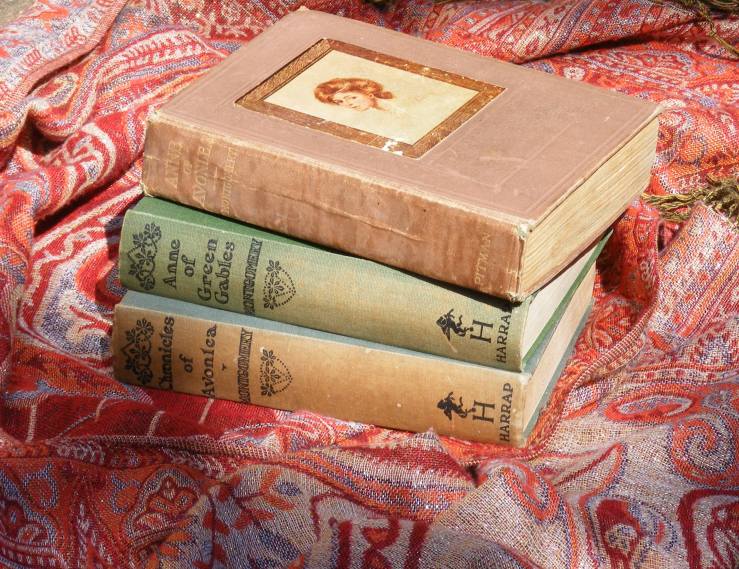
Leaving the realms of fantasy – or, since I’m now turning to Anne of Green Gables, perhaps not – and crossing the Atlantic brings me to Avonlea.
DSCF7905

I suspect that I’ll be writing a lot over the course of this series about how characters enter and leave fictional places, about outsiders and insiders are identified, and about how the established community is set up.

Anne of Green Gables does all of those things within the first few chapters. A typical opening would see the orphan Anne arriving on a train, to be met by Matthew Cuthbert and escorted into Avonlea.

And in fact that’s what happens. But it doesn’t happen until Avonlea has been introduced to us. The novel opens with Mrs Rachel Lynde seeing Matthew leaving Avonlea, and wondering why. It’s a clever move to get the best of both worlds: Avonlea may never have seen anything like Anne, but we can’t understand the significance of that unless we understand a little bit about Avonlea.

In passing, we get a geographical clue:

Mrs Rachel found abundant time to sit for hours at her kitchen window… keeping a sharp eye on the main road that crossed the hollow and wound up the steep red hill beyond. Since Avonlea occupied a little triangular peninsula jutting out into the Gulf of St Lawrence, with water on two sides of it, anybody who went out of it or into it had to pass over that hill road and so run the unseen gauntlet of Mrs Rachel’s all-seeing eye.

Then we follow Matthew out of Avonlea. There’s a little hint of the lyrical descriptive note that the narrative voice shares with Anne, but it’s nothing to what hits the page when we meet Anne herself and she meets Avonlea:

They were on the crest of a hill. The sun had set some time since, but the landscape was still clear in the mellow afterlight. To the west a dark church spire rose up against a marigold sky. Below was a little valley, and beyond a long, gently-rising slope with snug farmsteads scattered along it. From one to another the child’s eyes darted, eager and wistful. At last they lingered on one away to the left, far back from the road, dimly white with blossoming trees in the twilight of the surrounding woods. Over it, in the stainless south-west sky, a great crystal-white star was shining like a lamp of guidance and promise.

This alternation continues throughout the book. Marilla Cuthbert takes over the more prosaic point of view, while Anne keeps the descriptions. (Matthew continues not to say very much.) It’s effective: in the reader’s mind, Avonlea becomes a very beautiful place, but one that’s the creation of a very human community.

How to get there? I refer you to this thoroughly evidenced page matching the locations in the books with real-world settlements. Find your way to Charlottetown, and off you go. Actually, I’m not sure whether, growing up, it ever occurred to me to doubt that Avonlea was real.

Books referred to in this post

Daughter of Mystery, Heather Rose Jones

The Mystic Marriage, Heather Rose Jones

Mother of Souls, Heather Rose Jones

Anne of Green Gables (and, obliquely, much of the rest of the Anne series), L. M. Montgomery

ABCDEFGHIJKLMNOPQRSTUV

Charity vs piracy: my take on the second-hand books question

DSCF8026

As usual, I’m late to the controversy. As usual, I only have a hazy idea of what actually went down. But I think it was something like this:

  1. A site went up which shared pirated ebooks in PDF format
  2. Authors and publishers protested
  3. Users of the pirate site protested in turn
  4. Conclusions were jumped to (authors do not want people to read their books for free!)
  5. Assumptions were made (authors do not want people to read their books in any way that doesn’t involve buying the book new!)
  6. Somewhere in the middle of this, the site was taken down
  7. But the controversy kept running

If you happened to look at Twitter at the wrong moment, you might well be forgiven for concluding that authors disapprove of: libraries, charity shops, jumble sales, second-hand bookshops, those shelves you find in cafés and staff rooms and railway stations.

(Although if you looked a bit harder you’d find plenty of authors who’d disagree.)

There simply aren’t enough hard copies of my books out there in the wild for this to affect me. If there’s somebody currently scouring the charity shops of Britain in the hopes of picking up a paperback of Speak Its Name, then all I can say is, good luck to them. They’ll spend more on the petrol or the train fare than they would just buying the thing new.

So really, I’m talking as a reader here, as a browser, as a purchaser.

I’m talking about charity shops here, and about libraries, and about bricks-and-mortar second-hand bookshops. I’m talking about places with actual shelves. I’ve spent a lot of time in that sort of place over the years. And I have picked up books by authors I’d never heard of. My eye has been caught by a title, a cover picture, a half-remembered name.

And I wouldn’t have spent nine pounds ninety nine on this whim, but fifty pence, two pounds, seems like a decent gamble. Because it is a gamble. I might abandon it after one chapter. On the other hand, I might end up devoting the next five years of my life to finding everything else that author wrote and buying it – yes! perhaps even new!

And I have never felt remotely guilty about any of that; nor do I intend to start now. I am pleased to support a small business or a charity. (Well, most charities – but that’s another story.)

If I like a book, I might keep it and re-read it. If I don’t like it, am I expected to throw it away? Because I certainly don’t want it around my house. No. I will pass it on to a charity shop, or leave it on a swap shelf, or BookCross it, and if someone ends up selling it for fifty pence or five pounds, then they’re welcome to it. And, if I’m honest, the implication that all books should be new books (because that’s where the other way of thinking leads leads) appalls me on ecological grounds, quite apart from anything else.

Many of my clothes came from charity shops, and many have gone back to others. I don’t see the difference when it comes to books. Nobody apart from me can wear the dress that I am wearing. (They can wear a dress very like it, but that’s another story.) But I can lend, give, or sell it to somebody else without the manufacturer having any reasonable grounds for complaint. Likewise, nobody except me can read (for example) the particular copy of The Birthday Party (Veronica Henry) that’s currently on top of my chest-of-drawers. But I could lend, give, or sell it to you, and then you could read it.

And I don’t think that’s depriving Veronica Henry of any income that she could reasonably have expected, because I’d never heard of her before a BookCrosser sent me that book. On the other hand, if I were to start making and handing out copies of it to anyone who asked – people who were actively looking for her book, say – then that would be illegal and immoral. And that’s what the PDF distribution site was doing.

But the existence of any physical copy of any book implies that at some point, perhaps way, way back in the dim and distant past, the author (or the author’s estate, or whoever managed to get the rights off the author**) has been paid for that copy of that book. That is what makes the difference for me between the second-hand trade and piracy.

Incidentally, if you do happen to want a free ebook, then my Speak Its Name is free on Kobo, the iBookstore, Barnes and Noble, and Lulu until the end of September. And if anyone tells you off for downloading it, well, you can tell them that I wrote it and I published and I’m the one who gets to set the price. My apologies to Kindle users: I’m waiting for Amazon to catch up. If you don’t want to wait, you can get an EPUB copy and run it through Calibre with my blessing.


* I also make extensive and enthusiastic use of Project Gutenberg, on the grounds that the authors represented there are far too dead to care, and for the most part, so are their heirs.


Report from the Book Bus: new friends and old friends

DSCF7959

I am back on the mainland and back at my own computer, after most of a week at the Ventnor Fringe Festival, most of which I spent hanging around at the Book Bus.

I sold a few books. I wrote a few lines. But mostly I sat in a deckchair and chatted to Tom and Jen, who are in charge of the book part of proceedings (my father and brother look after the bus side of things), and to various family members and friends who were around for the week. I listened to poets and musicians. I bought some books I didn’t know I needed (a leather-bound copy of Prince Otto, which I finished in the form of a Project Gutenberg ebook a few weeks ago; an account of the Oberammergau Passion Play by Jerome K. Jerome; a Val McDermid so early it was published by the Women’s Press; a guide to the Offa’s Dyke long-distance trail).

And I reread my own book. I’m just beginning to work on the sequel to Speak Its Name, which will pick up on the action three or four years down the line, and I wanted to remind myself of what actually ended up in the book.

I knew most of what happened, of course, but I discovered that I’d got Colette’s brothers mixed up, and had given her a niece that I’d completely forgotten about. I discovered that the family dog appeared to be alive and well. I managed to distinguish the two separate parts of the Mel-and-Rose combination. I learned that Colette reads Trollope. I reminded myself of the names of all the churches in Stancester. I found that I’d already sown the seeds for one of the themes that I’m intending to develop in the sequel.

And I found myself filled with an unexpected affection for all my characters, but particularly for Colette and Lydia, who I put through hell and brought out the other side. I have found that all my major characters continue to sit in my head, and quite often I stop to think about what they would make of current affairs that affect them, but this felt rather different. This was more like sitting down with them for a long old gossip than following them on Twitter. It was lovely.

The next book will come from Colette’s point of view. I’m not planning any more Stancester books after this, but, you know, I said that last time. Either way, I’m looking forward to getting to know Colette and Lydia (not to mention Georgia, Will, and Peter) again. And it was great to have a week on a bus full of books to get things going.

Next time I’ll try not to bookend the week with the Discworld convention the weekend before and a wedding the weekend afterwards. But it was great fun, and I’ll definitely be back, so long as the bus is.


See you on the Book Bus

2013 May 232

Later this week I’ll be back on the Isle of Wight for Ventnor Fringe, an independent arts festival that turns every conceivable nook and cranny in this delightfully higgledy-piggledy Victorian resort into a performance space. Ventnor is possibly my favourite town in the entire country, but I have never yet managed to make it down there for the Fringe. Until now.

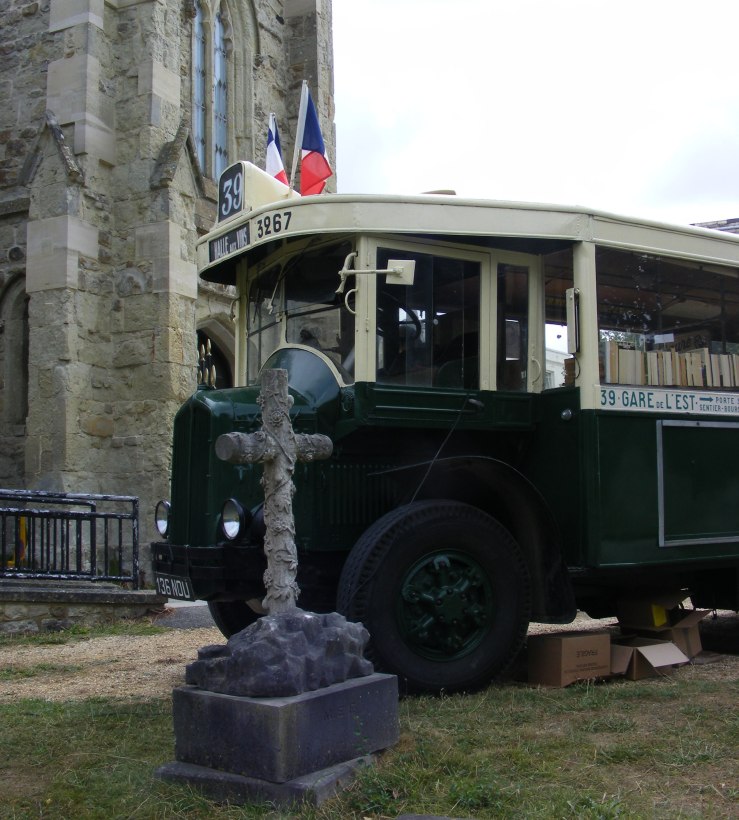
You may well find me in the Book Bus in St Catherine’s churchyard, where I’ll have copies of both my books on sale. (Mine are new. Everything else on there is second hand.) The bus (which is the one in the picture above) will be there all week, and is open from 10am to 6pm; I have to eat and sleep and would quite like to see some of the other events as well, so I can’t guarantee that I’ll necessarily be there when you happen to turn up. But hey, it’s a bus full of books; you don’t need me to be around to have a whale of a time there.

All this talk of independent events reminds me of an initiative I came across via Twitter this week, Just A Card. The idea is that if everybody who came into a [studio/craft shop/art gallery/bookshop] bought ‘just a [card/brooch/fridge magnet/book]’, that establishment would be able to remain in business for rather longer than it would otherwise.

Obviously I’m not advocating filling your house up with useless crap that you hate, particularly not if money’s tight; but if you find something cheap and pleasing, something that you think that a friend or family member might appreciate even if it’s not your thing, then buying it might go a little way to keeping an independent business going.

(Connoisseurs of British seaside towns may legitimately point out that this is obviously Brighton, not Ventnor. Unfortunately I don’t have a picture of the bus in Ventnor, although by this time next week I almost certainly will have fixed that.)

Brief and trivial

DSCF7792

Nobody gave me the correct answer to the question of which novel my fictional book group was discussing in A Spoke In The Wheel.

I can’t say that I’m surprised. It was in fact North Face, which is the last novel that Mary Renault wrote before giving up on writing about straight people and moving to South Africa. The rest of this post will contain spoilers, because I feel that I probably ought to explain a little.

The unpleasant hero is Neil Langton, who spends the whole book alternately mansplaining, manpaining, and trying to persuade the unfortunate Ellen that she ought to sleep with and/or marry him for her own good.

He achieves both.

The biscuits are metaphorical – well, a simile, really, and a very odd simile it is, too.

So far he had brought her; if it seemed well to him that she should part with her virginity as a casual epilogue, after an exhausting emotional crisis, in the abrupt and flickering desire of weariness – a satisfaction as brief and trivial as the biscuit which, wakeful, one reaches from the bedside tin – then this must be the perfect, the only possible thing, and she would embrace it gladly.

Sexy, no? No.

As for the incest, I still can’t work out whether we’re meant to think the reason that Ellen wasn’t attracted to her (now deceased) childhood friend Jock is because of the Westermarck effect, or because he literally was her brother. So it actually isn’t as incestuous as the book group made it sound. Or is it?

On a less baffling note, the winners of the giveaway, as determined by Random.org, are VivieH and joannechillhouse. I will be emailing you for your addresses.

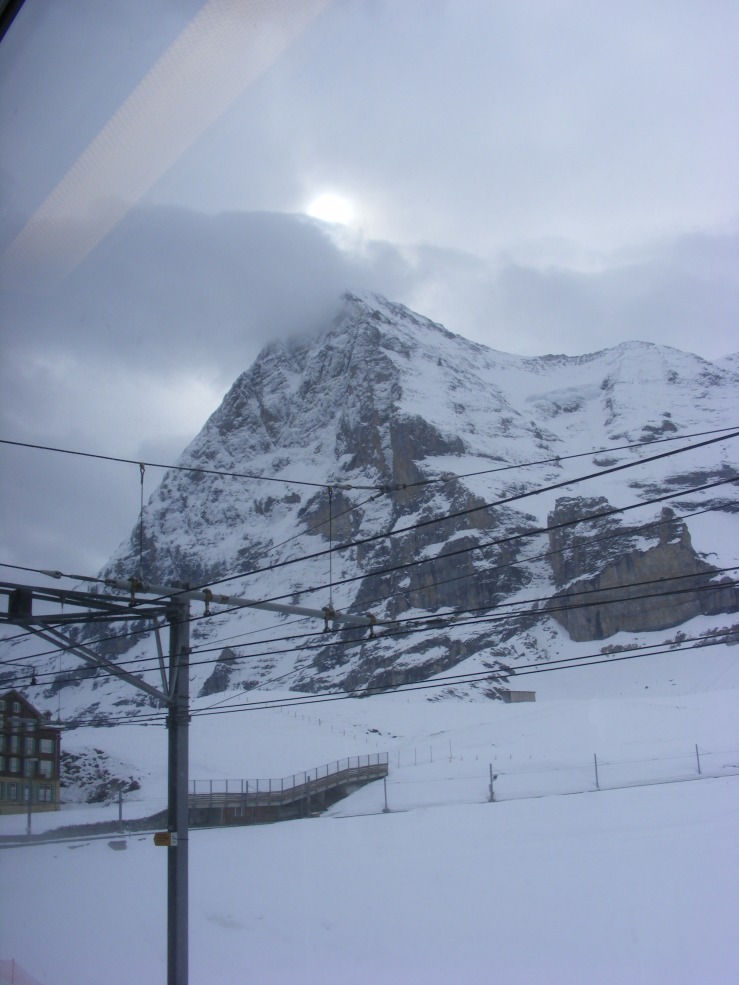
The picture, by the way, shows the north face of the Eiger as seen from the train at Kleine Scheidegg, and rather appropriately obscured by the weather.

National Reading Group Day giveaway

IMG_20180412_165644_410

Apparently it’s National Reading Group Day. For the next three hours, anyway. I thought about celebrating by putting together a set of reading group questions for each of my books, but I’ve yet to come across a group that actually uses those. In my experience most people are quite capable of talking about what did and didn’t work for them.

One reading group I used to belong to didn’t always get around to talking about the book at all, but I think that was an extreme case.

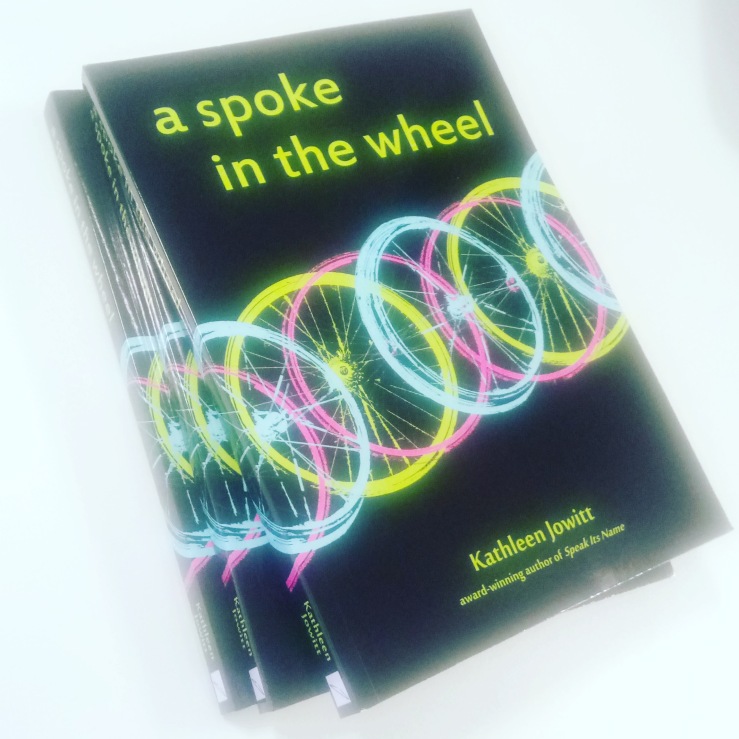
Instead, I’m going to take advantage of the fact that there is a book group in my latest book, A Spoke In The Wheel. As the old meme (almost) says, I put a book in your book, so you can read while you read… The book group aside, A Spoke In The Wheel is the story of what happens when a disgraced professional cyclist meets a disabled cycling fan; a story of assumptions, of redemption, and of coming to terms with one’s own limitations. And to give you that opportunity to read it, I’m hosting a giveaway.

The book group scene is below. They’re talking about a real book. It isn’t by Ian McEwan, despite what Polly thinks. The first person to identify the book wins a copy. Anyone who comments here with a guess that turns out to be incorrect will be entered into a draw for a second copy.

In short:

  • leave a comment on this post with the title and author of the book that you think this reading group might be discussing
  • the first person to guess correctly wins a copy
  • people who guessed incorrectly are entered into a draw for a second copy
  • if no one guesses correctly then I’ll draw for both copies from the incorrect guesses
  • if you have no idea, take a wild guess. What’s the worst that could happen?
  • this draw will take place on Saturday 23 June
  • I am prepared to send the prizes anywhere in the world

Those present at the discussion that inspired this (they know who they are) will not be eligible. If they feel hard done by they should comment with an alternative book, and if I find their suggestion sufficiently amusing I might enter them into the draw anyway.


Vicky texted me later in the day to say that she’d been sent home ill by her boss (who clearly wasn’t such a sadist as she’d made out) and could I pick Polly up on my way home. It seemed that one of Polly’s church ladies was going to drop her off at the Three Bottles after some event, and Vicki was going to pick her up when she got home from work. Quite why the church lady couldn’t take her all the way home I couldn’t work out, but since it wasn’t really any of my business I didn’t ask, just texted back to say that would be no problem. And, because I had a headache, felt slightly virtuous about it.

The Three Bottles was quite lively for a week night. I eventually found Polly at a small table behind a very rowdy book group. The substitution of me for Vicki didn’t seem to be a particular disappointment, so she’d evidently been warned.

She motioned me to sit down, and murmured, ‘I’ve been eavesdropping for the last quarter of an hour. They’ve established that the biscuits were metaphorical, but they can’t work out whether or not the incest was literal.’

‘What on earth are they reading?’ I kept my voice down too, though it was hardly necessary.

‘I’m not sure. I haven’t been able to catch sight of the book. It sounds vaguely like Ian McEwan, but I don’t think it’s one I’ve read, if so. The biscuits don’t sound right. Though the whole group seems to want to stab the hero in the face, which does.’

‘Right,’ I said. I still hadn’t put anything on my new library card, and whatever this book was, it didn’t seem like a very good place to start. ‘What about a drink?’ I offered. Now that I was inside, in the warm, I was reluctant to go out into the rain. My headache was getting worse, though; I hoped I wasn’t coming down with Vicki’s cold. I told myself that it was probably just dehydration.

She smiled. ‘Yeah, why not?’

‘What’s yours?’

‘Orange juice, please.’

I went to the bar. My timing was bad: two of the women from the book club had got up just before me, and were putting in an order for their entire table. I thought I heard someone say my name, but when I looked around nobody seemed to be trying to get my attention. The place was crowded; I’d obviously been mistaken.


The first thing I saw was the wheelchair.

The first thing she saw was the doper.

Ben Goddard is an embarrassment – as a cyclist, as an athlete, as a human being. And he knows it.

Now that he’s been exposed by a positive drugs test, his race wins and his work with disabled children mean nothing. He quits professional cycling in a hurry, sticks a pin in a map, and sets out to build a new life in a town where nobody knows who he is or what he’s done.

But when the first person he meets turns out to be a cycling fan, he finds out that it’s not going to be quite as easy as that.

Besides, Polly’s not just a cycling fan, she’s a former medical student with a chronic illness and strong opinions. Particularly when it comes to Ben Goddard…

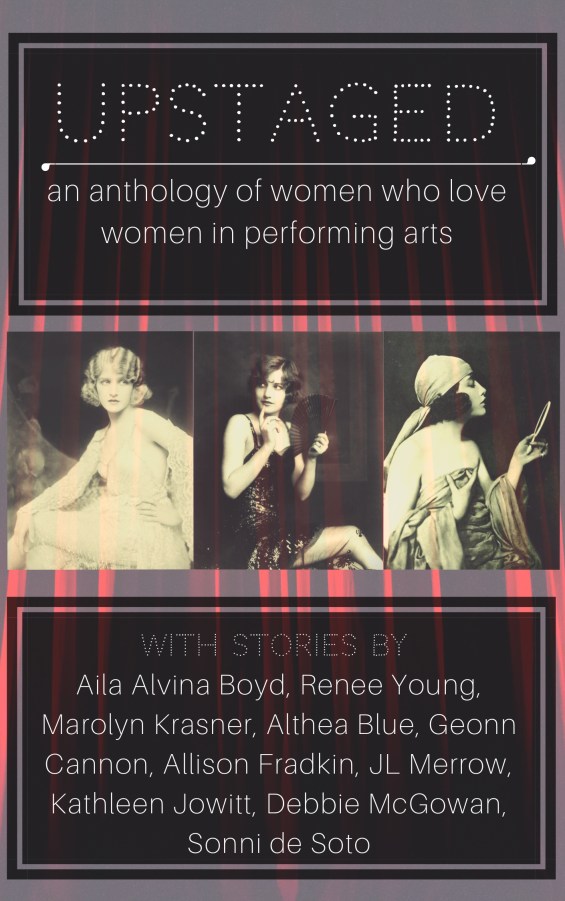
Upstaged: an anthology of queer women and the performing arts

UPSTAGED cover-2

I’m very pleased to say that my story Prima Donna will be appearing in Supposed Crimes‘ upcoming anthology Upstaged.

My author copy came through yesterday, and I’m planning on spending the weekend reading it. I know what’s in my story, of course (opera, travesti, people jumping to conclusions and having to find their way back from them, and more opera) but the rest of the anthology is new to me, and it looks very intriguing…

Presenting the Revial of Jan, Aila Alvina Boyd – Years after blowing her Broadway debut, a former actress is convinced by the playwright to come out of retirement in order to revive the role that pushed her to the brink of insanity.

The Helsinki Incident, Renee Young – After an unexpected, erotic encounter with a mysterious and beautiful stranger, the lead guitarist of a band touring mining outposts across the solar system rediscovers her love of music.

I, Stage Manager, Marolyn Krasner – A short love story about a stage manager, eccentric theater types, a kooky best friend, and leather daddies.

End of an Era, Althea Blue – In the years leading to the death of the silent film, many careers were ended prematurely. But do we really know everything there was to know about the silent stars who faded away?

Knife’s Edge, Geonn Cannon – Amid the insanity of the circus, Arlie and Ru must place absolute trust in each other. Arlie trusts that the blades will hit their intended target, while Ru trusts that Arlie won’t flinch. It would only take the smallest of mistakes to destroy that trust.

I Think I’m Gonna Like It Queer, Allison Fradkin – Theatre is an ensemble of inflection, projection, and rejection. So when 16-year-old Reyna—a performer who’s part prima donna, part dreamgirl next door—desires a duet with Melinda, the ingénue who plays her best friend, she can’t just run and tell that. Or even run and tell Melinda. But with the arrival of a triply threatening romantic rival, it’s five to places and ten to one that Reyna had better act on her feelings before the curtain closes on her chances.

London Lark, JL Merrow – Repairing a salvaged automaton becomes a labour of love for apprentice tinkerer Harriet Hodgkins. But the clockwork coquette is destined for resale, and Miss Pandora’s restoration will signal their separation—unless Hodgkins can engineer a more auspicious ending.

Prima Donna, Kathleen Jowitt – Everybody knows why the great Signora Valli left the Licorne opera company. Everybody, that is, except Monsieur Perret, who’s taken the brave – some would say foolish – decision to cast her opposite rising star Delphine Vincent-Leclerc in Rossini’s Tancredi. But what everybody knows is only half the story.

Oh No She Didn’t!, Debbie McGowan – Once upon a time, in the not so faraway land of small-town amateur dramatics, there lived a widow called Marcy and her beautiful, grown-up daughter, Ginny…

Rise or Shine, Sonni de Soto – What is Cadence Carrington to do? Her public life is colliding fast with her private persona, when her boss at the governor’s office sets his eye on shutting down the club she secretly performs burlesque at as featured dancer and femme fatale, Rebel Rouser. It’s only a matter of time before she’s found out, but the question is will she choose Cady’s steady, straight-laced life or will she choose to be the Rebel she knows she is at heart?

A. M. Leibowitz, the editor, says:

We had everything from actual plays to space operas to period pieces to contemporary romance. These talented storytellers captured womanhood, and women on stage and screen, in all their beautiful, wonderful glory. In the end, I was only able to take ten stories. These are the ones that made me laugh and cry and want to sing. There are erotic and sensual tales, gender non-conformity, trans women, lesbians and bisexuals, politics, falling in love, parenting, youthful crushes, opera, toe-tapping musical numbers, death-defying stunts, humor, and more. This anthology is a celebration.

Upstaged will be released on 15 July and is available for pre-order now.

Blog tour – final stage – excerpt at Books, Teacup and Reviews

ASITW blog tour individual 18 May

We’re nearly there! The very last stop on the blog tour takes A Spoke in the Wheel to Books, Teacup and Reviews, where you can read an excerpt. Yesha will be reviewing the book later in the summer, as well.

Thank you to all the bloggers who have welcomed me – and thank you for joining me on the ride. It’s been fun!

ASITW blog tour LARGE

Blog tour, stages 13 and 14: guest post at Anne Bonny Book Reviews, and review at Odd Socks and Lollipops

ASITW blog tour individual 17 May

It’s the penultimate day of the blog tour! Today I’ve taken A Spoke in the Wheel to Anne Bonny Book Reviews, where I’ve got a guest post on the subject of writing about disability.

And there’s a review at Odd Socks and Lollipops, where Jenni says,

Polly really made the novel for me, and the way in which she is written is so perfect. As a person who suffers with a chronic illness I could so relate to Polly and her experiences. It was so wonderful to see a disabled character written in the story and not have their narrative be there as a prop or so that they could be miraculously fixed. Instead Kathleen has created a wonderfully well developed character who highlighted both to Ben and the reader then challenge that every day life is for some.

You can read the whole review here.

ASITW blog tour LARGE