2020 reading challenges – a bit behind the times

DSCF7978

Having – somewhat to my surprise – filled an entire bingo card on the Indie Challenge last year, I had a vague idea of quitting while I was ahead, and not doing any reading challenges this year. Then I was messing around on Twitter and found a couple that looked a) interesting and b) manageable.

  1. The #EU27 project. This involves reading one book from each of the 27 EU countries that aren’t the UK. I’m late to the party on this one, as it began when Article 50 was triggered, and here we are over two years later. I’m going to miss being part of the European Union, and I rather like the idea of this challenge as a way to remain connected with the rest of Europe in at least a small way. I will write up books from this challenge on this blog. The majority will be translations: my French is good enough to read Jules Verne in the original, if not Colette (mind you, I get bogged down in Colette in English, too) but I don’t think I can say the same for my smattering of German and Spanish, let alone my opera fan Italian – and that’s as far as my languages go.
  2. #TBR20, which involves making one’s first twenty reads of the year books which one already possesses, and which appears to be a descendant of the TBR Dare (which involved reading only books that one already possessed for the first three months of the year). Since I’m likely moving house in March, this seems like a useful discipline, and I’m going to go for both goals: the first twenty and the first three months. I won’t be reporting back on these unless they also count towards #EU27.

The other thing I’m trying to do is use Goodreads and LibraryThing more. I don’t do star ratings, which in my experience are pretty much meaningless, but I will be posting text reviews. We’ll see how it goes…

#EU27project

Denmark: A Poet’s Bazaar (Hans Christian Andersen)

Germany: What Remains (Christa Wolf)

Italy: The Divine Comedy (Dante Alighieri)

Ireland: Landing (Emma Donoghue)

Spain: Nada (Carmen Laforet)

#indiechallenge (completed!) – El Hacho (Luis Carrasco)

DSCF8568

The blurb

El Hacho is a timeless evocation of inheritance, duty and our relationship to the landscape that defines us. Set in the stark beauty of the Andalusian mountains it tells the story of Curro, an olive farmer determined to honour his family tradition in the face of drought, deluge and the lucrative temptations of a rapidly modernising Spain. Wonderfully crafted, El Hacho is a poignant and compelling story of struggle and hope.

The author

Luis Carrasco lives and writes in Gloucestershire. He was inspired to write El Hacho after falling in love with the people and natural beauty of the Sierra de Grazalema whilst living in Andalucía. He is currently working on his second novel.

The publisher

époque press is an independent publisher based between London, Brighton and New York, which specialises in literary fiction.

The bookshop

I ordered this book direct from the publisher.

The bingo card

This could count towards: ‘Est. 2018’; ‘A new to you press’; ‘A debut’.

My thoughts

This is a gentle book, but it’s filled with tension as it explores the relationship between human tradition, ambition and destiny, and the forces of the natural world. The mountain of El Hacho dominates the action as it does the landscape in which that action takes place. Close behind the mountain comes the weather: an active force, sometimes empowering, sometimes destructive, whose changes are to be both longed for and feared. And against that backdrop the minute details of human relationships stand out vividly.

This is a short book, but it packs a lot in. I think I’ll have to go back and read it again.

The challenge

And that’s my twenty-fifth book of the #indiechallenge completed and reviewed. Here’s a round-up:

It’s been fun: an opportunity to reread old favourites, to discover new authors, to make a dent in my TBR pile. I’m particularly amused by how much of the non-fiction in particular is on bi themes – well, it’s true, we don’t get much representation in the mainstream. (And how every single one of them came from my TBR pile…) Two books included contributions from me; four were written by people I know; one was translated by someone I know. (And Peggy Seeger once said she liked my hat, though I’m sure she says that to all her fans.) There are a couple of books on there that I wouldn’t read again, and YA in particular just doesn’t do it for me any more, but generally speaking this has been a very positive experience. Now, do I want to do it all over again next year?

December Reflections 5: best book of 2019

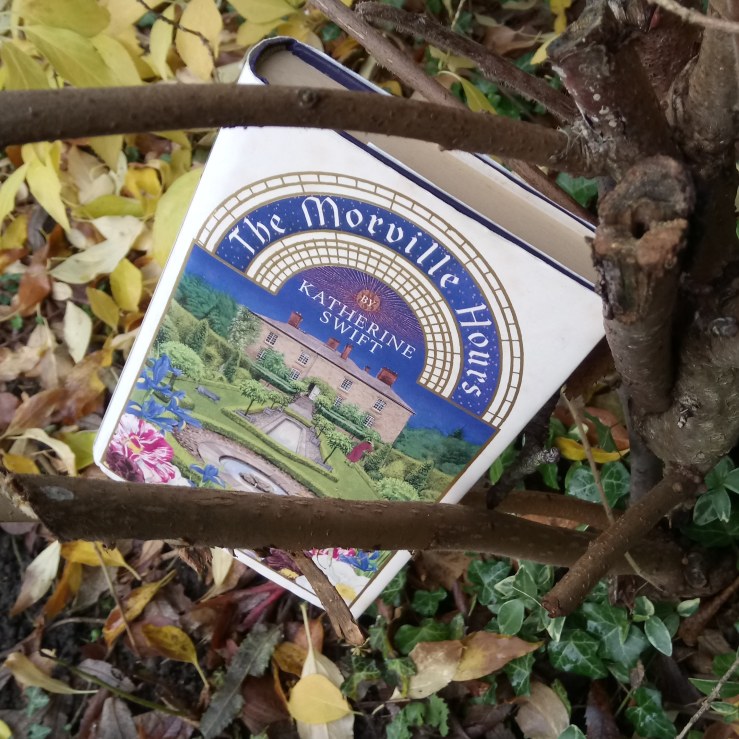
IMG_20191205_145629_040

As is often the case, my favourite book of the year is one that was actually published several years ago. Eleven, in this case, and the story begins twenty years before that, when the author moves into the Dower Houses at Morville and begins working on the garden. Or hundreds of years before that, when the monastery is built at Morville. Or decades before that, when she’s born. Or hundreds of years before that, when the monastery is built at Morville. Or thousands of years before that, when the Shropshire landscape is formed.

It’s the story of the landscape and the monastery. It’s the story of the author and the garden and her relationship with the garden. It’s about time, measured in days and sunlight and fruit. It’s about people. It raised in me a powerful nostalgia for the place where I grew up, which was not far away, and it observes the changes in society and agriculture with a clear and sometimes regretful eye, but I don’t think it’s nostalgic in itself. It lives too much in the present, and is too conscious of the constancy of change, for that.

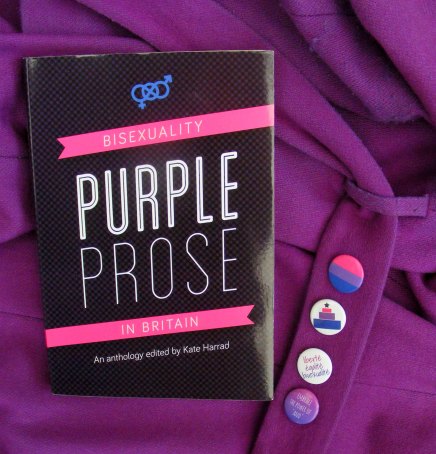
#indiechallenge – Purple Prose (ed. Kate Harrad)

DSCF8562

The blurb

Purple Prose: Bisexuality in Britain is the first of its kind: a book written for and by bisexual people in the UK. This accessible collection of interviews, essays, poems and commentary explores topics such as definitions of bisexuality, intersections of bisexuality with other identities, stereotypes and biphobia, being bisexaul at work, teenage bisexuality and bisexuality through the years, the media’s approach to bisexual celebrities, and fictional bisexual characters.

Filled with raw, honest first-person accounts as well as thoughts from leading bisexual activists in the UK, this is the book you’ll buy for your friend who’s just come out to you as bi-curious, or for your parents who think your bisexuality is weird or a phase, or for yourself, because you know you’re bi but you don’t know where to go or what to do about it.

The editor

Kate Harrad is  a published fiction and non-fiction writer. She co-edited The Ladies’ Loos: From Plumbing to Plucking, a Practical Guide for Girls (The Friday Project, 2006), and her novel All Lies and Jest was published by Ghostwoods Books in 2011. She has over a decade of experience working in business editorial/writing positions, and has written for the Guardian, the F-Word and the Huffington Post. She has also been a bi activist for several years, and has co-organized numerous UK bi events.

The publisher

Thorntree Press is an independent publishing company that was founded in 2013 by Eve Rickert and Franklin Veaux. They publish non-fiction books about sexuality, love and ethics with a focus on non-traditional relationship models.

How I got this book

I made a donation to the Indiegogo crowdfunder – a paperback copy was part of the reward level I chose.

The bingo card

This could count towards: ‘A crowdfunded book’; ‘A book from your TBR’; ‘Marginalised people’; ‘Non-fiction’; ‘Book from a micro press’; or ‘LGBTQIA’.

My thoughts

I have a soft spot for this book: I’m a contributor to it, in a very minor way (my poem Circles concludes the chapter on ‘Bisexuality and Faith’). And being a contributor, being part of process of putting this book together, was important to my own process of coming to understand who I was, of moving from an ill-defined conviction that I could call myself bisexual if I really had to, but God forbid it inconvenience anybody else, to a sense that I was part of a community.

But, although it was published back in 2016, I didn’t read it end to end until this year. And I think that what I really enjoyed about it this time round was that same sense of community. I follow many of the other contributors on Twitter; I’ve met some of them in real life, or recognise them as friends of friends. But even if that weren’t the case, even if I’d picked it from the shelf with no prior knowledge, I think I’d recognise myself in it, and be glad of that. It’s a great book for feeling less like you’re the only one who’s ever felt like this.

It’s a joyfully eclectic book, too – for a group that gets stereotyped as much as bisexuals do, we’re an eclectic bunch – and some parts inevitably feel more relevant (or, which is not the same thing) interesting to me than others do – but that’s a good thing. The multiplicity of perspectives makes it that little bit more representative.

The Reader’s Gazetter Special: Alpennia

We’ve visited Alpennia before in this series, but I have a particular treat for you today. As part of the publicity around the release of her new Alpennia novel Floodtide, author Heather Rose Jones has written a guest post exploring why she chose to set her stories in a fictional location, and what she had to consider once she’d made that choice.

It’s worth noting that, while Floodtide is a standalone and you don’t need to have read any of the previous books in the series to enjoy it, Heather is Bella Books’ featured author until the end of the month, so this is an excellent opportunity to pick up all the other Alpennia books at 30% off.

BEL-Floodtide

I’ve heard the question often enough: If you’re setting your story in actual history rather than a pure secondary world, why invent a country to set it in? Why not use a real location? What is the appeal of Ruritania?

Some of the reasons are practical. If your characters are major figures in their setting, maybe you don’t want to insert them into events and relationships that actually existed. Maybe no historic figures did the things or were the sorts of people you need. In my case, I started out thinking I was going to set my story in France, but I needed some specific legal and social structures to make my plot work, and those were impossible in a French setting. In order to give my imagination the space to work, I needed to remove the constraints of an existing historic society. Plot trumped history and so Alpennia was born. (The fantasy elements came later.)

Part of the appeal can be a type of laziness. Some authors are happy to break history and deal with the consequences when a subset of readers protest, “That’s not how it works! That’s not how any of this works!” Others may prefer the softer path–the ability to say, “That’s just how things are in this country.” Ruritania isn’t an excuse to create a society that isn’t internally consistent. There are limits to how lazy you can be and still write a good story. But the limits are more elastic, more forgiving.

An excellent reason to use an invented country is to be sensitive to the real-world cultures that inspired you. This is a sensitive topic, because borrowing elements you find inspiring can merge into appropriating the heritage of actual people while erasing their ancestors from the story. I’ve tried to make it clear that Alpennia is its own place, not an existing culture dressed up in a costume, but the approach has its own risks.

Sometimes inventing a country is a case of wanting to create a setting that could have existed but never did. To design realistic people and events that by chance never happened. Or ones that you suspect did happen but have been written out of history. The heart of my books is a focus on queer women. We know from the bits and scraps that were recorded (and for whom those records survived) that women have loved each other across the ages, but only certain types of stories have come down to us. Often the ones that ended badly. I don’t claim that Alpennia was some sort of queer paradise, but by creating my own society, I can integrate my queer characters without the charge “that’s unhistorical because these people aren’t in the history books.”

Once you’ve decided to invent your own country, the question becomes “how?”

I wanted a place that made sense within its context–that could have evolved naturally out of real historic settings and forces. The geography might be inserted sideways into the existing map of Europe, but the culture, the history, the economy needed to be unexceptional.

The original idea of setting the story in France had already shaped parts of the culture, so it made sense to place it on the border of that country. There were still plenty of small semi-independent duchies and principalities scattered through western Europe in the 18th century. For its simple existence, Alpennia makes as much sense as the Duchy of Savoy, straddling the modern border of France and Italy. In fact, the two are technically neighbors, though by the time of my stories, Savoy was part of the Kingdom of Sardinia. But I digress…

Sitting on the intersection of France, Italy, and Switzerland, the recorded history of Alpennia would of course have begun as part of the Roman Empire. There are references to Roman ruins in Daughter of Mystery, and fans of Roman archaeology will be entertained by the discovery of an ancient Roman monument that plays a key role in Floodtide.

As a consequence, Alpennia will have a Romance language, but likely with a Germanic substrate entering during the Migration Era. When I needed to build a “look and feel” for Alpennian names and vocabulary, I wanted something that was recognizably central European but not quite like any existing Romance language. I settled on using the (fairly fragmentary) written records of the Langobardic language as inspiration for the appearance of the language and developed a set of sound-change rules to use in transforming Latin vocabulary and names into early modern Alpennian. Hey, I have a PhD in historical linguistics, don’t think I was going to gloss over this part!

Alpennia sits on the edge of several large-scale cultural patterns. As a vast oversimplification, these patterns include falling on the Catholic side during the Reformation, an emphasis on “honor culture,” and tending to follow southern European marriage patterns.

Not having a direct sea port, I didn’t see Alpennia as participating strongly in colonial expansion (not for any virtuous reason, just lack of opportunity), and their water-based foreign trade is dependent on access to the Mediterranean through French ports. Alpennia’s major river, the Rotein, is a sort of shadow-twin of the Rhône (which might be guessed from its name) and the positioning of the capital of Rotenek is implied to be at the farthest upriver that commercial barge traffic can reliably go. When I first started plot-noodling the seasonal spring floods that give Floodtide its name, I envisioned the snow-melt of a fan of Alpine tributaries hitting the flatter country around Rotenek in potentially disastrous ways. News images of urban flooding in Europe in the last couple decades have been very inspiring for what the results might look like.

The most fun part of developing the physical environment of Alpennia is how the architecture of human spaces reflects the layered history of the country. The heart of the “upper town” (both upper in elevation and as the heart of upper class culture) is the plaza between the palace and the cathedral. But Floodtide centers more around the marketplace between the church of Saint Nikule (the patron of sailors and merchants) and the old river landing–a relic of a time when the shipping trade was no longer in the hands of the merchant families living along the Vezenaf (whose houses are now the most prestigious in the city) but before it moved to the south side of the river where land was less dear. The simple existence of the Nikuleplaiz summarizes the merchant history of the city. I created the remnants of an old public market building there, now only a covered arcade where the charmwives sell hope and magic, and a secular bell tower that chimes for fogs and floods.

I like to find inspiration in the quirks of real spaces that break the illusion of cleanly planned buildings in the past. The charity housing built into the spaces between the buttresses of Saint Nikule’s church are inspired by actual medieval structures of that type still standing around a church in Deventer in the Netherlands, where I was visiting a friend several years ago. I love details that imagination alone couldn’t create–details that reflect the messy and contradictory relationship of people to their surroundings.

We currently have a wealth of resources for envisioning environments of the past, from easy online access to art, texts, and publications, to reconstructed virtual environments. I find these things invaluable in fleshing out the Alpennian landscape, but my heart always goes back to the time I’ve spent traveling and living in older European cities. That sense of place and presence made a big impact on me when I was a ten-year-old California girl traveling to Europe for the first time–the year that inspired my ongoing love of history. Alpennia is my chance to share that love without laying claim to a heritage that doesn’t belong to me.


Floodtide

The streets are a perilous place for a young laundry maid dismissed without a character for indecent acts. Roz knew the end of the path for a country girl alone in the city of Rotenek. A desperate escape in the night brings her to the doorstep of Dominique the dressmaker and the hope of a second chance beyond what she could have imagined. Roz’s apprenticeship with the needle, under the patronage of the royal thaumaturgist, wasn’t supposed to include learning magic, but Celeste, the dressmaker’s daughter, draws Roz into the mysterious world of the charm-wives. When floodwaters and fever sweep through the lower city, Celeste’s magical charms could bring hope and healing to the forgotten poor of Rotenek, but only if Roz can claim the help of some unlikely allies.

Set in the magical early 19th century world of Alpennia, Floodtide tells an independent tale that interweaves with the adventures.

A stand-alone book in the Alpennia series (Alpennia #4)


Heather Rose Jones is the author of the Alpennia historic fantasy series: an alternate-Regency-era Ruritanian adventure revolving around women’s lives woven through with magic, alchemy, and intrigue. Her short fiction has appeared in The Chronicles of the Holy Grail, Sword and Sorceress, Lace and Blade, and at Podcastle.org. Heather blogs about research into lesbian-relevant motifs in history and literature at the Lesbian Historic Motif Project and has a podcast covering the field of lesbian historical fiction which has recently expanded into publishing audio fiction. She reviews books at The Lesbian Review as well as on her blog. She works as an industrial failure investigator in biotech pharmaceuticals.

Website: http://alpennia.com

Twitter: @heatherosejones

Facebook: Heather-Rose-Jones-490950014312292/

HRJ

The Reader’s Gazetteer

ABCDEFGHIJKLM

#indiechallenge – Squirt (Kate Spencer)

DSCF8525

The blurb

Kate made a discovery. She wrote a poem. She writes lots of poems about sex, sexuality, the body and body and bodily functions. She’s filthy, flirty, and funny; saucy, seductive, and sensual; raunchy, ridiculous, and ravishing. You won’t believe what comes out of her lips.

The author

Kate Spencer is co-producer of Poetry in Motion, the Wellington Feminist Poetry Club and Naked Girls Reading NZ. She’s a national slam finalist, a typewriter poet for hire, an editor, a writer, a promoter, a committed Christian, a dichotomy.

The bookshop

I ordered a copy direct from Kate.

The bingo card

I am going to count this for ‘a poetry collection’, but it would also work for: ‘a debut’; ‘a women’s press’; ‘LGBTQIA’; ‘Marginalised people’; and very possibly ‘Favourite’.

My thoughts

I’m somewhat amused by the way that this challenge started out as an earnest attempt to take on the worthy books that hadn’t got to the top of my TBR pile, and has recently become ‘I read this book by a friend and it’s a hell of a lot of fun’.

It would be funny to say that Kate was the one that the Christian Union warned me about, but I never really got into the Christian Union. Still, by all accounts we had far more fun in the Methodist and Anglican Society. (Not like that.)

Anyway, oblique nostalgia for my university years aside, this book is a hell of a lot of fun. It has all the verve and immediacy that I associate with slam poetry. An extensive vocabulary, creatively and joyfully used (‘Don’t expect me to labour over my labia/epilate before a date/or pluck pre-fuck’). In this book there’s a joy in both sex and words that makes me smile. It’s usually funny (‘don’t tell me I’m ovary-acting’), sometimes angry (‘Fucking is supposed to be fucking consensual/if not, it’s not fucking sensual/it’s a fucking con/and you should be fucking convicted’) and always honest.

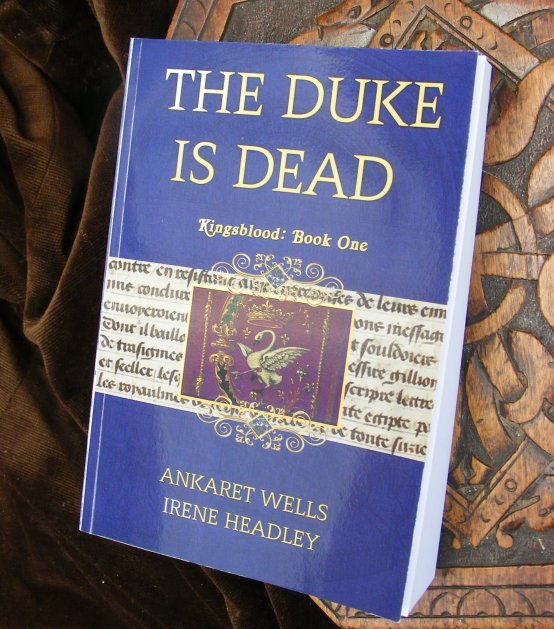
#indiechallenge – The Duke Is Dead (Ankaret Wells and Irene Headley)

DSCF8558

The blurb

It is seven years since the Cousins’ War ended.

King Roald has brought peace to the Three Kingdoms and driven the last heirs of the king he deposed into exile. His brother Thomas, Duke of Wharram, is a man for whom loyalty is the greatest virtue and family the highest cause. So when his sister Josiane, Duchess of Bergomance, finds herself widowed, her beloved stepdaughter Ambrosia beleaguered by suitors and her late husband’s coffers mysteriously empty, who better to send than Thomas?

But the ghosts of old wars are waiting in Bergomance, and new threats are rising. Some see heresy everywhere, and others look to an Empire in the east that has suddenly begun seeking allies. And into it all, a ship driven off course by storms brings a young man fleeing King Roald’s mercenaries and throws him into Thomas’s path. Nicolas ás Ithel, a man with dark eyes and a love of numbers, and an inheritance in his veins that could reignite the Cousins’ War.

Kingsblood.

The authors

Ankaret Wells and Irene Headley are friends of mine, and they talked about how they came to write this book on this blog a little while ago.

The bookshop

I bought the ebook version from Lulu; then, on discovering that there were family trees and maps to flip back and look at, bought the print version too.

The bingo card

This could count towards: ‘Genre fiction’; ‘Book from a series’ (at least, it will be soon); ‘Book that defies genre’; or ‘LGBTQIA’.

My thoughts

In recent years, holidays with my partner have tended to be ‘somewhere in the Low Countries’ (Leiden; Ghent; most recently, Lille, which is pretty sure it’s in Flanders) and ‘some time when the wind is very cold’. Don’t ask me why we keep doing this, especially since we live in Cambridge and therefore this isn’t much different from being at home.

I mention this because The Duke Is Dead is set in a fantasy Flanders in the middle of winter, but is very much concerned with a fantasy version of British history. Specifically, the Wars of the Roses. If royal heritage on all sides was marked by some kind of magical power – which might or might not be useful. If the men we now think of as Richard III and Henry VII found each other inconveniently attractive.

But The Duke is Dead is not just about the slash. In fact, the uneasy liaison between Thomas of Wharram and Nicolas ás Ithel is one single example of the tension between personal inclinations and private loyalties and public politics and the way that plays out for many of the characters when there are kingdoms at stake. Thomas’s sister Josiane is a major player, and her daughter is much more than a pawn, no matter what her suitors seem to think. Religion in this universe is fascinating: there’s a béguinage and a St Mary the Evangelist, and the doctrine of the Trinity is heretical. The weather might be horrible, and the humans certainly have their moments, but this novel is, apart from anything else, fun. I’m looking forward to seeing how the rest of the series plays out.


#indiechallenge – Keep Faith (ed. Gabriela Martins)

DSC_0107

I apologise for the quality of the picture. I took it on the train. Erm, at least you can just about see my jolly reusable coffee cup in the background? It’s in iridescent bi pride colours, not that you can really tell that. The cover looks much prettier in full colour.

The blurb

Keep faith, in the broad sense of the word. It doesn’t have to be a religion, unless you want it to be. It doesn’t have to speak about the universe, unless you want it to. It doesn’t have to be about anyone but yourself. Keep faith, in other planets and other houses; be it in the face of danger, grief, or while you spread your arms and laugh. Keep faith the same way you keep hope, bright and shiny, ever present. Keep faith in all your queer, beautiful self. Because you deserve it.

This is an anthology of 14 short stories, by 14 queer authors, where faith and queerness intersect. Incidental, purposeful, we-exist-and-that’s-why queerness. And faith meaning whatever you want it to mean.

The contributors

This anthology is edited by Gabriela Martins, with cover art by Kess Costales, and short stories by Adiba Jaigirdar, Bogi Takács, C.T. Callahan, Elly Ha, Gabriela Martins, Julia Rios, Kate Brauning, Kess Costales, Mary Fan, Mayara Barros, Megan Manzano, Shenwei Chang, Sofia Soter, and Vanshika Prusty.

The bookshop

This book is available on a ‘pay what you think is appropriate’ basis from Gumroad.

The bingo card

This could count towards: ‘An author from another country’; ‘A new to you press’; ‘Marginalised people’; ‘An anthology’, or ‘LGBTQIA’. Also, arguably, ‘Rec’d by a friend’, since I only came across this book when I saw a friend irritably tweeting it at Tim Farron.

My thoughts

The premise of this anthology is of course right up my street: the intersection between queer identity and faith identity is one that fascinates me on my own behalf and more generally.

The stories approached this from all sorts of different angles. Some, inevitably, worked better for me than others did. My favourites included “And I Entreated” (Bogi Takács), in which the narrator is having to deal with being a houseplant while her child prepares for their bar mitzvah, and “On The Other Side” (Shenwei Chang), which was a really poignant exploration of loss and tradition. “How Not To Die (Again)” (Gabriela Martins) was a light-hearted piece of high school magical realism. And “Godzilla” (Kate Brauning) was a perceptive picture of a well-meaning church attempting to be inclusive.

I was less impressed by “Bigger Than Us” (Megan Manzano) and “Golden Hue” (Mayara Barros). These both featured the sloppy worldbuilding that’s been irritating me in YA literature recently, where a very familiar twenty-first century culture prevails despite the presence of major fantasy elements that ought to have made things develop in very different ways.

Overall, though, this anthology was a good deal of fun, and I’d recommend it to anybody who enjoys exploring the nuances of identity.

The Reader’s Gazetteer: M

DSCF8522

M is another of those built-up letters. Hardy gives us Marygreen, Melchester and Mellstock. Wikipedia tells me that there was a Maltovia in one of the Biggles books, but if I read it (and I read a lot of Biggles, back in the day) then I don’t remember it. Helena Fairfax gives us Montverrier, and a dedicated exploration of the Ruritania series takes us to Mittenheim. (Well, it doesn’t really; a Grand Duke comes from there, but we never really learn much about it.)

Then there’s Maycomb. Google supplies a wealth of maps (extrapolating them from To Kill A Mockingbird seems to be a popular school activity) but I’m going to quote this lovely train journey from Go Set A Watchman:

The countryside and the train had subsided to a gentle roll, and she could see nothing but pastureland and black cows from window to horizon. She wondered why she had never thought her country beautiful.

The station at Montgomery nestled in an elbow of the Alabama, and when she got off the train to stretch her legs, the returning familiar with its drabness, lights, and curious odors rose to meet her…

For no reason an ancient fear gnawed her. She had not been in this station for twenty years, but when she was a child and went to the capital with Atticus, she was terrified lest the swaying train plunge down the riverbank and drown them all. But when she boarded again for home, she forgot.

The train clacketed through pine forests and honked derisively at a gaily painted bell-funneled museum piece sidetracked in a clearing. It bore the sign of a lumber concern, and the Crescent Limited could have swallowed it whole with room to spare. Greenville, Evergreen, Maycomb Junction.

Although even this train doesn’t quite get us there, and the journey is completed by car:

No trains went there – Maycomb Junction, a courtesy title, was located in Abbott County, twenty miles away. Bus service was erratic and seemed to go nowhere, but the Federal Government had forced a highway or two through the swamps, thus giving the citizens an opportunity for free egress.

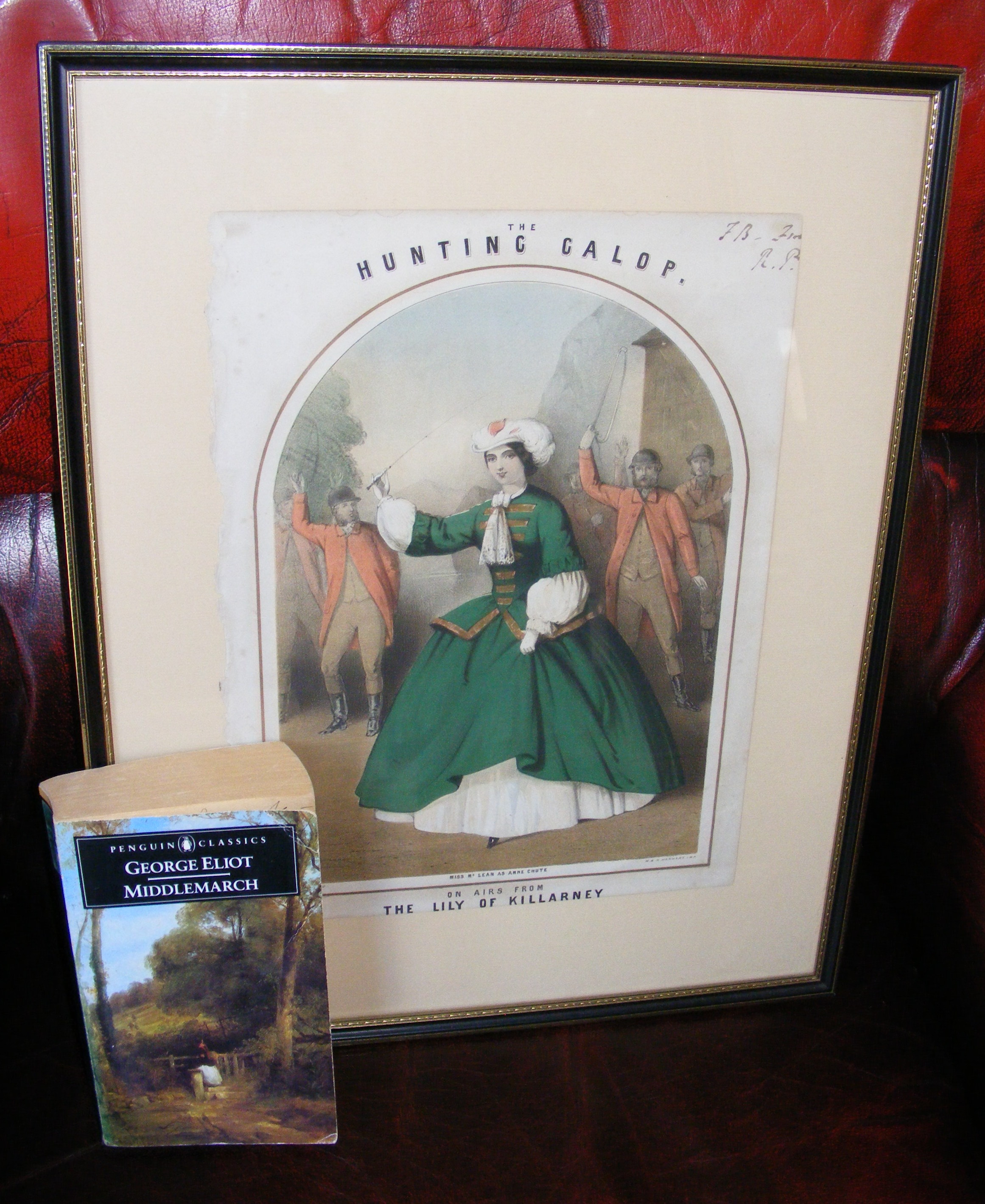
To reach Middlemarch these days you’d take a train out of London Euston and you’d be there in about an hour. But at the time that the action is set, the railway has not quite made it. In fact, we see it being built.

It’s not connections or landscape that make Middlemarch a place we can believe in. It’s the people. It’s the systems. It’s the systems in which the people live and move, and the people who make up the systems. There’s the class system, the minute gradations of commerce, the churches and the hospitals, the vain attempt to move up a rung, or at least keep oneself from moving down one, to escape it entirely, and the pettiness of the whole thing…

I know how to get to Middlemarch because I believe the introduction when it tells me it’s basically Coventry with the serial numbers filed off. (Which makes me wonder whether anyone’s written anything set in post-war Middlemarch. Or anything about the Middlemarch bicycle industry…) But I believe in Middlemarch because I believe in the people who live in it and around it.

Books mentioned in this post

Middlemarch, George Eliot

In the Mouth of the Wolf, Helena Fairfax

Jude the Obscure, Thomas Hardy

The Heart of Princess Osra, Anthony Hope

Biggles Goes To War, Capt. W. E. Johns

To Kill a Mockingbird, Harper Lee

Go Set a Watchman, Harper Lee

ABCDEFGHIJKLMNOPQRSTUV

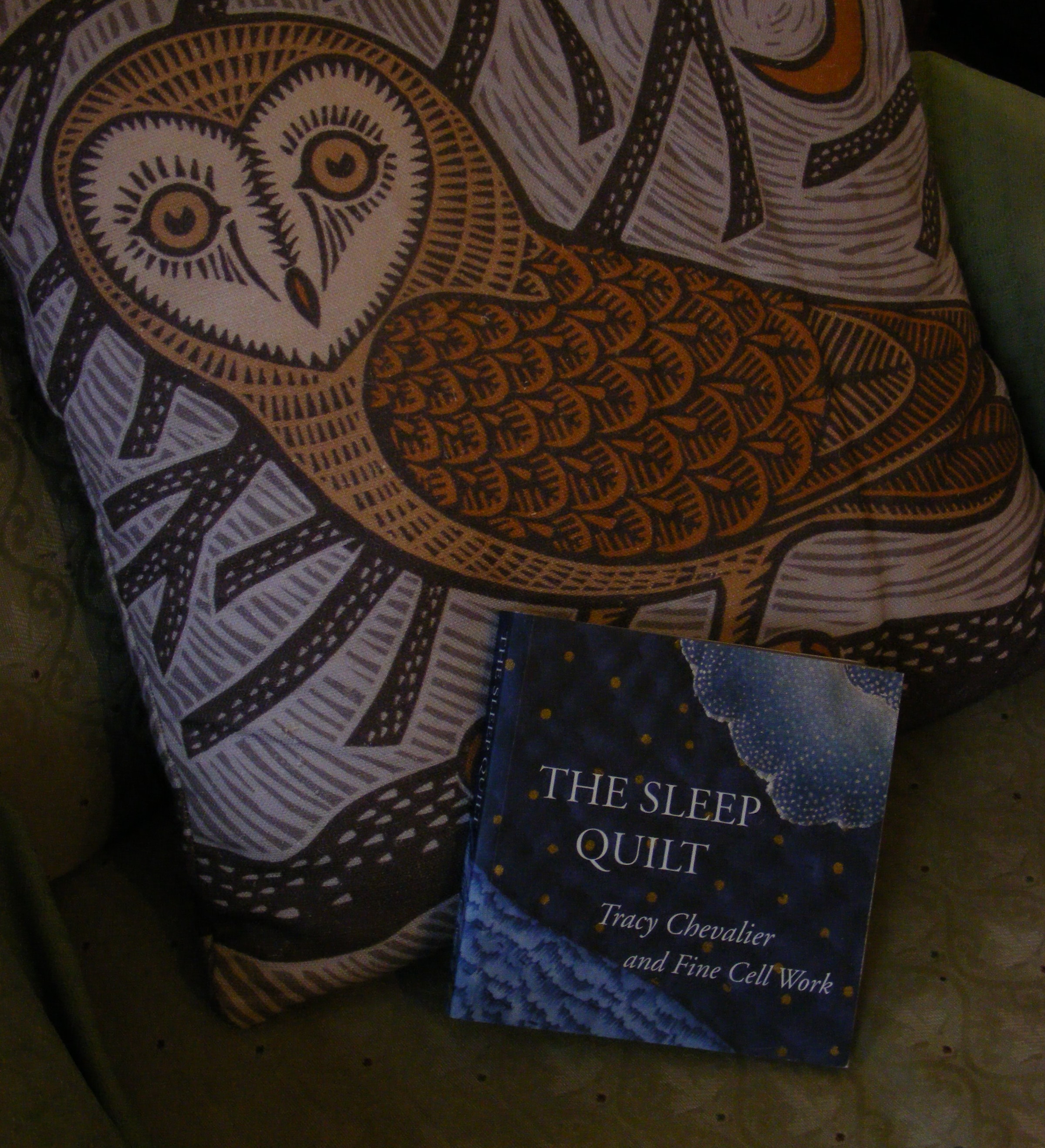
#indiechallenge – The Sleep Quilt (Tracy Chevalier and Fine Cell Work)

DSCF8551

The blurb

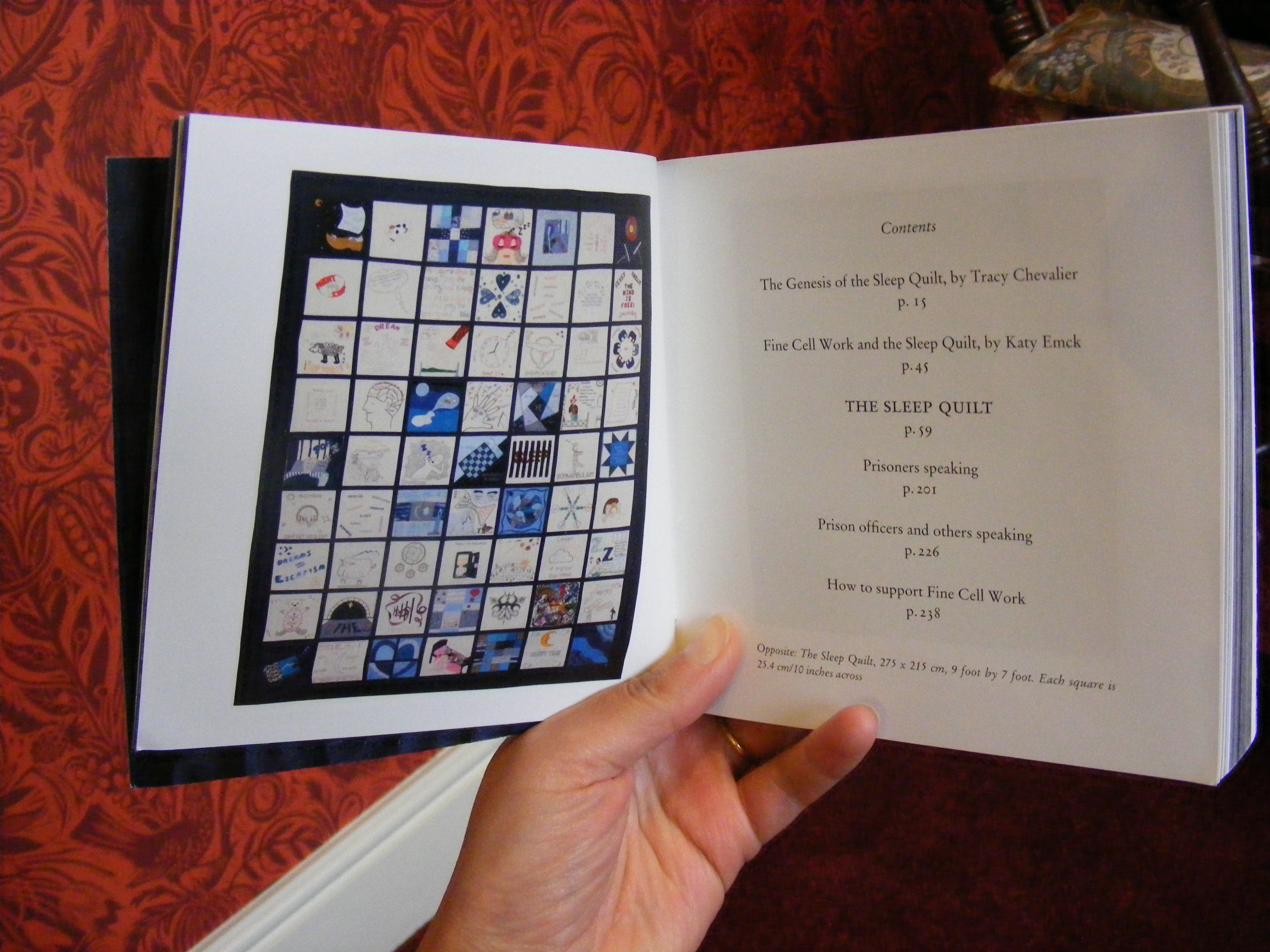
The Sleep Quilt is unlike any other quilt you will have seen. Commissioned by Tracy Chevalier, it is entirely stitched and quilted by prisoners in some of Britain’s toughest jails. Each of the 63 squares explores what sleep means in prison. A moment of escape for some, for others a dark return to all they most regret in life, sleep has a great significance in jail that is only strengthened by the difficulty of finding it in the relentlessly noisy, hot and cramped environment. By turns poignant, witty, lighthearted and tragic, The Sleep Quilt shines a light on lives that few outside can guess at.

The contributors

Tracy Chevalier is an American-British historical novelist, the author of books including Girl With A Pearl Earring and The Lady And The Unicorn.

Fine Cell Work is a charity which makes handmade textile products in British prisons:

Fine Cell Work enables prisoners to build fulfilling and crime-free lives by training them to do high-quality, skilled, creative needlework undertaken in the long hours spent in their cells to foster hope, discipline and self esteem. They can also learn sewing machine and textile production skills in our prison based workshops. Our aim is to allow them to finish their sentences with work skills, money earned and saved, and the self-belief to not re-offend.

The publisher

Pallas Athene has been publishing books for 25 years, starting with travel guides and now mainly focussed on art. Rather endearingly, they say:

We also have some wine and food titles, and other books we publish simply because we like them and want to bring them to a wide audience. (Most recently, David Lack’s wonderful Life of the Robin). The aim is always to make books that are approachable and intelligent, and we are great believers in illustration.

Where I found this book

I’ve been staying with a friend and reading my way through as many of her books as I could in a week (while also managing to fit in a lot of standing at the side of the road cheering on cyclists, and playing Pandemic in between times). We’ve been comparing textile notes for years (she is a very good embroiderer; I am a slapdash quilter) and so she brought this one to my attention.

The bingo card

This could count towards: ‘Rec’d by a friend’; ‘A crowdfunded book’; ‘A new to you press’; ‘Marginalised people’; ‘A press over 20 years old’; ‘Non-fiction’, and, perhaps, ‘Anthology’.

My thoughts

This is a beautiful, moving, little book. It opens with an essay by Tracy Chevalier explaining how she came to commission the Sleep Quilt (for an exhibition of quilts entitled ‘Things We Do In Bed’) and one by Katy Emck describing the aims of Fine Cell Work. The majority of the pages, however, are devoted to pictures of blocks from the quilt accompanied by contributions from the prisoners who worked on it, explaining the thinking behind the designs or expanding on quotations included in them. It’s fascinating and thought-provoking: a small treasure.

DSCF8555